



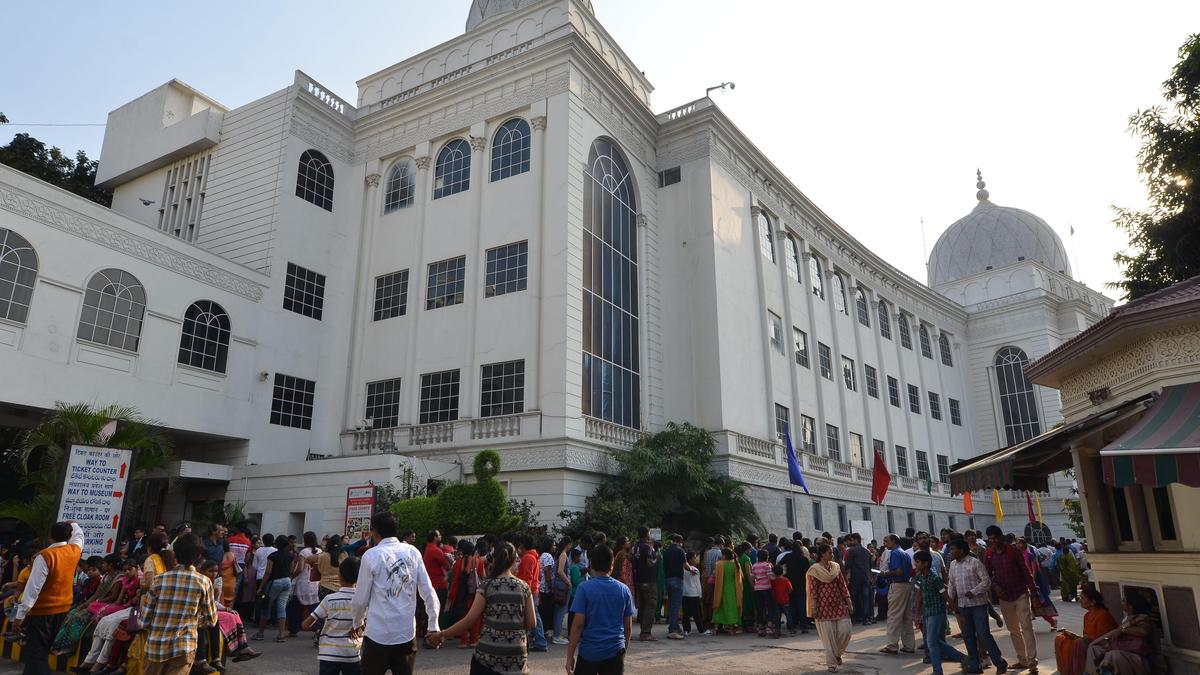
Salar Jung Museum turns 75: Exhibits that define Hyderabad’s iconic museum
When was the last time you walked through centuries in a single afternoon? As Hyderabad’s Salar Jung Museum marks its diamond jubilee, this is a good time to revisit its vast, globally sourced collection.
Established in 1951 by Nawab Mir Yousuf Ali Khan, Salar Jung III at Dewan Devdi, the 18th-century palace complex of the Salar Jung family, the museum moved to its present location in 1968. Known to be an avid art collector, Nawab Mir Yousuf Ali Khan served as the Prime Minister of Hyderabad from 1912 to 1914. The museum spans nine acres and is divided into central, eastern and western blocks and houses a collection of nearly 48,000 artefacts from across the world.
The museum displays ceramics, furniture, glassware, bronzes, ivory carvings, art, manuscripts and books, across 40 galleries, offering visitors a window into a richly layered past. “Besides being a connoisseur of rare and exquisite objects, Nawab Mir Yousuf Ali Khan had a keen eye for identifying exceptional quality and distinguishing originals from imitations,” says Ramani Kumari, senior guide lecturer at the museum.
It is difficult to narrow down highlights from a collection of this scale, which is best experienced slowly, but if you are short of time, here are a few that stand out.
The museum sees a footfall of 1500-2000 people on weekdays and a 10% surge during weekends and holidays.
Make way for the crowd pleasers
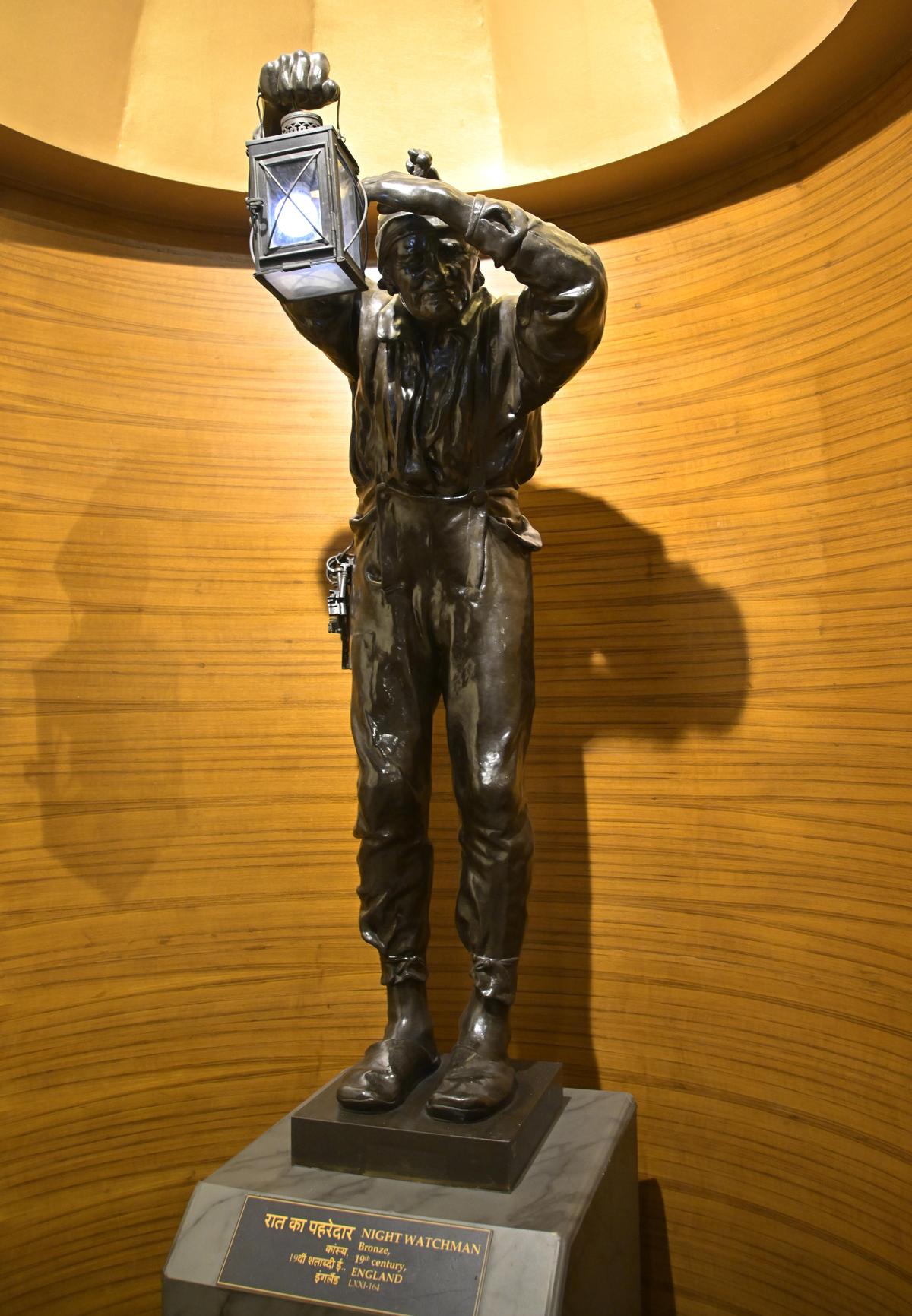
A bronze sculpture of a watchman holding a lantern and a bunch of keys
| Photo Credit:
SIDDHANT THAKUR
Unable to travel to the Louvre museum in Paris to see the Monalisa by Leonardo da Vinci? Check out a replica of the original painting at the art gallery, which creates an immersive experience for its visitors. Explore art, history and different schools of thought at the Indian and western modern painting collection, bronzes including stone sculptures. Handcrafted and beautifully painted European porcelain from Severs in France, Dresden in Germany and Wedgwood in England are the other cherished artefacts.
Meet at the clock
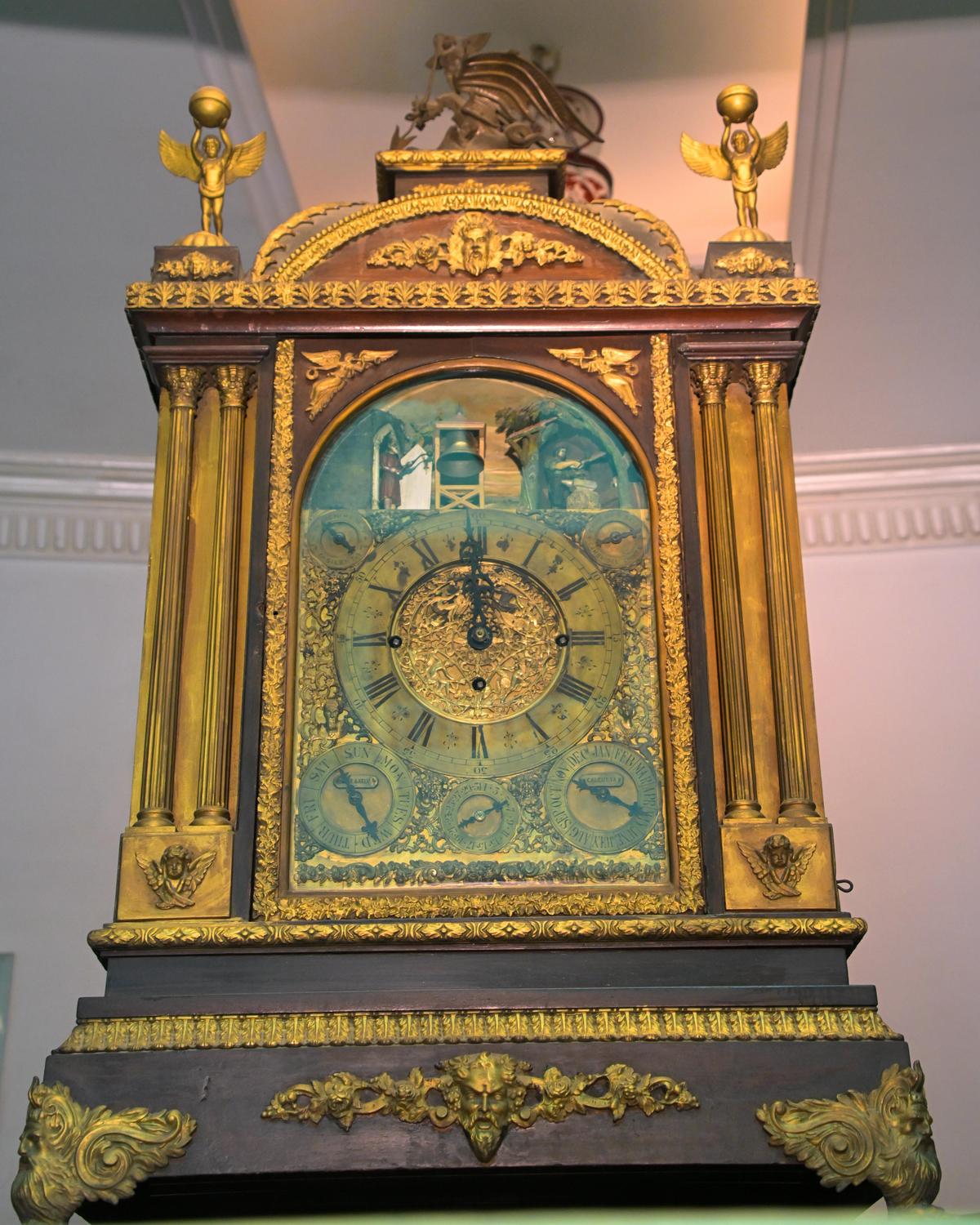
The iconic musical clock is made of 350 parts
| Photo Credit:
SIDDHANT THAKUR
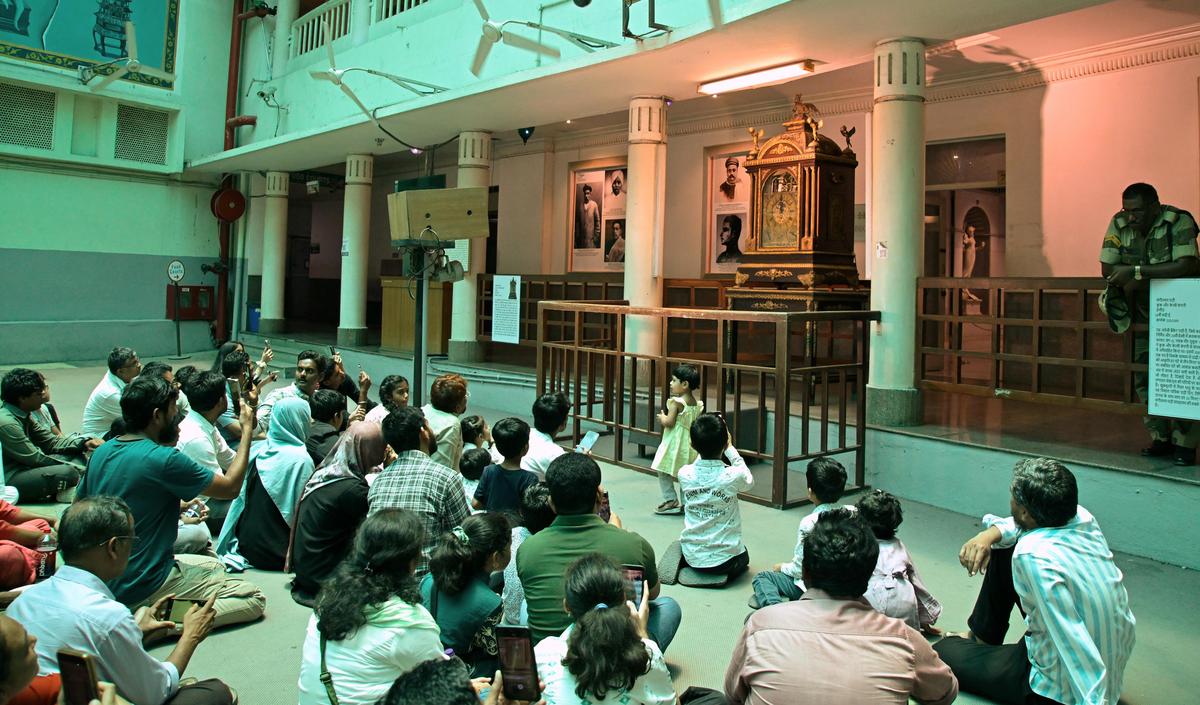
Visitors gathered at the iconic musical clock
| Photo Credit:
SIDDHANT THAKUR
On the ground floor portico of Hyderabad’s Salar Jung Museum, the crowd gathers, their phones held up in anticipation. As children edge forward The English bracket clock, acquired by Salar Jung III from Cooke & Kelvey, begins to chime.
It sits on a table made of carved wood and brass, its ornate case lined with falcon motifs. When the hour strikes, a small door clicks open and a toy soldier steps out to strike the gong, then retreats just as quickly — drawing applause from the visibly delighted crowd.
The clock is built from over 350 parts, with a central mechanism that keeps time and a secondary automaton that marks each passing second with a hammer. It is wound every third day, and despite its complexity, has famously needed only a single repair.
Do not miss the Veiled Rebecca
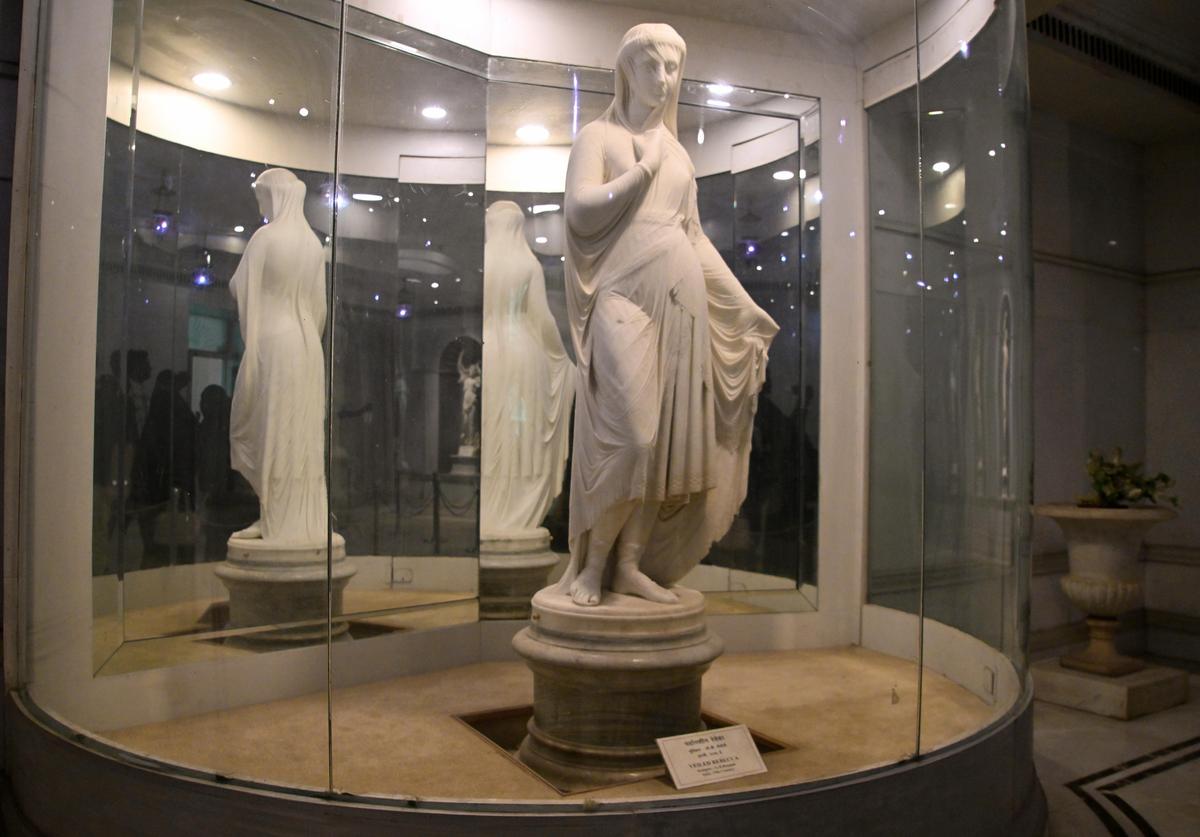
Veiled Rebecca sculpture
| Photo Credit:
SIDDHANT THAKUR
A few metres from the clock stands the Veiled Rebecca, displayed behind glass. Sculpted by Giovanni Maria Benzoni, the work is carved from a single block of marble and is noted for its illusionistic detail — the translucent veil appears to cling like wet fabric, revealing the figure’s contours and folds.
The gallery also includes marble sculptures representing the cycles of Nature and the seasons. These garden figures were earlier housed at Dewan Devdi, the 18th-century palace complex of the Salar Jung family.
A royal touch of ivory
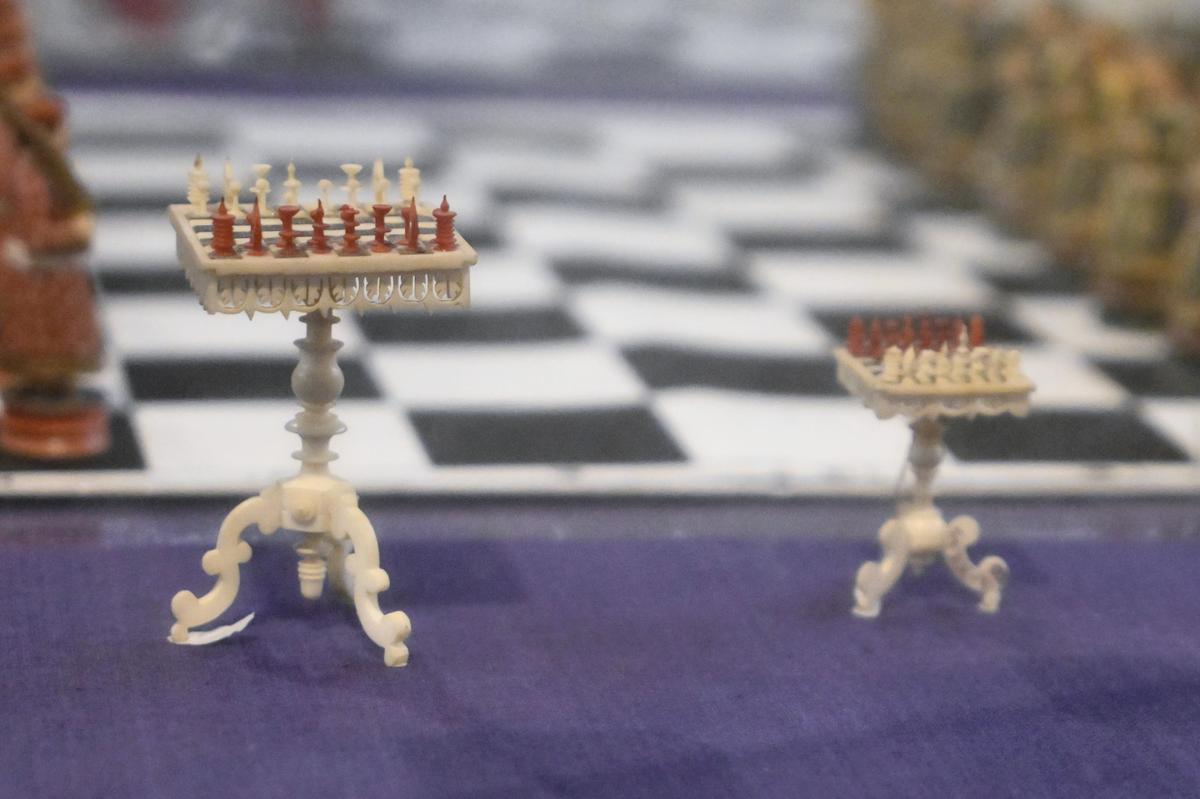
Intricately carved miniature chessboards
| Photo Credit:
SIDDHANT THAKUR
Ivory, once a marker of 19th-century royalty, anchors a gallery in the central block. The displays span Indian, Japanese and Western traditions, showcasing a range of carving styles and techniques.
The collection includes a layered chatai (mat), a bed lamp, miniature chessboards, and a chaur sahib — a ceremonial fly whisk used in Sikh rituals — crafted from fine ivory strips. Mythological panels depicting scenes from the Ramayana and the Dashavatara series further reflect the diversity of ivory craftsmanship shaped under royal patronage.
Among the notable pieces are ornate throne chairs believed to have been gifted by Louis XVI to Tipu Sultan. Considered part of the final acquisitions of Salar Jung III, they reached Hyderabad after his death.
Timeless and ancient
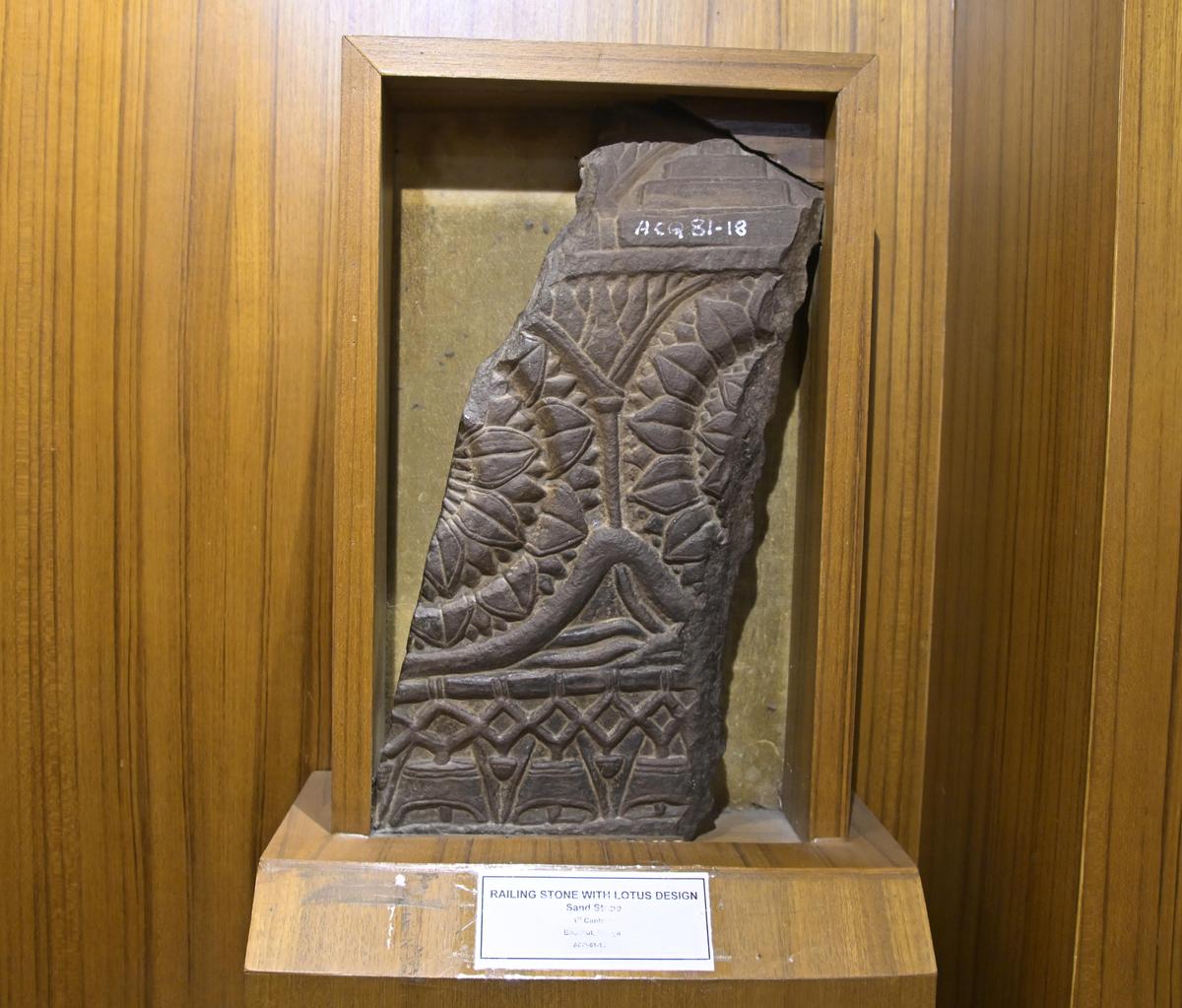
Stupa relic dating back to the second century BC
| Photo Credit:
SIDDHANT THAKUR
Discover the oldest and historically significant Buddha sculpture and a stupa relic from the 2nd and 1st century BC While a four-and-half-feet beautifully carved stone sculpture is from Nilakundapalli (Nagarjunakunda) in Khamman district of Telangana, the stupa relic is from Bharhut in Madhya Pradesh.
Jade in the spotlight
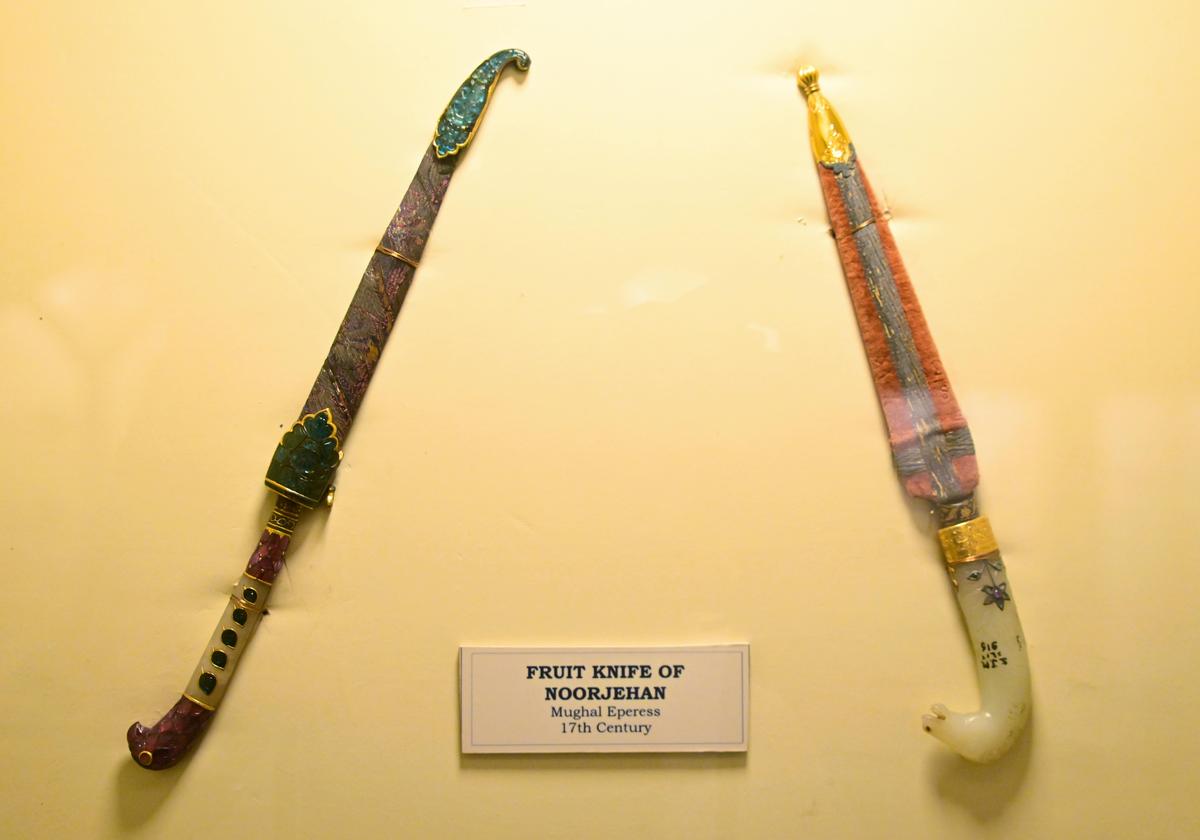
Noor Jehan’s fruit knife
| Photo Credit:
SIDDHANT THAKUR
Which knife do you use to cut fruit? For Noor Jehan, it was a jade blade with a dagger-like handle, set with rubies, emeralds, diamonds and sapphires. At the Jade Gallery, finely carved jade wine cups attributed to Mughal emperors are displayed alongside armbands and amulets inscribed with Quranic verses.
The collection also includes hookah pipe ends, royal swords and daggers inlaid with precious and semi-precious stones. Among the highlights is Shah Jahan’s jade archer’s ring, engraved with his name.
Far-eastern collection
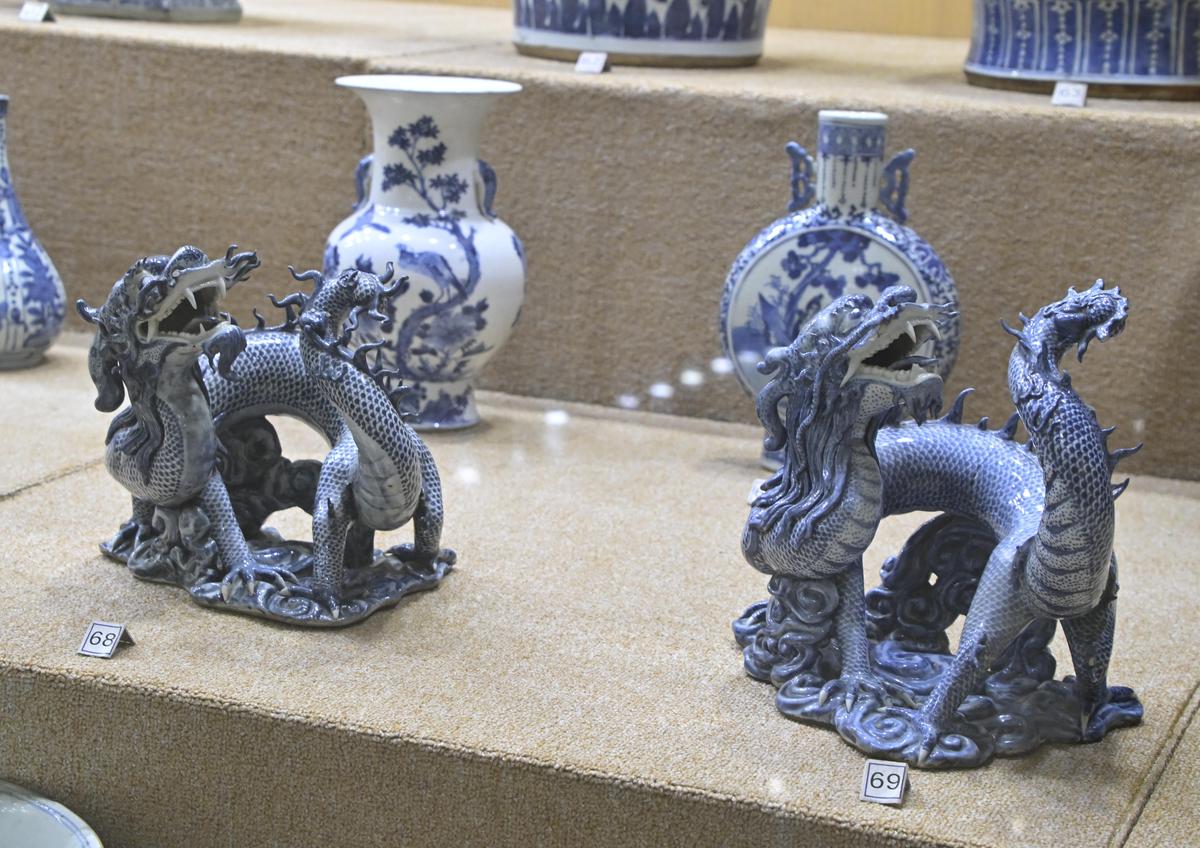
Few exhibits from the blue-and-white porcelain collection
| Photo Credit:
SIDDHANT THAKUR
Imagine a sheer silk fabric embroidered with the same tree-and-bird motif on both sides, with no visible knots. This double-sided Japanese embroidery is displayed on the first floor of the eastern block.
The gallery also features an extensive blue-and-white porcelain collection, including over 40 jars and vases from the Ming dynasty and Qing dynasty, alongside dishes decorated with lotus and dragon motifs in relief.
The Japanese collection further includes enamels, woodcuts and watercolour paintings.
Two faces, one sculpture
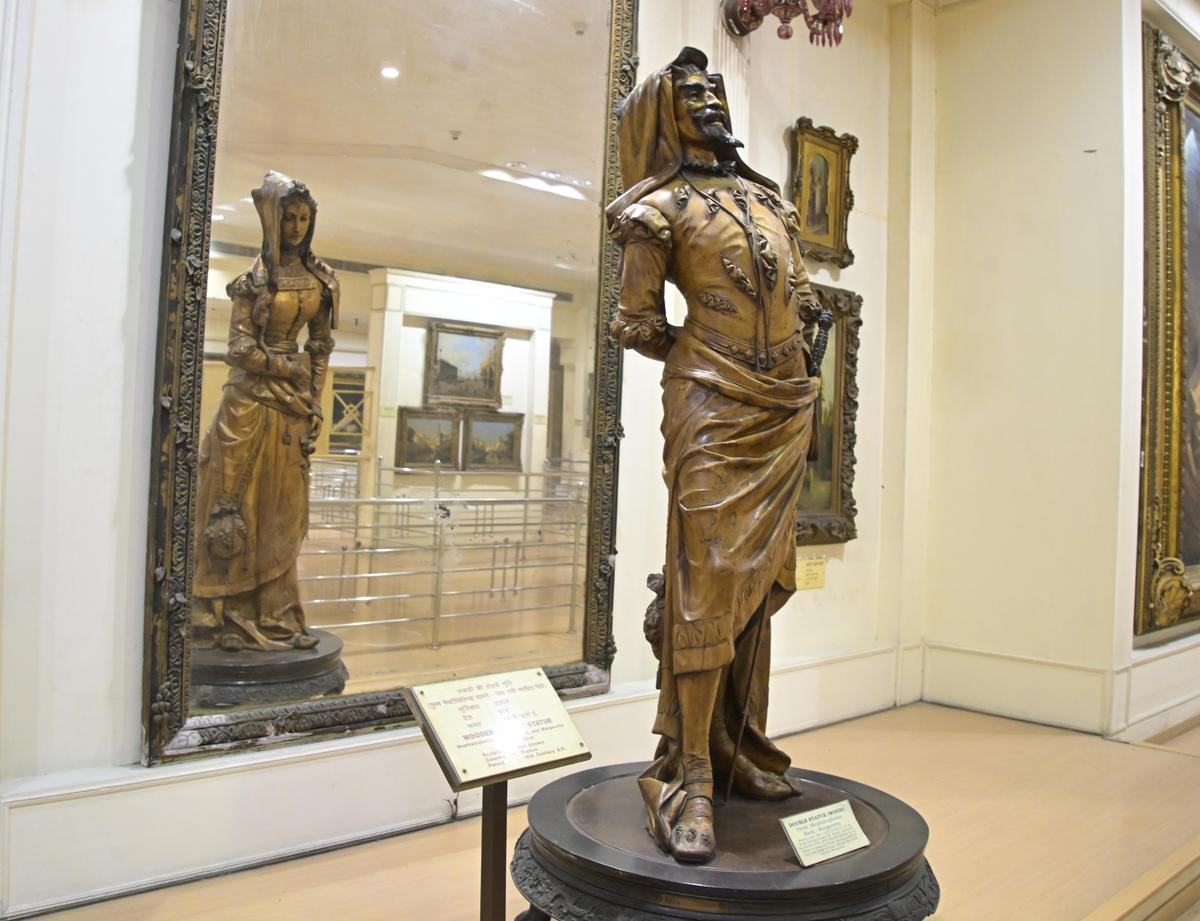
The double statue, a wooden sculpture of Mephistopheles and Margaretta
| Photo Credit:
SIDDHANT THAKUR
Have you seen a double statue revealed through a mirror, showing two sides at once? On the second floor of the European gallery, amid life-size paintings, stands a wooden sculpture of Mephistopheles and Margaretta from Faust.
The 19th-century work uses a mirror to reveal both figures simultaneously, underscoring the duality of good and evil. Mephistopheles appears as a smirking demon in heeled boots, while Margaretta is portrayed as a modest, prayerful woman with her gaze lowered.
The sculpture is of French origin, though the artist remains unknown.
Sit, pause and reflect
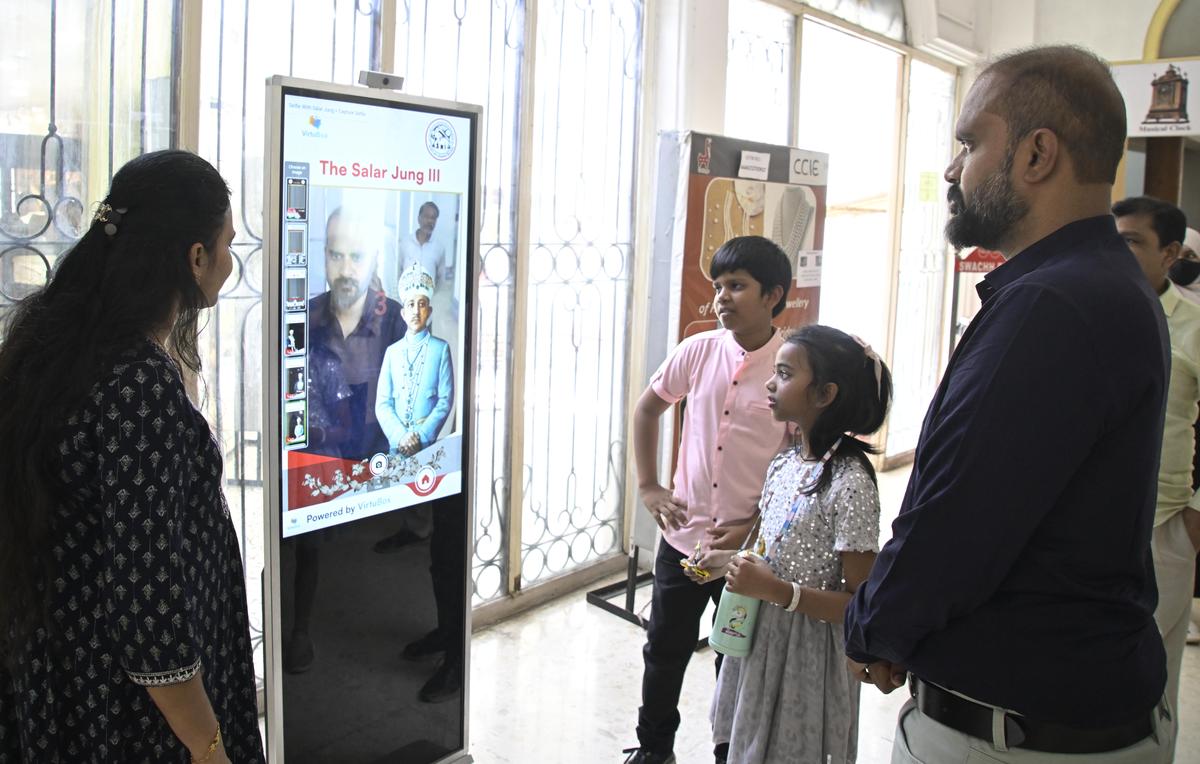
Selfie point at the museum
| Photo Credit:
SIDDHANT THAKUR
The museum does not have any less visited galleries but sometimes fatigue sets in due to continuous walking across its central, eastern and western blocks. And, for those who want to rest their feet or just take a moment to reflect on the history and grandeur, benches are provided near the corridors.
Finally, one can elevate the museum experience with a virtual selfie with the royals — Salar Jung I, II or III — at a kiosk on the ground floor.