



Finding spiritual renewal and fellow Indians in Bali
For newly married Rajesh and Aarti from Delhi, Indonesia’s Bali with its beaches, water sports, safari, jungle swings, forests and mountains, is more than a tourist destination. It is a liberating getaway where they could splurge, shed inhibitions and be themselves.
For elderly Hari bhau and his wife from Maharashtra, Bali’s appeal lies in its tranquillity, hot springs, spas, cultural and spiritual ambience. At a hot spring, Hari Bhau plunges in enthusiastically while his wife hesitates — until he pulls her in. Moments later, she is swimming with ease. “I learnt in my village lake,” she says, adding that she would not have attempted this back home in front of family. Bali is a getaway for them too.
Positioning itself as a clean, hospitable and affordable tourist destination for all ages, Bali is emerging out of the setbacks of the COVID-19 pandemic. To Indians, it offers an accessible international experience.
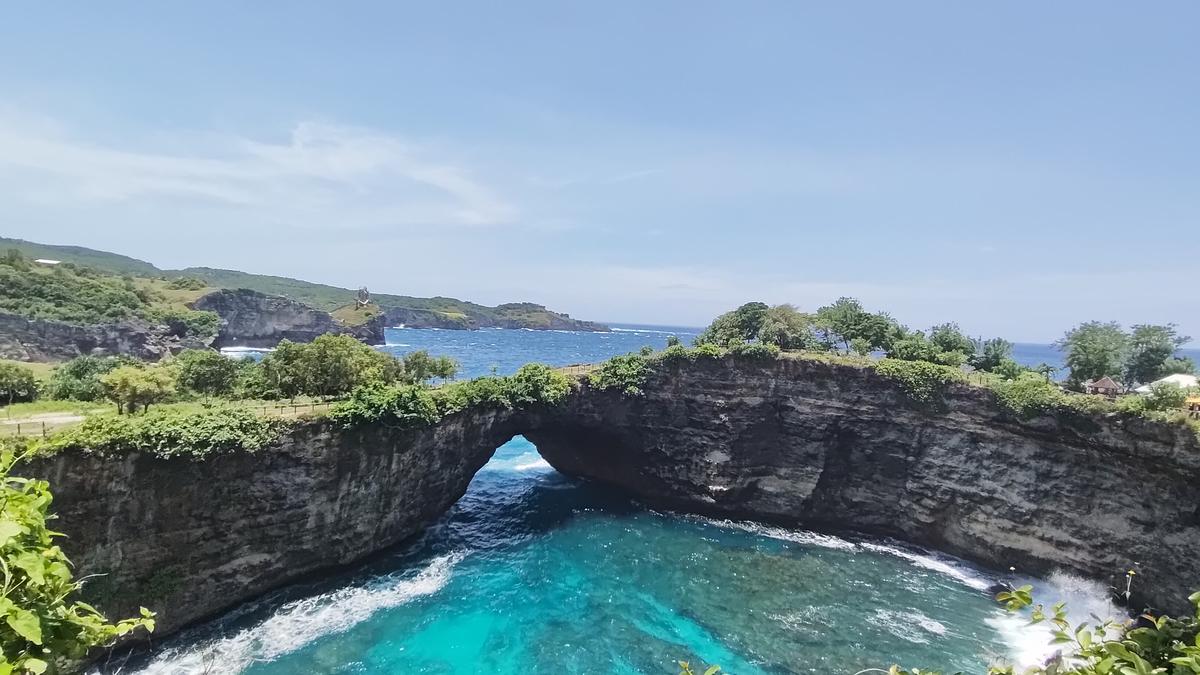
The iconic Broken Beach in Nusa Penida island.
| Photo Credit:
Gargi Parsai
My own recent journey to Bali was unplanned. A spiritual retreat organised by the Chinmaya Mission in Noida became available when my sister-in-law had to cancel. On impulse, I invite a friend from college days who lives in another city. Soon, we extend our trip by nine days, eager to explore beyond the retreat. There was no sign of the ongoing West Asia conflict and tensions then.
Our journey begins with a flight on Singapore Airlines, routing us through the famed Changi Airport, often described as a destination in itself. After an overnight layover, we board our connecting flight to Ngurah Rai International Airport at Denpasar, the capital of Bali.
Bali greets us with lush greenery, tropical rains, and a serene atmosphere. Surrounded by the Indian Ocean and Bali Sea, the island feels deeply connected to nature. As we drive through Kuta, stone-carved religious statues stand at every turn — at crossroads, sidewalks, and entrances, revealing the island’s deep-rooted cultural identity.
A surreal landscape
Bali’s Hindu-majority population distinguishes it within Indonesia. Religious imagery is not confined to temples but integrated into everyday life. Shrines stand at the entrance of homes and businesses, adorned daily with offerings of flowers and food. Sculpted characters from the Ramayana and Mahabharata are visible across public spaces.
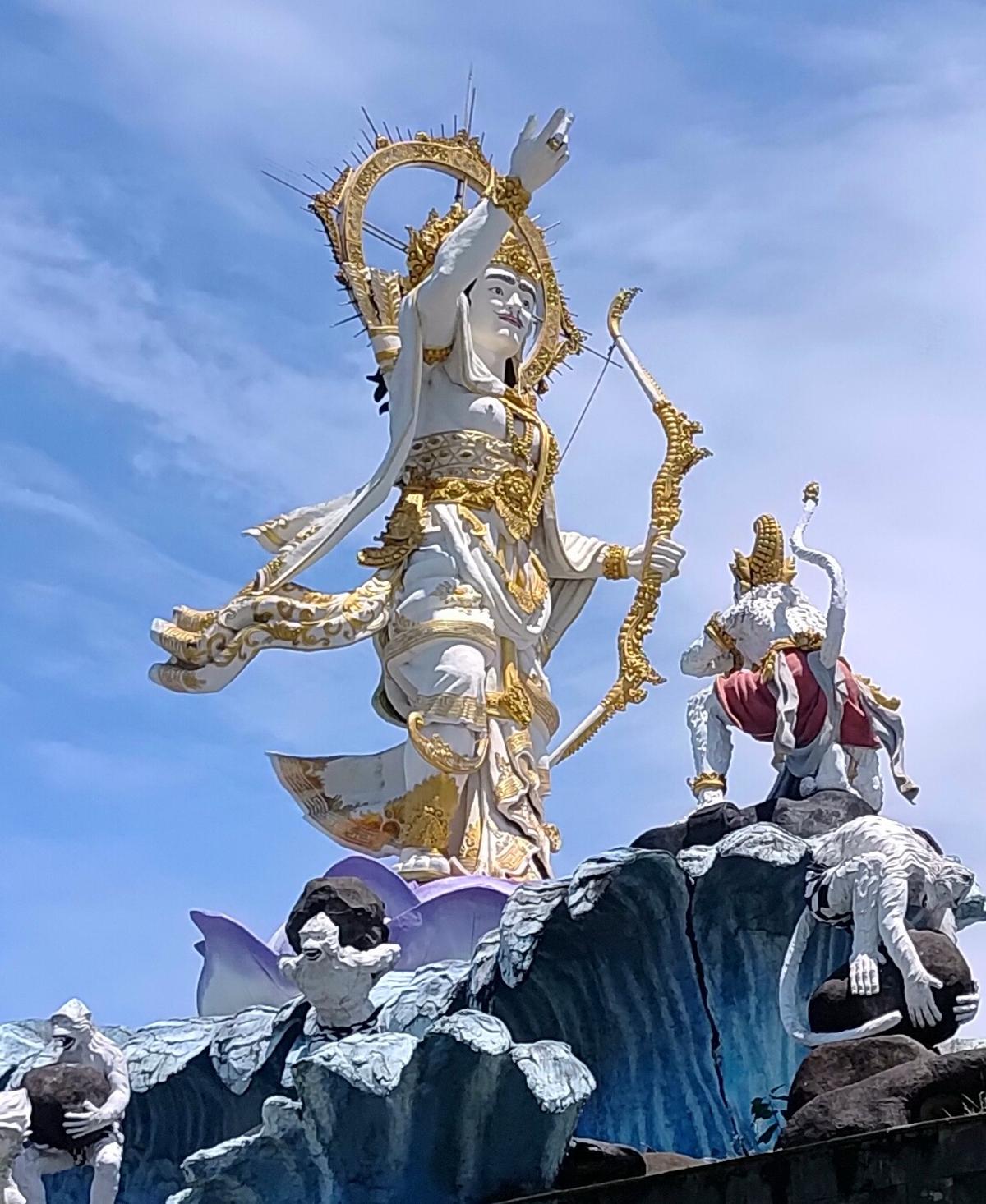
Sculpture of Rama at a road crossing in Bali.
| Photo Credit:
Gargi Parsai
“Our culture is unique and a symbol of gratitude to our ancestors and gods,” says Kadek Salen, a native of Bali. “Rituals here are meant to be meaningful, not burdensome.”
The island’s heartbeat, once agricultural, now pulsates with tourism. Every vista is curated, every experience thoughtfully presented and every visit ticketed. Signboards speak only in Balinese — a conscious choice, tour guide Eka explains, to preserve local identity amid global attention. Bali has learnt to welcome without losing itself.
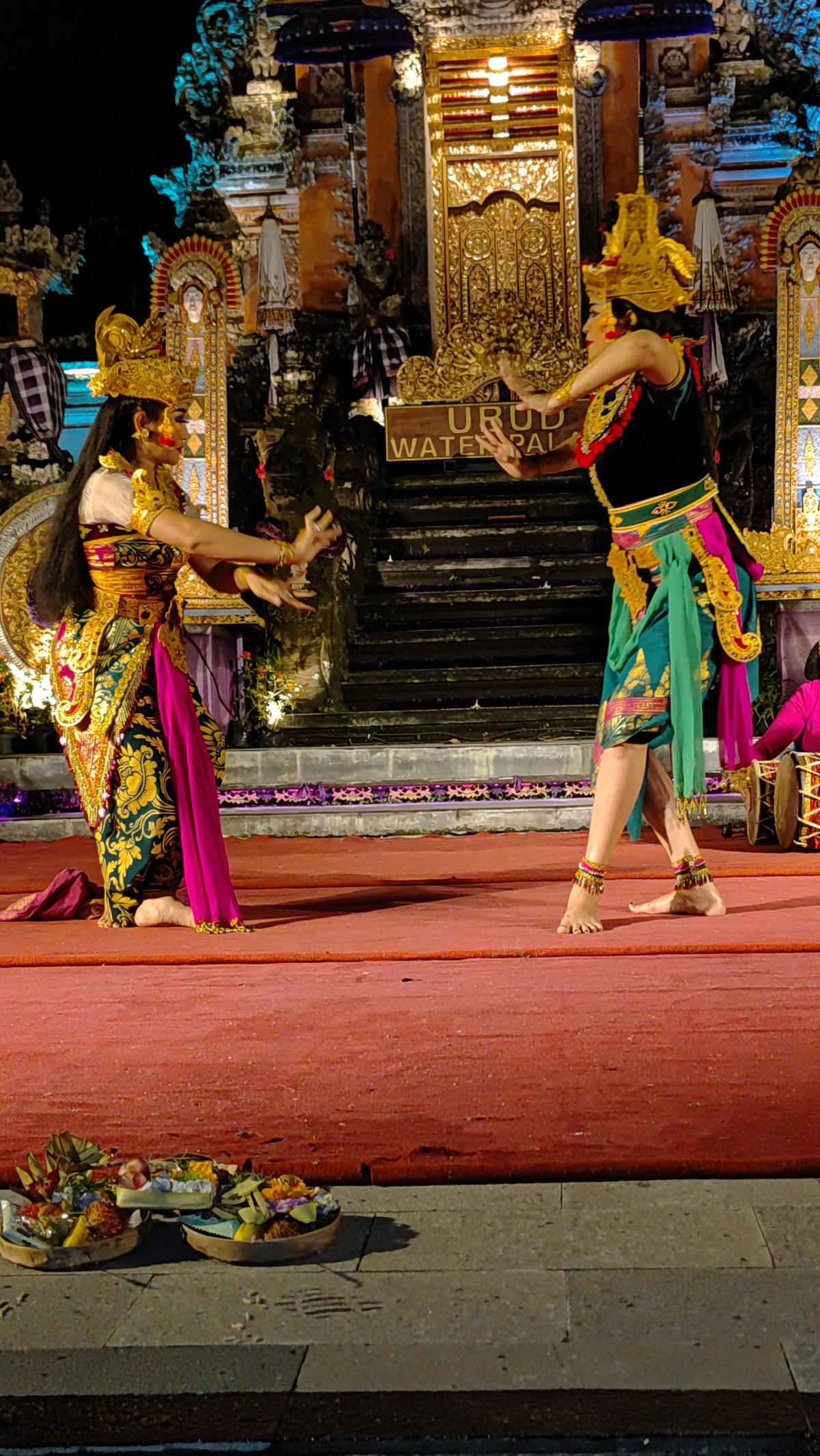
Ramayana ballet at Ubud Water Palace.
| Photo Credit:
Gargi Parsai
Despite a predominantly non-vegetarian cuisine, vegetarian options are plentiful, catering to Indian visitors that are the third largest here in number after Australians and the Chinese.
At Melasti beach, the Indian Ocean reaches out in big blue waves — each one inching closer, luring us forward. Nearby, Uluwatu Temple is perched dramatically on a cliff. By evening, we watch the open-air Kecak fire dance — an evocative retelling of the Ramayana through chants, flames and movement.
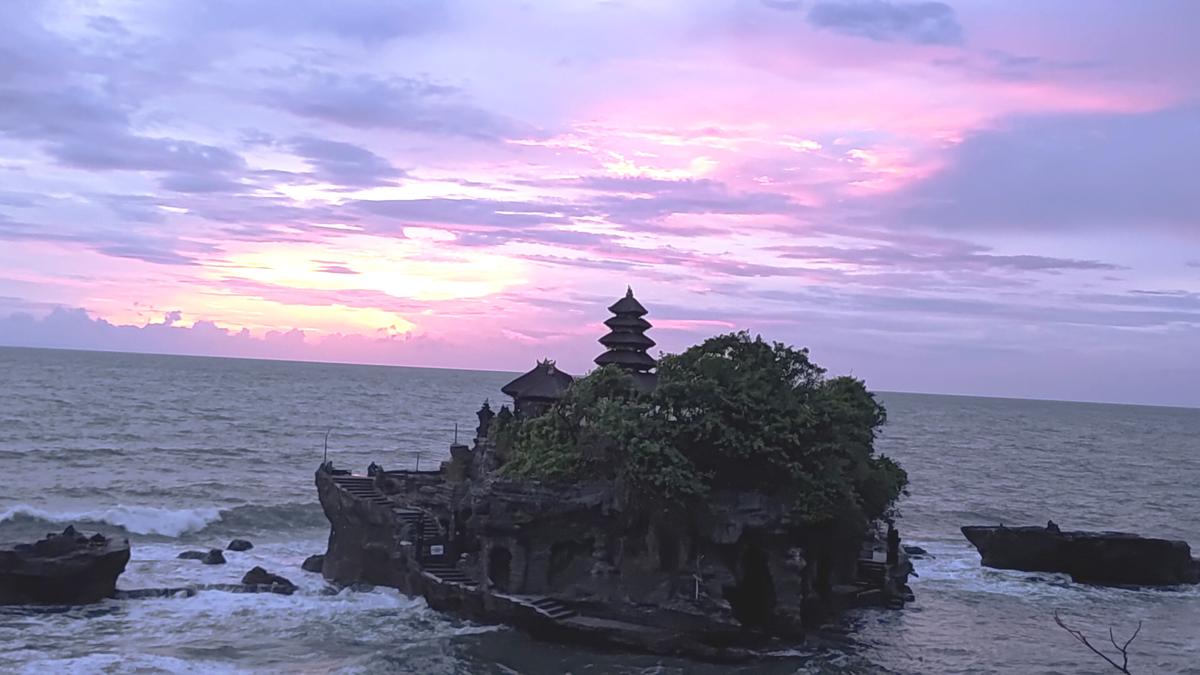
Tanah Lot temple perched on a rock formation.
| Photo Credit:
Gargi Parsai
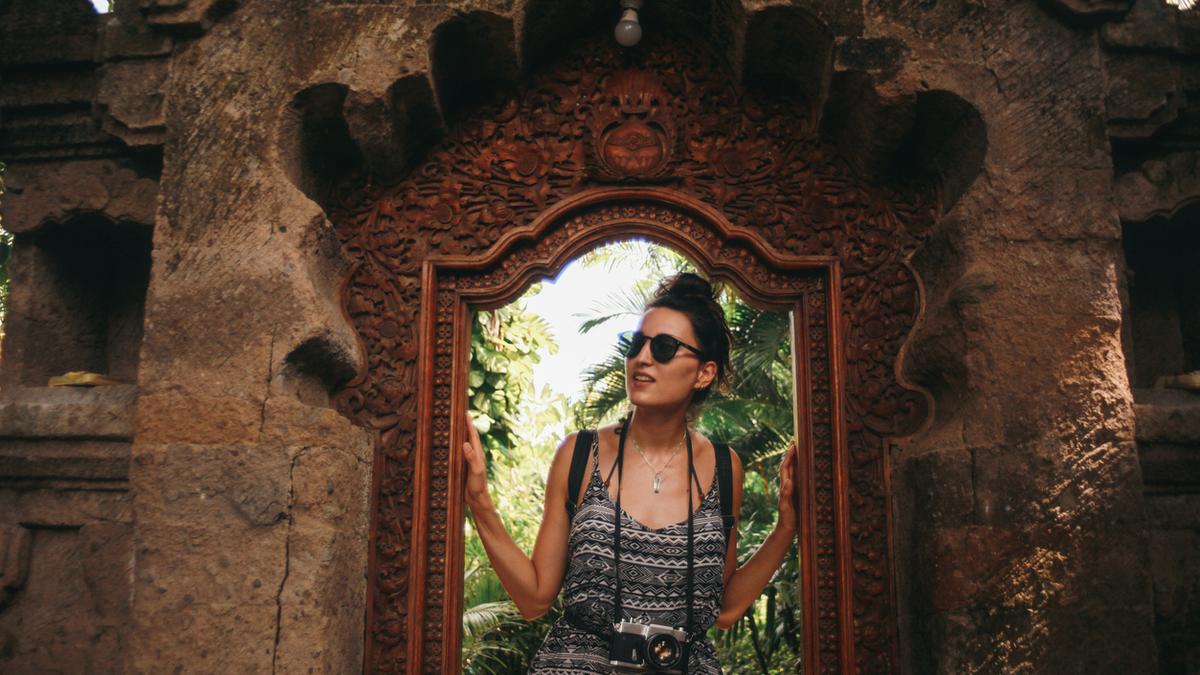
Though entry into temples is restricted for visitors at Tirta Empul Temple, we briefly witness a Balinese couple’s post-wedding ritual, offering an intimate glimpse into local traditions. At Ulun Danu Temple, vibrant gardens and lake reflections create a surreal landscape. Tanah Lot Temple, set against the ocean, delivers a breathtaking sunset.
Days blur as we moved from Seminyak to cultural Ubud, each place offering a different shade of Bali.
At Gitgit waterfalls, a slippery forest trek on a rainy day leads us to roaring cascades hidden deep within greenery. Along the way, a group of Indian women from Tamil Nadu warns us of the path’s dangers and promise to wait for us — a small act of kindness that stays with us.
Gentler moments follow — a sunset dinner cruise filled with music and dance, surrounded by Indian honeymooners. In Ubud, we stay near bamboo villas amid rice fields — simple, serene, and surprisingly free of insects.
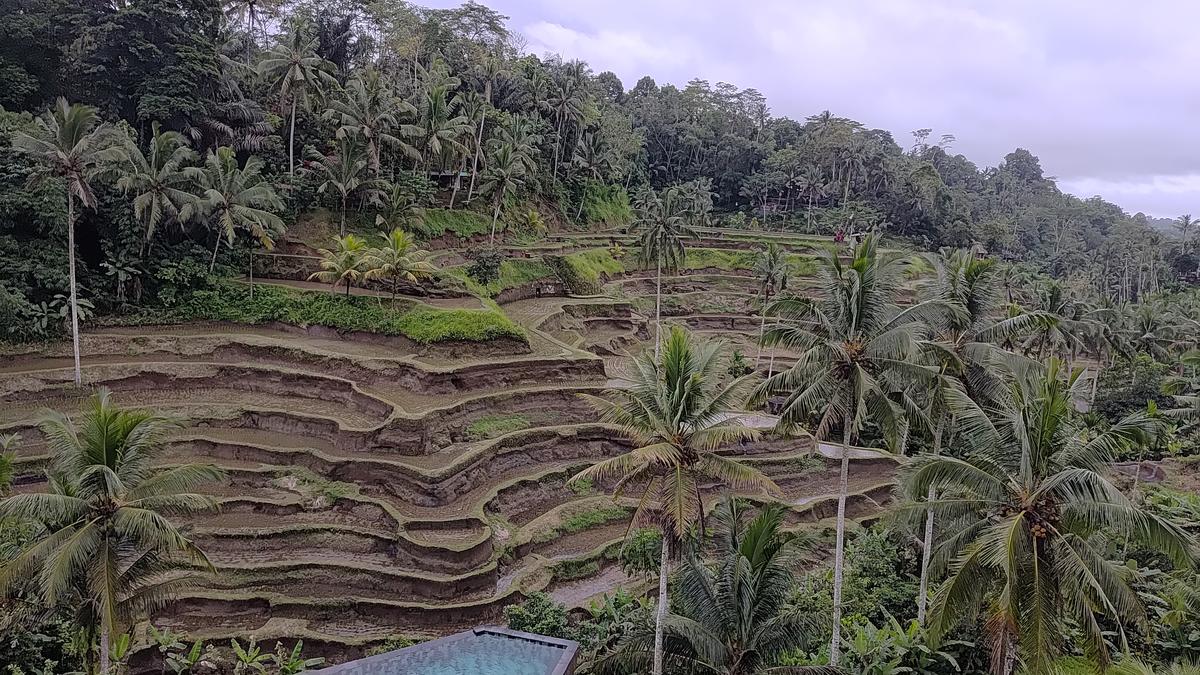
Tegallalang rice rerrace in Bali
| Photo Credit:
Gargi Parsai
Stories of abundance
Morning brings village life into focus. Artisans at work, crafting batik, silver, stone, and wood — traditions passed down like heirlooms. Terraced rice fields stretch endlessly, supported by the ingenious subak irrigation system. At coffee plantations, we encounter the famed kopi luwak coffee — made from beans digested and excreted by palm civets.
A pre-dawn excursion to Mount Batur, an active volcano, proves to be among the most memorable experiences. The rugged drive across hardened lava fields culminates in a panoramic sunrise view that draws a collective gasp from onlookers. The silence and scale of the landscape creates a rare sense of stillness.
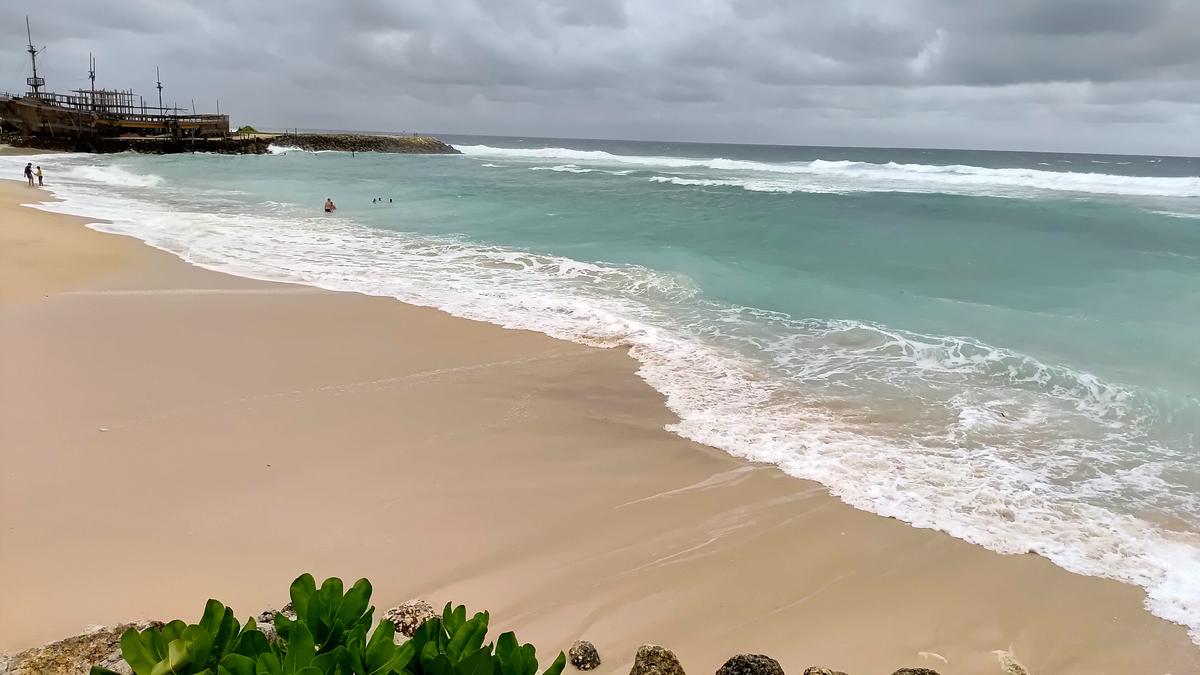
Pristine Indian Ocean beach at Uluwatu
| Photo Credit:
Gargi Parsai
And just when we think Bali has given us enough, it surprises us again — with the warmth of its natural hot springs. Immersed in sulphur-rich waters, surrounded by mountains, we let the journey soak into us.
The land itself tells stories of abundance — fields bursting with vegetables, plantations of tapioca, coconut, banana and rice swaying in the fresh air. Fruits like mangosteen and durian add their own flavours to the experience.
Our final adventure takes us in a boat ride to Nusa Penida, the largest island off the coast of Bali, rewarding us with stunning views. At Broken Beach and Crystal Bay, the landscape feels surreal, with turquoise waves crashing rhythmically against white sands.
Nestled there on a ranch in a quiet corner, we sip coconut water that tastes unmistakably like home.
Bali isn’t just a destination. It is a feeling that lingers long after the journey has ended, like the echo of waves gently retreating into the sea.
The writer is a senior journalist based in New Delhi.