





On hotter days, why does the sky seem more grey than blue?
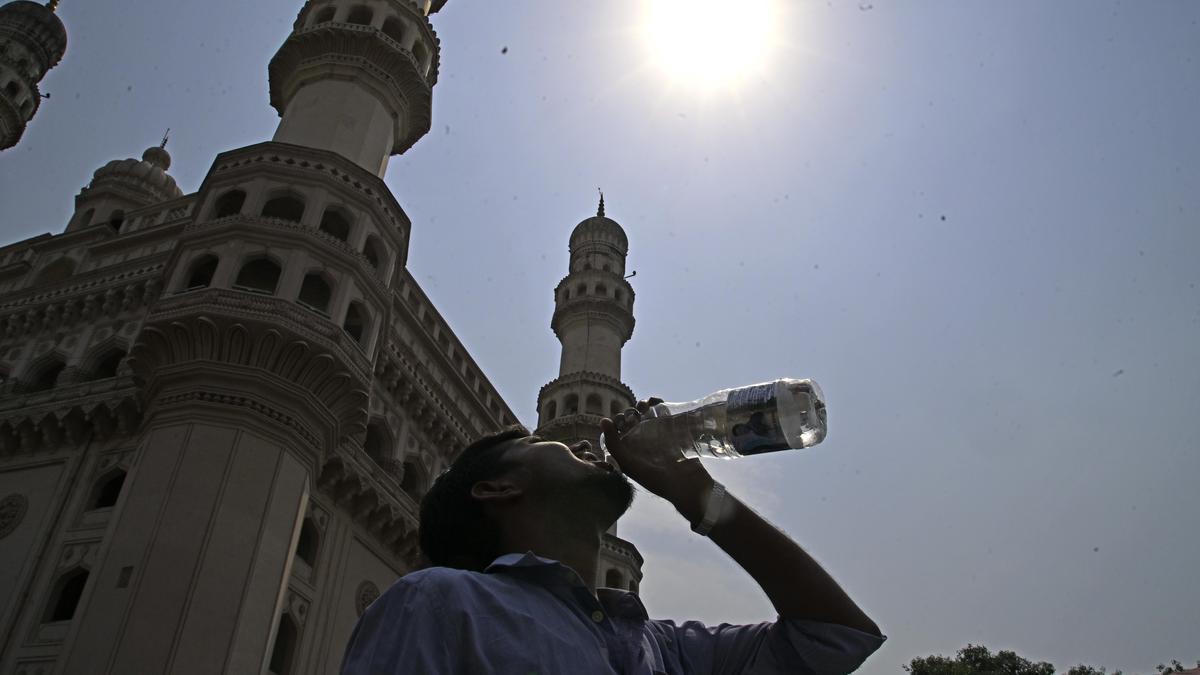
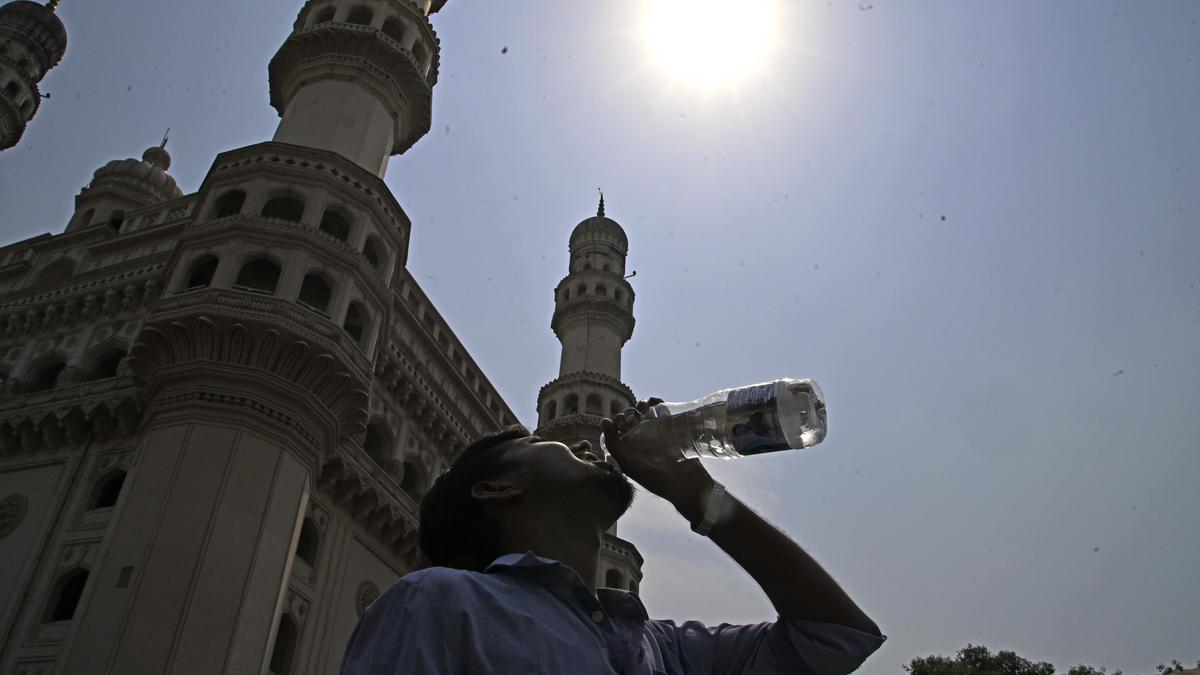
Silhouetted against the blazing sun, a man drinks water near Charminar amid heatwave conditions in Hyderabad, April 28, 2026.
| Photo Credit: SIDDHANT THAKUR/The Hindu
The sky’s blue is due to Rayleigh scattering — when molecules in the air scatter light of shorter wavelength (bluer) much more efficiently than that of longer ones. On hotter days, however, there can be other things in the air and which can affect how light is scattered.
Warmer air can hold more moisture. So on a hotter day, the air can have a combination of higher humidity, in the form of water vapour and fine droplets, and more dust, aerosols, and other particulate matter that convective currents driven by the heat have lifted up. These larger particles scatter all wavelengths of light more equally, not just blue, an effect called Mie scattering. Rayleigh scattering happens only when the object scattering the light is much smaller than the light’s wavelength.
As a result of Mie scattering, the sky’s colours are ‘washed out’ into a pale grey haze.
Human perception also plays a small role. On hot and bright days, the overall luminance of the sky increases, forcing our eyes to adjust. So the same sky that looks blue against a dim background looks whiter when flooded with light.
Have a question you would like answered? Send an email to science@thehindu.co.in with the subject ‘Question Corner’
Published – May 07, 2026 07:15 am IST