




Google team finds radiation glitch that limits quantum computing
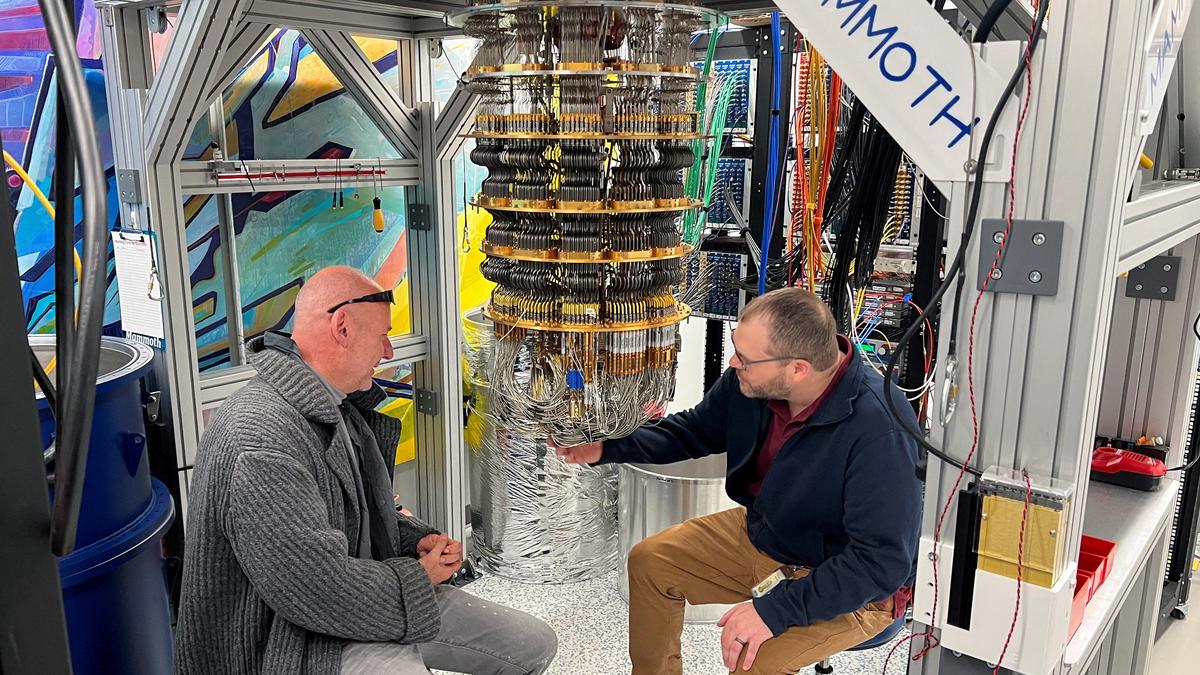
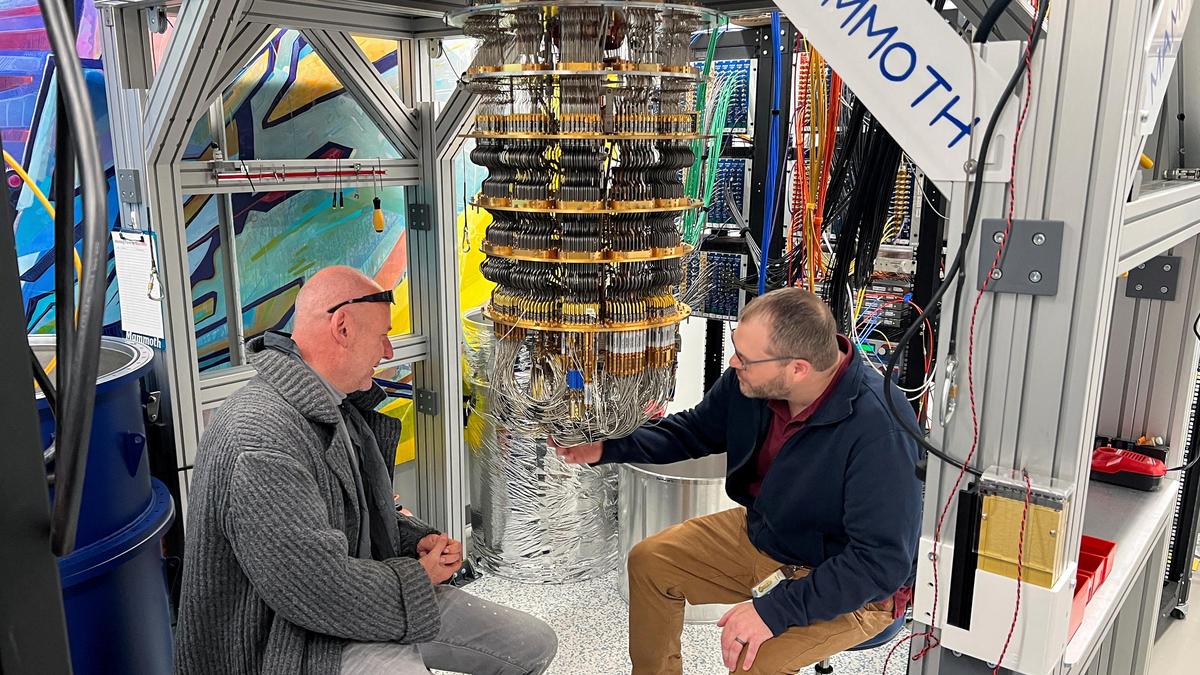
Scientists examine a specialised refrigerator for cooling quantum computing chips at the Google Quantum AI lab in California, U.S., November 25, 2024.
| Photo Credit: REUTERS
What is the world’s next great frontier in technology? There are multiple contenders: artificial general intelligence, programmable biology, sustainable energy, metamaterials, human-machine interfaces, and quantum computing. The future could in fact be more wondrous but also more difficult to predict because of how some of these technologies can work together. But there is still a long way to go — and quantum computing of late has illustrated that well.
Quantum computers are a new type of computer that promises to solve calculations significantly faster than today’s ‘traditional’ computers. The problem is that these machines are also very fragile. They operate in temperatures lower than outer space and the slightest vibration or heat can cause them to stop working.
On May 4, researchers from Google Quantum AI published a paper in Physical Review X reporting that they had found a new ghost in the machine that poses another major threat to these computers — called correlated phase error bursts.
High-energy particles from outer space and trace elements in the earth’s crust both emit ionising radiation. When even a small dose of it strikes the silicon substrate of a quantum chip, it creates a splash of vibrations that ripple across the chip. These vibrations break apart the pairs of electrons that allow a superconductor to work. Many quantum computing chips are based on superconductors.
The break-ups create a swarm of quasiparticles. It’s like a cloud of electronic debris has flooded the chip.

A conventional chip is made of many semiconductors. A quantum chip is made of many qubits. Scientists were worried that the quasiparticles would interfere with sensitive parts of the qubits, causing a crash. So they developed a hardware design where a component acts like a fence that prevents the quasiparticles from jumping into sensitive parts of the qubit.
The solution worked too — until the current study revealed the new problem. Its authors found that even if the quasiparticles couldn’t jump the fence, their mere presence near a qubit caused its frequency to shift. This is like some soldiers walking at a different pace than others in a march-past, falling out of sync and breaking up the parade.
A single dose of radiation could shift the frequencies of many qubits together by as much as 3 megahertz for 1 millisecond — an eternity in quantum computing. Because these shifts happen to many qubits at once, they hit the computer like a sudden loss of coordination.
Scientists are working on a technology called quantum error correction — a safety net to allow a quantum computer to keep working even if a few qubits fail. Among others, it depends on the assumption that errors in different qubits are independent of each other. The correlated burst nullifies this assumption. In fact, the authors of the study have said correlated phase error bursts could set an upper limit on how reliable current quantum computers can be.
Gianluigi Catelani, a scientist at the Jülich Research Centre, Germany, wrote in Physics that researchers already have at least two solutions in the works: ‘traps’ that absorb the static before it hits the qubits and technologies to dampen the splash.
Published – May 06, 2026 07:35 am IST