

A look at the BJP’s playbook in Kerala
After the elections, senior Communist Party of India (Marxist) leader Thomas Isaac commented: “Though the BJP [Bharatiya Janata Party] won three Assembly seats in Keralam, the vote share of the NDA is only 14.2%, lower than the 19.24% vote share of the 2024 Parliament elections and the 16% [vote share] of the local government election held a few months back.”

This assessment pervades large sections of the BJP’s secular opposition. However, it misunderstands Hindu nationalism in Kerala which has expanded despite abysmal electoral results. This dichotomy between the cultural inroads made by the Sangh Parivar, and its election results needs analysis.

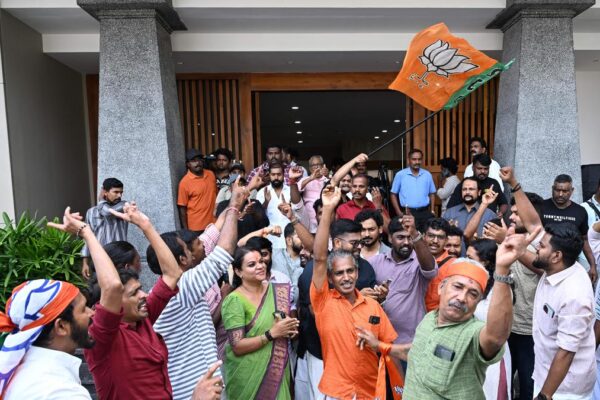
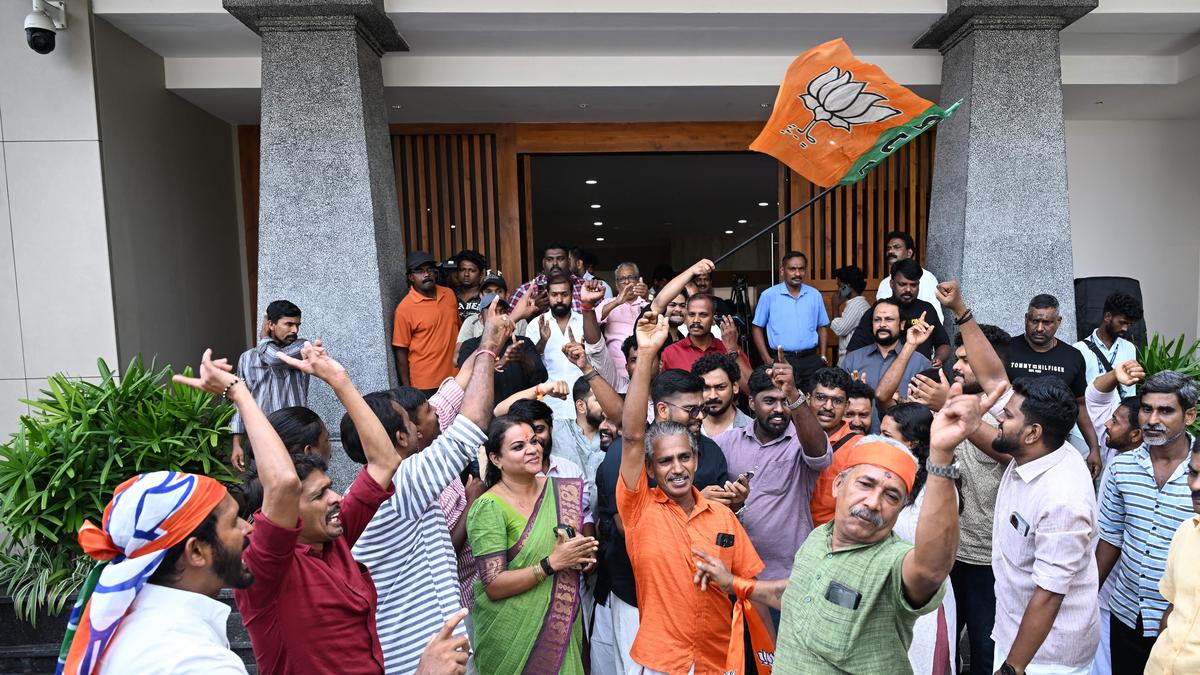
Even with regard to elections, the shifting winds cannot be ignored. While the BJP’s vote share has remained almost the same, below 11.5%, it has converted three of the nine second-place positions from 2021 into victories this time, while coming second in another six seats. In addition, there are 15 seats in which it won 30,000-40,000 votes in the third position. This is also when 50% of the seats in the State were won by less than 15,000 votes this election. This shows the beginning of a tendency towards breaking the established bipolarity in the State. As the Kerala State BJP President Rajeev Chandrashekhar commented, for many years, “the BJP has been shut out of Keralam’s politics, and that lock has been broken.” More important is the symbolism that is evoked nationally of the unstoppable BJP when, in Kerala, the party attained three Assembly seats for the first time in 2026; a corporation win for the first time in Thiruvananthapuram in 2025; and a Parliament seat in 2024.
Changing cultural landscape
Despite these subtle shifts electorally, Hindutva is already changing Kerala’s cultural and political language. Kerala, with its unique presence of Christians, Muslims and communists, is indeed Hindutva’s last frontier. As scholars have argued, Hindutva cannot enter new regions without vernacularising itself, translating it into local cultural practices, and by even going outside the Sangh Parivar’s framework.
In a middle-class dominant State with high human development, violence and vigilantism cannot become the main vehicle of Hindu nationalist expansion. Instead, culture becomes a central focus; besides, there is an attempt to project the image of development and modernity through figures such as Mr. Chandrashekhar, “Metro Man” E. Sreedharan and retired civil servants who have joined the BJP.
In the demography of Kerala, where the Hindu population is less than 55%, vernacularisation also takes the form of wooing the powerful Christian community by promising them a “micro-minority” status with associated welfare benefits, and electoral seats.
BJP’s electoral breakthroughs are products of Hindutva’s long-time non-electoral and “non-political” interventions through activities such as welfare organising, temple renovation, family meetings, etc. As scholars Dayal Paleri and R. Santhosh have shown through their fieldwork, these activities have advanced Hindutva ideas even in a town like Kodungallur with a historic inter-religious presence of Hindu, Muslim, Christian, and Jewish traditions.

Yet, the vernacularisation of Hindu nationalism is not seamless, for there has been a simultaneous process of nationalisation as well. There are attempts, for instance, to introduce icons like Chhatrapati Shivaji into Kerala, or to promote festivals like Mahamagham, which were never seen as solely religious events historically, as “Kerala’s Kumbh Mela,” producing tensions with local traditions.
However, the language of development also slips when core Hindutva concerns burst through, such as, for instance, when the BJP candidate of the Guruvayur constituency reportedly made a speech insinuating the lack of a Hindu MLA in the constituency for 50 years, attracting a police case. Happenings outside the State such as the anti-Christian violence in Manipur, the Chhattisgarh arrest of Kerala nuns, and the proposed curbs by the Foreign Contribution (Regulation) Bill (which raised fears of government control over Christian institutions) also show how national Hindutva clashes with the vernacular.
Religion to the forefront
Decidedly, Hindutva can reap substantive electoral gains only if it is able to secure Hindu votes. The 2021 and 2016 post-poll surveys (Lokniti-CSDS) showed that the BJP is still savarna-dominated, with more support from “upper-caste” Nairs (27%-33%) than the OBC Ezhavas (23%-18%) and Dalits (7%-23%). And despite sections of the Church wanting to enter into a transactional relationship with Hindutva, Christian support remained abysmal (2%-10%).
Nevertheless, a mere election-focused analysis obscures Hindu nationalism bringing the discourse of religion to the public forefront, supplanting questions of caste, class, and gender equality. The Sabarimala Temple issue, in which the Left retreated from its initial position on women entry, and its resorting to occasional Islamophobic tropes, are clear examples. It has also made dents on Kerala’s unique inter-religious conviviality. The battle, in confronting a dominant political power, is not just through elections, but, as Marxist philosopher Antonio Gramsci recognised, also via the terrain of culture: universities, religious institutions, media and worker unions. Therefore, the secular opposition would be remiss if it were to be lulled into a somnolence based on just BJP’s electoral performance in Kerala.
Nissim Mannathukkaren is with the Dalhousie University, Canada and is the editor of ‘Hindu Nationalism in South India’
Published – May 18, 2026 12:35 am IST