



Oslo summit must mark India’s northward turn
Prime Minister Narendra Modi’s visit to Oslo on May 18-19 for the third India-Nordic Summit comes as the logic of India’s engagement with Northern Europe has fundamentally changed. When India first met the Nordics — Norway, Sweden, Finland, Denmark and Iceland — in Stockholm in 2018, and again in Copenhagen in 2022, the relationship was anchored largely in climate cooperation, innovation, digitalisation and the blue economy. Those priorities remain important, but a transformed geopolitical landscape is giving the partnership strategic depth and economic purpose.
Follow the live updates from PM Modi’s visit to Sweden
The change underway reflects developments beyond bilateral ties. The war in Ukraine has transformed Europe’s security order, while strains within the trans-Atlantic alliance have unsettled long-standing assumptions. Denmark, current chair of the Arctic Council, faces renewed pressure from the United States and strategic interest over Greenland.
The spotlight on the Arctic
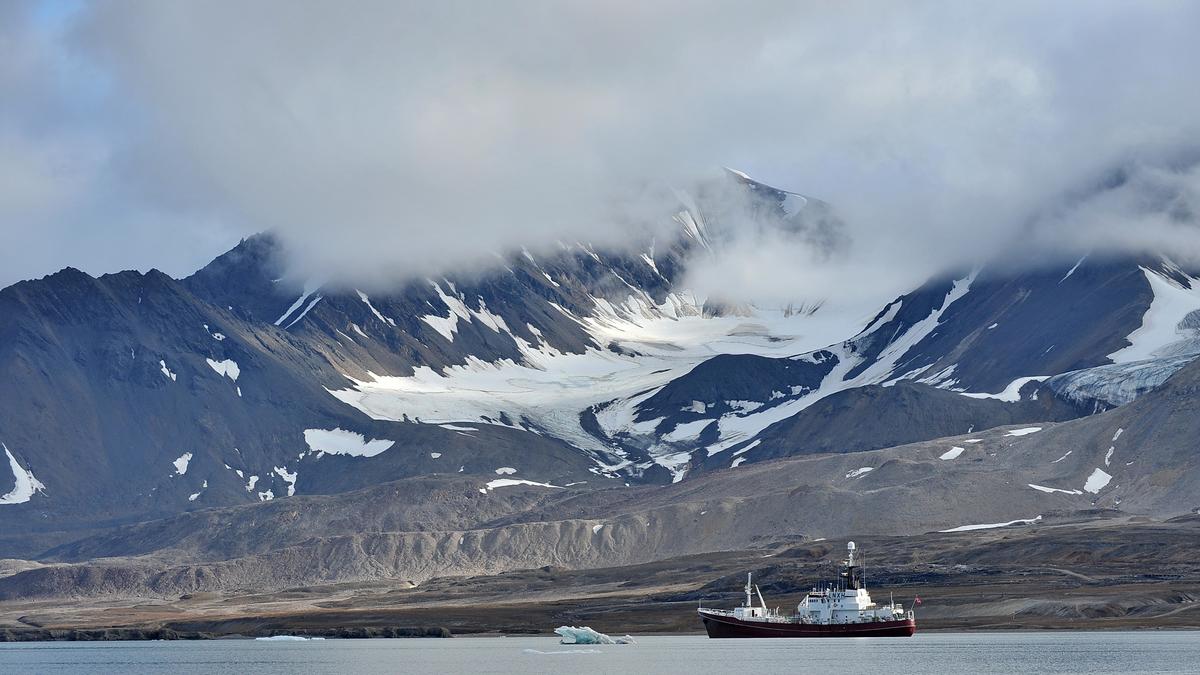
The Arctic, once insulated from geopolitical rivalry, is emerging as a theatre of competition over shipping routes, energy resources, critical minerals and strategic infrastructure. Finland and Sweden’s respective accessions to the North Atlantic Treaty Organization (NATO) have rewired Nordic security architecture, leaving Russia as the Arctic Council’s sole non-NATO member. The Russia-China partnership has acquired a polar dimension through cooperation on Arctic shipping and energy. These shifts shape the agenda Mr. Modi will encounter in Oslo.
India and the Nordics now matter more to each other than before, with converging interests in technology, supply chains, maritime security and green energy.
Norway’s revised High North strategy balances scientific cooperation with rising security concerns. Denmark, through Greenland, occupies a pivotal position in emerging Arctic sea routes and critical mineral networks. Sweden and Finland contribute advanced defence technologies, innovation ecosystems and Arctic capabilities. Iceland offers geothermal expertise directly relevant to India’s Himalayan regions.
The Arctic, once defined by scientific cooperation, is increasingly shaped by deterrence, energy rivalry and military positioning. New technologies, from autonomous underwater vehicles to satellite-enabled seabed mapping, are reshaping Arctic security, even as vulnerabilities in undersea cables and critical infrastructure grow.
India joined the Arctic Council as an observer in 2013. Its Himadri research station, IndARC underwater observatory and Gruvebadet atmospheric laboratory, in Norway, give India a meaningful Arctic footprint. But science alone cannot safeguard Indian interests in a region increasingly shaped by geopolitics.
As a stakeholder
India is not an Arctic nation, but it is undeniably an Arctic stakeholder. The Arctic is warming more than three times faster than the global average. Ice loss in the Barents-Kara Sea has been linked to variability in India’s summer monsoon, while rising polar melt threatens India’s coastline, ports and island territories through sea-level rise.

The commercial and strategic stakes are equally important. Accelerating ice melt is opening Arctic waters to shipping, resource extraction and military deployment. The Northern Sea Route along Russia’s Arctic coast is becoming more navigable, with implications for trade and maritime connectivity. Extending the Chennai-Vladivostok corridor to Murmansk and onward to the Nordics would create a maritime link connecting India, Japan, Russia and Northern Europe. India’s Arctic engagement with the Nordics can proceed alongside its partnership with Russia; the two are not a zero-sum game.
India must construct a small fleet of five Arctic-capable, ice-class tankers under its Shipbuilding Financial Assistance Policy by 2030-31. Delay in building such capacity risks locking India out of early-mover advantages in Arctic shipping and energy logistics. An India-Arctic Economic Forum could connect Indian industry with opportunities in manpower, shipping, energy and infrastructure. It could champion an “Arctic-Himalaya Climate Data Corridor” with the Nordics for joint monitoring of climate linkages affecting monsoons and sea-level rise. India should appoint a Special Envoy for Arctic Affairs. Unlike the four other Asian observer states in the Arctic Council, it lacks one.
Focus areas
Nordic countries lead globally in offshore wind, hydrogen, electric mobility and green shipping, while India’s clean-energy ambitions require technology, investment and trusted partnerships. Cooperation must move beyond buyer-seller arrangements towards co-development and production in offshore wind manufacturing, green hydrogen and grid-balancing technologies.
Norway’s deep-sea mining ambitions, Sweden’s rare earths and iron ore, and Denmark’s Greenland link offer supply-chain diversification amid concerns over China’s processing dominance. Nordic strengths in telecommunications, semiconductors, batteries, artificial intelligence and advanced materials complement India’s scale, engineering talent and manufacturing ambitions, supporting more resilient supply chains.
Maritime cooperation deserves equal attention. India’s economic future depends on secure sea lanes, resilient ports and efficient logistics, while Nordic countries lead globally in shipping technology, maritime digitisation, shipbuilding innovation and sustainable port infrastructure. Disruptions in the Strait of Hormuz have exposed maritime vulnerabilities, making route and partnership diversification strategically valuable. Deeper India-Nordic maritime cooperation would advance the economic and geopolitical interests of both.
For the Nordics, a re-emerging India offers scale, growth and a trusted democratic partner in the Indo-Pacific; for India, the Nordics provide technology, capital and expertise, without hegemonic pressures. As the Arctic becomes more contested and consequential, the Oslo summit should mark the point at which episodic engagement gives way to sustained strategic partnership.
Ajai Malhotra is Distinguished Fellow and Senior Adviser (Climate Change), TERI, and former Indian Ambassador to Russia, Kuwait, UN/New York, and Romania. The views expressed are personal
Published – May 18, 2026 12:40 am IST