


How Chinese Buyers See American And European Cars
- China’s auto industry is trying to squeeze foreign competitors out of its home market.
- As the Beijing Auto Show prepares to kickoff this week, brands are focusing on bringing value, features, and technology to the table.
- Meanwhile, younger car buyers in China are looking at legacy Western automakers as a “brand for the parents.”
There was a time in China when buying a German car was a sign that you wanted the best of the best. An over-engineered driver’s car that cost a bit more, but also had a more solid thunk when you closed the door and premium feel all around. That was yesterday.
Today, things have changed. Western automakers don’t hold the same sort of reputation that they once did in the country. Now younger buyers in China—the same buyers who once thought of the German brands as top-tier—see the average Western car company as a “brand for the parents.”

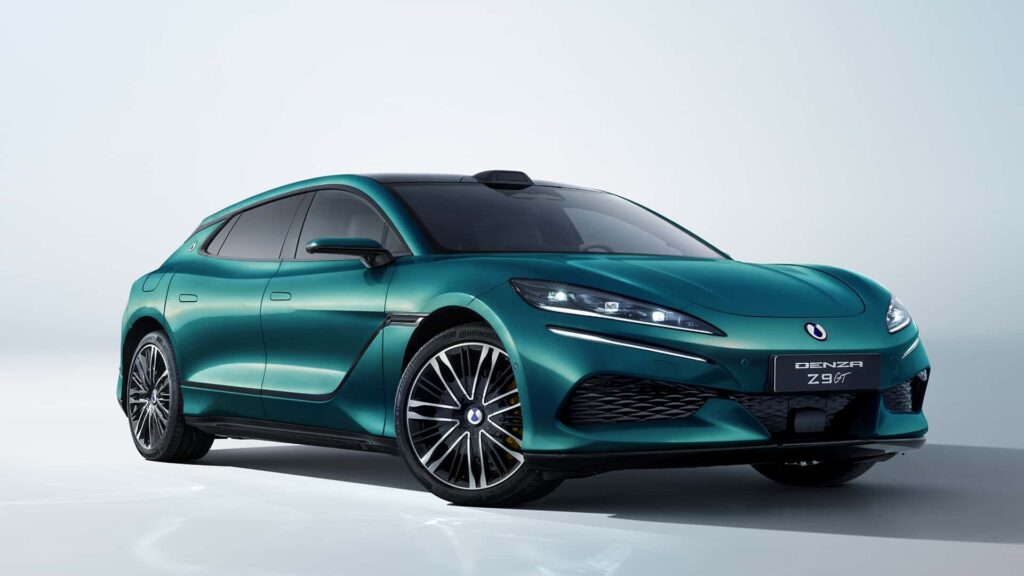
Photo by: Andrei Nedelea
That wording is how Volkswagen China’s CEO, Robert Cisek, described the current car-buying temperature in China in an interview with Reuters this week. Younger folks in the market for a new EV are no longer shopping for the heritage offered by the BMW roundel or Buick’s tri-shield—they want new and techy, and that’s something that legacy auto didn’t bring to the market quickly enough.
Most Western brands have been fairly comfortable with their sales until recent years. This allowed them to coast along with the typical five-plus-year vehicle lifecycle and minimal changes between model years. Sure, there was innovation, but it wasn’t all that quick. As Western brands chugged on, homegrown brands were gearing up to blow past anything that the legacy brands had to offer.
Much to both Europe, Japan, South Korea, and the United States’ chagrin, China has been speed-running the whole auto manufacturing business over the last decade. And it’s gotten very, very good at building cars while doing so.
Sino Auto Insight’s managing director, Tu Le, put it simply: “Detroit’s cash cow is no longer safe.”
Here’s how Reuters describes the shift in consumer preference:
When Volkswagen attended its first Chinese auto show in Shanghai in 1985, locals were impressed by the quality of the German automaker’s marketing materials.
“We were met by an unimaginably huge crowd and our brochures flew off the shelves,” then-CEO Carl Hahn, who oversaw the company’s entry into China, wrote in his memoirs. “For people at that time, it was enough simply to marvel at the quality of the paper and print and to dream about owning a car.”Now, the German auto group needs more than just glossy paper to stage a comeback at this year’s Beijing Auto Show, which kicks off on Friday.
Having dominated combustion-engine car production, automakers like Volkswagen find themselves racing to catch up in a market where more than one in four new cars is fully electric.
Companies like BYD, Geely, and Xiaomi quickly began to snag customers that would have previous went German or American brands. Volkswagen and Buick, which were both huge players in China just a decade ago, are examples of brands feeling the pain. Buick’s sales have more than halved in China since 2017. Volkswagen has seen a nearly 27% decline in the same time.
Government incentives helped the homegrown brands to quickly conquer the cheerful and cheap segments, especially with electrified offerings as low as $8,000. The price battle wasn’t the only war forged in China, though. Brands have since pivoted from being just the cheapest to figuring out how to offer the best bang-for-buck by cramming the latest tech into what feels more like a phone-on-wheels than a car.
“The price war has turned into a value-for-money war,” said JATO Dynamic’s country manager, Bo Yu.
It’s not just ending at the entry-level segment, though Those same Chinese brands are now waking sight at Europe’s premium car companies. With the Beijing Auto Show kicking off this week, China is taking this opportunity to really stick it to BMW, Mercedes-Benz, and Porsche in a show of tech and premium construction once unrivaled by the Germans.
Take the Zeekr 8X, for example, which can tilt the car upwards just before a collision to help protect passengers. Or the CATL’s new LFP battery that promises to deliver a charge of up to 80% in under four minutes.
Chinese manufacturers are now going global. That could spell trouble for legacy carmakers (especially those who believe that the “value over volume” approach is still going to be in their favor). BYD, for example, sees up to half of its sales eventually being outside of China.
The U.S. is still insulated from China’s EVs. But as its neighbors to the North and South are welcoming Chinese EVs, America is starting to feel the squeeze. It’s not clear what happens next, but the old playbook is gone.