



What fighting a forest fire near my farm taught me about community
I can be quite old fashioned about some things; I think living on a farm makes you that way. For instance, I am a firm believer that there is men’s work and there is women’s work, and they are not always the same. Personally, I don’t want to cut wood, kill chickens (though I have done my fair share of it) or fight forest fires. Can you imagine fighting a fire on your period? Ugh.
It was an ongoing discussion between me and my girlfriends recently, when they drove down to the farm in Kodaikanal from Goa. Don’t get me wrong, I love my friends, but their stance on gender roles (absolute equality, etc.) is tough to maintain in the wild.
Excited to show them the farm, I rushed them to my favourite sunset spot, with beautiful views of the mountains. As I pointed out the different fruit trees along the way, I suddenly heard a familiar crackle — much like fat raindrops hitting the trees, except they were burning.
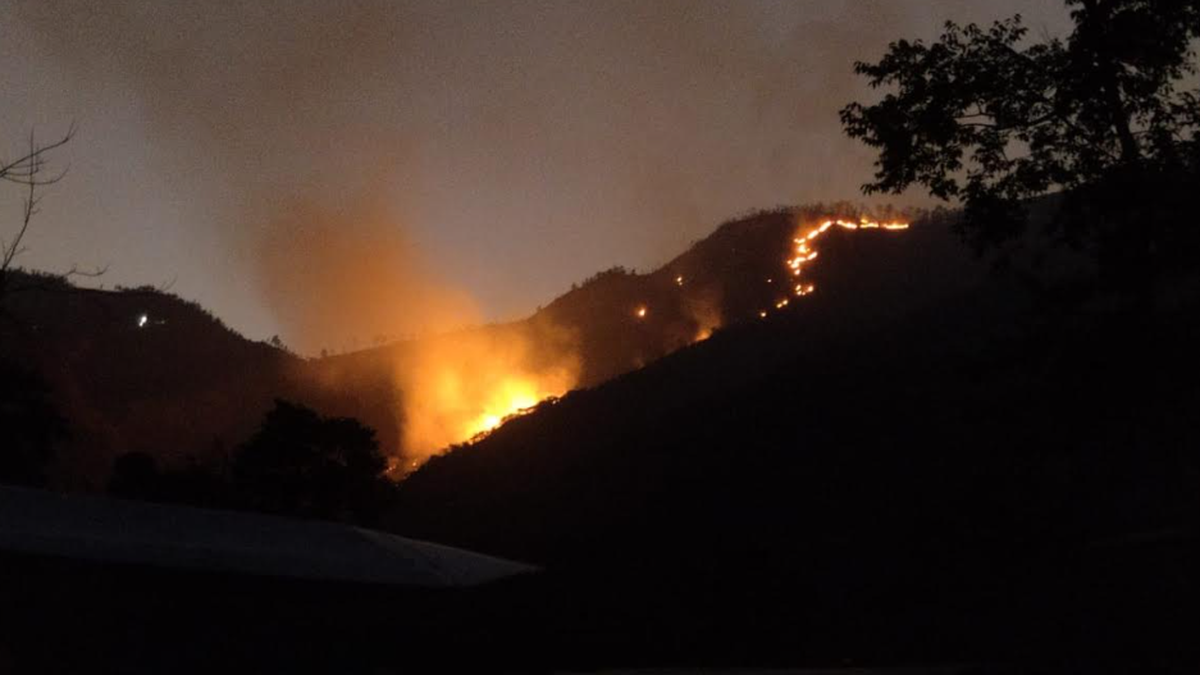
The sunset was forgotten and we watched in awe (and a healthy dose of fear) as giant flames leapt above the treeline in the dark, the burnt trunks of trees standing as stark silhouettes against the orange aliveness of the forest fire. The fire was close, but there was a stream between us and it. Knowing it couldn’t reach the farm, I gave myself permission to appreciate (albeit briefly) its beauty.
Like water and air, fire too is magnificent in its chaos. Being witness to a forest fire up close is like watching a hurricane or a sea storm — almost hypnotic in how awe-inspiring it is to feel so small watching Nature at her worst. Nature encoded ego death, if you will. (Performance artist and Kochi-Muziris Biennale curator Nikhil Chopra will get it, being obsessed with volcanoes and fire “running wild” in nature, a theme that has been running through his work lately.)
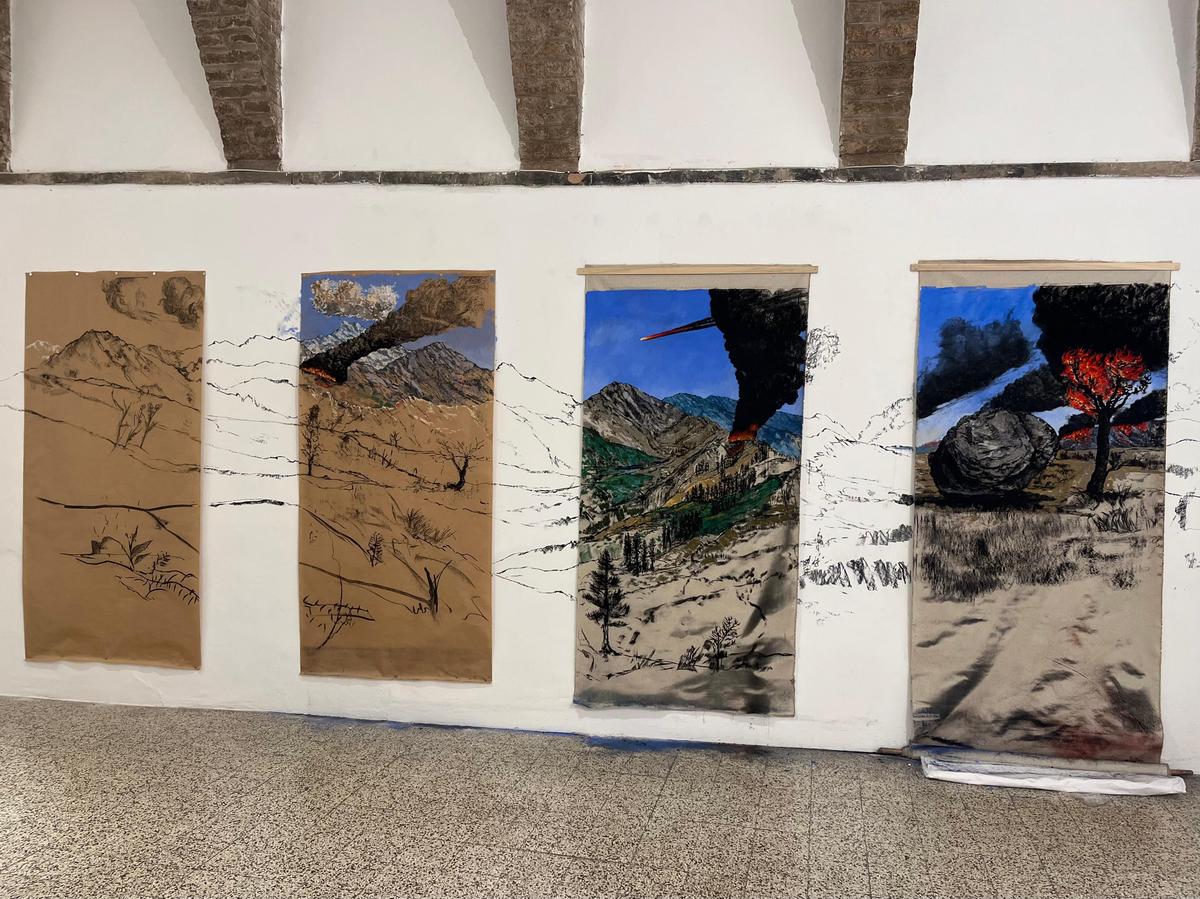
Embers, a drawing performance installation (May 2026) by Nikhil Chopra with Uriel Barthelemi at the Galleria Continua, Italy
The reality of wildfires
The sad truth today is that only some of these fires are the work of Nature. Most are started by farmers practicing jhum cultivation (slash-and-burn agriculture) or to promote the growth of grass for their cows. The fact that we now have a ‘fire season’ every year says a lot about the epidemic of fires in India. And 2026 is emerging as a concerning outlier.
Forest fires in the country have risen by over 80% in early 2026 as compared to the past decade, with the biodiversity rich regions being the most affected, mainly the Northeast, Odisha, Uttarakhand and the Western Ghats in the south. Worse, they are starting earlier and earlier in the year. Uttarakhand reported more than 28,000 fires in January and February, traditionally the coldest time of the year. To add to the bad news, the fires are also getting more intense. Fire intensity (measured by radiative power from satellite data) reveals that the ones in 2026 are almost 50% hotter than in 2024, the hottest year in the world on record.
These numbers raise serious concerns about the future of our forests, the people and animals living in them, and how they affect and are being affected by climate change. Wildfires have a complex impact on forests: they release carbon and greenhouse gases stored in the trees and soil, further exacerbating climate change, and also contribute to more fires — as part of a ‘fire-climate feedback loop’.
We are feeling the effects of this loop now. Worldwide, fires have accounted for almost half (44%) of all tree cover loss per year between 2023 and 2024. Extreme heat waves are also five times more likely today than they were 150 years ago and are expected to become even more frequent as the planet continues to warm.
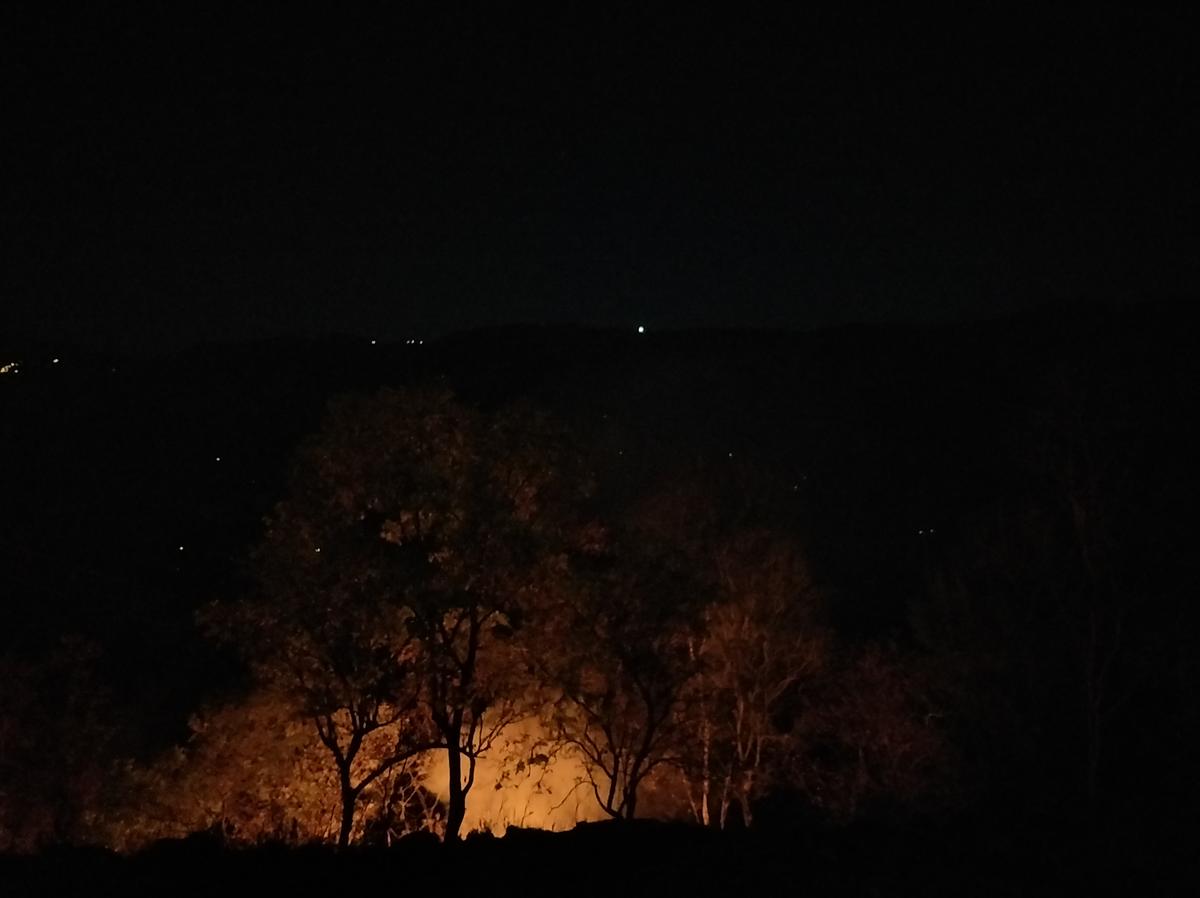
Forest fire raging near the farm
When you must ask for help
On my farm, which is bordered by the Annamalai Reserve Forest, summers have been getting worse — the water level in the stream nearby is at an all-time low — but the space itself has never been cooler. My porch has no view of the mountains because the Malabar neem trees that my permaculture teacher made me plant have grown so tall (in fact, my Jacarandas won’t flower because they don’t get enough sunlight!). The large canopy has created its own micro climate. The shade allows a blanket of moisture to remain in the soil and the farm stays green through the year, making sure no fire can survive in it.
By the seventh and last night, my friends and I had grown bored of watching the forest fires. I was in the kitchen when a friend, Sai, came rushing in, shouting, “I think there’s a fire on the farm!”
I stepped outside and, even through all the trees, I could see flames leaping up from the cliff behind my caretaker Kumar’s house. I immediately realised this could be a problem because forest fires always climb upwards, and this one was below us. Kumar was in Madurai and it was just us girls at home. It was time to put that men’s work/women’s work theory to the test.

We ran into the orchard to gather branches because water doesn’t put out forest fires (it cools the temperature and slows its spread). It can only be stopped by beating the flames with tree branches that store more water than resin or oil (Gliricidia is an example), thus cutting off its oxygen. (A few weeks later, I heard the Tamil Nadu Forest Department had to deploy helicopters to fight a fire in the Nilgiri Reserve Forest, which adjoins the forest bordering my farm. More than 500 forest guards fought the fire that lasted two weeks and burned through 1,000 acres of forest land. Forest department officials believe that the fires were man-made.)
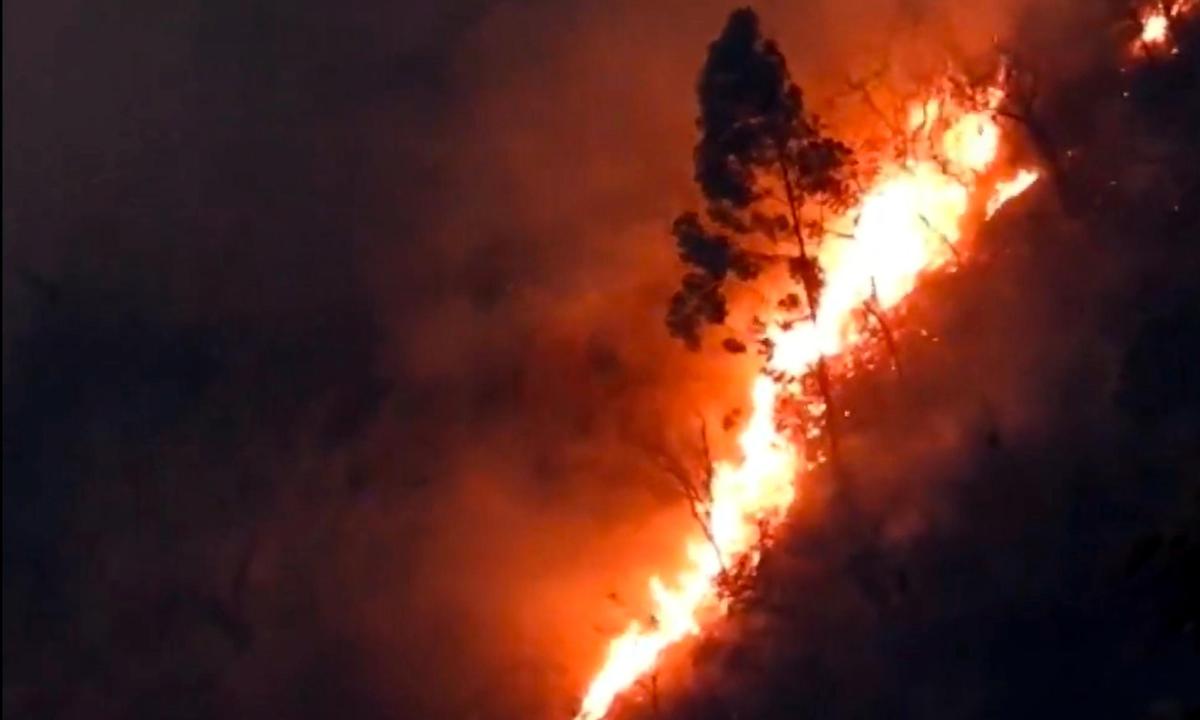
In the end, we couldn’t fight the fire on our own. My caretaker, who could only make it back by the next morning, made a phone call to the small tribal community that lives near me. They showed up to do the men’s work. They carried full trees to quash the fire, going down the cliff to fight it from below. Over the years, we have taken care of each other, the only real neighbourly community in the small village where my farm is located (the others are the ones starting the fires — for illegal timber, clearing land, or even a brawl with a neighbour). Their children and ducks come every afternoon to swim in the stream. I buy forest honey from them and allow their goats to eat the grass in my orchard.
They saved my farm. And that’s when I learnt, community is the best protection from climate change. Just create your own micro-climate.
A series written through the lens of someone who works the land. Let’s make thinking about the ecology feel like Second Nature.
Published – May 20, 2026 06:45 pm IST