




War’s ripple effect: West Asia conflict sends costs soaring in Nagapattinam’s boatyards
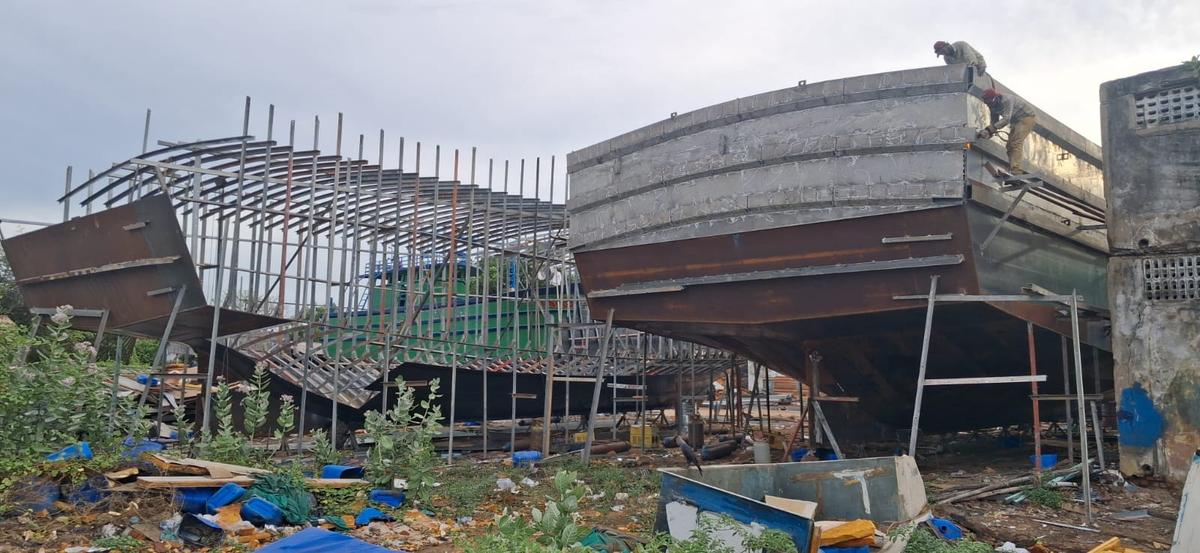
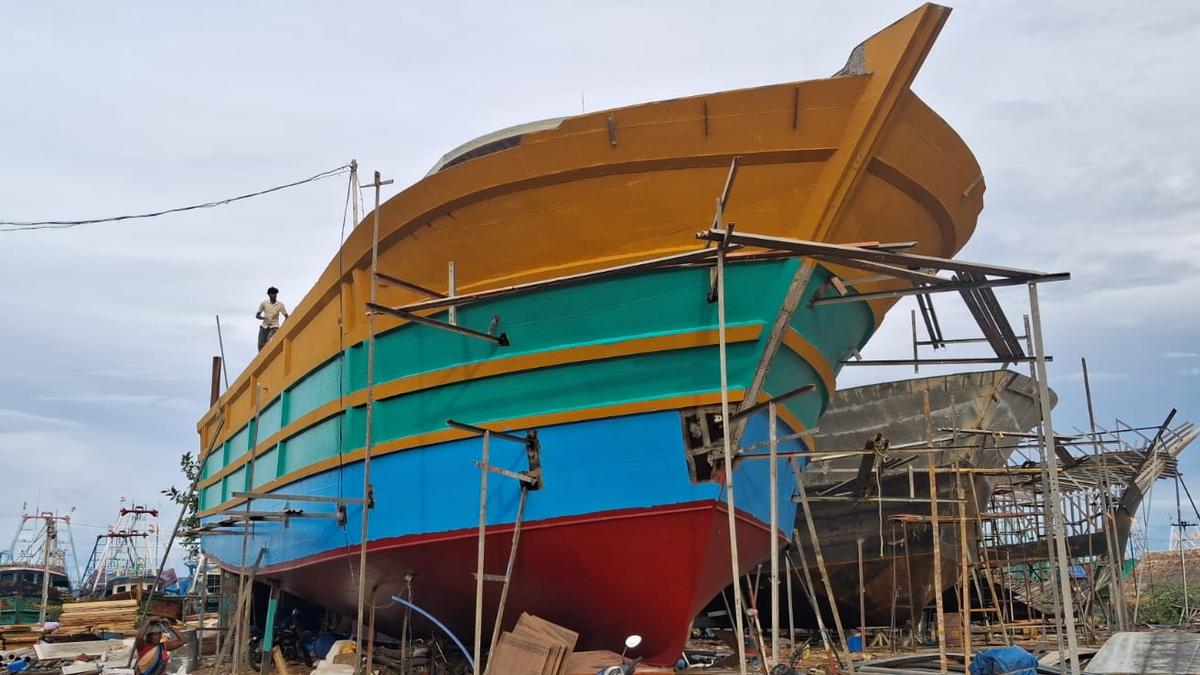
Ships under construction at the Nagapattinam boatyard as builders carry out final works.
| Photo Credit:
Special arrangement
In the sprawling boatyards that line the coast of Nagapattinam — Tamil Nadu’s second-largest shipbuilding cluster after Thoothukudi — the clang of hammers and the hiss of welding torches fill the air as workers race against time. The annual fishing ban period, which idles trawlers at sea, transforms these yards into a frenzy of repair work and new construction. But this year, the familiar rhythm is strained by a crisis that originates far from these shores: the war in West Asia.
Shipbuilders here say a cascading rise in the cost of nearly every material that goes into making a fishing vessel — steel plates, plywood, engines, propellers, FRP rexin and LPG gas cylinders — has pushed the construction cost of an 80-foot boat from roughly ₹80 lakh to ₹90 lakh, a jump of ₹10 lakh that most builders say they cannot recover from their customers.
“We are not making any profit,” said V.Paramasundaram, proprietor of P.S. Steel Boats, and a shipbuilder with two decades of experience in Nagapattinam. “The problem is that customers give us an advance and we quote a price. But by the time we finish the work — and an 80-foot boat takes six months to build — the prices have risen so sharply that we end up absorbing the loss ourselves. Some customers understand, many do not.”
Mr. Paramasundaram rattled off a list of prices that have risen since the outbreak of the West Asia conflict. Iron plates, used extensively in steel boat construction, have climbed from ₹63 per kilogram to ₹73 per kg. A single 80-foot vessel requires approximately 60 tonnes of steel — meaning the steel cost alone has increased by over ₹6 lakh per boat.
Plywood prices have risen from ₹2,228 to ₹2,500 per unit, while FRP rexin material — used for fibreglass reinforcement has surged from ₹150 per kilogram to ₹250 per kilogram. Propellers, a critical component, now cost ₹3.75 lakh, up from ₹2.75 lakh. Engines, imported from China, have jumped from ₹9 lakh to ₹11 lakh apiece.
“All the materials we use come from foreign countries,” Mr. Paramasundaram said. “The moment the war started, we knew prices would rise. But we did not expect it to be this severe or this sustained.”
An LPG Crisis Compounds the Pain
Beyond the bill of materials, an acute shortage of LPG cylinders has added a logistical burden that builders say was unimaginable even a year ago. Gas agencies, which once delivered cylinders directly to the boatyards, have stopped doing so. Builders must now send their own vehicles — a tempo — to collect cylinders from the agencies, adding fuel and labour costs to every procurement.
“Earlier, the agencies would come to us. Now we go to them, and even then, we are not assured of supply,” said Mr. Sundaram. “We have to inform them in advance and wait. For one boat, we need 16 cylinders of 19 litres each. At ₹3,300 a cylinder, that is already a significant cost — and getting even that is now a struggle.”
He said the price of LPG for industrial use has risen by nearly ₹1,000 per cylinder in recent months. The shortage has also changed the way builders manage their work: where gas was once used freely, workers are now told to conserve every flame.
The boatyards of Nagapattinam depend almost entirely on migrant workers from North India — a workforce that Mr. Paramasundaram described as both indispensable and irreplaceable.
“All our labourers are from the North. If they leave because we cannot pay them what they deserve, it will be very difficult to find replacements,” he said. “So even when costs are rising everywhere, we do not cut their wages. We cannot afford to lose them.”
With the fishing ban season bringing peak demand for both repairs and new construction simultaneously, the yards are operating at full capacity. Around 1,500 workers are employed across the four major boatyards in Nagapattinam, which together construct between 50 and 100 vessels annually — including mechanised trawlers and deep-sea fishing boats.
Nagapattinam’s boatyards serve a wide geography, catering to fishermen from Mayiladuthurai and neighbouring districts, as well as clients from Puducherry, Andhra Pradesh, Karnataka, and the Andaman and Nicobar Islands. The sector is, in effect, a lifeline for commercial fishing communities across a large stretch of India’s eastern seaboard.
That the disruption comes during the peak repair-and-construction season makes the situation all the more precarious. Builders say they are caught in a bind: they cannot raise prices retrospectively on contracts already signed, cannot easily source cheaper materials, and cannot reduce their dependence on imported goods without rebuilding their entire supply chain.
Published – May 13, 2026 11:30 pm IST