


The significant erasure of democracy in Bengal
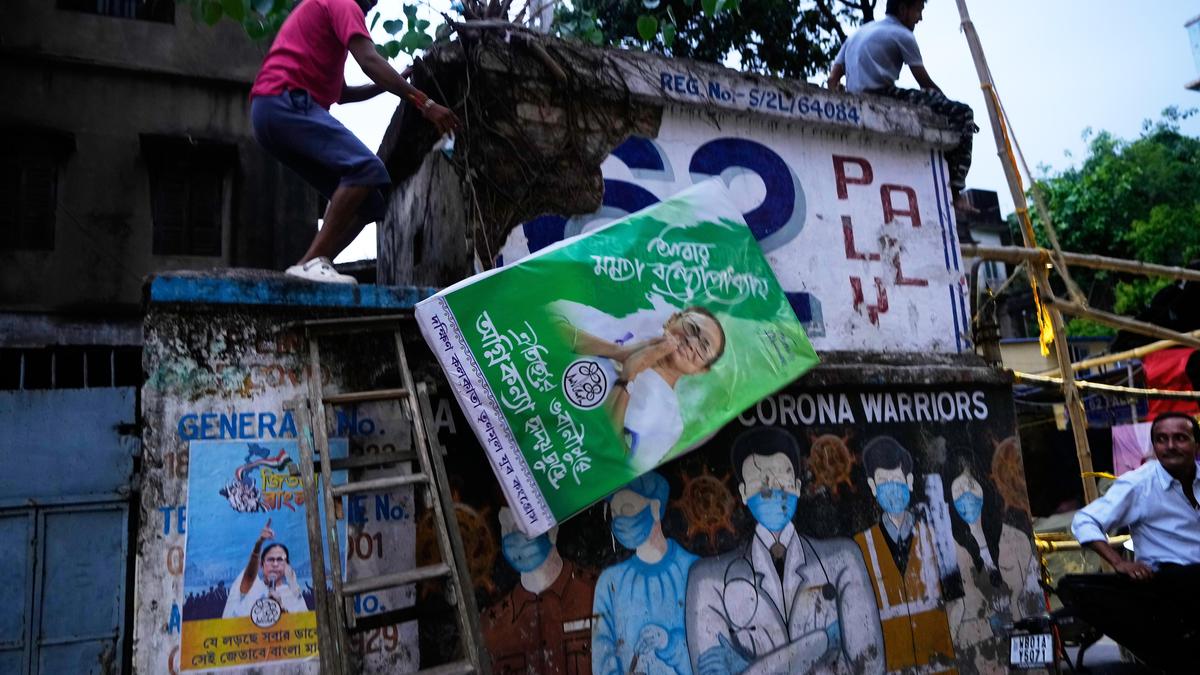
A supporter dismantles an election billboard bearing a portrait of West Bengal Chief Minister and Trinamool Congress chief Mamata Banerjee in Kolkata on May 4, 2026 after the party’s loss in the West Bengal Legislative Assembly election.
| Photo Credit: AP
The results of the 2026 Assembly elections in West Bengal marks a tectonic shift in the political landscape of the State. The Bharatiya Janata Party (BJP), for the first time in history, has emerged as a clear winner with 206 seats and a vote share of 45.84%, up from around 38% in 2021. The Trinamool Congress on the other hand has won 81 seats with 40.8% of the vote share, down from 48% in 2021. Most of the Cabinet Ministers of the Trinamool government have also lost. Clearly, there has been a significant anti-incumbency vote against the ruling party.
The Trinamool government had a massive beneficiary network through its multiple schemes targeting women, workers as well as the youth. Moreover, the BJP was portrayed as an ‘outsider’, incompatible to the ethos of Bengali culture. Also, the question of disenfranchisement through the Special Intensive Revision (SIR) of electoral rolls was also a major electoral talking-point. In spite of all these issues, supposedly favouring the ruling party, the BJP has won a thumping majority in the State. What explains these results?
Published – May 05, 2026 01:25 am IST