



The Mercedes-Benz C-Class EV Is Not What I Expected
Mercedes wants its new line of EVs to look as conventional and as close to its gas cars as possible. The new electric C-Class is the third Mercedes in this new line of EVs, after the new CLA and GLC, and the manufacturer promises that it “elevates the segment to an entirely new level.”
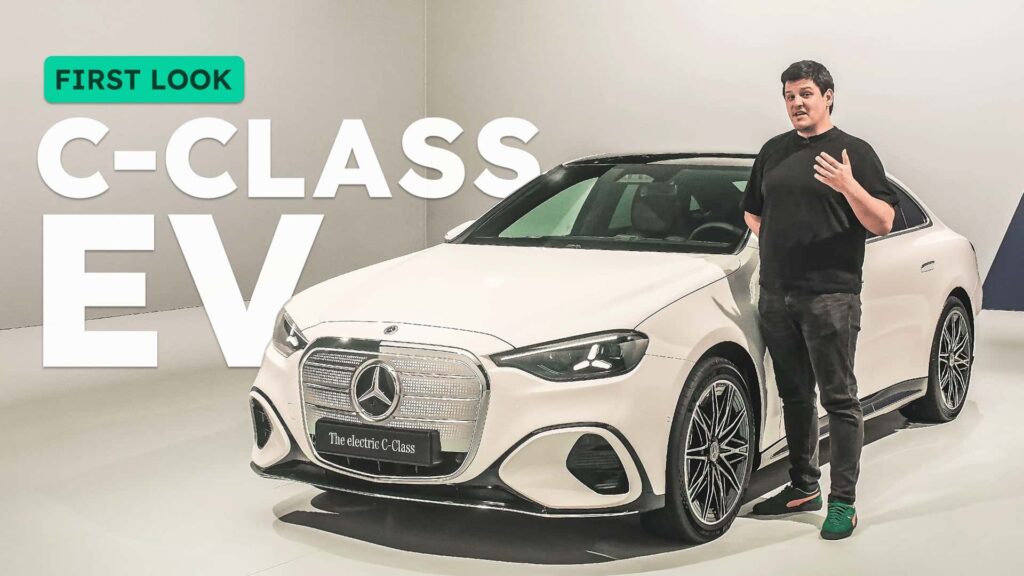
The front design follows the direction set by the GLC EV, with a retro-homage grille reinterpreted for the LED era, featuring hundreds of light-up points and an illuminated surround. It’s the biggest talking point of the entire exterior design, which is otherwise quite restrained and conservative.
The most daring part is the rear, which isn’t a traditional sedan but more of a fastback, hinting at the sporty character that Mercedes says it’s been imbued with. Mercedes calls this an “athletic GT rear design” and says the shape plays an active role in giving the car its impressive drag coefficient of 0.22, which is lower than the combustion C-Class.
Seeing the car in person, it looks quite a bit taller than its sleek, hunkered-down combustion counterpart. Mercedes has tried to hide some of the height by making the side skirts black, visually shrinking the car, but that only works to a certain degree, and it’s hard to beat the presence and elegance of the W206 C-Class, which is probably the prettiest car in its class.
It rides on a 116.6-inch wheelbase, which is 3.8 inches longer than the gas C-Class. Mercedes says it gives the EV 0.5 inches of additional legroom in the front, which is probably true, but the rear felt pretty cramped with the seat set in a comfortable position for my six-foot frame, made worse by the fact that you can’t slide your feet under the seat in front.
The driving position is fantastic, though. The seat can go nice and low to make you feel connected to the car, and you can bring the steering wheel closer to you. Just like the GLC, the C-Class EV’s dashboard is all-screen, with the same optional 39.1-inch display that runs from pillar to pillar. The base setup consists of three separate screens that still take up the entire dash, as we’ve seen in the CLA and VLE.

Photo by: Mercedes-Benz
The infotainment is the latest MB.OS system, which is not built on Android Automotive but features native Google Maps. It also has multi-agent AI integration, and it determines whether to answer your queries with ChatGPT or Google Gemini based on what you ask. I tried it in the GLC EV, and it was very good, and conversations were surprisingly quick and natural.
One unexpected thing I noticed while in the C-Class is that the quality of the materials was better than in the GLC. Specifically, it had soft-touch plastic all the way down the door panels and lower down on the center console, places where the SUV has hard plastic.
The manufacturer makes a bold claim about the C-Class EV, saying it’s “the sportiest C-Class to date with unmatched agility and long-distance comfort,” pointing to its available rear-wheel steering and air suspension. It’s built on the same MB.EA 800-volt platform as the GLC EV, which I’ve already tried on twisty roads in Portugal, where it exceeded my expectations. It’s also smaller and lighter, so it should be even better.
The rear wheels can steer up to 4.5 degrees in the opposite direction of the front wheels, reducing the turning circle radius by almost 3 feet to 36.7 feet. They steer 2.5 degrees in parallel with the front to increase high-speed stability—this rear-steer system made the GLC feel surprisingly athletic and surefooted even at higher speeds—it should feel even better in the C-Class, with its lower center of gravity.
Making the air suspension system even better and more useful is the Car-to-X communication system, which gathers information from other Mercedes models that have the system. It sends road information about the road’s condition to the cloud, so other cars know about the location of a pothole, for instance, and cars with air suspension can switch to a higher, softer setting to mitigate its effects.
With the same 94.3-kilowatt-hour battery pack as the GLC SUV, the sedan can stretch it a bit further, with a claimed maximum WLTP range of 473 miles (762 km), 29 miles (47 km) more than the GLC SUV. It has the same peak charging power rating of 330 kilowatts, but I charged the GLC at 353 kW, so the C-Class should be capable of the same in ideal conditions.
Charging for 10 minutes can add up to 202 miles (325 km), up from 188 miles (303 km) in the GLC.
Just like the GLC, the C-Class can recover up to 300 kW through its regenerative braking system, which utilizes the motors rather than the actual friction brakes. That also translates into a lot of stopping power, which means most braking will be done through the motors, making brake pads and rotors last a long time.
With 482 hp from its dual-motor setup, the C400 4Matic Electric can accelerate from a standstill to 62 mph (100 km/h) in 3.9 seconds. Most of the power comes from the rear drive unit, which also has a two-speed transmission to improve acceleration and efficiency. The front motor can mechanically decouple to reduce electricity consumption.
The trunk opening looked a bit small, but it’s marginally bigger than the combustion model’s at 16.6 cubic feet (up from 16.1 cu-ft), and it’s complemented by a small frunk whose capacity was not disclosed, but it looked about similar to the one in the GLC EV, which can hold around 4.5 cu-ft.
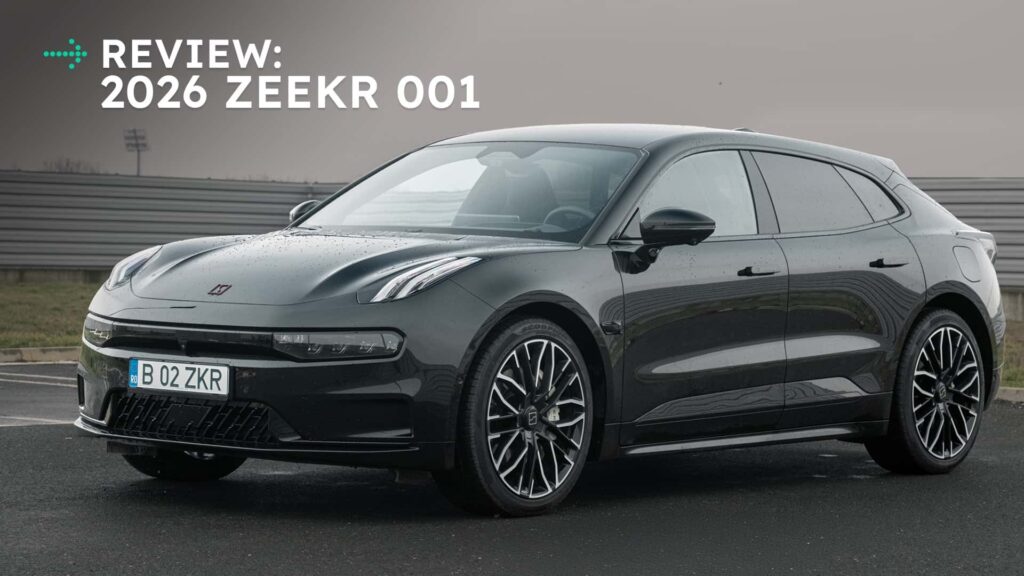
Mercedes needed to make the C-Class EV punch above its weight, since it will be facing very talented and feature-packed rivals like the BMW i3 and the Zeekr 7GT, which will surely attract a lot of buyers here in Europe, where the Tesla Model 3 still makes a lot of sense in the class.
But the manufacturer seems confident. Mercedes boss Ola Källenius said “The all-new electric C-Class is redefining the mid-size segment for electric vehicles. Customers will get exactly what they expect from this new version of the beloved model: the perfect blend of performance, comfort, dynamics, and intelligence.” On first impressions, it seems to tick many of the important boxes, but we’ll have to drive it to see whether it really lives up to the sporty image Mercedes wants to project.