


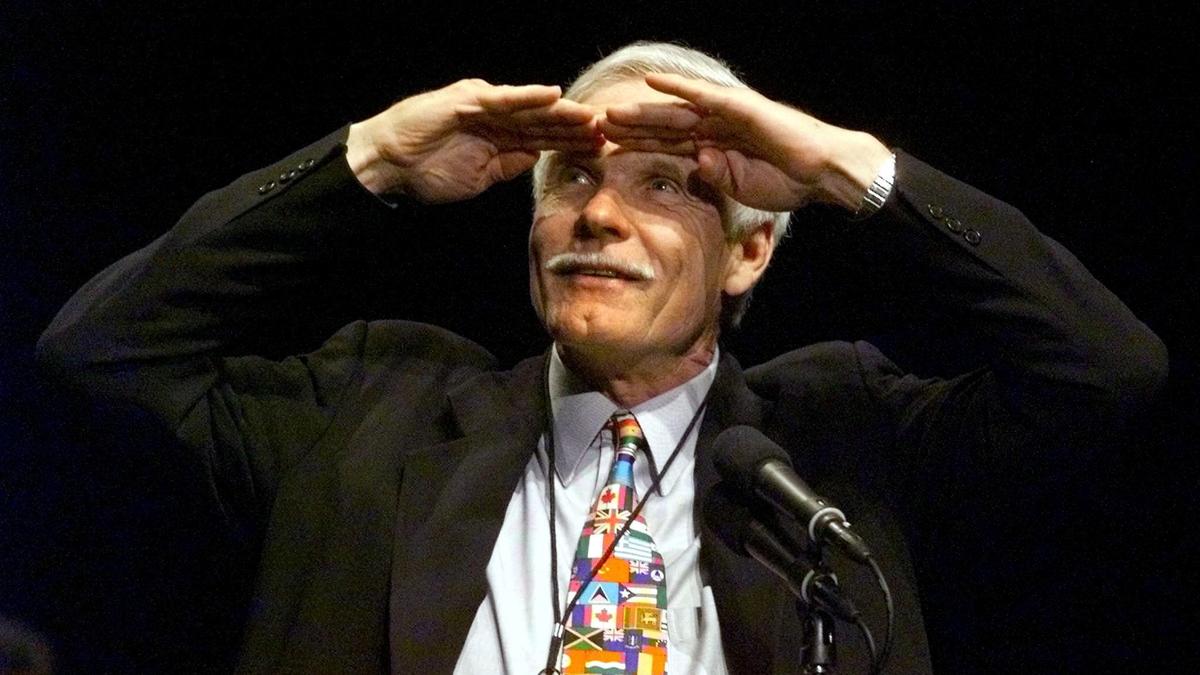
The enduring legacy left behind by Ted Turner
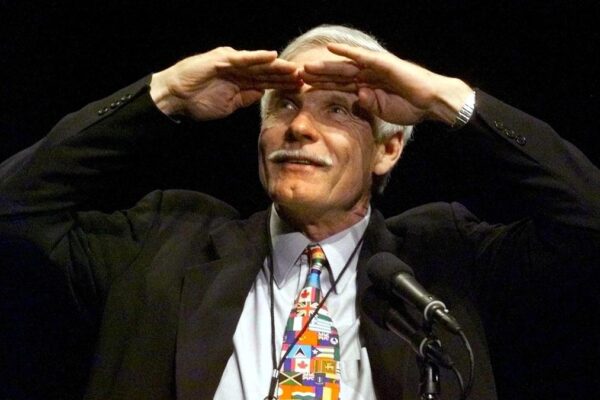
As a child, Ted Turner’s father, Ed Turner, who was a major if overbearing influence on him told him to set his goals so high, that they were impossible to accomplish in one’s lifetime. “That way you’ll always have something ahead of you,” Turner senior told him. Ted Turner, who died this month at the age of 87 followed this dictum all his life, but not only did he see many ‘impossible dreams’ come true, he also saw many of them die — be it the gift of globalised news, or steadfast support to the United Nations.
He gave the world its most important journalistic invention — 24-hour news, through the creation of CNN, which he eventually had to sell. Turner, called “Captain Outrageous”, also had a personal life that played out on the public stage. When asked about his biggest regrets, he told me there were two in an interview in 2012 — “I regret losing control of CNN, and I regret that my marriage [to actress Jane Fonda] just didn’t work out”, he said.
As a journalism student, my dream was to work for CNN, a channel that had captivated everyone with its coverage of the first Gulf War in 1991. At the time, there was no world news that was truly global, and CNN was the only U.S. network that interviewed Iraqi President Saddam Hussein. CNN decided to keep its reporters in Baghdad even when the U.S.-led coalition began to bomb it, despite a phone call from U.S. President George HW Bush telling the news agency to pull its personnel out.
Turner had banned the word “foreign” across his network, mandating the word “international” instead. In Boston in 1993, I heard him speak about why, when after a visit to Cuba where he met with Cuban leader Fidel Castro, he realised that much of what he had grown up believing about Cuba was propaganda borne of a “my country right or wrong mentality”. CNN had a show called “World Report” that aired reports from local channels around the world, so that Americans and global audiences could see news through a different prism.
Turner was also concerned about global issues, with his UN Foundation channelling a billion dollars into the UN and its various projects. In 1985, he set up the Better World Society with many international figures, including Dr. M.S. Swaminathan on the board, and funded the “Goodwill Games” in Moscow and Atlanta to counter the U.S.-led boycott against the Moscow Olympics.
During my days as an intern at the CNN bureau of the United Nations, I became Turner’s gopher for a day, on duty to escort him and Jane Fonda at a UNGA meet ahead of the UN Population summit in Cairo. Turner had only two tasks for me that day — to keep him stocked with Coca Cola supplies (as it was an Atlanta-based company), and to run up the stairs to the CNN office to bring him the baseball scores as the Atlanta Braves were playing. His enthusiasm for globalisation and building global citizens was what stayed with me.
Months later, when I was hired to work at CNN’s “South Asia” bureau, I realised the importance of his diktat on “international v/s foreign” as I travelled across the region, including to Pakistan, to report in a non-partisan way for a global network. Those were heady days, when the “CNN effect” — the idea that international coverage which humanised conflict in remote areas could help to drive solutions to the violence — was on full display. Under Turner, CNN had major reporting budgets. Once, we chartered a helicopter to get to the site of a mid-air collision in rural Haryana. In 2000, after the Bhuj earthquake, CNN was the first to report on the devastation — sending a plane to carry reporters in. During the Tsunami in 2004, CNN deployed dozens of crews, including to the Andaman and Nicobar islands.
However, Turner’s discovery, that 24-hour news could actually be a profitable business became the reason for its downfall. In the U.S., networks that had thought of news as a government-mandated public service (according to FCC regulations, all TV stations had to broadcast a certain amount of news programming every day), began to set up their own 24-hour CNN copies in order to make money. Instead of spending on news coverage as a necessity, they began to look at the “bottom-line” — chasing stories that would catch attention rather than important news, and shutting down their bureaus in world capitals. CNN too went down the same route after Turner left, and even the New Delhi bureau now operates with just skeletal staff.
Turner remained an optimist, despite how things turned out. When I asked him in 2012 what his ‘impossible dream’ was, he said, “a world at peace”. By the time he died this month, however, the world is witnessing more state-based conflicts than at any time since World War II, when he was born.
Published – May 15, 2026 12:40 am IST