


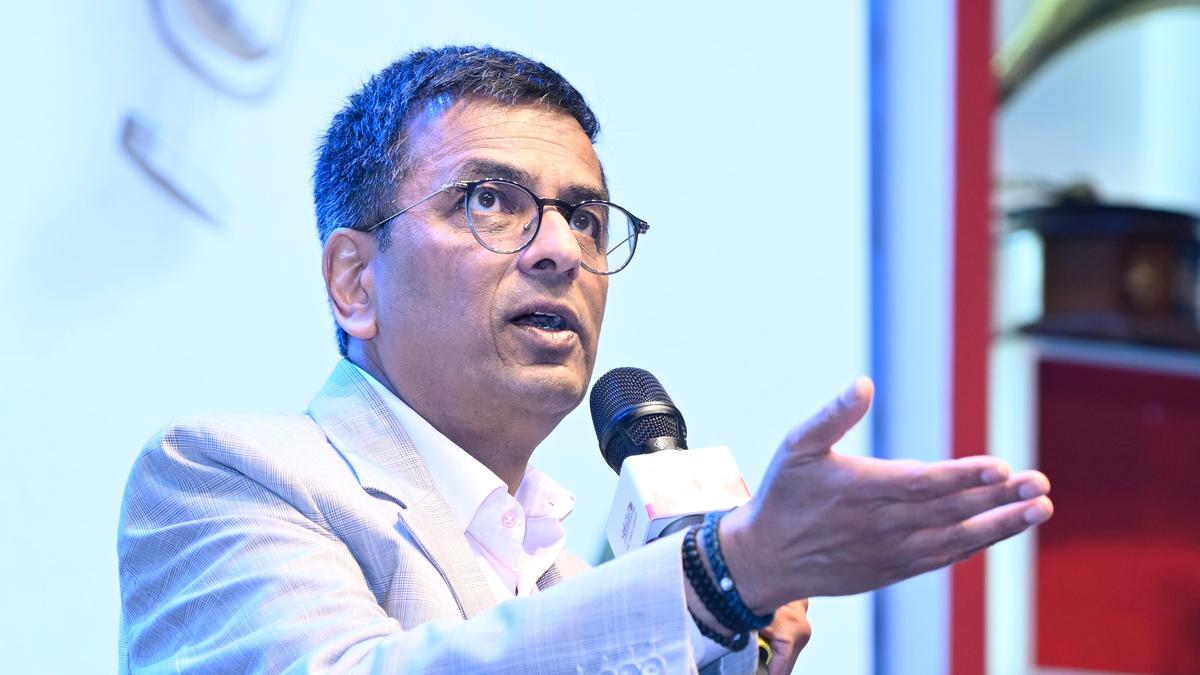
Supreme Court appoints former CJI D.Y. Chandrachud as mediator in Sanjay Kapur estate row
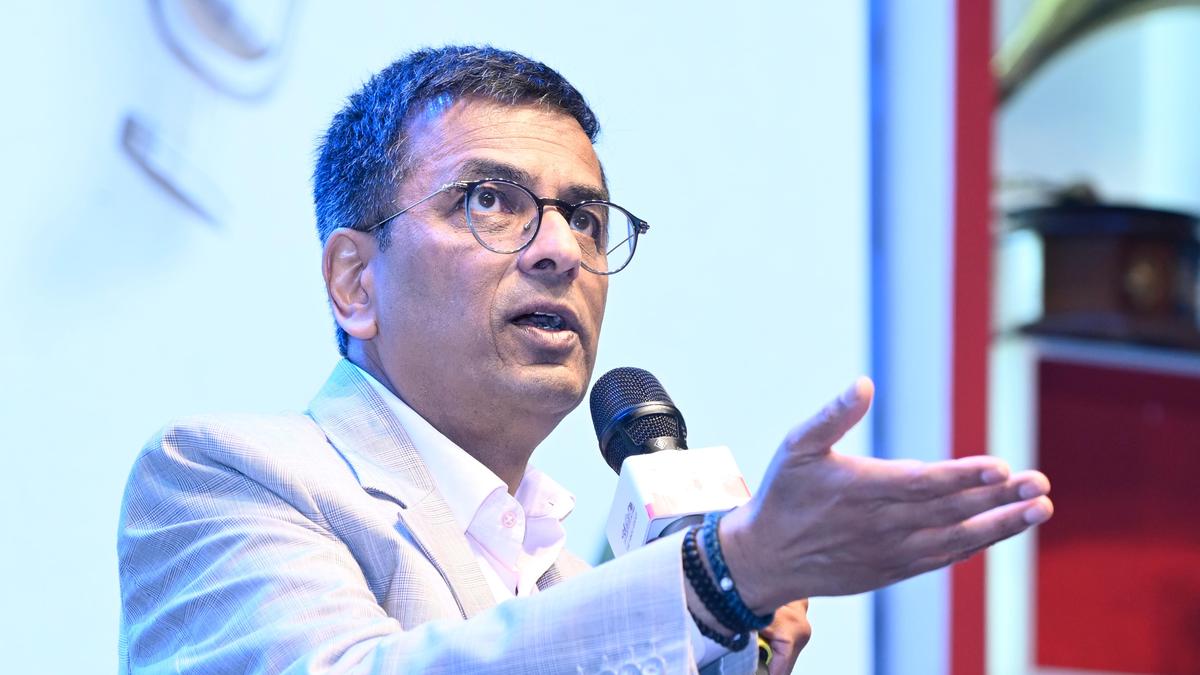
Former Chief Justice of India D.Y. Chandrachud. File
| Photo Credit: Ragu R.
The Supreme Court on Thursday (May 7, 2026) appointed former Chief Justice of India (CJI) D.Y. Chandrachud as mediator to facilitate a settlement in the bitter inheritance dispute within the family of late businessman Sanjay Kapur, after the contesting factions agreed to attempt an amicable resolution.
A Bench of Justices J.B. Pardiwala and Ujjal Bhuyan also advised members of the Kapur family against making public statements or posting on social media about the dispute for the “entertainment of others”.
“It is a family dispute. Let it be confined to the family only. It should not be a source of entertainment”, the Bench observed.

The court further observed that the parties must approach the mediation process with a genuine willingness to resolve their differences and avoid “long drawn litigation”. “This being a family affair, the endeavour on their part should be to get the dispute resolved at the earliest and put an end to the entire matter. We firmly believe that all parties should participate in the mediation proceedings with an open mind,” it said.
The proposal to appoint Mr. Chandrachud as mediator came after senior counsels appearing for the parties conveyed their willingness to engage in discussions and attempt a negotiated settlement.
“Today, all the counsel appearing for the respective parties have very graciously agreed to go for mediation. In such circumstances referred to above, we appoint D.Y. Chandrachud, former Chief Justice of India, to act as a mediator,” the Bench said.
The Bench said it would await a preliminary report from the mediator before proceeding further and listed the matter for hearing in August. It, however, clarified that the mediation process would remain confined to disputes among family members in the present proceedings and that ancillary disputes would not be entertained.
Earlier, the Bench had nudged the parties to avoid prolonged litigation over the sprawling Sona Group-linked estate, particularly since the dispute also involved octogenarian Rani Kapur, the late businessman’s mother.

Sunjay Kapur, chairperson of automotive component manufacturer Sona Comstar, died of a cardiac arrest while playing polo in London last year. He was first married to designer Nandita Mahtani and later to actor Karisma Kapoor, with whom he had two children — Samaira and Kiaan. Following their divorce in 2016, he married Priya Sachdev Kapur in 2017, and the couple later had a son, Azarias.
The Rani Kapur Family Trust was created through a trust deed executed on October 26, 2017, and presently holds shares in Sona Comstar.
The proceedings before the apex court stem from a petition filed by octogenarian Rani Kapur seeking protection of the family estate. In her plea, Ms. Kapur has questioned the creation and operation of the family trust, alleging that the structure effectively divested her of control over substantial assets without her informed consent.
According to the petition, the dispute dates back to 2017, when Ms. Kapur suffered a stroke. She has alleged that, following her medical condition, her late son and others orchestrated the transfer of key family assets into the trust without her complete knowledge or approval. The plea further claims that she was asked to sign documents on the pretext of routine administrative formalities.
Among the reliefs sought before the apex court are directions to maintain status quo over the estate and restrain the alienation of assets during the pendency of the dispute. The petition also challenges certain orders passed by the Delhi High Court in connected proceedings that remain pending before it.
During an earlier hearing on April 27, the Bench had cautioned that high-stakes inheritance disputes are better resolved through dialogue.“Why are you all fighting? This is not the age for your client to fight…go for mediation once and for all”, the Bench had remarked.
Published – May 07, 2026 04:06 pm IST