





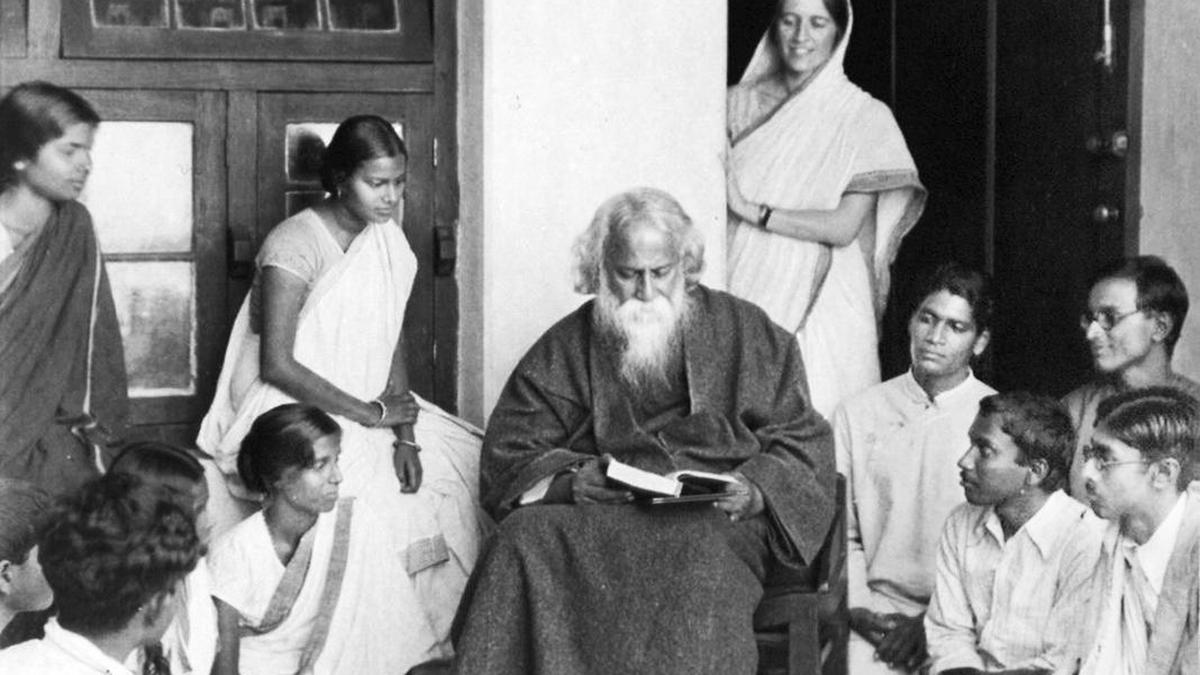
On Rabindranath Tagore’s 165th birthday, a journey into recipes from the Tagore household
Every year, on May 7, the birthday of Nobel Prize winning poet, playwright, composer and polymath, Rabindranath Tagore, the maestro returns to Kolkata in song, stage, art and poetry.
What returns less visibly is a culinary world that once moved through Jorasanko Thakurbari or Tagore’s ancestral home in North Kolkata with equal ease. Not canonical dishes, but experiments. These are not recipes in the strict sense, but ideas that date back to the late 18th and 19th centuries that travelled between kitchens, conversations, and texts, and are now difficult to fully recover.

For Subhajit Bhattacharyya, this incompleteness is precisely his point of entry. A former media and event management professional, he now works on reconstructing recipes that have slipped out of everyday use. Along with fellow event management professional Amit Ghosh Dastidar, he co-founded Lost and Rare Recipes, an online culinary archive across YouTube, Instagram, and Facebook, where he uses storytelling to bring dishes from historical texts and regional traditions back into public memory, often with detailed methods and measurements. These include Thakurbari ranna (cooking from the Tagore household), among several others.
Kolkata as a site of exchange
To understand the Tagore kitchen, the chef places it within a broader history. Bengal’s agricultural abundance shaped a cuisine of range and variation. Calcutta, , particularly under colonial rule, became a site of exchange. European ingredients and techniques entered certain kitchens. Bawarchis or Indian cooks got trained in continental styles and were soon curating dishes that carried both influences. Dishes evolved across geographies, between Dhaka’s nawabi influences and Calcutta’s emerging urban palate. What resulted was a confluence of culinary ideas and practices.
Within this landscape, the Tagore household occupied a distinct position.
“Thakurbari influenced Bengal in almost every sphere,” the chef says. “Art, literature, music, even how Bengalis wear the sari or think about themselves. Food was part of that life.”
Tagore himself, he adds, was attentive to what he ate. His meals moved across registers. He enjoyed traditional Bengali food during the day and European dishes like pies, steaks, pastries and cutlets in the evening. This was made possible by access. In colonial Calcutta, although ingredients such as vinegar and bottled sauces were available in select shops, they were expensive.
“They were very affluent,” Subhojit says. “In ordinary households, these ingredients were not accessible. But in their family, they were used regularly.” References to this appear in texts such as Thakurbarir Ranna (Recipes from the Tagore Household) by Purnima Thakur and in the writings of Pragya Sundari Devi. Recipes included vinegar fish, maccher sauce curry or fish in tomato sauce curry, and other preparations that brought together local ingredients and unfamiliar techniques.
Much of this experimentation unfolded within the household kitchen, often shaped by Mrinalini Devi, Tagore’s wife, who was an accomplished cook. There are accounts of Tagore suggesting unusual combinations and asking for dishes to be prepared with specific ingredients. Some results were unexpected like kochu or taro finding its way into jalebi.
Experiments in the Tagore household kitchen
One such creation was elo jhelo mishti (haphazard sweet) a sweet made by Mrinalini Devi. It resembled a kind of gaja or sweetmeat made from flour and clarified butter. On hearing the name, Tagore is said to have reacted with mild disdain: “What kind of a name is this?” So the poet renamed it poribondho. While the word ‘poribondho’ has no meaning , Subhajit believes that perhaps the poet called it so beacuse the sweet resembles a pointed gourd closed or bandha at its tips featuring multiple slits on its belly making it look like a cage-shaped jalebi.
Outside the domestic space, food became part of a larger culture of exchange. Tagore hosted the khamkheyali (whimsical) sabha (gathering), an informal gathering of contemporaries such as Bengali composer Atul Prasad Sen, poet and playwright Dwijendralal Ray, polymath Jagadish Chandra bose, freedom fighter Chittaranjan Das amongst several others. These were evenings of music and conversation, held in rotation at each other’s homes. There was one stipulation: each host had to serve a meal, and each meal had to be unconventional.
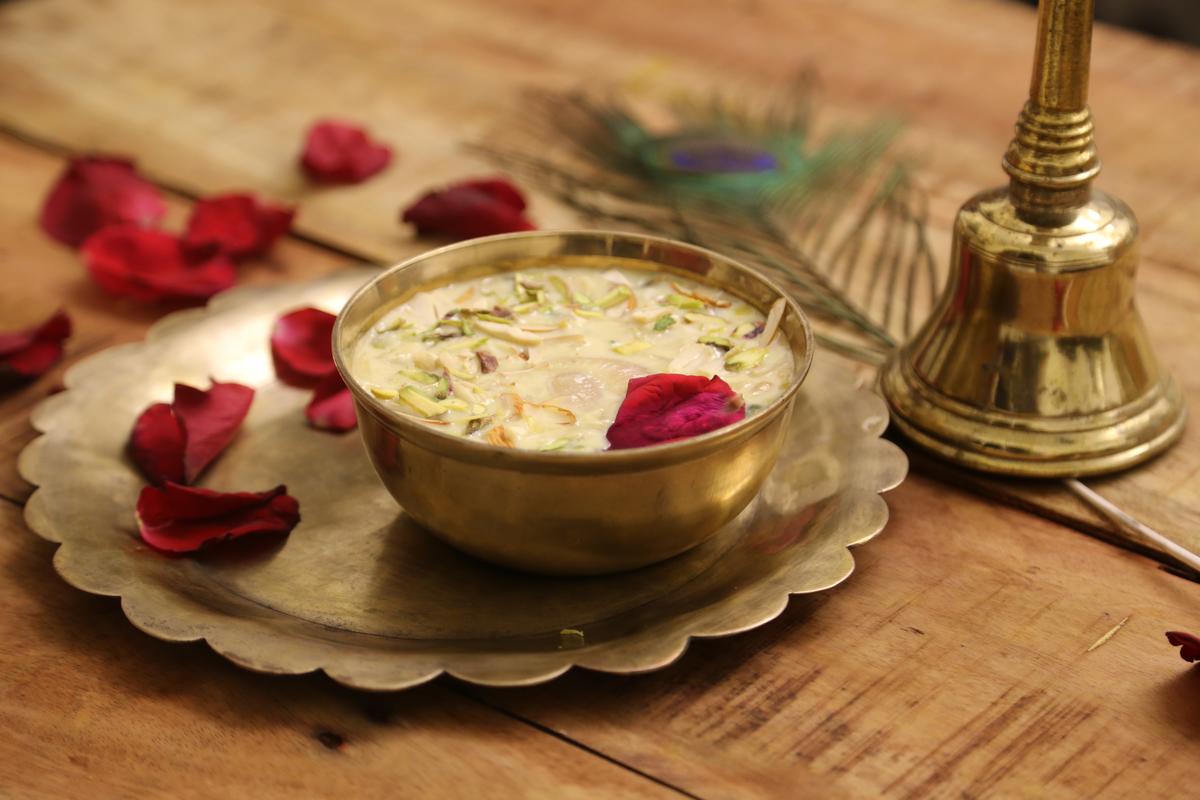
Rice pudding with onions
| Photo Credit:
Lost and Rare Recipes
From these gatherings came dishes that resist easy classification. Combinations such as mangsher machher curry (meat’s fish curry) or machher mangsher curry (fish in meat curry). Preparations that blurred the line between categories. Purnima Thakur, who was very close to children’s literature writer Leela Majumdar. When Leela Majumdar first tasted piyanj er payesh or onion ice pudding, she thought it was made from litchis. In this preparation, the outer layers of the onion are removed and washed more than seven times in warm water. This process removes the pungent smell, so when the payesh or rice pudding is cooked, it tastes exactly like litchi.
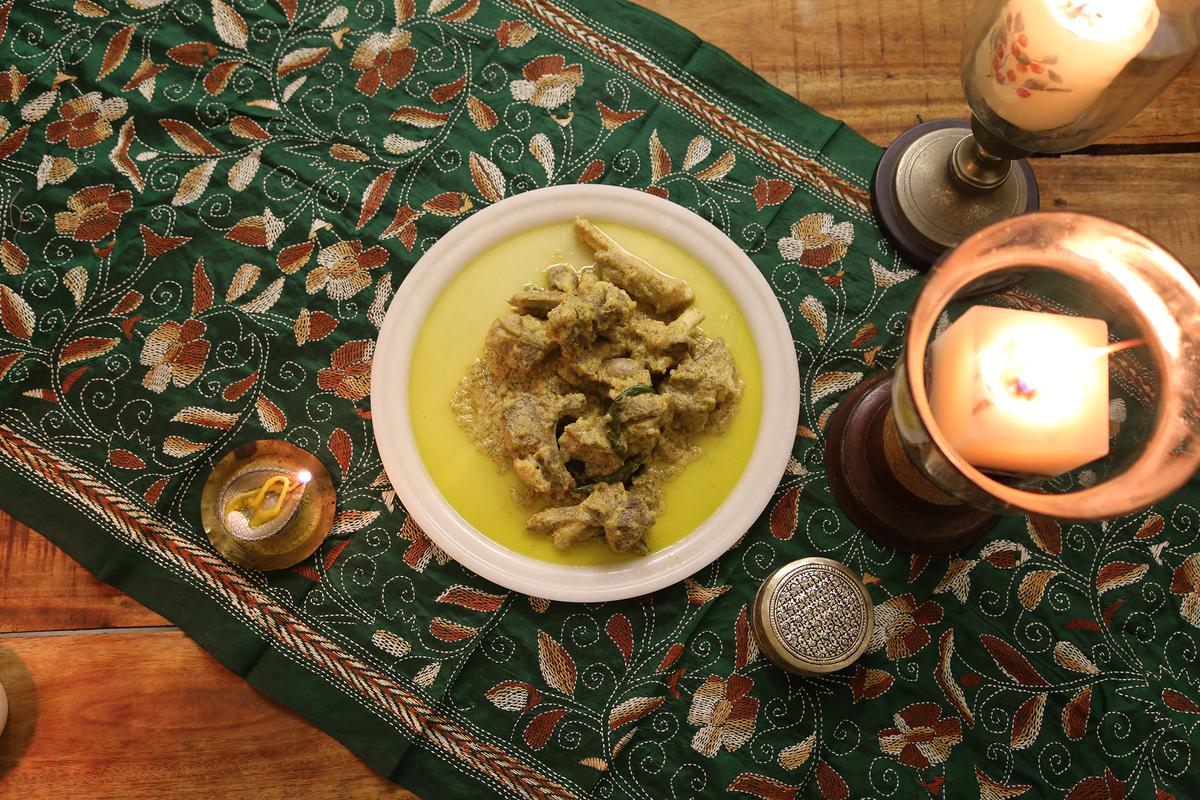
Sorshe Mangsho or mutton slathered with mustard.
| Photo Credit:
Lost and Rare Recipes
There were simpler details too. Rice eaten with ground beetroot. Murgir Rosholla, a simple onion and bay leaf based chicken curry. Sorshe mangsho, where mustard paste imbued the meat and defined the dish. Not all of these were elaborate. But they indicate a kitchen that did not adhere strictly to form.
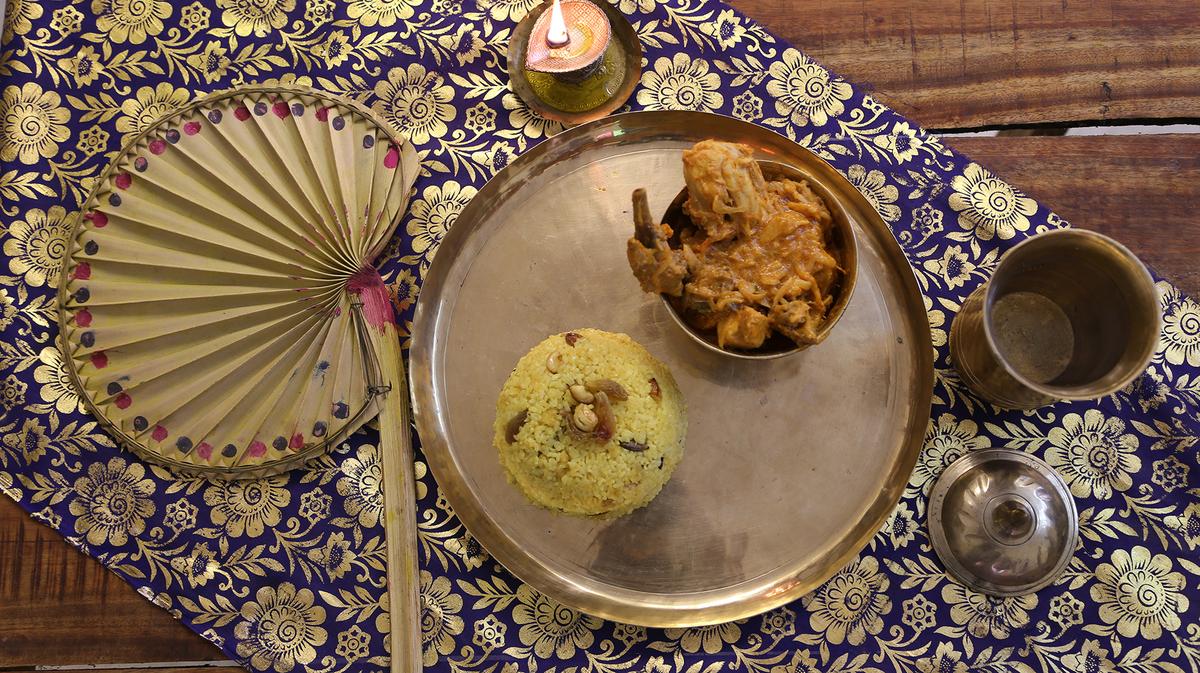
Murgir Rosholla a chicken , onion and bay leaf based chicken curry
| Photo Credit:
Lost and Rare Recipes
For Subhajit, recreating such dishes involves working with scattered references. On his platform, he documents recipes like pagalkhana mangsho (mad house mutton) a mutton curry that used to be prepapred in the ‘paglagarod’ or psychological rehabilitation homes in Bengal or mangsher jemon temon (meat any which way) mentioned in Renuka Devi Choudhurani’s book Rakmari Amish Ranna — an unusual mutton curry made without garlic an otherwise essential ingredient in Bengali meat preparations.
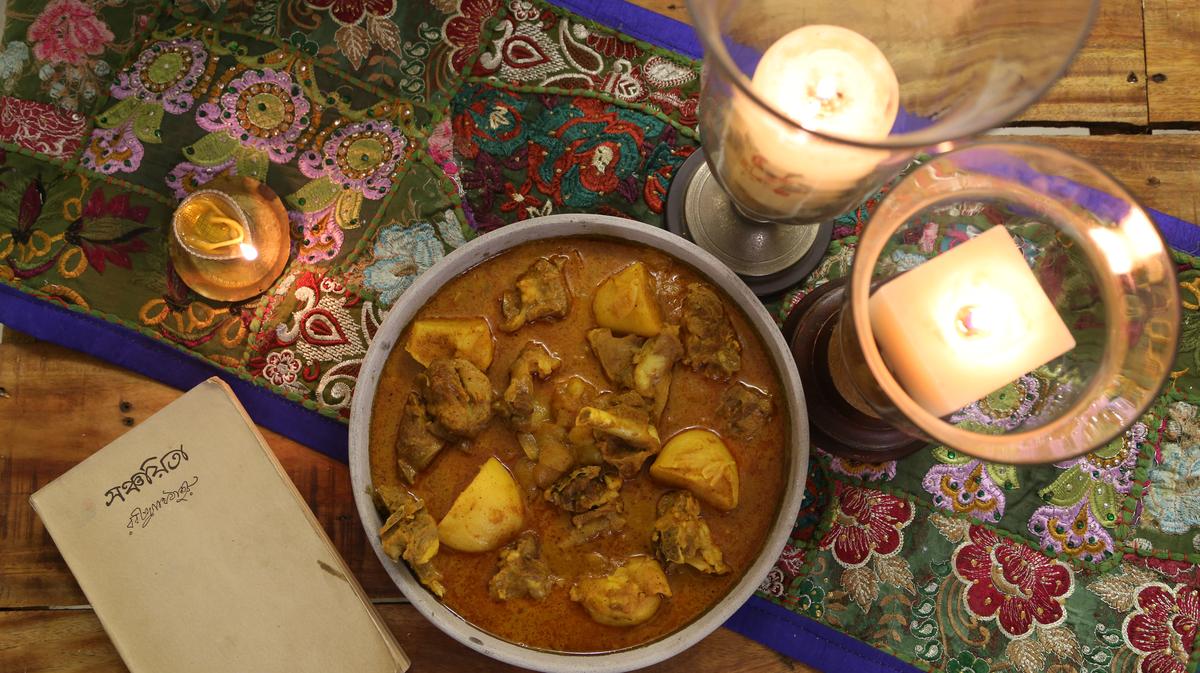
Pathar Bangla, which translates to Lamb’s Bengal is a simple lamb stew which brought back Tagore’s lost appetite in the final days of his life.
| Photo Credit:
Lost and Rare Recipes
There are also moments that anchor this culinary history in lived experience. Towards the end of his life, when Tagore was unwell and had lost his appetite, he is believed to have responded to a dish prepared by Pratima Devi. Known as panthar bangla which translates to lamb’s Bengal, it was a light stew of lamb and potatoes. After eating it, his appetite returned. In his final days, he is said to have eaten it more than once.
In the end, the Tagore we return to is not only the one we perform, and read about but also the one who sat down to eat, who asked for something new, who responded, even in illness, to a simple stew. That world of food lives on through incomplete recipes, in dishes that must have be guessed at and what survives is not completeness, but continuity.
Published – May 06, 2026 05:02 pm IST