



Managing coexistence in human-wildlife conflict zones
Human-wildlife conflict (HWC) is often framed as a conservation problem. In reality, it is a complex socio-ecological challenge shaped by land use, livelihoods and ecological change. Across continents, interactions between people and wildlife are becoming more frequent and more intense, not because animals are encroaching on human space alone, but because human activity is rapidly transforming natural habitats.
In India, hundreds of people die each year in encounters with elephants, while large numbers of livestock are lost to predators. Similar patterns are reported in parts of Africa, Southeast Asia and Latin America. These conflicts reflect deeper pressures such as habitat fragmentation, agricultural expansion and changing land use. Where biodiversity overlaps with dense human settlement, conflict becomes almost inevitable.
A reflection of ecological imbalance
Geographically, the most severe conflicts occur in South and Southeast Asia and sub-Saharan Africa. Brazil, India, Indonesia, Kenya and Tanzania face recurring challenges involving elephants, big cats and other large mammals. These species require extensive ranges and seasonal movement corridors. When forests are cleared, roads constructed or farms expanded, these natural pathways are disrupted. Wildlife then adapts, often by moving into agricultural landscapes or peri-urban areas in search of food and shelter.
Importantly, animal behaviour in such contexts is rarely “aggressive” in intent. Crop raiding by elephants or livestock predation by carnivores are adaptive responses to ecological constraints. Monkeys and wild boars exploit easily available food near forest edges, while predators turn to livestock when natural prey declines. These patterns reflect ecological imbalance rather than aberrant animal behaviour.
Global responses to HWC show that coexistence is possible when policy moves beyond reactive measures. In Africa, Botswana and Namibia have implemented community-based natural resource management systems, where local communities share tourism revenues and gain rights over wildlife use. This aligns conservation goals with economic incentives, reducing hostility toward wildlife. In central America in Costa Rica, ecological corridors are integrated into national planning to maintain habitat connectivity. Finland combines real-time wildlife monitoring with rapid compensation systems, reducing both risk and resentment.
Editorial | Wild and safe: On growing human-wildlife conflict
These approaches share three key features: strong local participation, reliable economic support and the use of ecological data for planning; they treat conflict as a shared management issue rather than a law-and-order problem.
The complexities in India
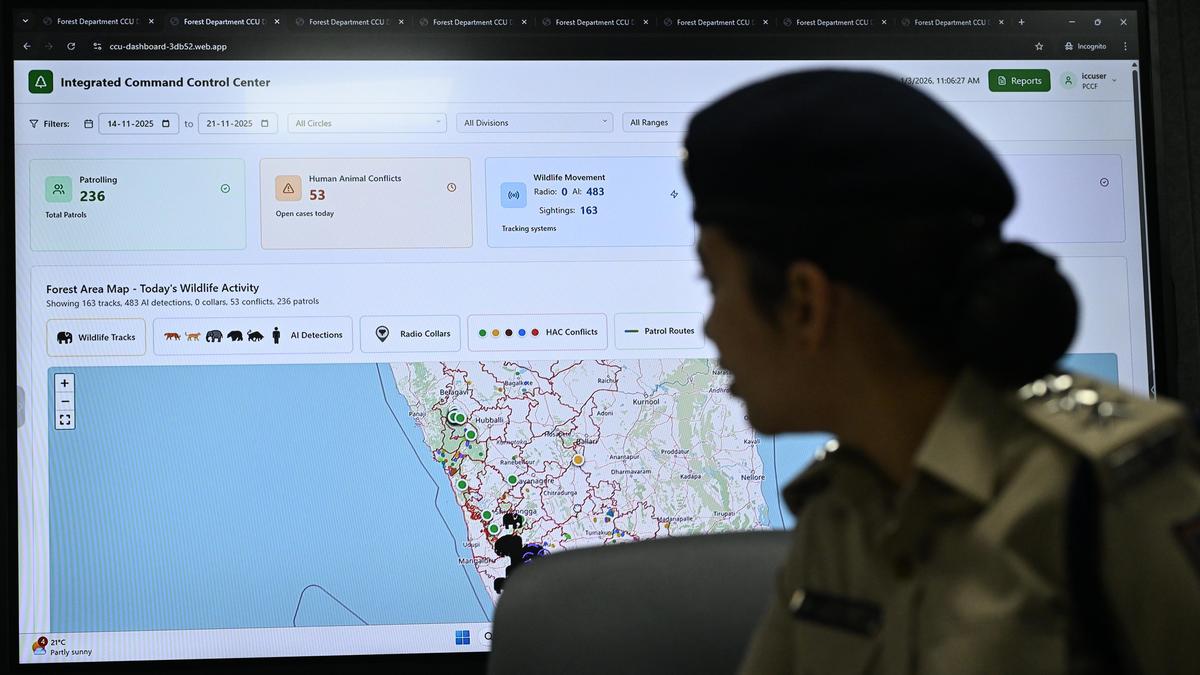
In India, significant efforts have been made to address HWC through compensation schemes, technological interventions and legal frameworks. However, given the scale and complexity of the challenge, there remains scope to further strengthen implementation. Compensation mechanisms, while well-intentioned, can benefit from greater timeliness, enhanced coverage and improved accessibility for marginalised communities. Similarly, measures such as solar fencing and early-warning systems have shown context-specific success, but their effectiveness depends on better coordination and ecological planning.
At the policy level, India’s legal framework has played a crucial role in wildlife conservation. Going forward, there is scope to better align these frameworks with the evolving realities of human-wildlife interfaces. As land-use patterns and ecological pressures change, adaptive, locally responsive governance approaches can help strengthen coexistence outcomes.
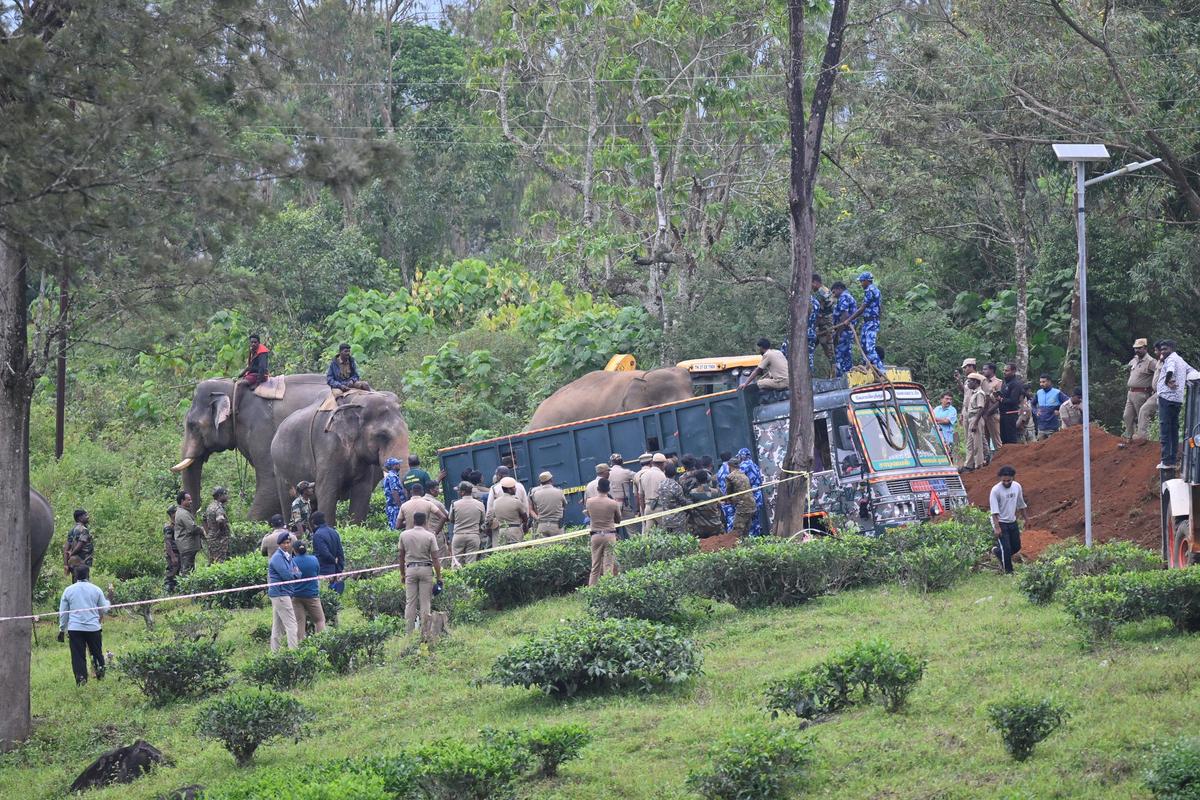
‘The key challenge remains habitat loss, increasing competition for food and water, and growing human-wildlife interface’
| Photo Credit:
The Hindu
There is a need to carefully assess the practicality and long-term effectiveness of proposed interventions. Suggestions such as fertility control in wild elephants have occasionally entered public debate; however, experts note that such measures have limited applicability beyond small, intensively managed populations. In the Indian context, where elephants range across vast and fragmented landscapes, the key challenge remains habitat loss, increasing competition for food and water, and growing human-wildlife interface. Therefore, lasting solutions must focus on habitat restoration, ecological connectivity, and community-based conflict mitigation rather than isolated technical fixes.
Evidence from Bhutan and Nepal shows that locally grounded solutions can reduce conflict. Community-managed forests, coordinated grazing and predator-proof livestock enclosures have shown positive results, supported by stable conservation funding mechanisms.
Focus on education and awareness
Climate change is likely to intensify HWC by altering resource availability and forcing both humans and wildlife to adapt. This adds urgency to the need for a shift in perspective. Wildlife cannot be treated as an external threat to be controlled, nor can human livelihoods be side-lined in the name of conservation.
The way forward lies in designing landscapes that accommodate both. This includes securing wildlife corridors, improving land-use planning, strengthening compensation systems, and involving communities as active partners in conservation. Education and awareness can also play a role in rebuilding tolerance and understanding.
HWC is not an anomaly. It is a predictable outcome of how we use land and resources. The challenge is not to eliminate conflict entirely, but to manage it in ways that are scientifically informed, socially just and ecologically sustainable. If approached thoughtfully, coexistence is not only possible, but it is also essential for the future of both people and wildlife.
Vinaya Kumar H.M. is Assistant Professor, Keladi Shivappa Nayaka University of Agricultural and Horticultural Sciences, Shivamogga, Karnataka. Aishwarya P. is Assistant Conservator of Forests, Forest, Environment and Ecology Department, Government of Karnataka. The views expressed are personal
Published – May 13, 2026 12:08 am IST