



Lebanon yearns for peace and deliverance
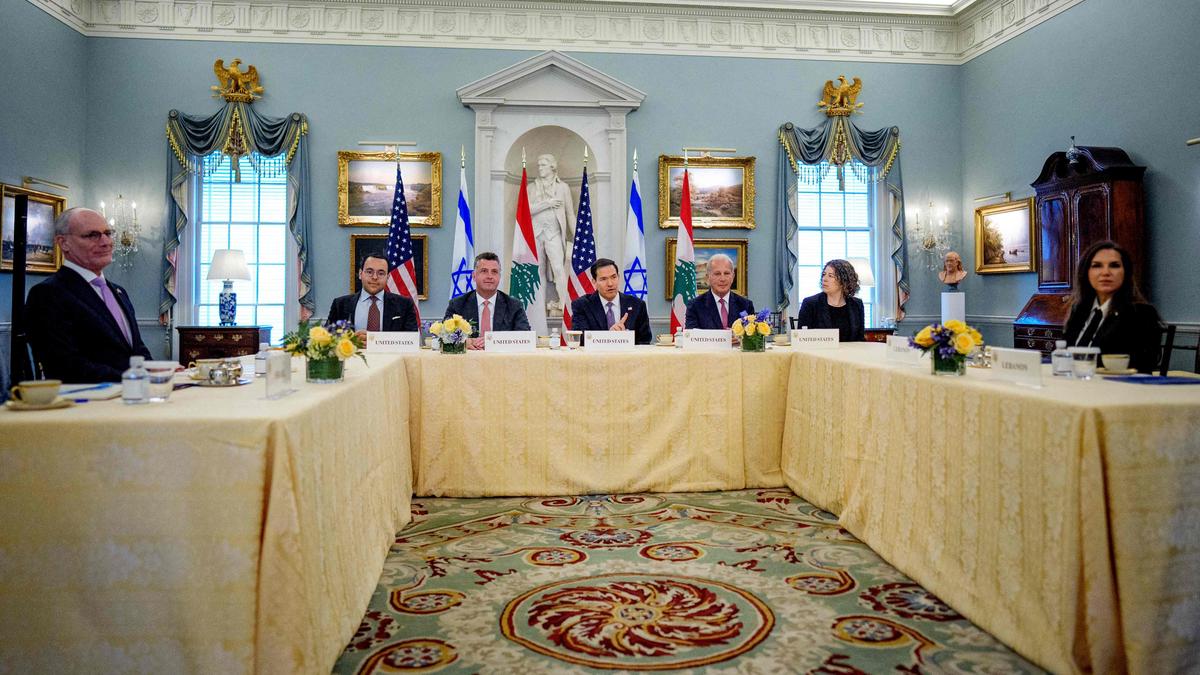
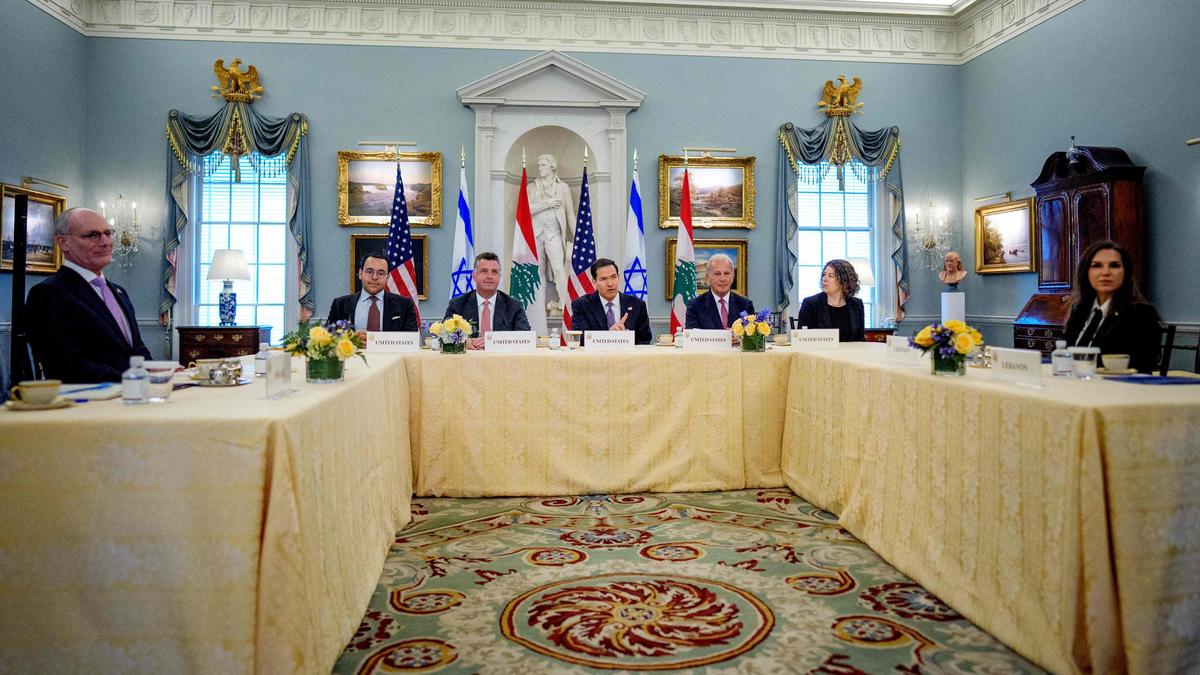
The working-level peace talks at the U.S. State Department on April 14, 2026
| Photo Credit: Getty Images via AFP
The high-octane din of the ongoing Operation Epic Fury against Iran, which began on February 28, 2026, has largely subsumed an equally ferocious war being waged simultaneously in Lebanon. While this fracas between the Israeli Defense Forces (IDF) and Lebanon’s Hezbollah militia has some linkages to the Iranian imbroglio, it would be simplistic to regard it as a mere sideshow of the latter. The Lebanon conflict predates the formation of the Islamic Republic of Iran in 1979 and has its own background, drivers and ramifications.
Indeed, for much of its 83 years as an independent nation, Lebanon, with a current population of five million, has been used as a springboard for foreign causes against Israel, with which it shares a 79-km land border. Following the creation of Israel in 1948, nearly 1,00,000 Palestinians took refuge in Lebanon. They eventually led to the establishment of the Palestine Liberation Organisation (PLO), based in Beirut, forming a state within the Lebanese state. The PLO, under its Chairman Yasser Arafat, conducted guerrilla activities against Israel, provoking Israeli wrath against Lebanon. A civil war broke out in Lebanon in 1975, pushing ethnic identities over nationalism. The PLO joined the conflict. In 1982 the IDF invaded Lebanon to expel it, causing the PLO to relocate to Tunis. However, most Palestinian residents remained in Lebanon and are now estimated at around 5,00,000, roughly one-tenth of the population. Syria, a neighbouring big brother under the al-Assad regime, also intervened in the civil war, maintaining a so-called “deterrent force” ostensibly to maintain order.
Published – April 24, 2026 12:50 am IST