




Kerala-based ICAR-CTCRI to launch four value-added products from sweet potato varieties with orange and purple flesh
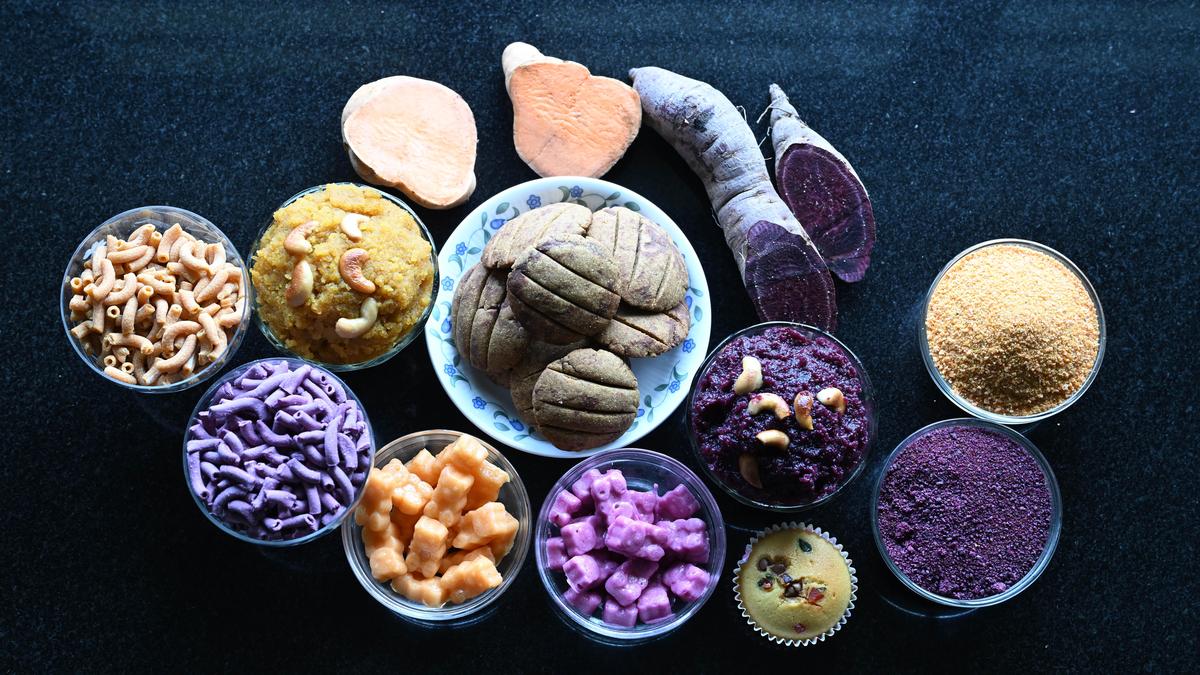
As I bit into the muffin, nothing about the softness and slightly grainy texture revealed that it was made from orange-fleshed sweet potato. Or the cute purple-coloured gummy that came next was prepared using purple-fleshed sweet potato. There was more — cookies, chips, kulfi, kesari, ice cream, ready-to-cook pasta — all in shades of orange and purple arranged in glass bowls.
It was a feast for the eyes and the palate as we stood at the ICAR-CTCRI (Central Tuber Crops Research Institute) at Sreekariyam in Thiruvananthapuram, as the staff arranged the products. ICAR-CTCRI, under the Indian Council of Agricultural Research (ICAR), which has been conducting R&D in tropical tuber crops since 1963, has added another feather to its cap. It has obtained licence to manufacture four products — kulfi, muffins, gummies and cookies — from the new sweet potato varieties, that is orange-fleshed Bhu Sona and purple-fleshed Bhu Krishna. The varieties were launched around a decade ago.
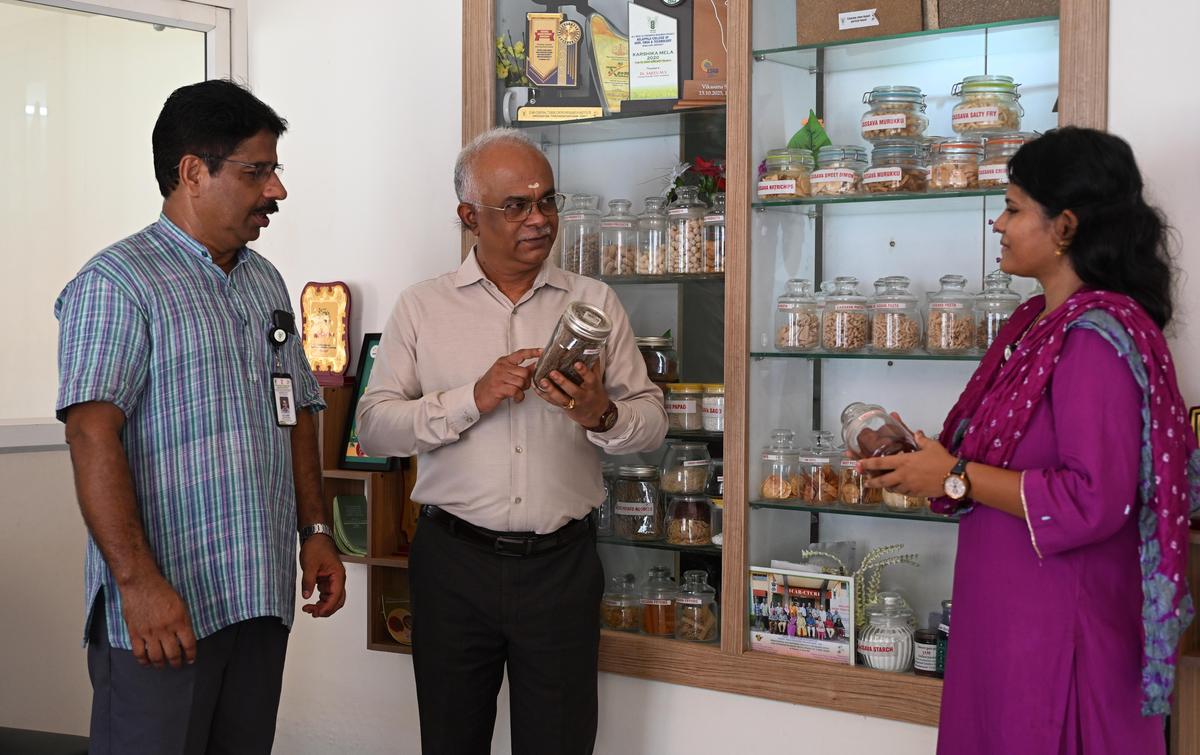
(From left) Sajeev MS, principal scientist, G Byju, director and C Pradeepika, scientist, at ICAR – Central Tuber Crops Research Institute
| Photo Credit:
Nirmal Harindran
“To start with, we will train members of Kudumbashree [Kerala’s women-oriented poverty eradication mission] later this month. Once they learn the technique, they can go ahead with making the products and sell through respective Kudumbashree units,” says G Byju, director, ICAR-CTCRI.
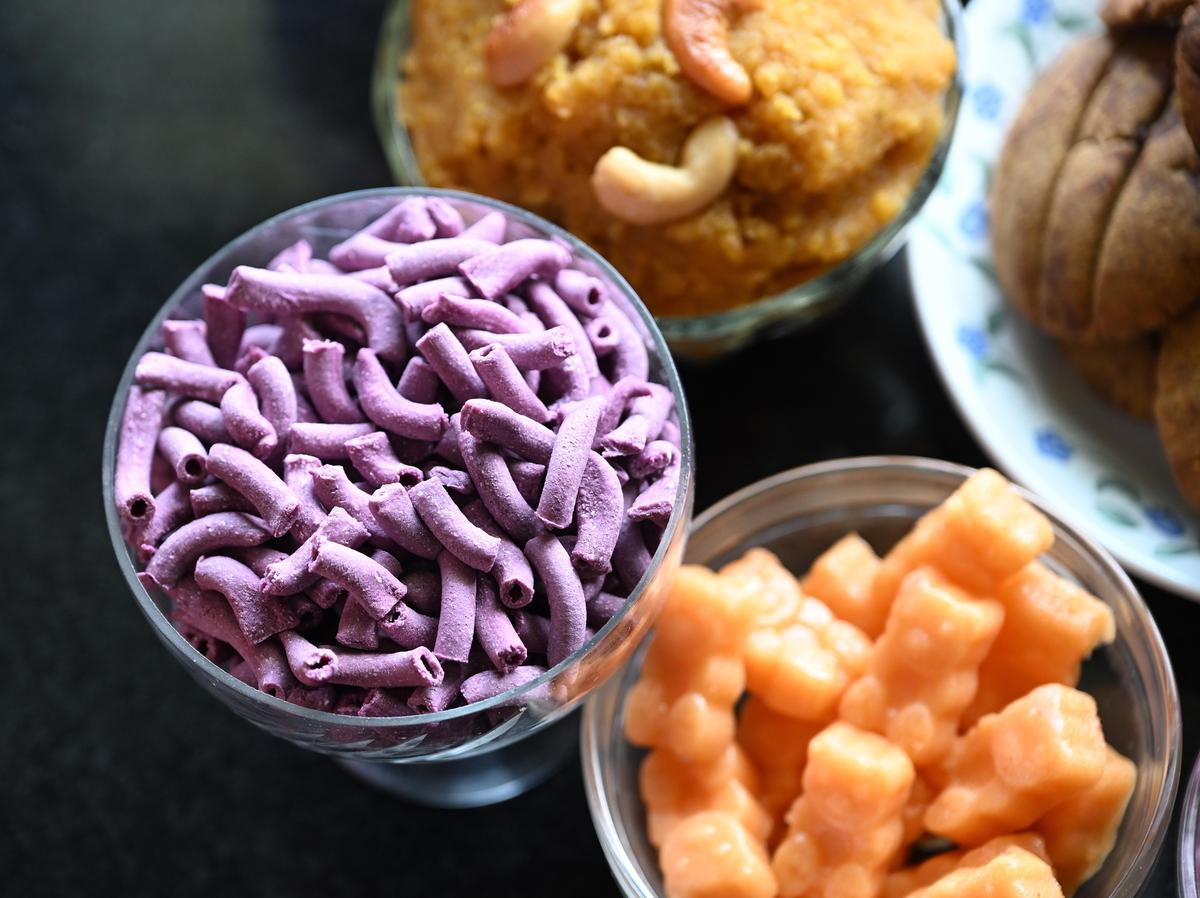
Pasta, gummies and kesari from orange and pink fleshed sweet potato
| Photo Credit:
NIRMAL HARINDRAN
The hands-on training will be given at the Techno Incubation Centre on the campus, which offer facilities for producing tuber-based products, besides giving technical support and acting as a production and processing hub.
He adds, “Sweet potato, as such, has gained popularity as a dietary support across the globe as the tuber is rich in carbohydrates, bioactive compounds and vitamins. Research on the tuber has been going on here and at our regional centre at Bhubaneswar in Odisha.”
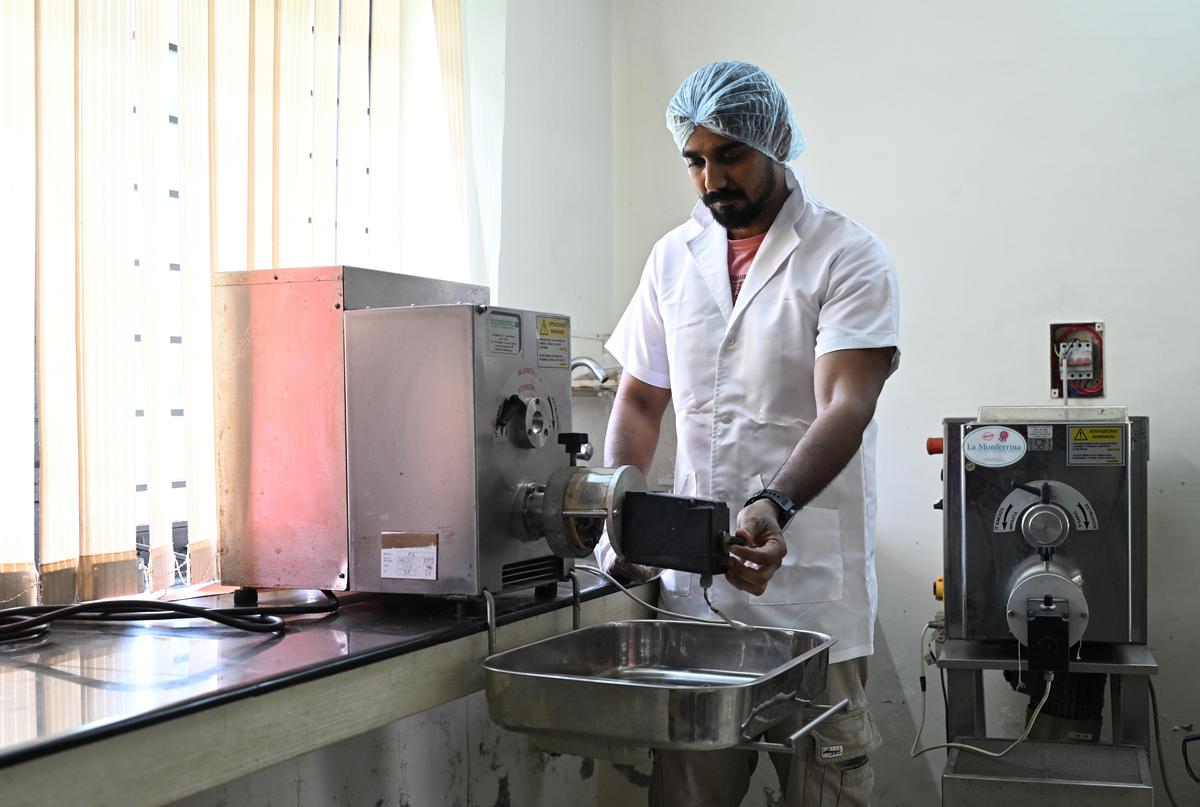
Mechanised production of sweet potato pasta at ICAR – Central Tuber Crops Research Institute.
| Photo Credit:
Nirmal Harindran

The Institute has so far developed 22 varieties of sweet potato and the nutritional profile vary between different flesh colours. While research has been going on to produce functional foods (products that provide health benefits beyond basic nutrition) for many years, this is the first set of products to be launched from any variety of sweet potato by ICAR-CTCRI. So far, the Institute has brought out numerous products from cassava.
“The orange and purple varieties are bio-fortified, meaning they have higher nutrient density. While Bhu Sona is rich in beta-carotene, which gets converted to Vitamin A, Bhu Krishna has anthocyanin, an antioxidant and anti-inflammatory compound,” says Sajeev MS, principal scientist at the Institute.
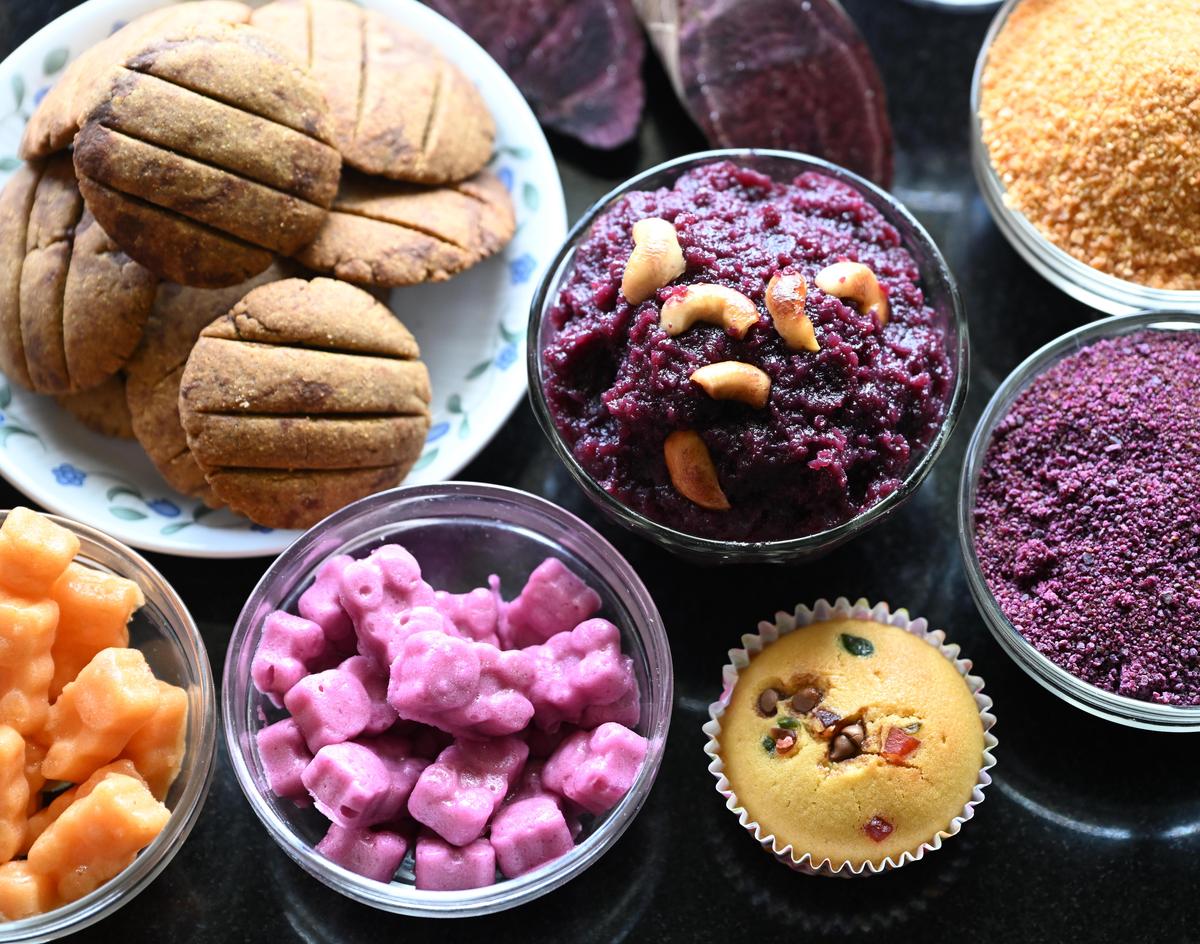
Value-added products from orange and purple fleshed sweet potato on display at ICAR – Central Tuber Crops Research Institute, in Thiruvananthapuram
| Photo Credit:
NIRMAL HARINDRAN
It was last year that the Institute obtained the license to commercially produce the four products. “We started with kulfi. The base is sweet potato puree. You boil or bake the sweet potato to make the puree. Then you add the usual ingredients that go into a kulfi – fresh cream, milk/milk powder, sugar etc. In muffins and cookies, sweet potato flour is used. A small amount of maida is used as binding agent. The cookies have sweet potato and finger millet and comes with choco chip fillings,” says C Pradeepika, scientist, who has been spearheading the research and experiment behind the manufacture of the products.
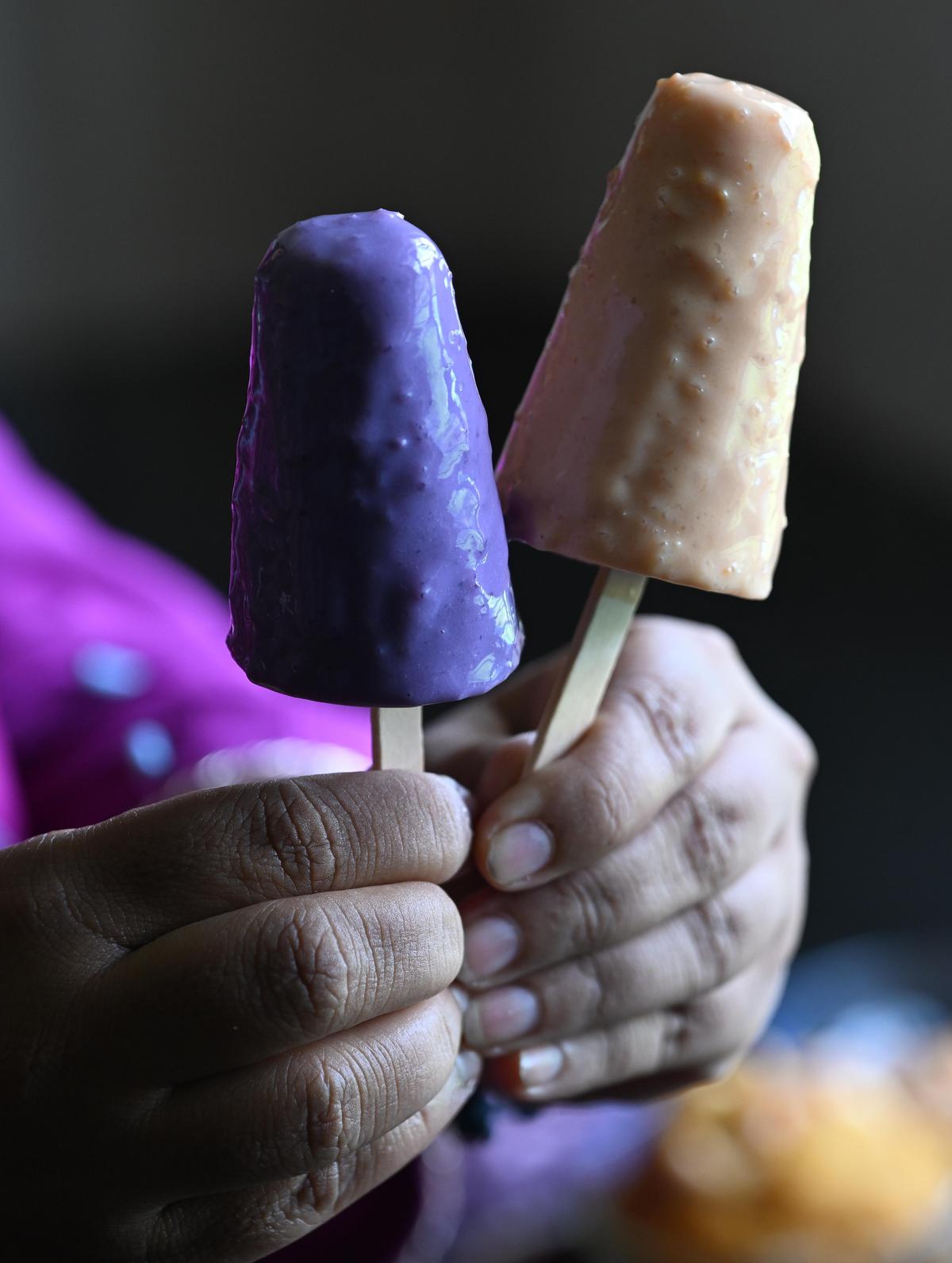
Kulfi made with orange and purple-fleshed sweet potato at ICAR-CTCRI
| Photo Credit:
NIRMAL HARINDRAN
She adds that the process involves playing with the ingredients. “It takes time to arrive at the exact combination. As a food technologist, I research different formulation and study about various biochemical parameters before presenting it for consumers’ acceptance.”
About the other products that were displayed for us, like kesari and pasta, she adds, “We wanted to show that there is a large scope for value-addition in sweet potato, especially with these two varieties. It is to be noted that we have retained the natural orange and purple colours in these products.”
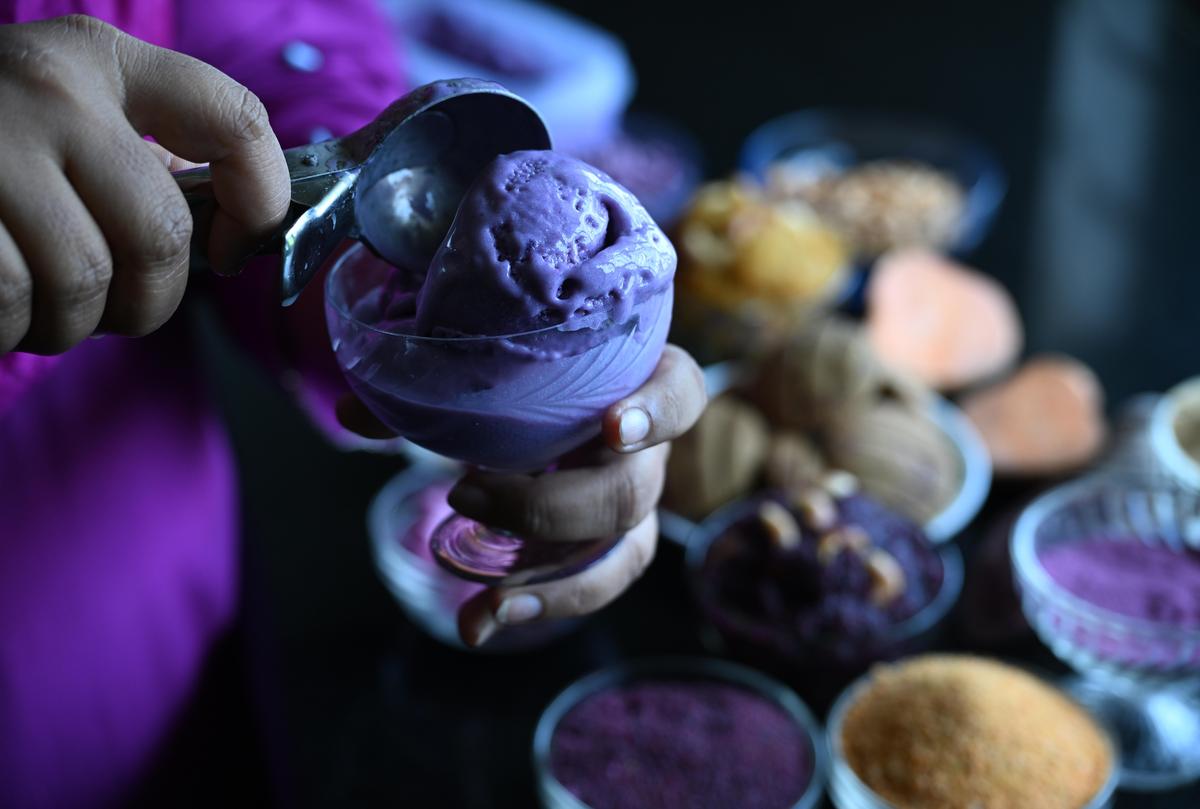
Ice cream made with purple-fleshed sweet potato
| Photo Credit:
NIRMAL HARINDRAN
Meanwhile, the Institute is all set to patent the technology involved in preparing the ice cream, rava (semolina), and flour from the two varieties. “The ice cream is synbiotic, meaning it is both prebiotic (has fibre that feeds live bacteria) and probiotic (has live beneficial bacteria). Basically, it is a gut-friendly frozen dessert,” she says, adding, “As for the rava, which is a substitute for wheat semolina, and flour, we are patenting the technology that retains the natural colour. The colour usually fades when we dry the potato in the sun or in dryer. The new technology retains the natural colour.”
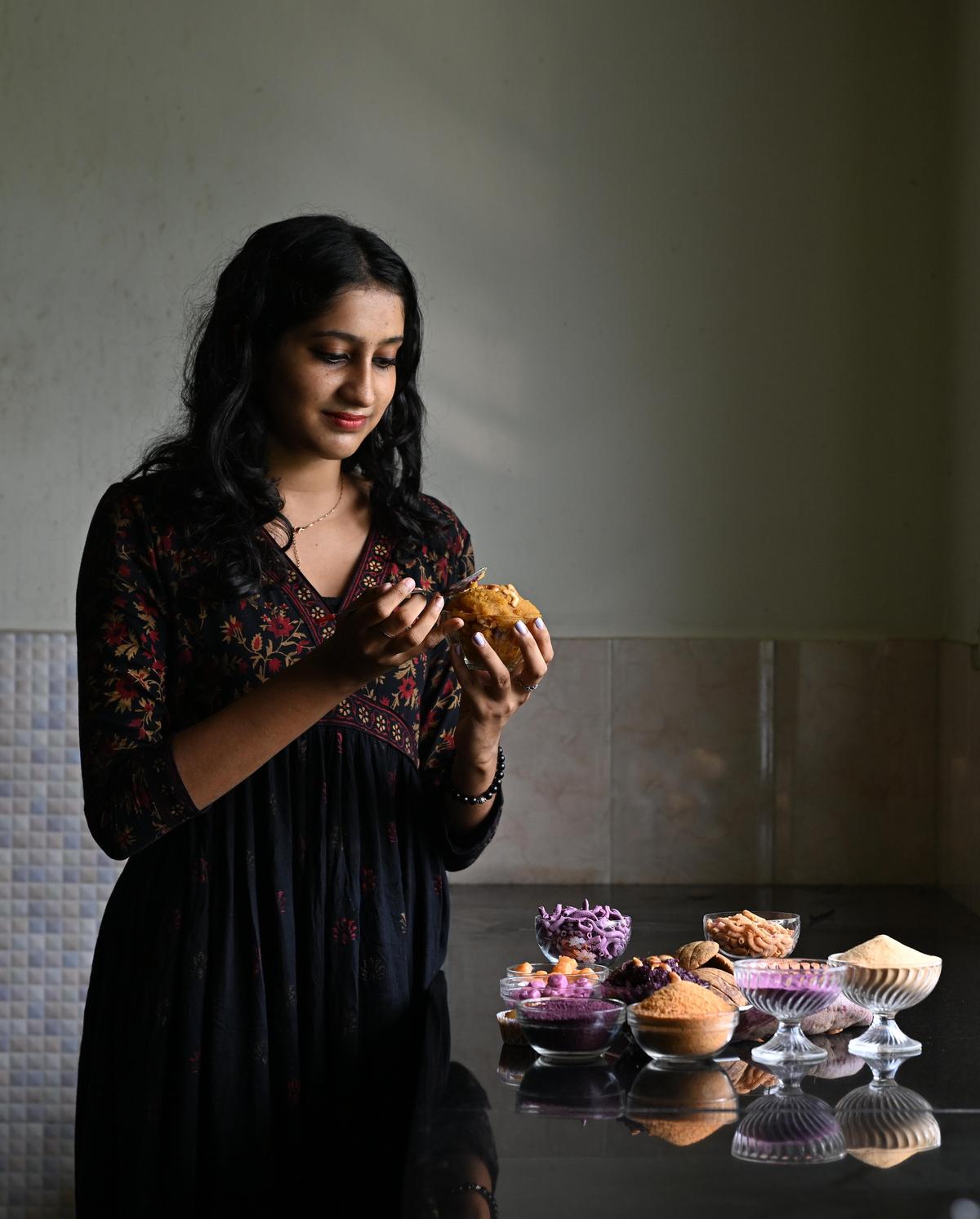
A staff of ICAR-CTCRI tasting food products from orange and purple fleshed sweet potato.
| Photo Credit:
Nirmal Harindran

Odisha continues to have the largest sweet potato cultivation in the country, while Kerala is quite far behind. However, CTCRI has been promoting the cultivation of different biofortified sweet potato varieties in different parts of the State, predominantly in Palakkad and Idukki districts.
Published – May 15, 2026 10:48 am IST