




Jyothi Surekha Vennam: India’s compound archery queen on the road to Olympic glory at Los Angeles 2028
Jyothi Surekha Vennam has collected more than 90 medals across the Asian Games, Asian and World Championships, World Cups and beyond, but numbers alone fail to capture what she has become. In Indian sport, she exists in a rare category of athlete: the kind who is expected to win before the first arrow is even drawn. A sure shot, as they call it. A burden disguised as praise.
With compound archery preparing for its Olympic debut at the 2028 Los Angeles Games, that certainty is set to be amplified into something brighter, heavier, harder to ignore. It is in this gathering light that The Hindu travelled to Vijayawada – crossing a river she once mastered as a five-year-old (which rocketed her into the Limca Book of Records) – to meet one of the country’s most formidable athletes.
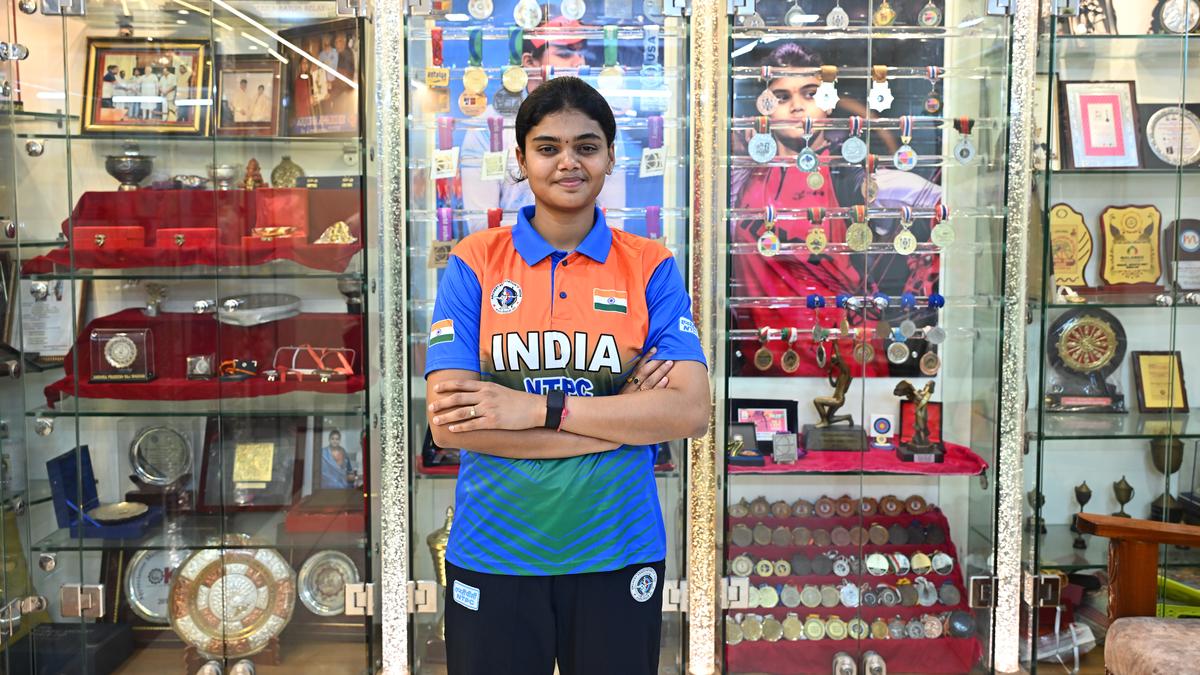
Surekha’s world does not announce itself. It hides in plain sight. A gated community. A door no different from the others. A home that could belong to anyone – until it does not. Inside, silence gives way to shimmer. Medals catch the light like fragments of a long, relentless conversation with time.
READ | How three daughters were shaped by their mothers’ sacrifices
What was once a bedroom has surrendered itself to memory, becoming a walk-in archive of effort and repetition, of early mornings, missed shots, and moments of precision. Even now, it overflows – trophies resting where there is no space left for them.
It is here that the 29-year-old sat down, surrounded by the evidence of everything she had done, to speak not just of winning, but of carrying what winning leaves behind and what lies ahead.
Thrown in the deep end
Long before the plethora of medals, before the expectation that she would never return home “empty-handed,” before compound archery finally found its place at the Olympics, Surekha was an eight-year-old crying because she did not want to take up archery after getting used to the routine of swimming.
Sports ran in the family. Her grandfather was a physical education teacher who trained athletes for kabaddi. Her father, Vennam Surendran Kumar, played the sport himself at the college level before moving on to a career in veterinary science. Surendran and his wife, Sri Durga, made every major decision regarding their daughter’s involvement in sports.
“My parents chose archery mostly because it’s an individual game and involves more concentration and focus,” Surekha explained. The idea to pick the compound vertical was to allow her the space to also balance her academics.
“We heard then that to shoot a recurve bow, I would have to give a lot of time. It might affect my studies. My parents were very clear that even if I’m into sports, I should not neglect my education. They wanted me to have a plan B if a life in sports did not pan out.”
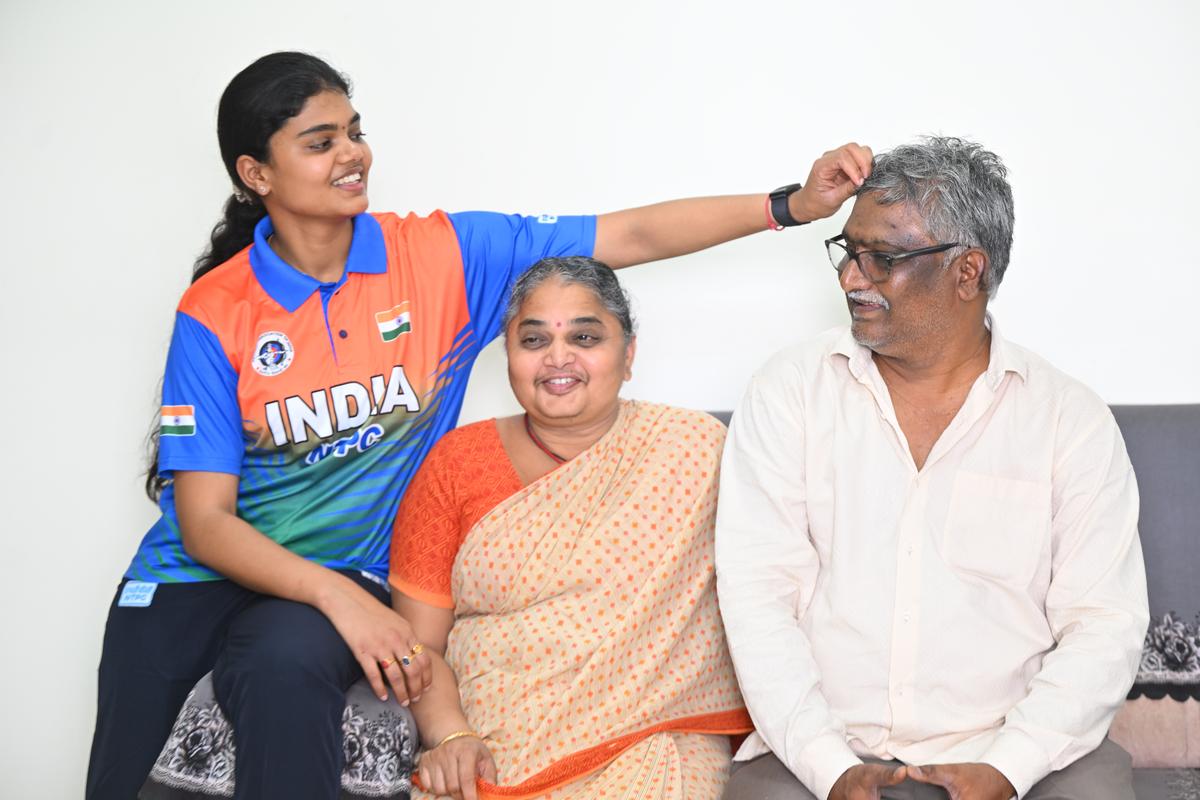
Jyothi Surekha with her father, Vennam Surendran Kumar, and mother, Sri Durga.
| Photo Credit:
K.V.S. Giri
It was not love at first sight for Surekha with archery. The affection arrived gradually. When she struck six gold medals at her first nationals, at the U-13 level in 2008, the sport latched on to her, permanently now.
Unsurprisingly, the narration of one of the most consequential moments of her life comes with restraint: “I was like… okay, I am happy with it.”
International archery wasn’t as instantly rewarding. Silvers and bronzes kept getting collected, but golds were elusive at first.
“It took me 12 World Cups to win a medal, and there were situations where people were coming into the team for the first time and they won one. I often asked myself, ‘Why am I not able to win a medal in the World Cup?’ I was really upset about it for a long time.”
Earning her flowers
That drought would end in 2018.
“That year was really great because in all four stages of the World Cup, we won bronze in the mixed team event, and I also got to win two silvers in the women’s team category as well.”
Each year of the nearly two decades she has spent in archery has seen a generous sprinkling of medals across tiers of competition. But a few moments stand out. The 2023 Archery World Cup is one of them, where she shot 713 out of a possible 720 in the first stage in Antalya to match the erstwhile world record.
READ | Arundhati Reddy and the power of perspective
“Funnily, in training, I felt I was missing something. I was not confident at all. But I knew that it takes just one shot or a single feeling to bring you back. During the qualification, someone shot 360 while I had shot 353, which wasn’t too bad. In the second half, I shot a full 360. It’s something I haven’t even done in practice. That was the first and last time I managed that (laughs).”
Her first individual medal was another memorable milestone, coming at the 2019 World Championships. Her first individual World Cup medal came in Paris in 2022.
The Jyothi Surekha formula for success and crawling out of a rut is as simple and no-nonsense as she herself is. Three hours of practice in the morning, three hours in the second half, plus one hour of physical activity accompanying either session. Journaling and visualisation sessions also figure without a break in her timetable.
“I just visualise that I am there in an arena, shooting my best. I focus on the process, how I want to execute a shot and make sure I visualise doing it at the same place repeatedly so it doesn’t seem new to me when I get there.”
And when things work, the ‘celebration’ is just as simple.
“Most of the time, when I win, I call my parents. We talk about ice cream. No particular flavour, just any ice cream.”
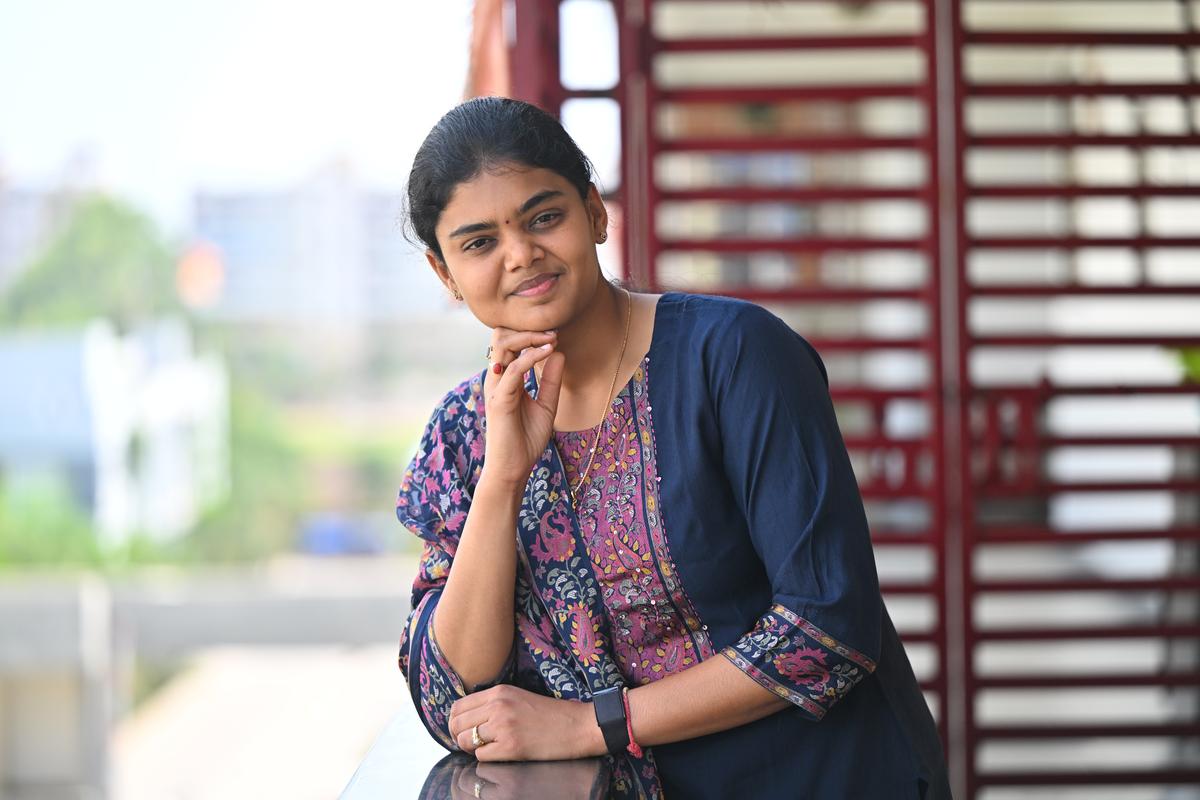
Jyothi Surekha became one of the youngest recipients of the prestigious Arjuna Award in 2017.
| Photo Credit:
K.V.S. Giri
Many of the medals adorning the walls of Surekha’s house were victories without an audience. So when she became one of the youngest recipients of the prestigious Arjuna Award in 2017, it was vindication for her, yes, but more for her parents.
“My parents always wanted me to earn the Arjuna Award. When it did come, my father kept reminding me that this should now spur me on to be more responsible and keep giving my best.”
It did. She went from strength to strength. Among her achievements was a sensational triple gold at the Hangzhou Asian Games in 2023, where she scooped up top honours in the women’s individual, mixed team and women’s team events, becoming the first Indian to win multiple gold medals in archery at a single Asian Games.
Perhaps, the relentlessness of the drive her parents prioritised to keep achieving tinges her father’s voice when he expresses regret that she is yet to make the recipient list of the Major Dhyan Chand Khel Ratna honour, the country’s highest sporting award.
Right for recognition
What could tip the scales? An Olympic medal, maybe?
Surekha’s career coincides fortunately with the induction of her category in the roster for the Los Angeles Games in 2028. When the announcement came through, Surekha was in Florida with the Indian team.
“It was the first day of the World Cup. After our session was completed, we had our lunch and were waiting for our bus when suddenly, World Archery people came around capturing reactions to the news. Every compound archer was really happy. I immediately called my parents.”
She, however, was quick to put that joy into perspective. One that came from finding satisfaction in a discipline that has long survived outside the halo of the revered quadrennial extravaganza.
“Olympics is just the name of the event. It’s the same archers who are competing at the World Championships, World Cups and more. In India, nothing else matters besides the Olympics. But it’s not true. There are many tournaments just as big.
Otherwise happy to make do with a few words in her responses, Surekha’s thoughts reflect immense clarity, and perhaps, even a little dissatisfaction.
“That perspective needs to change. Because maybe if it does, maybe if the Olympics are not given that much priority, the athletes who are competing there can perform even more freely without any pressure and give their best performance and win more medals for our country.”
Still, the importance of the platform and its positives, particularly for compound archery, is not lost on her.
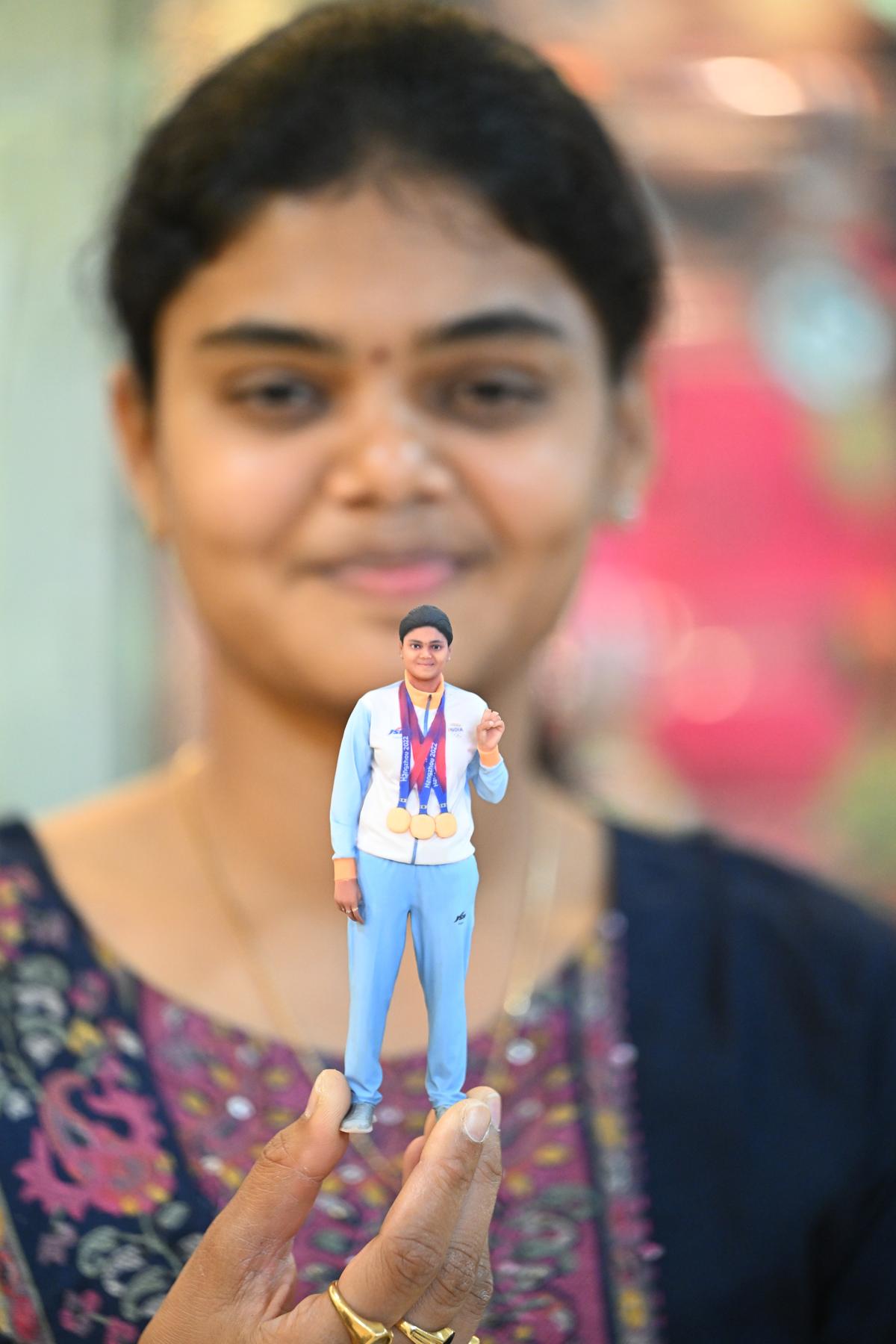
Jyothi Surekha is all set to lead India’s charge at the 2026 Asian Games.
| Photo Credit:
K.V.S. Giri
“If you look at history, when anyone wins a medal in the Olympics, that sport as a whole grows. For example, look at badminton, javelin throw and wrestling. There is so much hype that comes around for the person winning a medal and the sport they play. The interest automatically grows because of the publicity and that takes the sport to the next level.”
Perhaps that is what makes Surekha such a compelling athlete to listen to right now. At a time when Indian sport increasingly celebrates noise, branding, and spectacle, she represents something quieter and far more enduring.
Discipline without drama. Ambition without arrogance. Confidence without demonstration. None of this happens in isolation. Surekha knows what it means to endure uncertainty. She knows what it means to chase excellence in a sport that does not always receive attention. She knows the emotional cost of expectation, the loneliness of underperformance, the patience required to keep showing up. But through all of it, the thing she values most is remarkably human: the assurance that somebody will still be there when the competition ends.
Slow and steady
“You have to believe in yourself, and you have to have a good support system, be it mentally or financially, to come into sports. If one has a strong familial support system, they’re happy when you’re successful. But, more importantly, they’ll be fine if you aren’t too.”
Surekha has made the squad for the 2026 Asian Games in Japan. The drill remains the same. What will change are the eyeballs and the strengthening of the “she will bring home something” belief.
READ | Why Arundhati Reddy is ‘okay clapping for others’ until her time comes
“I have been listening to people saying that we know that you will not come empty-handed. We for sure know that you will get something or the other, at least a medal, one medal from a tournament. I am really fortunate that people think that way, that they trust, no matter what, that I’ll bring back something. It pushes me to put in the same work every day and ensure I don’t return with any regrets about not giving my best.”
By the time the 2028 Los Angeles Games arrive, the spotlight around Surekha will only grow brighter. India will look at her and see the possibility of history waiting to happen.
She will probably walk into that Olympic arena the same way she has walked into every other tournament in her life: without allowing the enormity of the moment to swallow her. Because long before the Olympics entered her sport, Surekha had already mastered something far more difficult: separating who she is from what she wins.