



These EVs Have The Highest Claimed Charging Power In 2026
The speed at which electric vehicles can replenish electrons from DC fast chargers is a key statistic that brings potential EV buyers into certain manufacturers’ showrooms and makes them avoid others. This is because the faster an EV charges, the less time they expect they will have to spend waiting around for its battery to be topped up.
These charging speed numbers seem to be very important for prospective EV buyers. The bigger they are, the more attractive they make a model in buyers’ eyes, even though they perhaps should be paying more attention to the small print about the size of their battery packs and how many miles they can stretch one kilowatt hour (so that they spend less time charging).
Manufacturers have speculated this trend among buyers and are trying to outdo one another with ever-quicker charging EVs, with more attention-grabbing headline figures. It’s undeniable that some impressive advancements in the field of EV charging have been made in recent years, and charging times are dropping significantly even compared to five years ago.

Photo by: Patrick George
Currently, the fastest-charging EVs in the United States run at 800 volts or more, and the charging speed leaders can bring their batteries’ state of charge from 10% to 80% in under 20 minutes. They can add hundreds of miles of range in 10 minutes or so, which sounds very appealing to those EV buyers who don’t want to spend more time charging than they did filling up their old gas car. We’re not quite there yet, but given the rate of advancement, it’s a point the industry will probably reach in less than five years.
When Edmunds tested the real-world charging speed of EVs, it found that Hyundai and Kia EVs charged the quickest. But now there are even quicker-charging EVs on the scene, which have yet to be tested but tout even higher charging power numbers.
Let’s go over the fastest-charging EVs available in 2026 and examine what their impressive claimed maximum charging power figures mean. We also listed when each vehicle will come equipped with the Tesla NACS connector. It’s worth noting that the EVs with the fastest rate of charge aren’t necessarily the ones with the lowest charging times, since some have quite big battery packs that will require more time to charge.
1. BMW iX3 (tie)
Photo by: BMW
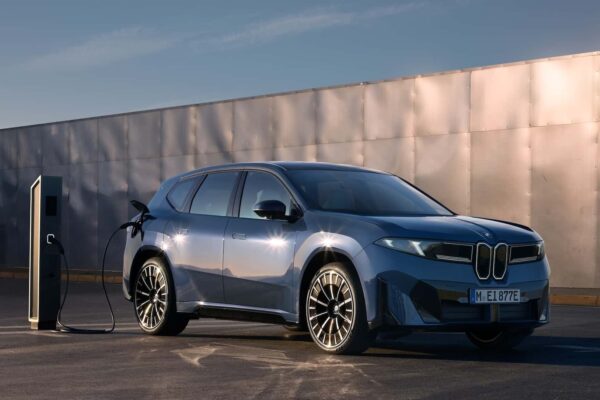
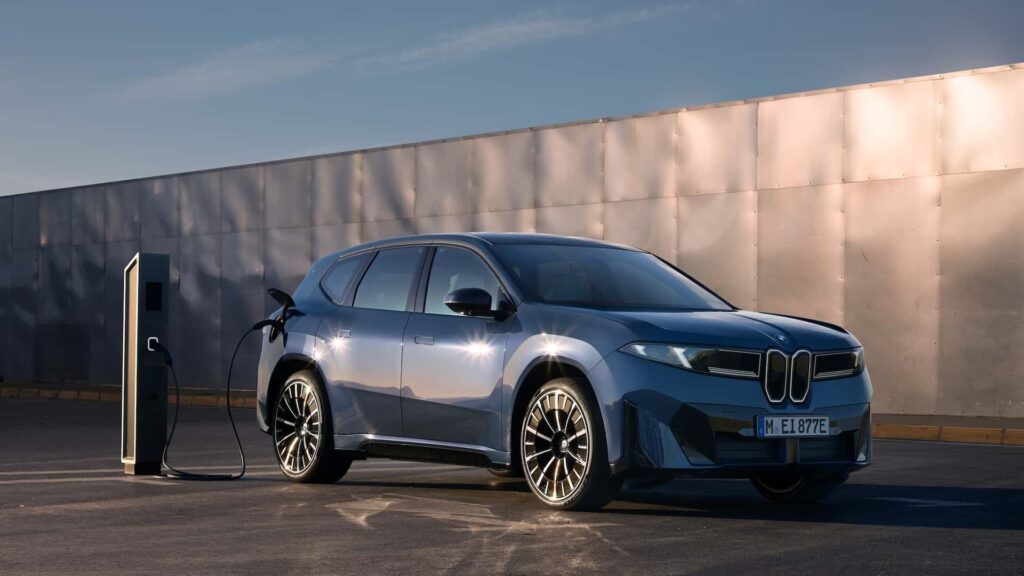
Taking full advantage of its new 800-volt Neue Klasse platform, sixth-generation batteries, and the latest and greatest in electronics, the BMW iX3 can replenish its battery at up to 400 kW from a sufficiently powerful DC fast charger.
The dual-motor iX3 50 xDrive can add 185 miles of range in just 10 minutes, and the 10-to-80% dash takes 21 minutes, a bit slower than you would expect given its impressive peak charging power; it’s exactly the same as the Porsche Macan EV, which is much lower on this list with its peak charging power of 270 kW. The iX3 has quite a big battery pack, though, with a usable capacity of 108.7 kWh, giving it an EPA range of 434 miles, so there’s a lot to charge.
NACS port: yes
1. Lucid Gravity (tie)
Photo by: Patrick George
The Lucid Gravity rides on a version of the same 900-volt platform that underpins the Air, only it can charge at 100 kW more than the sedan. Lucid says it is good for a charging power peak of 400 kW, which is enough to bring its 123 kWh battery from 10% to 80% in 23 minutes. On a full charge, the Gravity gets an EPA range rating of 450 miles, which drops to 386 miles with the larger optional wheels.
NACS port: yes
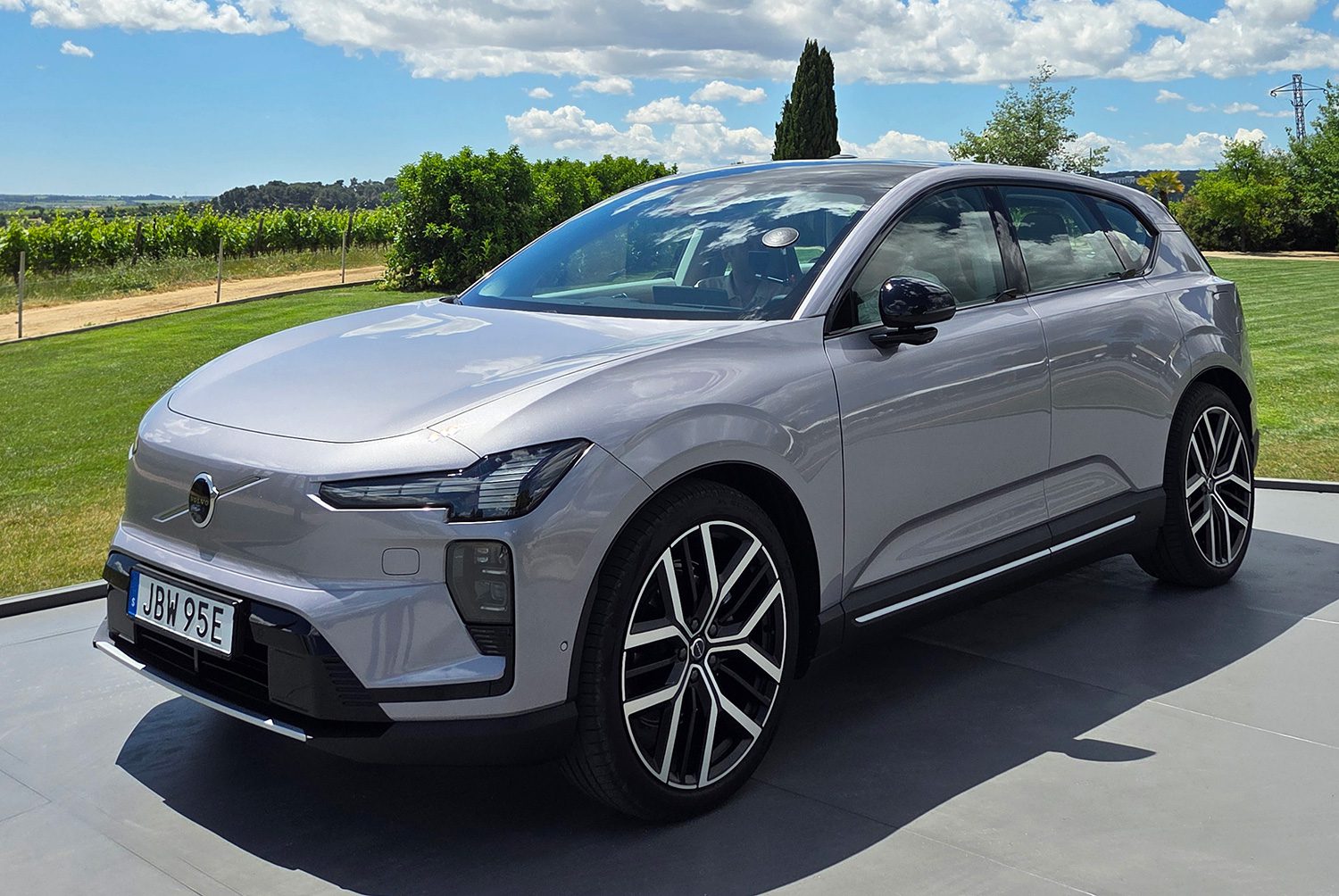
2. Volvo EX60
Photo by: Mack Hogan/InsideEVs
The new EX60 is Volvo’s most advanced EV, and it needs to be if it wants to stand a chance against the headline-making BMW iX3 and Mercedes GLC.
After the lackluster debuts of the EX30 and EX90, both of which were plagued by software issues, the Swedish automaker poured its heart and soul into the new EX60, which has a good shot at becoming one of Volvo’s best-sellers.
Based on the new SPA3 architecture, the 2027 Volvo EX60 uses an 800V battery pack that can charge at up to 370 kW on the larger-capacity versions, and at up to 320 kW on the entry-level model. The rear-wheel drive P6 gets an 83 kWh pack, the P6 ups the capacity to 95 kWh, and the range-topping P12 completes the lineup with a generous 112 kWh battery.
According to Volvo, the EX60 P6 and P10 need 16 minutes to go from 10-to-80%, while the P12 takes 19 minutes.
NACS port: yes
3. GMC Hummer EV And Hummer EV SUV (Tie)
The GMC Hummer EV and Hummer EV SUV have a unique split battery pack that allows the vehicles to operate at 400 volts while driving and 800 volts to increase their charging speed. It should have a maximum charging speed of 350 kW, although we haven’t seen it go much above 300 kW when tested. GMC says that in ideal conditions, it can add up to 100 miles of range in just 12 minutes when hooked up to a powerful enough Level 3 DC fast charger.
NACS port: no
3. Chevy Silverado EV (Tie)
Chevrolet tells us the Silverado EV can add up to 120 miles in as little as 10 minutes when charging at a low state of charge on a 350 kW DC fast charger. Like the Hummer EV and Hummer EV SUV, the Silverado EV’s battery pack is wired as two separate 400-volt battery packs. To reach its full charging potential, some relays switch open, others close, and the pack changes from a parallel configuration to a serial arrangement, which, in turn, doubles the voltage.
NACS port: no
3. Lotus Emeya (Tie)
Thanks to technical help from parent company Geely, which also built it a brand new factory in China to make luxury EVs, Lotus has created what could be the world’s fastest-charging production EV. Lotus says the Emeya’s 800-volt platform allows it to charge at a maximum 350 kW, which is good for a 10-to-80% charging time of 18 minutes.
However, when an independent consulting firm tested the Emeya in Germany on a 400-kW charger, it went from 10-80% in just 14 minutes, with a peak charging power of 402 kW and an average throughout the session of 331 kW. These numbers exceed what Lotus claims for this model, which officially does 10-80% in 18 minutes and shouldn’t go above 350 kW.
NACS port: No
3. Lotus Eletre (Tie)
2024 Lotus Eletre S Exterior Front Quarter
The Lotus Eletre SUV shares its platform with the Emeya sedan and has the same claimed charging specs—it officially maxes out at 350 kW. It has a slightly larger battery pack than the Emeya, so the 10-80% charge takes 20 instead of 18 minutes, and a 5-minute charge should add 74 extra miles of range.
NACS port: No
3. Polestar 3 (tie)
Photo by: Mack Hogan/InsideEVs
Polestar’s flagship SUV got a massive technical upgrade, where the old 400V battery pack was ditched in favor of a more modern 800V battery. This improved the EV’s charging capabilities quite a bit, with a new peak of 350 kW and a 10-to-80% session time of 22 minutes. That’s 100 kW more than its predecessor, while the 10-to-80% time has been slashed by eight minutes.
All this being said, it’s worth noting that the new and improved Polestar 3 is not yet on sale in the U.S. The company is still selling the 400V version stateside, and there’s no word on when the updated model will hit stores.
NACS port: no
4. Mercedes-Benz GLC With EQ Technology
Photo by: Andrei Nedelea
Mercedes can’t quite match BMW when it comes to outright charging power with its new GLC EQ, but it’s still impressive with a peak rate of 330 kW. It has a slightly smaller 94 kWh battery, and a lower 443-mile (713-km) range, but it’s no charging slouch, adding 188 miles of WLTP range in 10 minutes.
NACS port: TBD
5. Mercedes-Benz CLA With EQ Technology
Photo by: Patrick George
The 2026 Mercedes-Benz CLA was the German brand’s first model to get next-gen underpinnings. Based on an 800V platform that can also accommodate hybrid powertrains, the all-electric sedan can accept up to 320 kW from an 800V charger, leading to a 10-to-80% session time of 22 minutes.
That’s an important thing to mention because Mercedes-Benz initially said the CLA would not work with older, 400V DC fast chargers in the U.S. The company eventually changed its mind and is fitting all U.S.-spec CLAs with a 400-volt converter, but bear in mind that charging from a 400V stall will significantly reduce the power. (In other markets, the 400V converter is an optional extra.)
The car comes standard with two charging ports: a NACS port for DC fast chargers and a J1772 port for Level 1 and Level 2 AC charging.
NACS port: yes, but only for DC charging
6. Volvo EX90
The Volvo EX90 was supposed to be a money maker for the Swedish automaker, but it turned into a massive headache. The initial batch was riddled with software issues, which prompted the company to go back to the drawing board.
For the 2026 model year, the EX90 ditched the old 400V platform in favor of a more modern 800V setup, which significantly increased the charging performance of the family-oriented electric SUV. The new model also gets a more powerful processor.
The base model gets a 92 kWh pack, and there’s a 106 kWh option, too. No matter the capacity, though, Volvo claims it takes 22 minutes to go from 10-to-80% when hooked up to a 350 kW charger. That’s eight minutes less than the outgoing model.
Volvo doesn’t publish the maximum charging input of the 2026 EX90, but independent tests have shown that the flagship SUV tops out at 310 kW.
NACS port: no
7. Lucid Air Grand Touring and Sapphire
The Lucid Air runs at over 900 volts, which makes it one of the highest-voltage EVs currently on sale in the US. This allows for impressive charging speeds of up to 300 kW in the top Grand Touring and Sapphire trims, which can gain up to 200 miles of range in 12 minutes. Charging from 10 to 80% state of charge takes a claimed 22 minutes. When our own Tom Moloughney tested the charging speed of the Air Dream Edition from flat to full back in 2021, he saw it peak at a remarkable 304 kW.
NACS port: no
8. Porsche Macan EV (tie)
Porsche’s second mass-market electric model, the Macan EV, is built on a different 800-volt platform than the Taycan, but it still has the same peak charging speed of 270 kW. Even though its battery pack’s usable capacity is slightly higher than the Taycan’s, the manufacturer says it can go from 10 to 80% in 21 minutes.
NACS port: no
8. Porsche Taycan (tie)
Thanks to the 800-volt technology it acquired by partnering up with Rimac, Porsche’s first EV, the Taycan, can charge at impressive speeds of up to 270 kW. That allows the sporty electric sedan (or wagon) to increase its state of charge from 5 to 80% in 22.5 minutes.
NACS port: no
8. Audi E-Tron GT (tie)
The Audi E-Tron GT is built on the same 800-volt platform as the Porsche Taycan, so it can also reach charging speeds of 270 kW. It also has an identical battery pack as the Porsche, which is why it’s not surprising it too can go from 5 to 80% in 22.5 minutes.
NACS port: no
9. Tesla Cybertruck (tie)
The Cybertruck is the first 800-volt EV from Tesla, and it’s also the fastest to charge, with a maximum rate of over 300 kW. Tesla says it’s limited to 250 kW, but independent tests have shown it can go beyond 300 kW even when hooked up to a powerful enough third-party charger. The manufacturer estimates that a 15-minute charge should add up to 128 miles of driving range.
NACS port: Yes
9. Tesla Model 3 (tie)
The Tesla Model 3 runs on a 400-volt architecture, so it can’t quite match the quickest-charging EVs, but its charging performance is still impressive given the voltage. It can peak at 250 kW, which is enough to add 175 miles of range in 15 minutes.
NACS port: yes
9. Tesla Model Y (tie)
The Tesla Model Y is the Model 3’s slightly bigger and more practical brother. They have similar underpinnings and batteries, but the taller and heavier Model Y travels less on one charge. It can also charge at a maximum of 250 kW, but charging for 15 minutes will only add 162 miles of range, according to Tesla (the least of any model in the manufacturer’s lineup).
NACS port: yes
9. Hyundai Ioniq 9 (tie)
Photo by: Suvrat Kothari
Based on the Hyundai Motor Group’s established E-GMP platform, the Hyundai Ioniq 9 is one of the best three-row electric family haulers out there. It’s rocking a 110 kWh battery that can be charged from 10% to 80% in 24 minutes, according to Hyundai.
The automaker doesn’t publish the maximum input power for the Ioniq 9, but independent testing has revealed that the electric SUV can take in up to 250 kW.
NACS port: yes
9. Lucid Air Touring and Pure (tie)
Even though all Lucid Airs run at the same 900+ volts, the more affordable Pure and Touring trims charge slightly slower than the Grand Touring and Sapphire, with a maximum charging speed of 250 kW. They can charge up to 200 miles of range in 17 and 15 minutes, respectively.
NACS port: no
9. BMW i7 (tie)
Photo by: BMW
BMW’s flagship sedan got a major technical overhaul for the 2027 model year. Using the learnings from the new iX3, BMW slimmed down the wiring harnesses, upped the technology on board, and fitted a better battery pack that enables more driving range.
The updated BMW i7 is powered by a 112.5 kWh battery that can accept up to 250 kW from a potent enough DC fast charger, leading to a 10-to-80% session time of 28 minutes. It’s not exactly record-breaking, but better than its predecessor, which topped out at 195 kW.
NACS port: yes
10. Kia EV6
Photo by: Patrick George
The Kia EV6 looks like a tall rally-derived fastback, but underneath its sporty sheet metal, it’s based on the Hyundai-Kia group’s E-GMP 800-volt dedicated EV architecture. It has a maximum charging power of 240 kW and a 10-to-80% charge time of 17-18 minutes, depending on the version.
NACS port: yes
11. Kia EV9
The Kia EV9 is the Korean automaker’s latest electric model to launch, but it hasn’t exceeded the EV6’s maximum charging speed. It will charge at a maximum of 235 kW for the smaller 76.1 kWh battery and 210 kW for the larger 99.8 kWh battery, which is enough for a 10-80% charge in 20 minutes and 24 minutes, respectively.
NACS port: yes
12. Hyundai Ioniq 5 (tie)
The Hyundai Ioniq 5 is the taller crossover alternative to the low and aerodynamic Ioniq 6, built on the same E-GMP platform. Its peak charging power is the same 233 kW, as is its 10 to 80% time of 18 minutes.
NACS port: yes
12. Genesis GV60 (tie)
The Ioniq 5’s fancy cousin, the Genesis GV60, is roughly the same size as the Hyundai and is built on the same platform. It has the same 233 kW peak charging power as well as the same-size battery pack, so it charges from 10 to 80% in 18 minutes.
NACS port: yes
12. Genesis Electrified GV70 (tie)
The Genesis Electrified GV70 is not built on the E-GMP architecture (it’s an electric version of the ICE GV70), but it too has a peak charging power of 233 kW and a 10 to 80% charging time of 18 minutes. That’s enough to provide about 186 miles of extra range.
NACS port: yes
13. BMW i4
BMW hasn’t made any 800-volt EVs yet (that’s coming with its Neue Klasse series of models), but for a 400-volt EV, the i4’s maximum charging power of 205 kW is still impressive. This was increased from the original 195 kW via a software update, and it allows the i4 to go from 10 to 80% in just over 30 minutes. BMW says a 10-minute DC fast charging session will add 90 miles of extra range.
NACS port: no
14. Polestar 4
Photo by: Polestar
The Polestar 3 is the Swedish automaker’s best-selling model, and it comes with more-than-decent charging specs. Powered by a 100 kWh battery, the EV that became famous for not having a rear window can accept up to 200 kW from a DC fast charger, leading to a 10-to-80% time of 30 minutes. Not great, not terrible.
NACS port: no