




International Tea Day 2026: How to brew the perfect cup of Darjeeling tea? We find out at Flurys Kolkata
At Flurys, time steeps gently, like tea leaves in hot water. Outside, Park Street swells with taxis, office-goers and the familiar chaos of Kolkata in May. Inside, teaspoons clink against porcelain cups, like they have for nearly a century, and waiters carry teapots with solemn concentration.

Founded in 1927 by Swiss expatriate couple Mr and Mrs J. Flurys, the tearoom captures erstwhile Calcutta’s nostalgia, served with patties, baba cakes (a dry fruit cake infused fruit dry fruits), rum balls and tea.
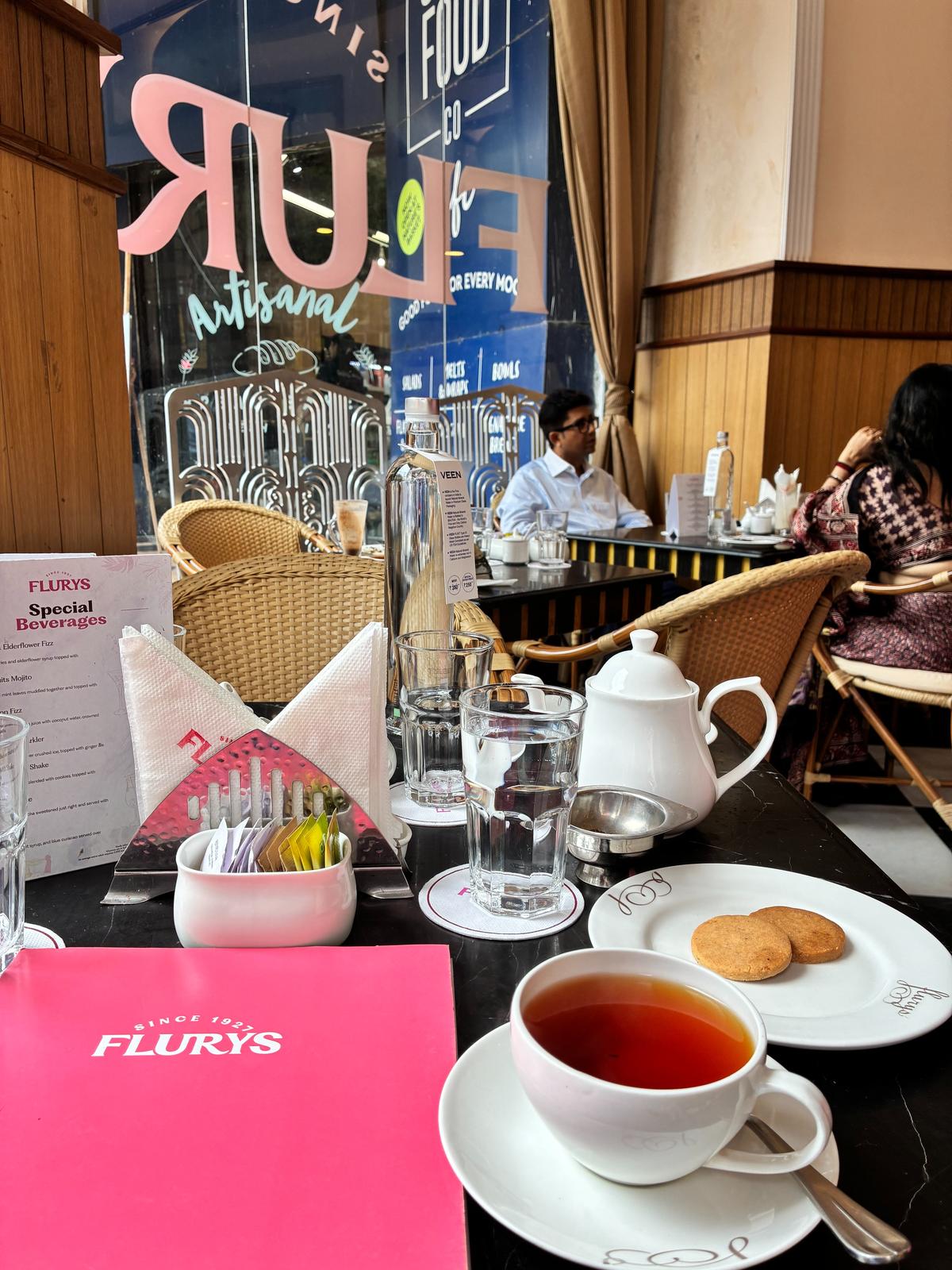
A cup of freshly brewed Darjeeling tea sits alongside the new logo of Flurys, unveiled in 2024.
| Photo Credit:
Shreya Banerjee
On International Tea Day, we take notes from Dhrubojyoti Das, a senior F&B executive at Flurys for over 12 years now, on how to brew a perfect cup of the GI tagged Darjeeling tea. He approaches the subject of brewing with surgical precision. To him, brewing a cup of Darjeeling tea is an art.
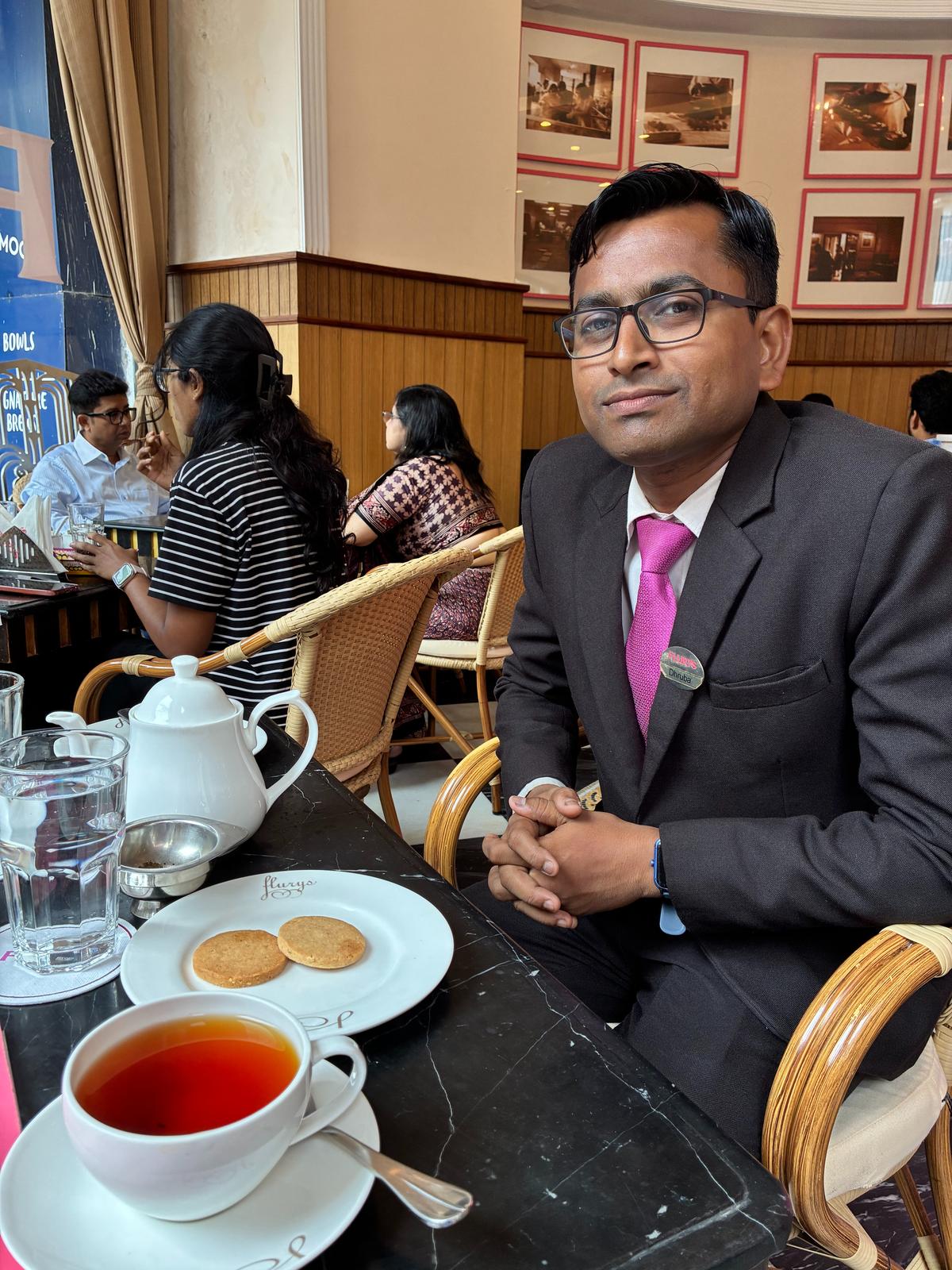
Dhrubojyoti explaining the tea brewing process.
| Photo Credit:
Shreya Banerjee
First, he speaks of water. For Darjeeling tea, water must rest for a few seconds after boiling, waiting calmly to meet the leaves. Dhrubojyoti says that darjeeling tea is prepared using tea leaves sourced from the tea room’s own gardens , owned by the Apeejay group in Darjeeling’s Pankhabari. For one large cup of darjeeling tea, a tablespoon of loose leaf tea is enough. He says that after the water is heated just below boiling point and steeped for precisely three minutes, the tea is strained and served without milk. “The leaves are delicate and one has to let them open slowly until the concoction assumes a golden to deep amber shade, which is the mark of a well-brewed cup of tea,” says Dhrubojyoti.
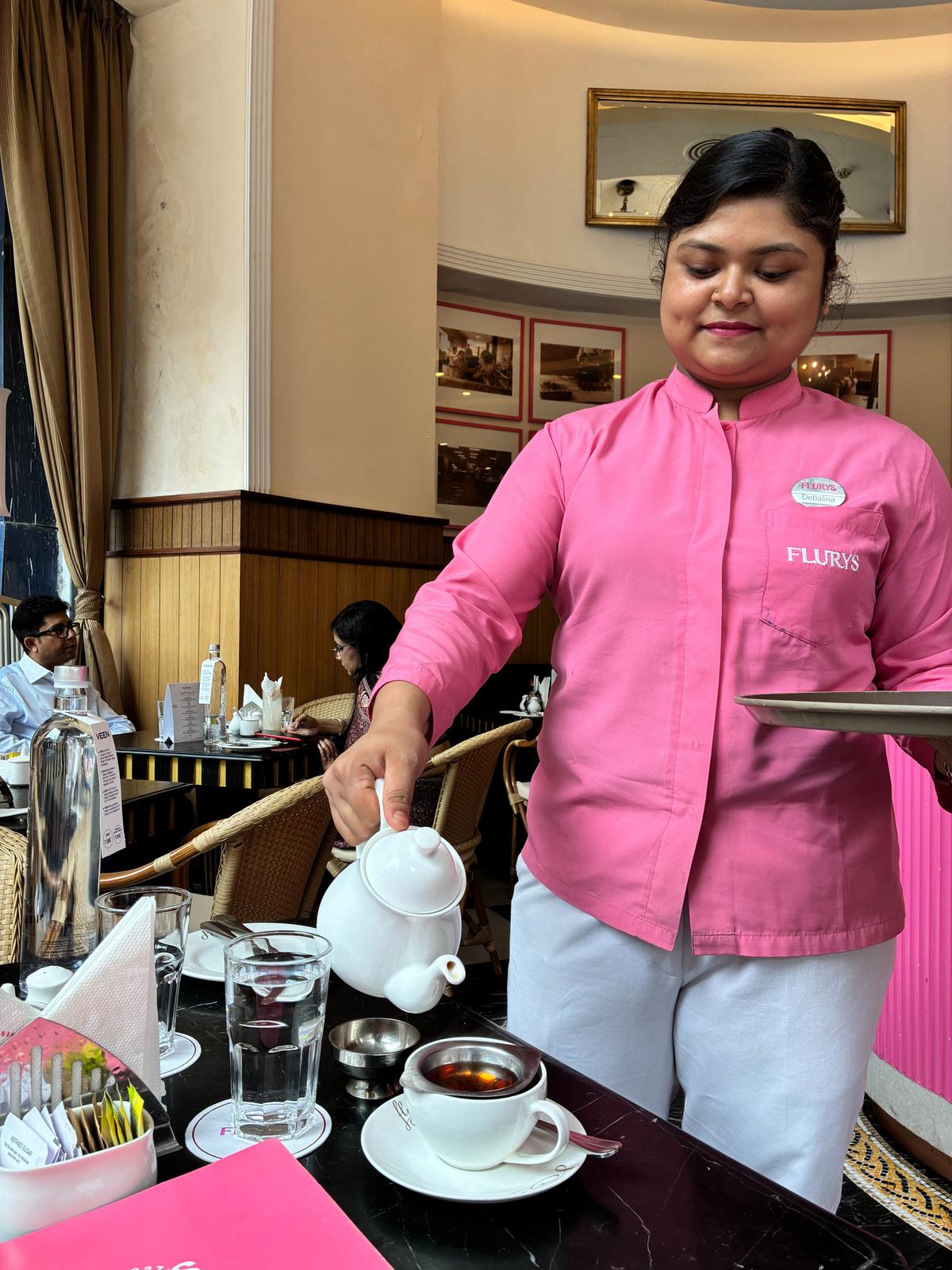
Tea being served at Flurys, Kolkata.
| Photo Credit:
Shreya Banerjee
Darjeeling tea comes in four main flushes or seasonal varieties: the floral and delicate first flush, the fuller-bodied and muscatel-rich second flush, the stronger monsoon flush and the mellow autumnal flush. The second flush is most prized for its rich enveloping notes and bright amber liquor.
The markers of a premium Darjeeling tea lie in its fragrance, whole leaf appearance, layered flavour and absence of bitterness.
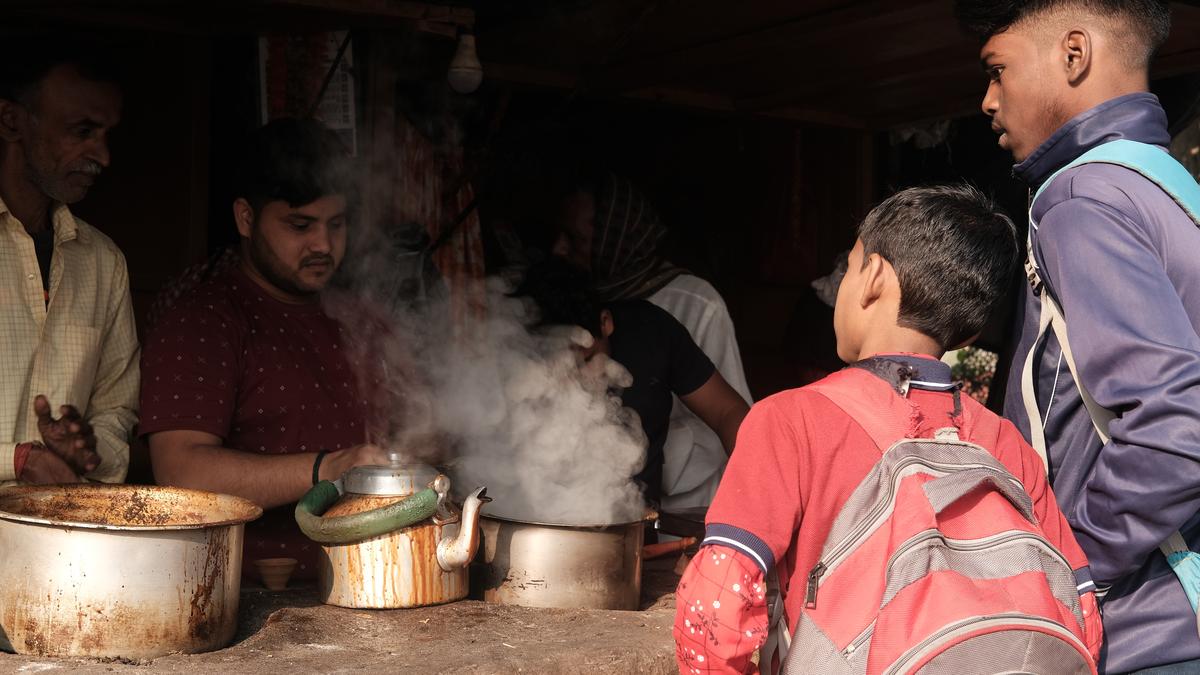
Unlike the thick, malty, tannic chai made from fannings (small grainy particles of tea leaves) and CTC tea, which stands for crush, tear and curl, a processing method that produces small granular tea particles which brew quickly, give a dark colour, strong flavour and pair well with boiled milk, sugar, ginger, cardamom and spices. In Kolkata and much of Eastern India, roadside tea is often made using Assam CTC tea.
From China to India
Acclaimed tea taster Dilip Kumar Banerji, in his book, I am Tea (1933) outlines that tea came from the Camellia group of plants which first originated in China in the 5th entury. “It soon spread to Burma, Japan, and then, through inquisitive explorers of the East India Company, tea was successfully planted in the soils of India.”
Dilip also outlines in his book that, Darjeeling tea belongs to a different emotional climate. It is called the “champagne of teas” by tea connoisseurs for its muscatel flavour, floral aroma and light-golden colour. Like the Champagne region in France, which enjoys geographical exclusivity and produces champagne that are bright, crisp and delicate, Darjeeling tea is exclusive to Darjeeling and is known for its delicate lightness, floral aroma and complex body. Grown across the misty slopes of Darjeeling at elevations often above 6,000 feet, the tea absorbs the peculiarities of mountain weather the way wine absorbs terroir. First flush Darjeeling, harvested in spring, tastes green and delicate, a child of its verdant green environs in spring. Second flush carries the fuller muscatel note tea drinkers speak about with great devotion.
And Kolkata understands the ritual of tea. This is a city where conversations begin with cha and end with another cup. Tea here is not merely consumed, it structures social life and is the nucleus of adda (conversation). Deals are negotiated over tea, heartbreaks are softened with tea, political theories are sharpened beside tea stalls balanced precariously on street corners. Yet, Darjeeling tea occupies a slightly aristocratic corner within Bengal’s tea imagination. It is less hurried, less sugary, less democratic perhaps. It belongs to old clubs, long train journeys to the hills, monsoon afternoons and porcelain cups that make a faint sound when placed carefully on saucers.
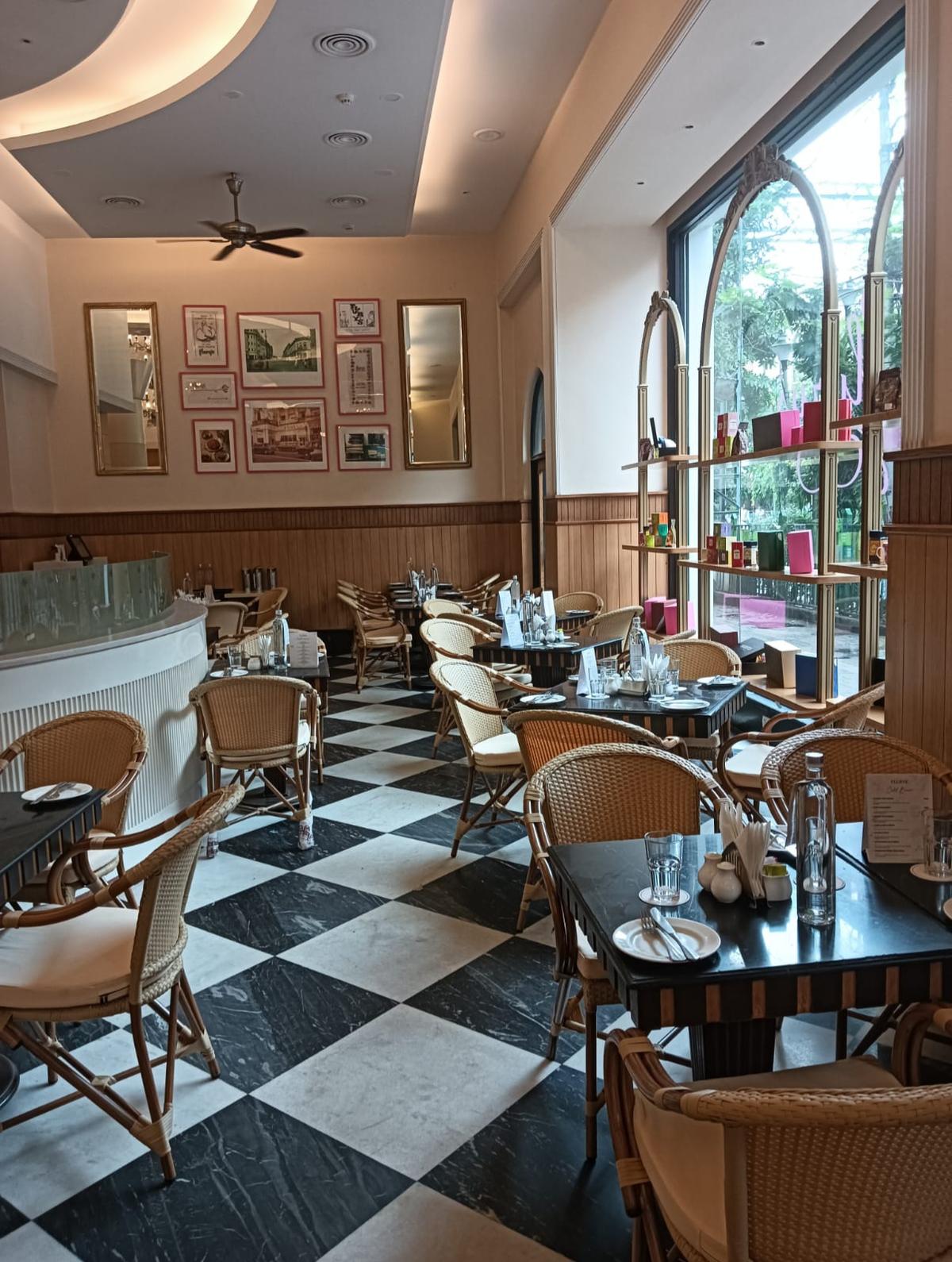
Inspired by European cafés, Flurys features an iconic black-and-white marble flooring.
| Photo Credit:
Dhrubajyoti Das
As the tea is poured into a porcelain cup, the amber toned brew catches the chandelier light like burnished gold. No milk. No ginger. No cardamom. Nothing to interrupt the fragile perfume of the hills trapped inside the leaves. Outside, Park Street hurries on, and somewhere between the first sip and the last curl of steam, Kolkata reminds us that even a restless city can pause for a good cup of Darjeeling tea.
Published – May 21, 2026 07:01 am IST