

International Museum Day: Revisiting Coimbatore’s Gass Forest Museum, Textile Museum, Geedee Car Museum and more
Gass Forest Musuem
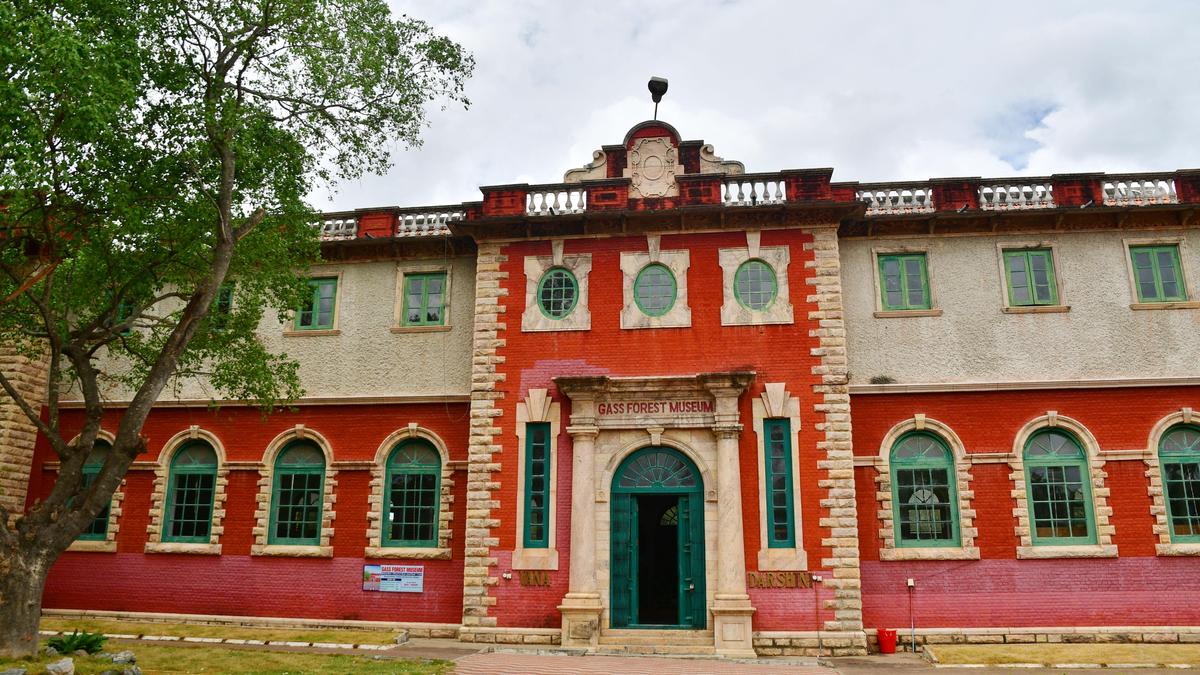
Nestled among greenery at the sprawling forest campus of Tamil Nadu Forest Academy is the iconic 120-year-old Gass Forest Museum named after Horace Archibald Gass (the Conservator of Forests in Coimbatore Southern Circle of the Madras Presidency in 1902) in recognition of his efforts and contributions.
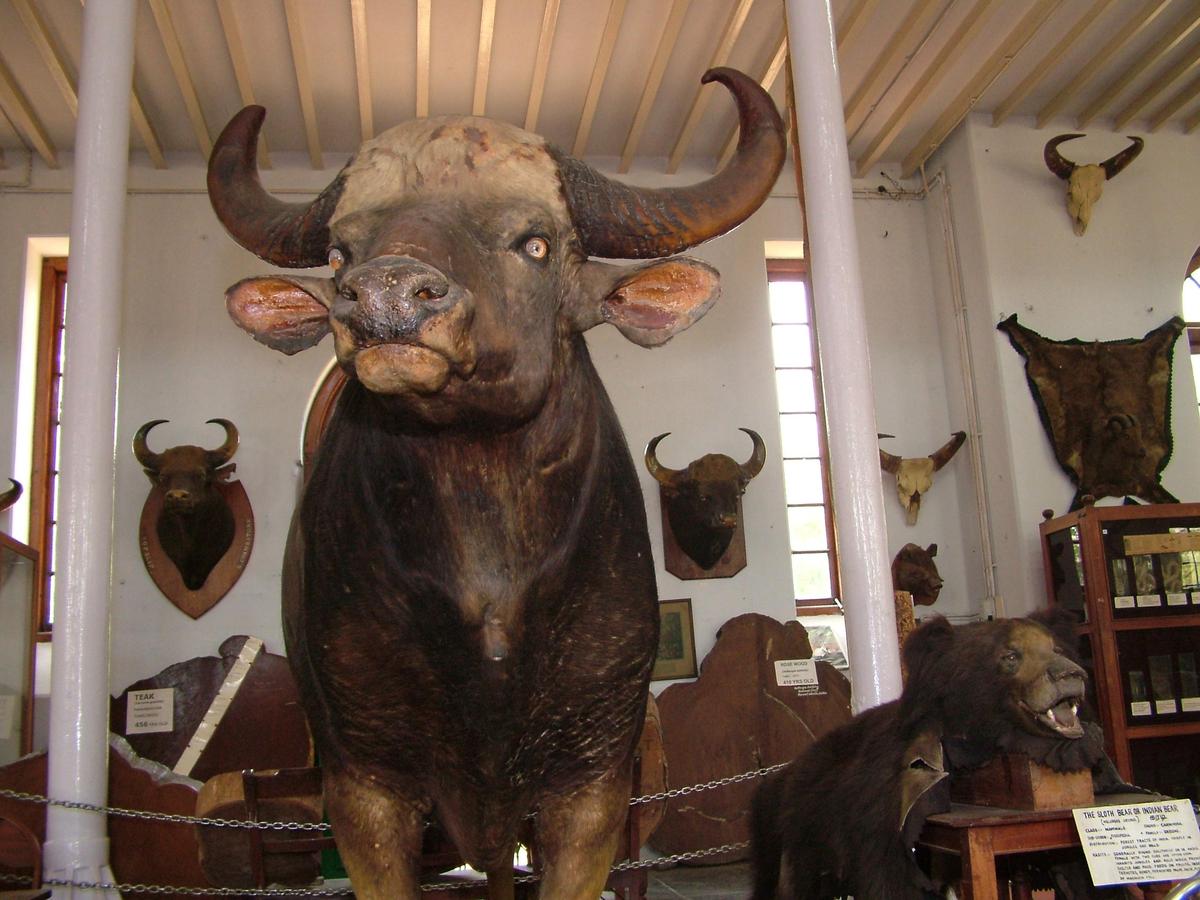
A giant stuffed Indian Gaur from the Biligiri Hills of Karnataka, an exhibit at Gass Forest Museum
| Photo Credit:
PERIASAMY M
A one-of-its-kind museum in the country, it is a record of the history of the land, lovingly curated for over a century. The towering two-tiered Gothic-style mansion holds one of India’s largest and oldest natural history collections and hosts as many as 4000 artefacts including wildlife, timber and non-timber forest produce, geological samples, and forest engineering models. It continues to attract students, researchers, nature enthusiasts and the general public.
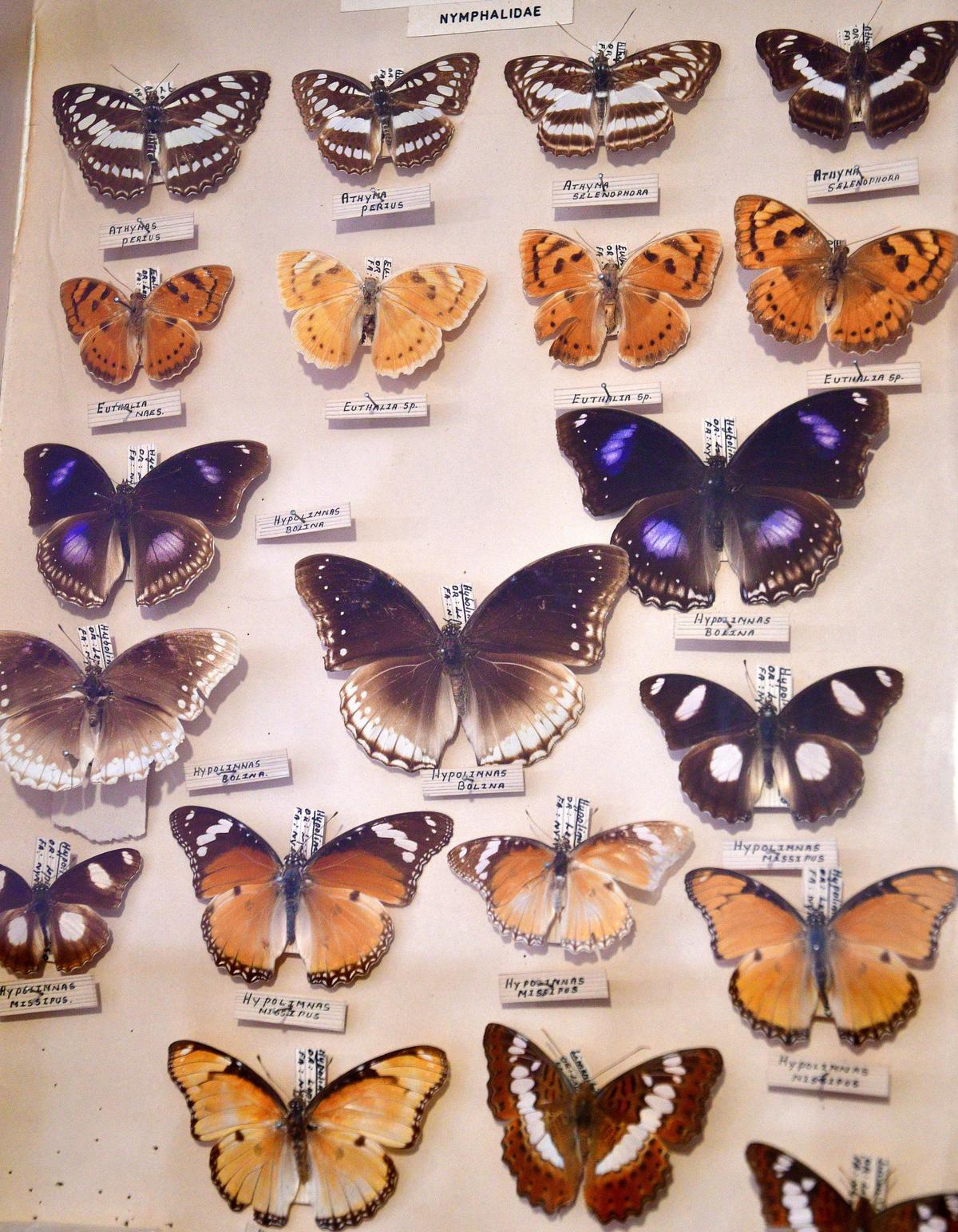
Entomology section
| Photo Credit:
PERIASAMY M

A giant stuffed Indian Gaur from the Biligiri Hills of Karnataka greets you at the exhibition room. It was presented in 1956 by Jayachamaraja Wodeyar, the last Maharaja of the princely state of Mysore. The gaur is accompanied by various other stuffed animals and birds including the great Indian hornbill, Nilgiri langur, and slender lorris. A skeleton section showcases the skeleton of an elephant and a bull while one can also explore an extensive collection of fungi in the mycology section. The exhibits also include a cross-section of a 456-year-old teak wood, first man-made Conolly’s teak wood, and over 400 timber panels. This gives us a peek into history of the East India Company’s arrival and trading. In entomology, insects, beetles and butterflies are displayed on mahogany boards that go back to over a century. A sneak peek of rare butterflies like the autumn leaf and five band swordtail is a highlight. While the wildlife artefacts are disturbed only to polish, periodically change formalin and maintain moisture content, the seeds, soils and fungi collections are updated regularly. However, preserving biological specimens is a challenge.
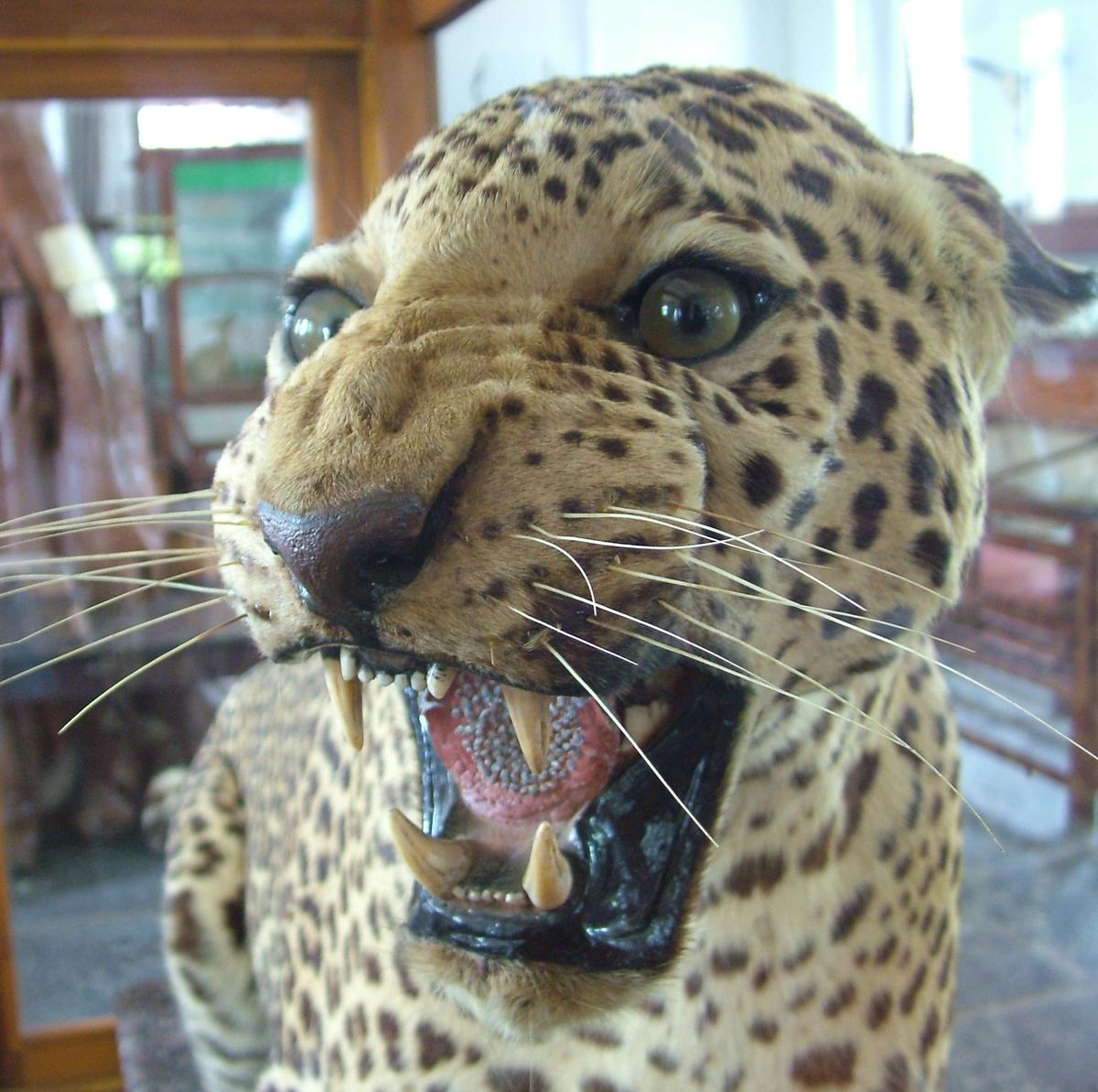
A rich collection of wildlife exhibits
| Photo Credit:
PERIASAMY M
The museum will be open from 9 am to 5.30 pm on all working days except Saturday, Sunday and declared holidays with an entry fee of ₹40 for adults and ₹20 for children. Museum curator can be reached at 0422 2450307.
Police Museum
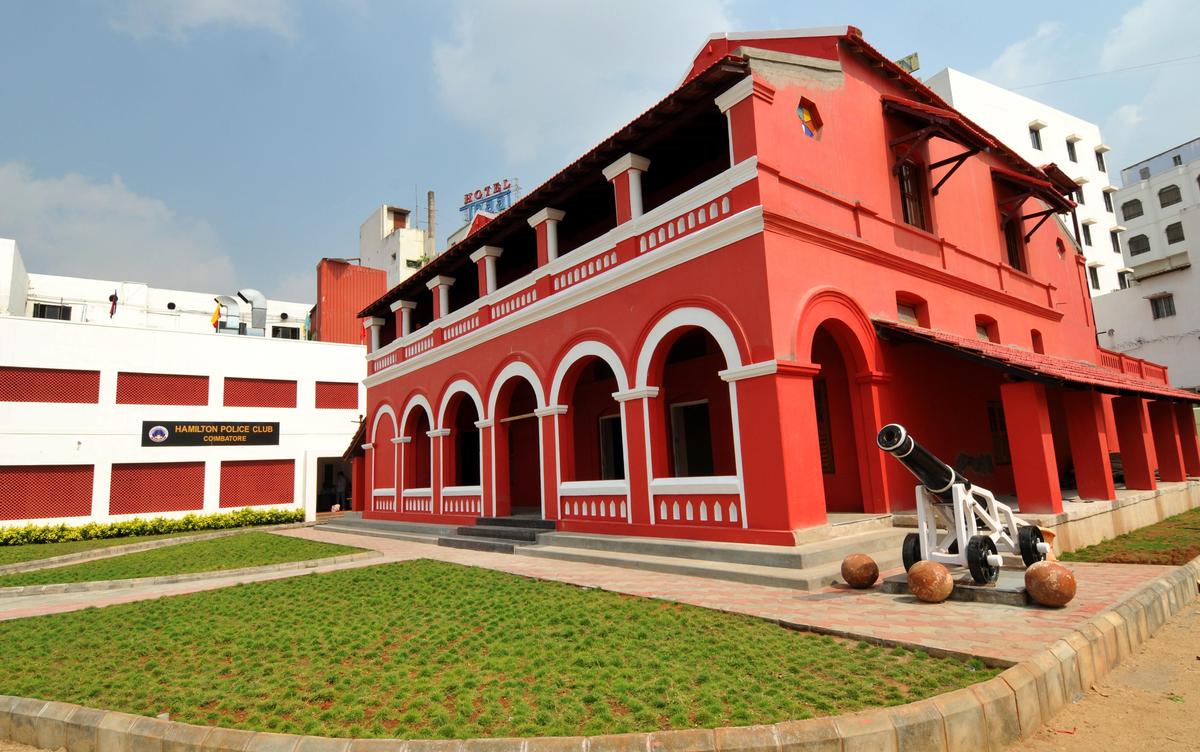
Police Museum (the erstwhile Hamilton Club) near the Coimbatore Railway Station, constructed in 1918
| Photo Credit:
PERIASAMY M
An exhibit of a 120-year-old rare long muzzle load gun catches your attention as you step inside for a date with history at at the Police Museum (the erstwhile Hamilton Club) near the Coimbatore Railway Station, constructed in 1918. The artefacts on display trace the history of the police department including old police uniforms, rare photographs, and weapons seized from late forest brigand Veerappan, a submarine from the Liberation Tigers of Tamil Eelam, to name a few. One of the cannons placed on the side of the building in the open is made of cast iron and was used in the famous battle of Wandiwash (third Carnatic War of 1760) fought between the British and the French. The cannon, partially damaged, is embedded with the British Crown emblem on top. The cannon was brought from Arcot Police Station, Vellore.

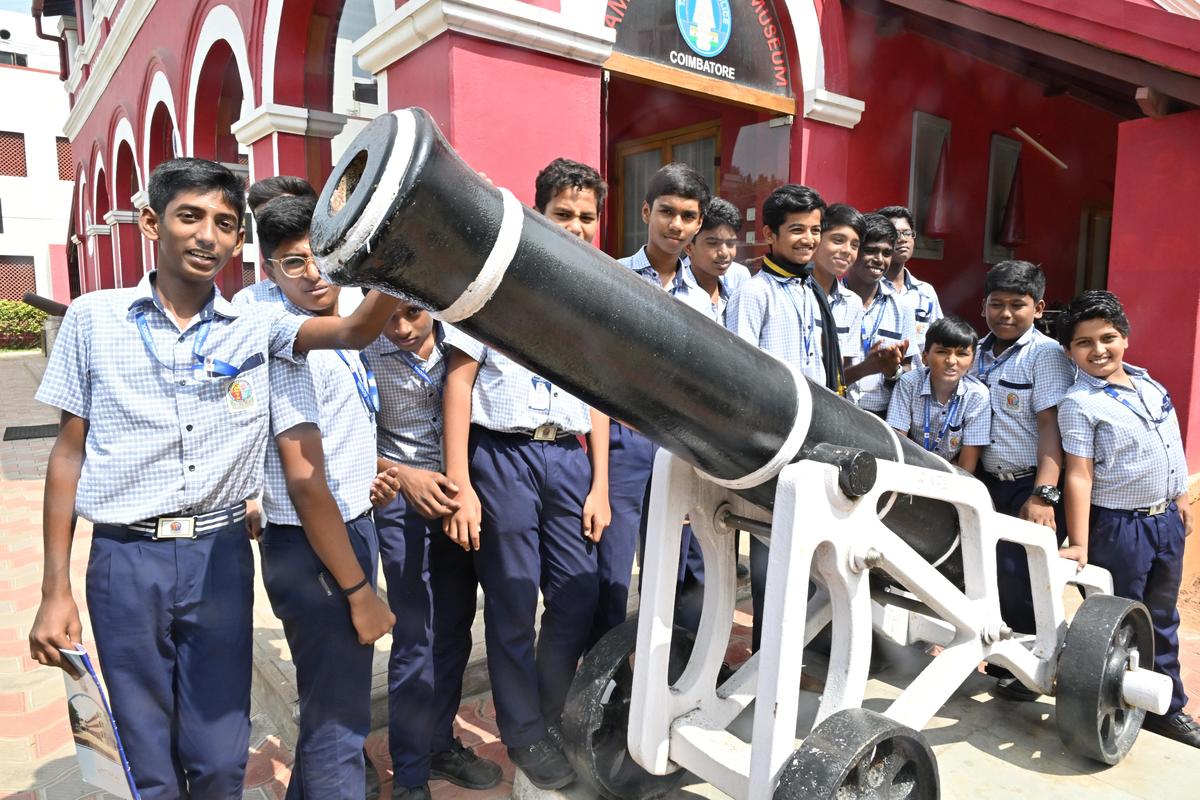
School students at the Police Museum
| Photo Credit:
SIVA SARAVANAN S
An HPT-32 Deepak primary trainer aircraft, which retired from service in 2009, occupies pride of place at the museum. The aircraft manufactured in 1977 by Hindustan Aeronautics Limited (HAL) was used in Indian Air Force Academy near Hyderabad for training purposes. The 25 feet-long aircraft is nine-feet tall and boasts a wingspan of over 30 feet. Other notable displays include the T55 Tanker used in Kargil War, mini aircraft used to train war pilots, marine boats, torpedo missiles from the Indian Navy, and a sword presented by the late MG Ramachandran in 1980. Other prized possessions are hand-written notes of Chief Ministers who ruled the State over the years.
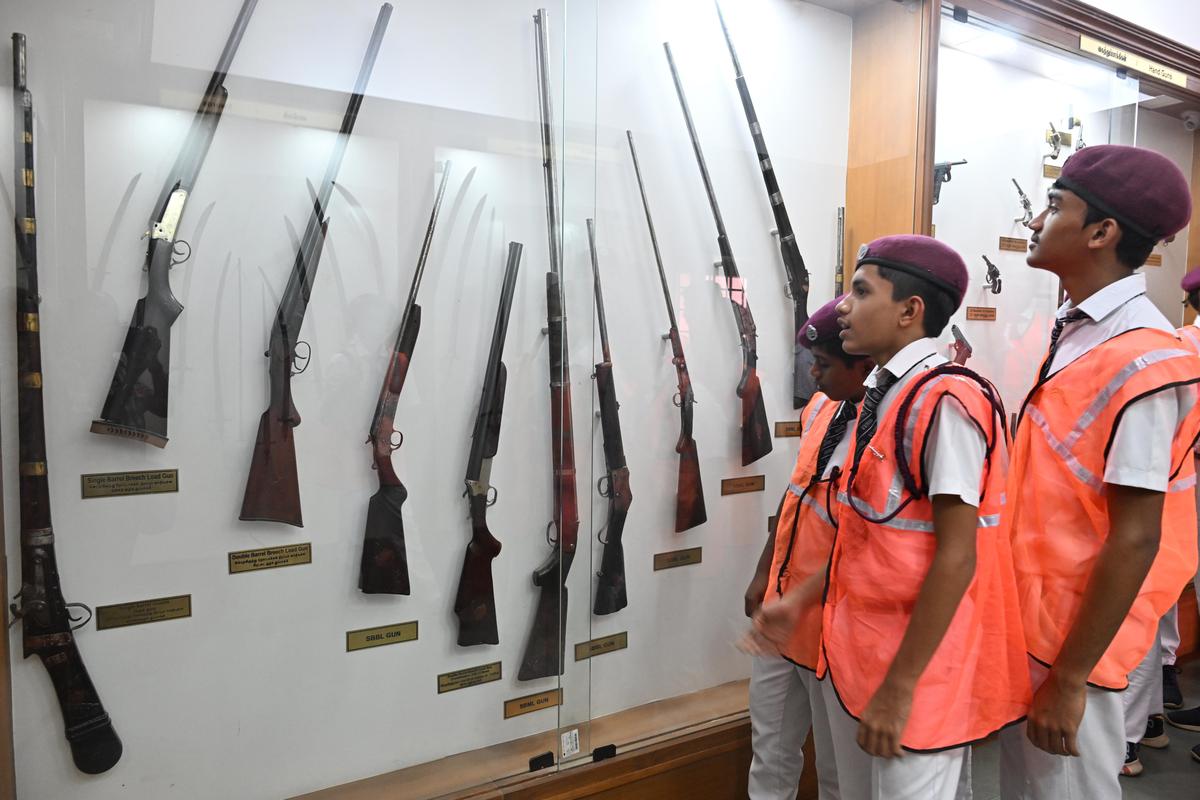
Exhibits at the Police Museum
| Photo Credit:
SIVA SARAVANAN S
An HPT-32Deepak primary trainer aircraft, which retired from service in 2009, occupies a pride of place at the museum. The aircraft manufactured in 1977 by Hindustan Aeronautics Limited (HAL) was used in Indian Air Force Academy near Hyderabad for training purposes. The 25 feet-long aircraft is nine-feet tall and boasts a wingspan of over 30 feet. Other notable displays include the T55 Tanker used in Kargil War, mini aircraft used to train war pilots, marine boats, torpedo missiles from Indian Navy, and a sword presented by the late Chief Minster MG Ramachandranin 1980 are notable displays. Another prized possession are hand-written notes of Chief Ministers who ruled the State over the years.
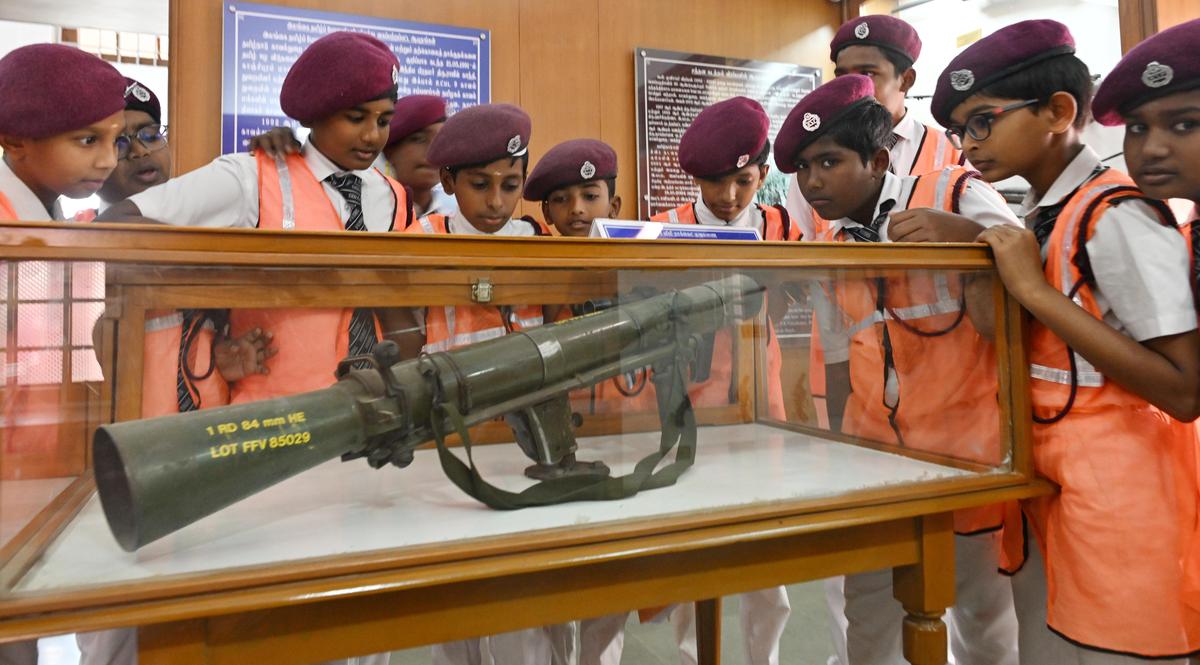
The displays trace the history of the police department including old police uniforms, rare photographs, and weapons
| Photo Credit:
SIVA SARAVANAN S
The Police Museum located on State Bank Road near the Coimbatore Railway Station is open six days a week from 10am to 7pm and is closed on Mondays. The city police band and sniffer dog demonstrations happen every Saturday and Sunday from 6pm to 7pm. Entry fee is ₹10 and free for government school students, police personnel, and children.
Textile Museum
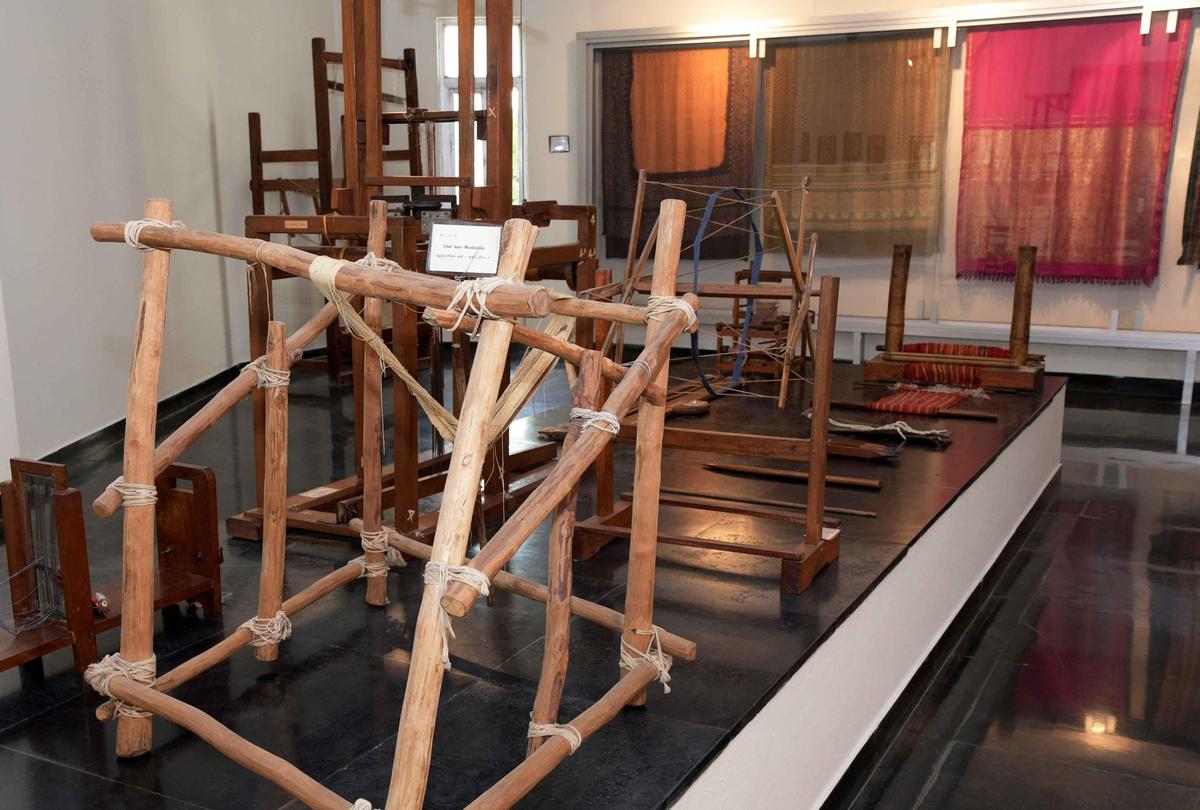
Textile Museum, a part of the Kasthuri Sreenivasan Art Gallery set up in 1988
| Photo Credit:
SIVA SARAVANAN S
An artistic series of paintings on mica sheets that depict the handloom operations in India in the 17th Century starting with reeling, sorting hanks of yarn, dyeing, and marketing, is a noteworthy exhibit at the textile museum, a part of the Kasthuri Sreenivasan Art Gallery set up in 1988 by the late K Sreenivasan, a visionary, textiles scientist and writer. Other displays include traditional looms such as the loin loom used by Naga tribes (one end of the loom is tied to the waist of the weaver and the other to a tree trunk), looms used by tribal people in Madhya Pradesh, hank holders and a model of a drugget loom, which is used to weave carpets.
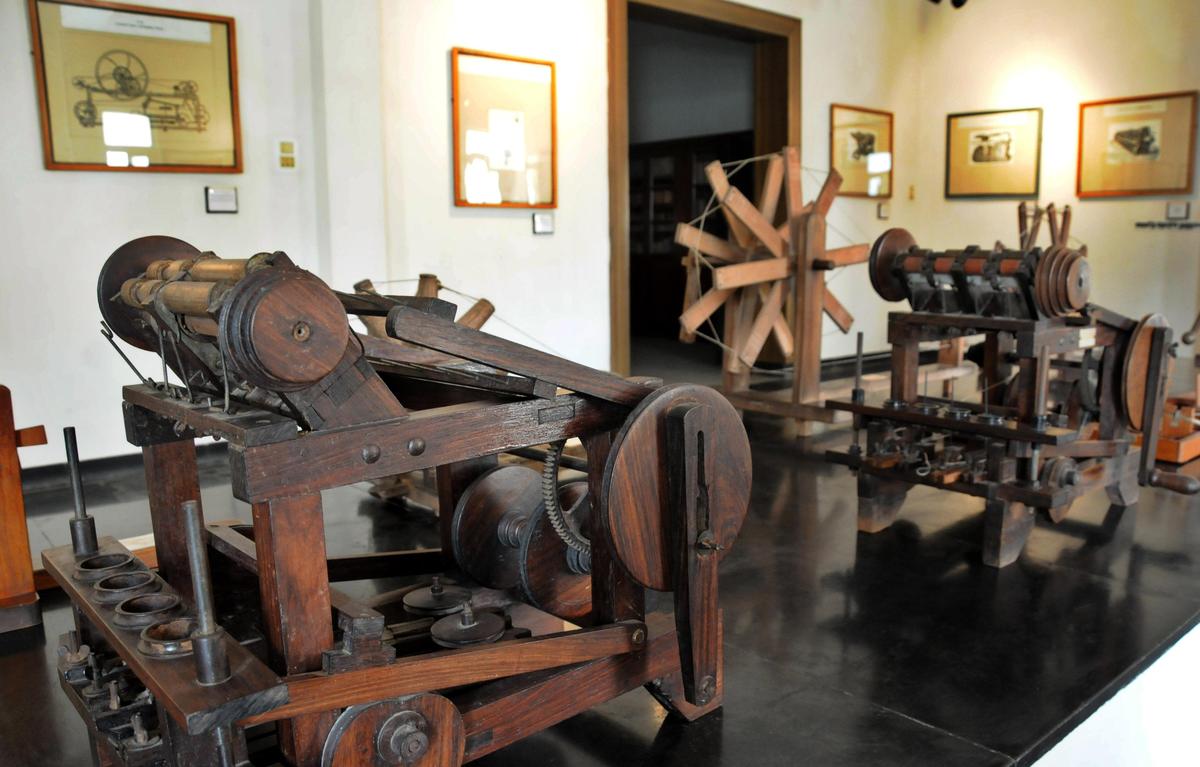
Exhibits at txtile Museum at Kasthuri Sreenivasan Trust Art Gallery in Coimbatore on January 19, 2016.
Photo: S. Siva Saravanan
| Photo Credit:
SIVA SARAVANAN S
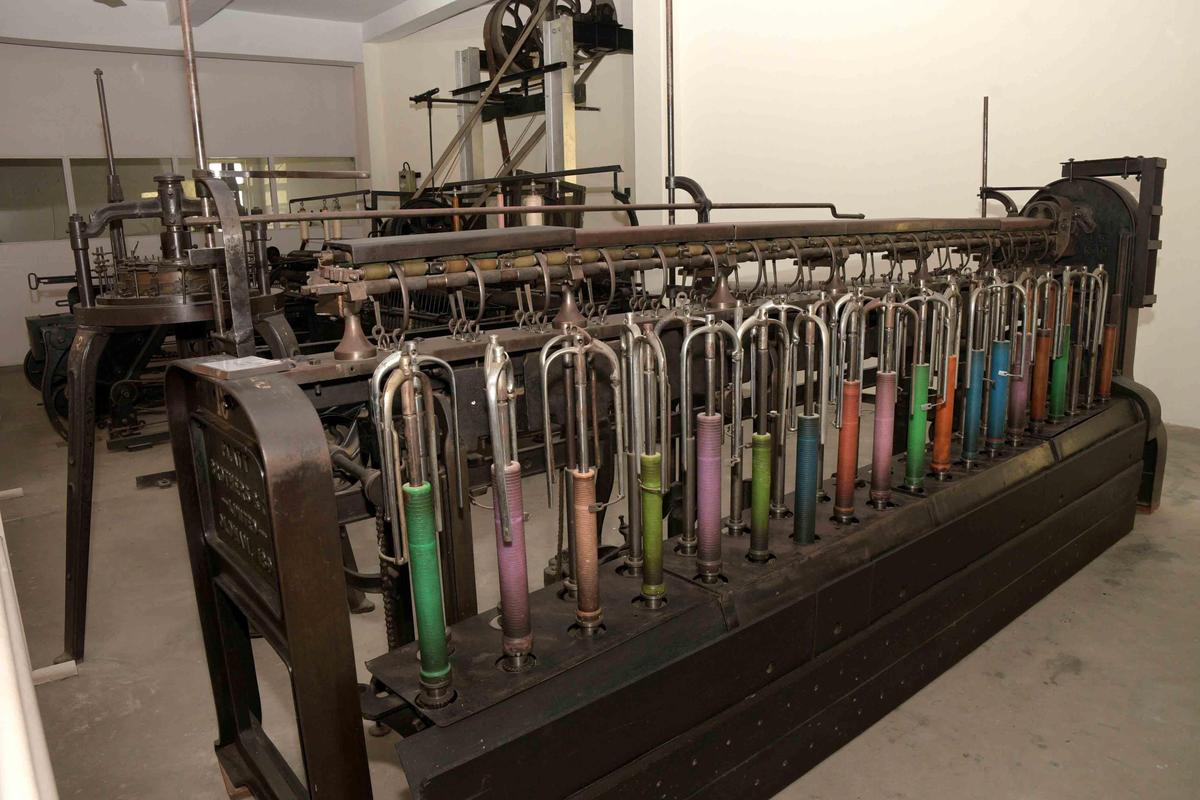
A treasure trove of paintings and textile-related heirlooms, a section on history of textile technology showcases the growth and development of spinning and weaving beginning with whorl wheels of Egypt and the spinning wheels of Mohenjadaro and Takli spinning, to Chinese silk weaving and ancient methods of hand ginning. Among the exhibits are Leonardo Da Vinci’s spinning wheel (Saxony wheel) and samples of a 1000-year-old fabric from the Tellem caves of Nigeria.
A model of manual vertical weaving preparations belonging to 1760 AD and Muller powerloom in use in 1796 AD are also on display. Crompton’s spinning mule, developed by Samuel Crompton (1779 AD) and various models of charkha gives a peek into the rich heritage of Indian textiles.
A section on history of textile technology showcases the growth and development of spinning and weaving
| Photo Credit:
SIVA SARAVANAN S
The KasthuriSreenivasan Art Gallery and Textile Museum is open from 9am to 5pm on all days except Sundays and National holidays. For details, call 0422-2574110. Entry is free
Geedee Car Museum
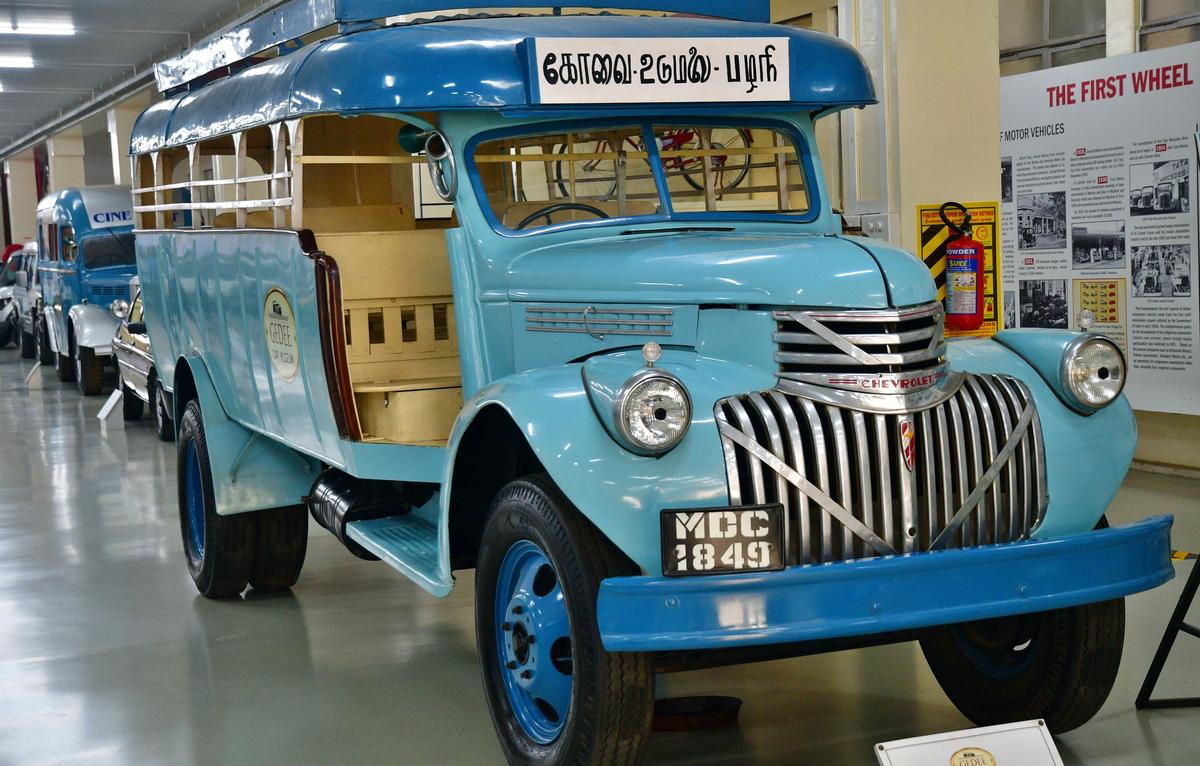
The Geedee Car Museum throws some surprise or the other during every visit. For instance, on a recent trip with a bunch of school children, we saw up close the caravan bus that was used by social activist EVR Periyar for campaigning. We have seen the bus several times — it was a gift from the politician to GD Naidu, who were known to be good friends. What struck us was how the polished wooden interiors gleamed; the seats too were done up with shiny new covers.
The Indian car section of Gedee Car Museum
| Photo Credit:
PERIASAMY M
The museum run by the GD Naidu Charities since April 2015, has over 100 vintage cars that are part of the private collection of the GD Naidu family. A visit takes one through the evolution of automobiles, starting with the history of cars and the technological innovations that took place over the years. Each display is accompanied by informative text panels about the model; there also is a video show that can be seen as soon as one enters the museum.
On display are the Benz Motorwagen 1886 developed by Carl Benz, the Volkswagen Kombi Van T2, Oldsmobile Delta 88, Cadillac One, and Hansa 1100, among others. In 2023, the museum added a bay for Indian cars, featuring over 40 cars by manufacturers such as Hindustan Motors, Tata, Bajaj, and Premier Automobiles.
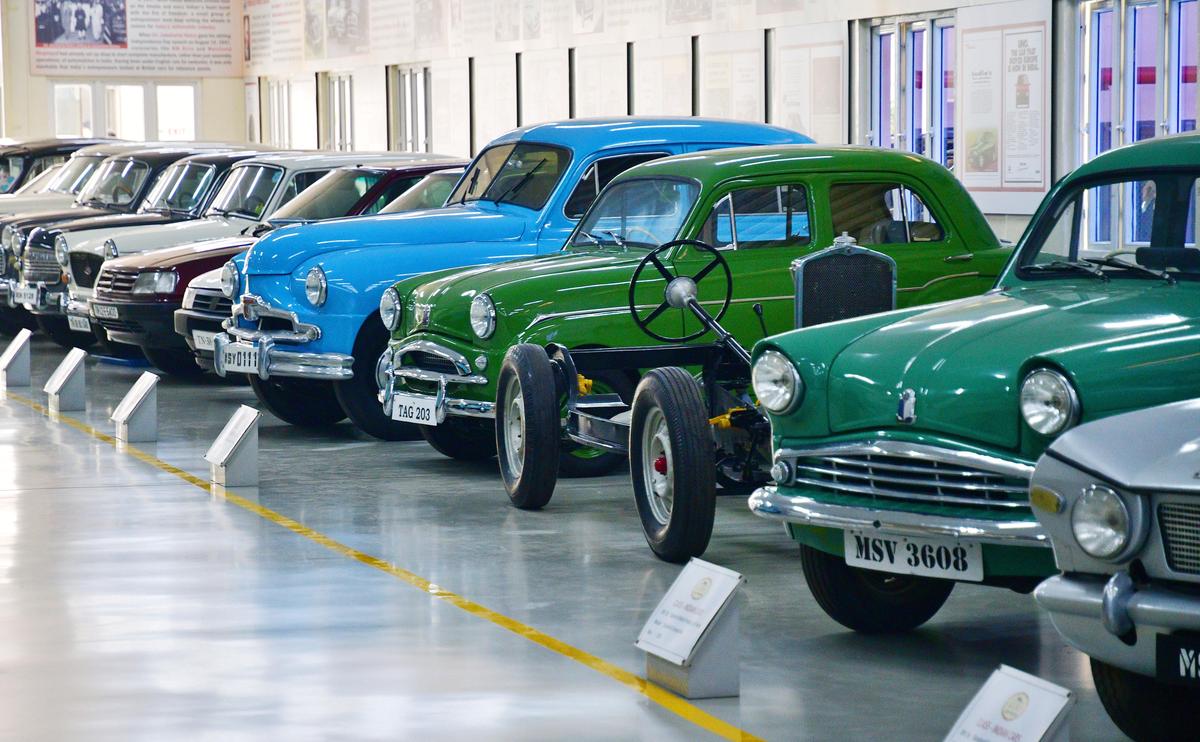
The care section featuring over 40 cars by manufacturers such as Hindustan Motors, Tata, Bajaj, and Premier Automobiles
| Photo Credit:
PERIASAMY M
There are good old models such as Uno, Ambassador from 1964, Matiz, and 1984 Contessa Classic and cars such as Indigo, Indica and Aria, a Bedford studio van from 1931and a Coimbatore-Udumalpet-Palani bus from the 1940s. Another highlight is a new section for performance cars with 25 cars, including race cars, supercars, luxury cars, and Formula 1 cars.
Gedee Car Museum is located at 734, President Hall Building, Avinashi Road. Open from Tuesday to Sunday, 9am to 6.30pm. For details, call 2222548.
Mahatma Gandhi Memorial
A guest house in Podanur that Gandhiji visited on February 6, 1934, has been restored as the Mahatma Gandhi Memorial for public viewing. Inaugurated on October 2, 2022, the house belongs to family of inventor GD Naidu. The memorial features a photo gallery, library, and a semi-open conference space. Visitors can also see displays of replicas of artefacts used by Gandhi, such as his spectacles, Ingersoll watch, rosary, and the charkha.
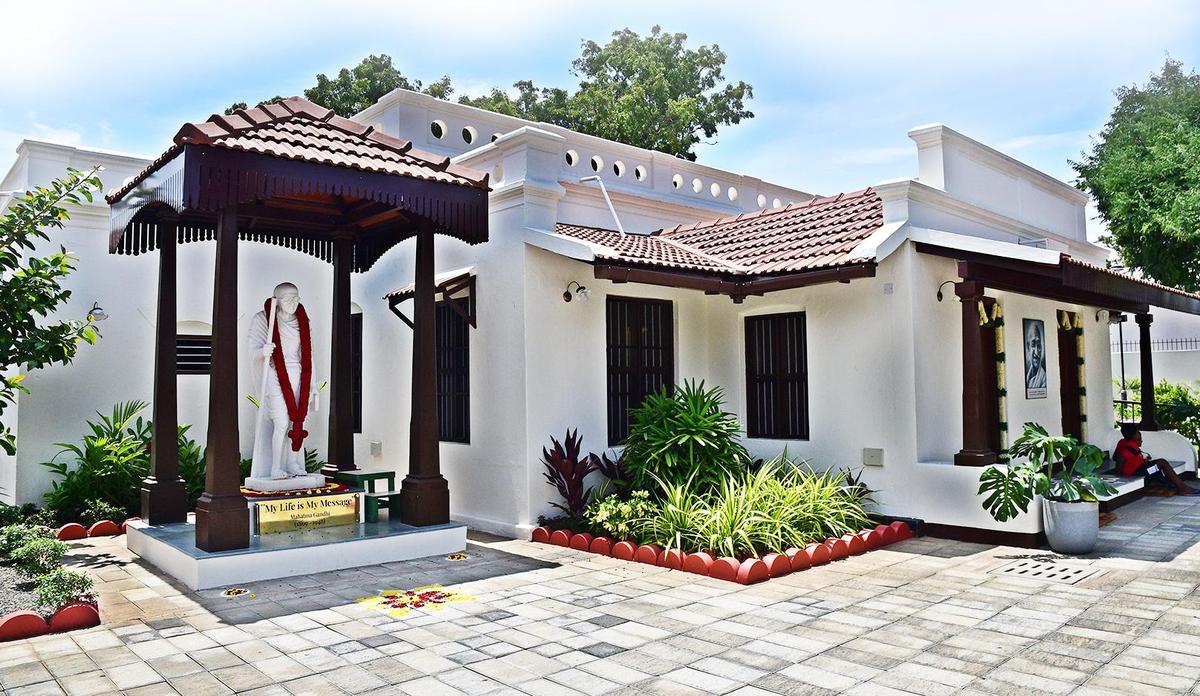
A view Mahatma Gandhi Memorial at Podanur
| Photo Credit:
Siva SaravananS
Gandhi was in Coimbatore for collecting funds for his Harijan Welfare organisation. He arrived at the guest house past 11pm, and was up till 2am, engrossed in accounting work. The room in which he worked now has a low table with a white mattress along a wall, and a charkha in front of it.

The photo gallery has displays that tell people the life story of Gandhi. Here, one can find snapshots of letters he wrote. There is a note in his well-known simple handwriting; a photo of his letter to Tagore, and even a copy of his Matriculation exam results from 1887.
In its previous avatar, the tile-roofed building was known as GD House and it was during his stay here that Gandhi laid the foundation stone for Sri Ramakrishna Vidyalaya.
Mahatma Gandhi Memorial is located at 11/10 A, Chettipalayam Road, Podanur. It is open from 9am to 6pm, Monday to Saturday. Entry is free. Call 2993441 for details.