



I Love EVs, But Kia and Hyundai Are Making That Harder
I transitioned to car journalism in the late 2010s, just as two seismic automotive industry shifts began. Electric vehicles evolved. What were eccentric curiosities became compelling options for mainstream buyers. The period also saw the rise of Hyundai Motor Group. The previously maligned Hyundai and Kia brands, along with a new luxury arm, Genesis, produced flashy, award-winning EVs and distinctive, commercially successful family crossovers.
My wife and I were both ready for new cars in 2024. At my “expert” urging, we made what seemed like the savvy, car journalist play: getting the best value in the market by going all-HMG and all-electric. I found a too-cheap-not-to take-it offer on a 2024 Hyundai Ioniq 5 SEL AWD and traded in my aging Volkswagen Golf Sportwagen. Meanwhile my wife wanted a luxurious, efficient three-row crossover to replace her Hyundai Santa Fe Hybrid. We decided to risk first-year production with a 2024 Kia EV9 GT-Line.
We leased both cars. That’s where the deals were with the now-defunct federal tax credit loophole. I was also unsure how EV technology and the resale market for used electric cars would develop over the next few years. I am now glad we did so—not because of the resale market (probably the right move)—but because of battery problems, which have me eager to move on from both cars.
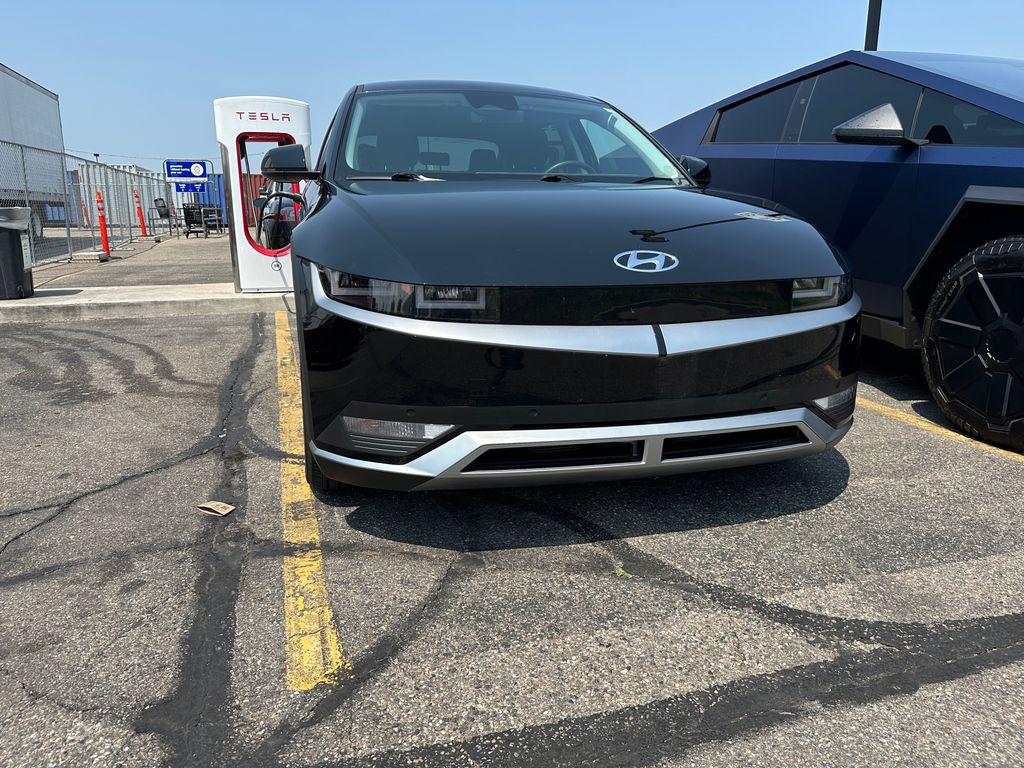
The writer’s Hyundai Ioniq 5 parked at a Tesla Supercharger. Photo: Ty Duffy
Photo by: Ty Duffy/InsideEVs
Our Ioniq 5 has developed a seriously annoying quirk with its 12V battery. And our Kia EV9, fresh off a full traction battery replacement and multiple month-long trips to the dealership, has had me researching Michigan lemon laws. We no longer concern ourselves with long-distance range anxiety. We fear driving either vehicle outside of rideshare range from our house.
Our First EV9 Battery Issue Occurred Immediately
When operational, our EV9 has been an excellent family SUV, electric or not. It looks cool, garnering unsolicited comments from friends, family, strangers, valets, and dealership employees. It’s pleasant to drive. It has a compelling infotainment interface. There’s plenty of space for luggage and passengers. Older relatives can get in and out easily. But “when operational” has proven quite the caveat of late.
Our EV9 experience did not get off to an auspicious start. I picked the new EV9 GT-Line up from the dealership. I brought it home proudly and texted my wife the obligatory photos of her new daily driver. Aglow with new car glee, I attempted to install my daughter’s car seat before picking them up from school. That’s when I noticed the GT-Line’s second-row relaxation chairs were frozen in place. The folded one would not lift. The upright one would not fold. I returned the vehicle to the dealership first thing the next morning.
I researched the issue online. The salesperson had told me when I picked up the EV9 that they had to jump the 12V battery before I arrived. Owners reported the same issue with those seats on the GT Line after having the 12V battery go flat. I presumed a software reset would fix things in no time. That was the fix, but the process proved anything but swift, requiring multiple diagnostic tests and back-and-forths with a central Kia service hub.
The whole thing took about a week to sort out. I remember vividly because I gallantly gave the Ioniq 5 to my wife and spent a week driving the dealership’s loaner: a Kia Niro PHEV that still reeked of the last occupant’s chainsmoking.
Then The EV9’s Traction Battery Started Acting Up
The next 14 months or so proved relatively uneventful. The EV9 had regular maintenance and safety recalls. We had to replace one of the plastic GT-line wheel covers, which a rock cracked. My wife put about 11,000 miles on the EV—mostly city driving. We DC fast-charged the EV9 twice and charged it above 80% once when my wife drove it to Grand Rapids, MI, for a work event.

Photo by: Ty Duffy/InsideEVs
Then the main traction battery started having issues. On December 7, 2025, I charged the EV9 on our home level 2 charger overnight. I woke up to an email alert that the charge had stopped at 67%, with a glaring red warning light indicating a problem with the battery system. I got the first available Kia appointment, at a different dealership from the first one, four days later. The battery had drained down to 42% sitting in the driveway.
The dealership ran a diagnostic. Five days later, on December 16, 2025, the service department informed me that the EV9’s battery management system needed a new control module. The dealership needed to order that part. The holidays happened. My family endured a week-long bout of Influenza A. I was neck-deep on message boards tracking the drama of Michigan’s football coaching search.
I finally reached out to the dealership to check in on December 29, 2025. The service center told me the part was in, the technician was working on it, and they hoped to get the car back to me later that day. “Later that day” ended up taking much longer. The service center did not have the car ready until the end of the day on January 9, 2026, nearly a month after I brought it in.
Eventually, The Kia EV9 Required A Full Battery Replacement
My wife drove the EV9 for another two months. On March 16, 2026, we received another red critical battery error notice. I brought the car to a third Kia dealership on March 17, 2026. Kia informed me the following week, after diagnostic back-and-forth with the central Kia service center, that the EV9 required a full high-voltage battery system replacement.
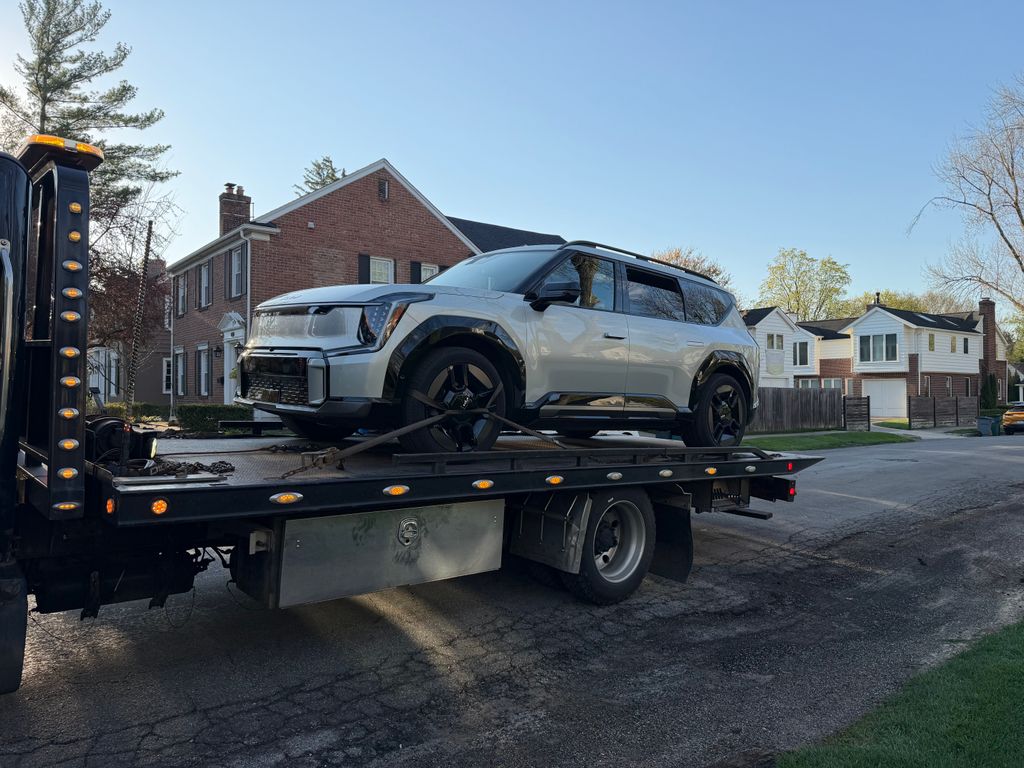
The writer’s Kia EV9 on a flatbed tow truck.
Photo by: Ty Duffy/InsideEVs
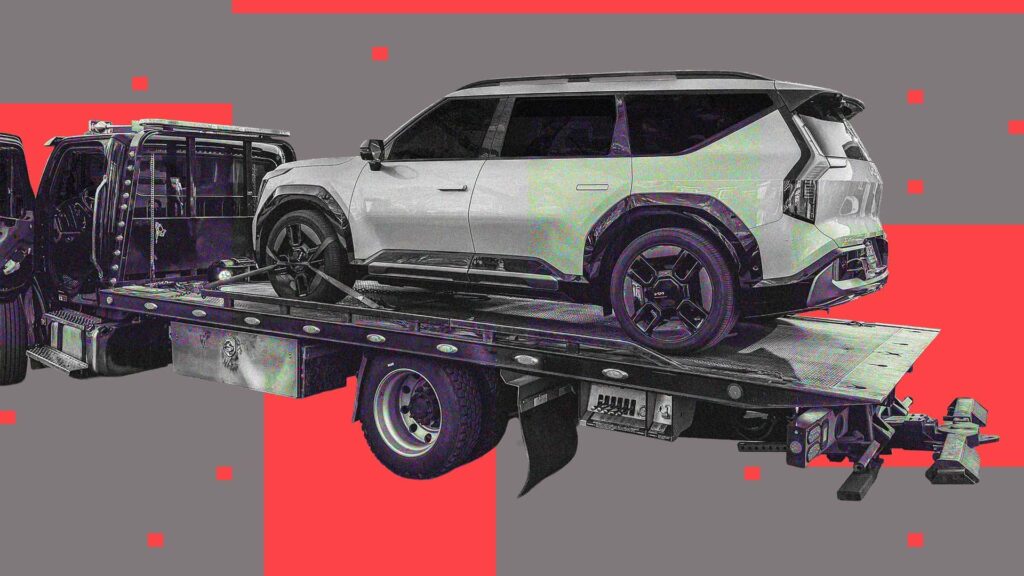
The dealership had to order and then install the new battery system. Then the dealership had to order and install a new fuse. The dealership informed me the car was ready on April 21, 2025. I picked up the car, drove home, turned it back on to pick up my kids from school, and received an orange alert to refill the battery system coolant. I sent the EV9 back to the dealership on a tow truck.
The issue was air bubbles during the coolant refill during the battery install. Technicians drained the coolant system and refilled it. I picked it up on April 23, 2026. No battery indicator lights have come on—so far. I have officially out-Kia-problemed my buddy, whose “in spec” 3.8-liter Telluride is burning a quart of oil every 1,000 miles.
Kia did not get back to InsideEVs when reached about the problems I experienced or about battery failure rates in its EVs. But it’s safe to presume my experience is rare. The latest data shows that manufacturers have replaced only 0.3% of EV batteries in new electric cars since 2022. If the EV9 were dead average in that regard, it would mean that about 66 of the 22,017 EV9s that Kia sold in the U.S. in 2024 required replacement. I am one of those few and not particularly proud owners.
Our Hyundai Ioniq 5 Has Also Had 12V Battery Issues
Our Ioniq 5 trouble began on December 31, 2025. We celebrated New Year’s Eve at my brother-in-law’s house. I was last to arrive and dutifully parked the Ioniq 5 in the last space at the end of the one-vehicle-wide, vertical driveway. I tried to leave around 9:00 pm (New Year’s Eve parties are less rowdy with kids). The Ioniq 5 would not start, becoming a nearly 5,000-pound cork blocking most of my wife’s family from leaving.
I determined the issue was likely the 12V battery. The traction battery had about 42% charge remaining. A vehicle-to-vehicle jump attempt was unsuccessful. Hyundai’s roadside assistance came to the rescue with a portable jump starter, which got the car going around 10:20 pm.
I did not experience the issue again for some time. I presumed it was a one-off, probably resulting from some sort of draining while it sat in our driveway for a few days while my family recovered from the flu. I purchased a NOCO portable jump starter and kept it charged in the glove box. I also avoided parking in anyone else’s driveway.
Ty Duffy’s Hyundai Ioniq 5
Photo by: Ty Duffy/InsideEVs
The Ioniq 5 started having the 12V battery go flat again sporadically over the past couple of weeks. It’s not clear whether the issue is some form of vampire draining (which has been an issue for Ioniq 5s in the past), a failure to charge the 12V under certain conditions, or an issue with the battery itself, after about 8,500 miles.
A Hyundai spokesperson suggested that the issue may be related to a faulty integrated charging control unit (ICCU) fuse that was the subject of a 2024 recall. I have performed all recalls I was aware of, including having Hyundai inspect the ICCU, after leasing the vehicle in May 2024. The National Highway Traffic Safety Administration recall page shows no open recalls for my vehicle. It’s possible the fuse has failed since it was inspected, in which case Hyundai would take care of it free of charge.
Under normal circumstances, the Ioniq 5 would be at the dealer getting sorted. But I did not want to embark on what could have been a substantial repair with days left on my lease. I try to keep the Ioniq 5 on the charger when at home. The portable jump starter makes the issue a mild inconvenience rather than an untenable catastrophe. The Ioniq 5 has stranded me at home only once, when I forgot to charge both the car and the NOCO overnight. Fortunately, I work from home and live within walking distance of my kids’ school.
Would I Buy Another Hyundai Motor Group EV?
It’s complicated. I would consider another Hyundai EV. We’ve had multiple Hyundai vehicles and liked them. Our local dealer is pleasant to work with. The only other issue I had with the Ioniq 5 over two years was becoming so annoyed by the flimsy stock windshield wipers that I bought aftermarket ones.
We already replaced the Ioniq 5 with a 2025 Toyota 4Runner hybrid. On a spreadsheet, it will look like I turned away from EVs. But the decision was more due to a change in our family’s needs. My wife and kids took up skiing, and charging infrastructure in Northern Michigan is seriously lacking. Driving up there in an EV is a pain in the summer. With range loss in the winter, it is untenable. For me, having one vehicle that can fill up with gas makes more sense (even if it’s pricey right now).
We would prefer another EV for the second car. However, it’s hard to know what will even be available in a year and a half when our EV9 lease expires, given the raft of cancellations and delays as of late. The replacement won’t be another EV9, that’s for sure. We can’t trust the reliability, even if our issue was statistically unlikely. And Kia’s dealer network, at least where I live in Southeast Michigan, has not kept pace with the quality of the cars.
If there’s one brand with a reputation for quality, durability, and reliability, it’s Toyota. And we will definitely be checking out the new Toyota Highlander EV when it launches later this year.