



Global financial environment is extremely challenging, cautions Chief Economic Advisor Nageswaran
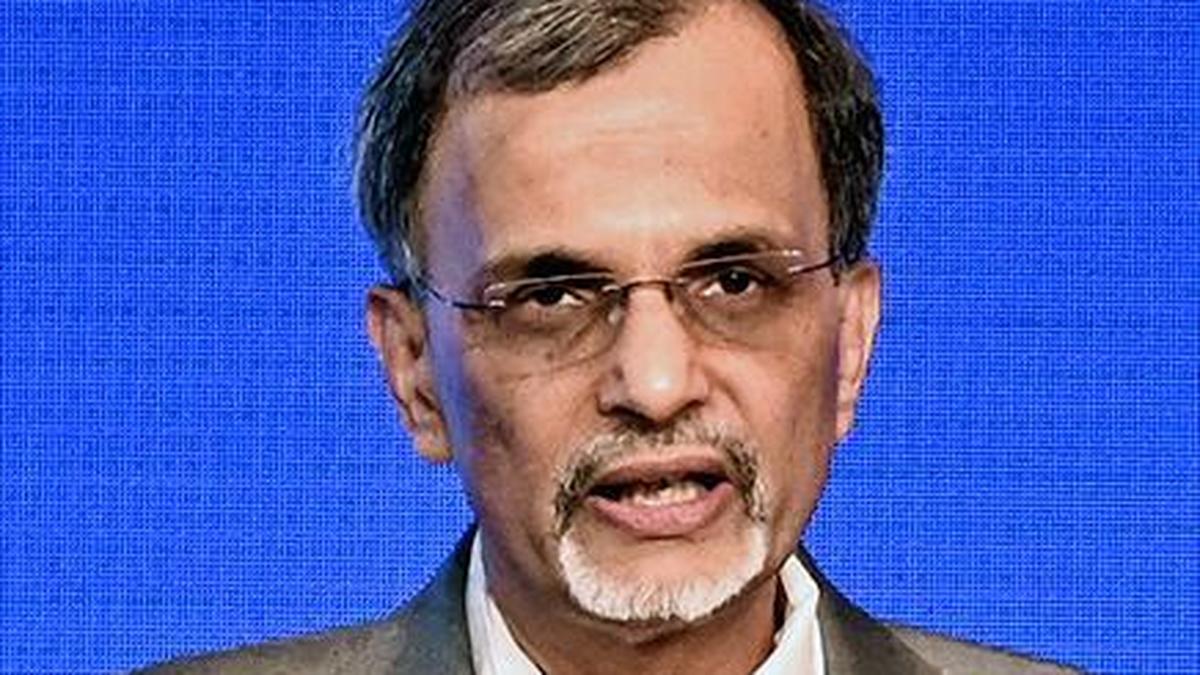
The global financial environment has become increasingly challenging, with U.S. 30-year Treasury yields crossing 5%, the U.K. 10-year yield rising above 5.2%, and Japan’s 30-year yield touching 4%, said V. Anantha Nageswaran, Chief Economic Advisor, Government of India in Bengaluru on Saturday.
According to him, much of the FDI India attracted over the past two decades came during an era of near-zero interest rates and quantitative easing, when global capital actively sought higher returns in emerging markets. “With that phase now over, India must compete in a world where 5% risk-free long-term interest rates have raised the benchmark for every dollar of investment entering the country,’’ he stated while delivering a keynote at the PanIIT Alumni Meet 2026 in Bengaluru.
Highlighting the changing global landscape, Mr. Nageswaran, pointed to three major forces redefining the world order: intensifying great-power competition, fractures within Western alliances and China’s unprecedented manufacturing dominance.
India’s goods trade deficit stood at 8.5% of GDP in FY24, and even after excluding oil and coal imports, the deficit remained at 3.5% of GDP, indicating a structural rather than cyclical challenge. At the same time, foreign direct investment (FDI), after accounting for repatriation and outflows by Indian firms, has reduced significantly, with global investors watching India closely but not committing capital at the scale required, he observed.
Speaking candidly about India’s economic realities, Mr. Nageswaran noted that India’s goods trade deficit remained structurally significant and that global capital flows were becoming more selective in a high-interest-rate environment.
“India’s potential is not a given. It must be claimed deliberately,” he said, emphasising that the coming decades would be shaped not by any single government, but by the collective choices of citizens, institutions and industry leaders.
Addressing a packed audience of policymakers, technologists, entrepreneurs, investors and industry leaders, Mr. Nageswaran urged that, “India is at a fork, not in crisis and must move with speed, confidence and strategic clarity.’’
On manufacturing, he said India must simultaneously focus on labor-intensive sectors such as garments, footwear and food processing, while also building capabilities in semiconductors, batteries, advanced electronics and specialty chemicals.
Calling for greater urgency in building strategic reserves and accelerating nuclear energy adoption, he said a country aspiring to host semiconductor fabs, battery gigafactories and data centres cannot treat nuclear energy as a distant horizon.
Addressing the rise of artificial intelligence and its impact on employment, the country’s Chief Economic Advisor said, AI would compress routine cognitive work and narrow entry-level hiring, making deep expertise and skilled trades increasingly important.
According to him, the country requires at least eight million new jobs or livelihoods every year, however, he said trade skills such as electricians, skilled construction workers and technicians will remain among the most protected and essential jobs in the emerging economy.
Mr. Nageswaran also urged IIT alumni, who gathered at the meet, to leverage their influence across government, academia, industry and startups to help shape India’s next phase of growth and strategic transformation.
Stressing that India’s next 25 years would be determined by the collective choices of institutions and individuals, the CEA said the country could no longer afford slow decision-making and delayed execution in an increasingly fragmented and conflict-prone world order.
Published – May 16, 2026 09:00 pm IST