



From weed to wealth: Assam women turn water hyacinth into livelihoods near rhino habitat
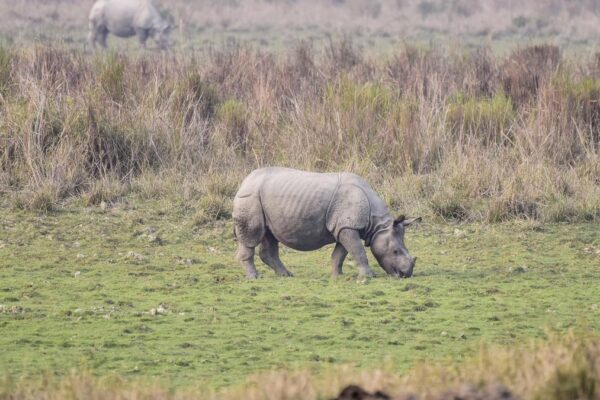
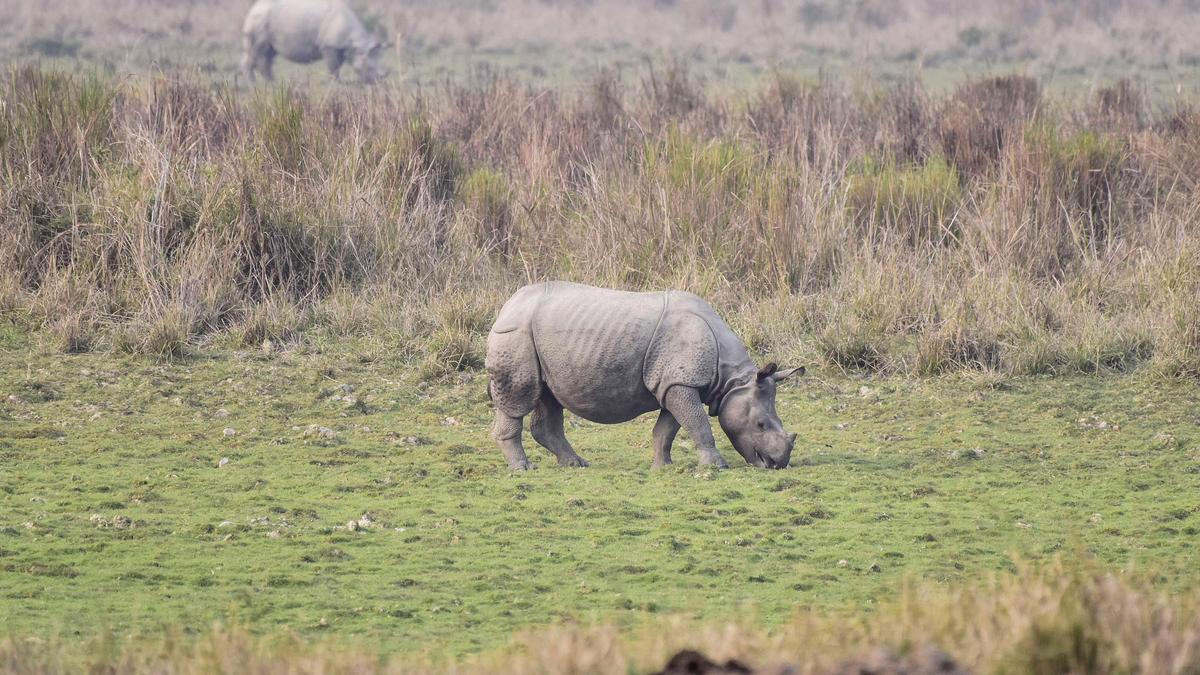
A livelihood initiative supported by the International Rhino Foundation has helped women in the fringe areas of central Assam’s Laokhowa-Burhachapori Wildlife Sanctuary (LBWLS) turn weed into wealth. A key biodiversity area, the 114.19 sq. km LBWLS is contiguous with the landscape of the Kaziranga National Park and Tiger Reserve.
Much of the Laokhowa part of the sanctuary was reclaimed from encroachers in two phases since February 2023, allowing one-horned rhinos to return after 40 years. The rhino, tiger, and other animals were wiped out from Lawkhowa in the 1980s, when people from surrounding villages converted large swathes of the jungles and associated government land into paddy fields and fisheries. Poaching was also a factor.
Assam-based biodiversity conservation Aaranyak teamed up with the Kaziranga authorities to engage the women of these villages in a different kind of conversion — by utilising the abundant water hyacinth in the LBWLS landscape to craft market-ready utility items. Considered one of the world’s most invasive aquatic weeds, the fast-growing water hyacinth affects freshwater ecosystems by physically and chemically suffocating life beneath the water surface.
The idea behind this project, which started in 2023, was simple. To sustain the reclaimed LBWLS, it was necessary to improve the economic conditions of the needy living on the sanctuary’s periphery. Arif Hussain, senior manager in Aaranyak’s Rhino Research and Conservation Division, said two groups of women were trained and provided with necessary equipment and facilities to produce a variety of household items with water hyacinth.
“One of the reasons the project has succeeded is the support of Kaziranga Director Sonali Ghosh for the initiative that has the bigger goal of securing the wildlife habitat in LBWLS,” he said.
Market-friendly items
The manufacturers of water hyacinth products belong to two self-help groups — Pragati in Singimari village and Bonani in Kaliadinga village. They sell their products to business organisations linked to the project to ensure a steady income.
Master trainer Anjuma Begum, who catalysed women’s entrepreneurship in the area, said the craft has been convenient for the women. “The manufacturing units have given them a monthly earning while allowing them to fulfil their responsibilities at home,” she said.
“After undergoing advanced training, the women have been churning out dining mats, dining table runners, baskets and bags of various sizes and utilities, purses, bags, serving bowls, paper tissue boxes, mobile phone holders, hanging flower vases, hats, and other market-friendly items,” she said.
Rajib Hazarika, the Divisional Forest Officer of Nagaon Wildlife Division, said such initiatives enhance coordination between the Forest Department and people in fringe areas to protect wildlife habitats. The Nagaon Division administers part of the LBWLS. However, he stressed the need to ensure the products are durable, given that water hyacinth items readily absorb moisture and may decay quickly.
The LBWLS complex features a mosaic of wet alluvial grasslands, riparian forests, and rare freshwater mangroves. Apart from the rhino and tiger, it is home to the barking deer, fishing cat, leopard cat, civet, wild boar, and 225 species of birds, 39 species of fish, 14 species of reptiles, and nine species of amphibians.
Published – May 23, 2026 03:20 pm IST