




Examining the Tadmetla encounter inquiry
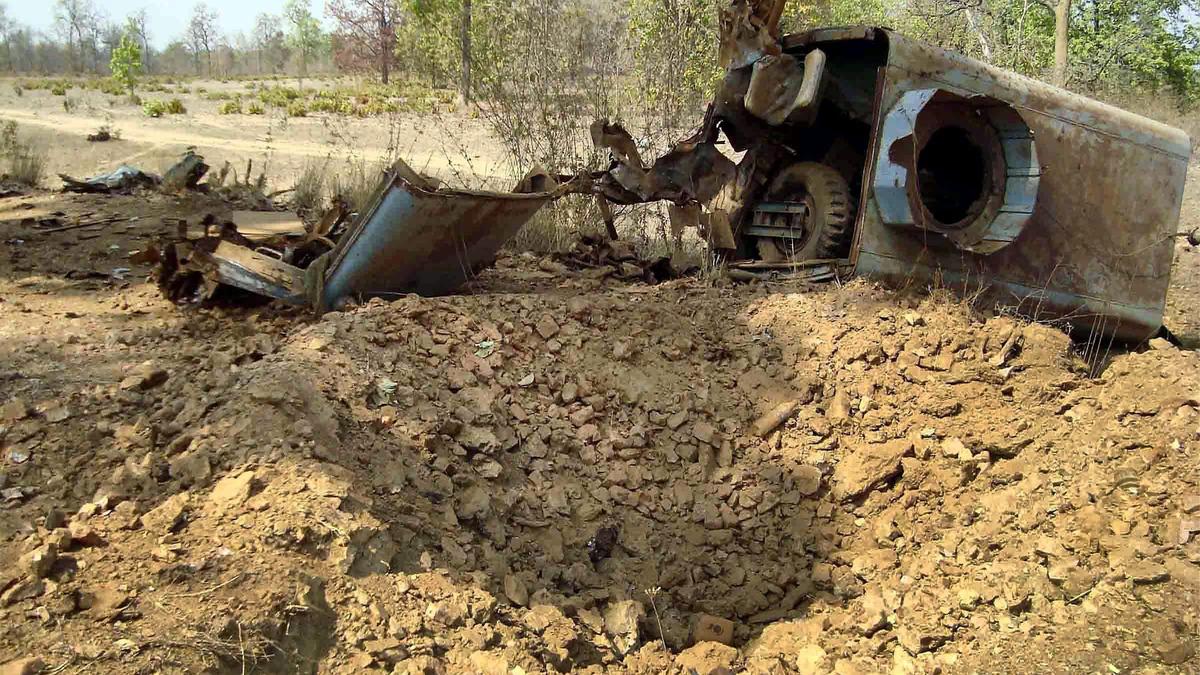
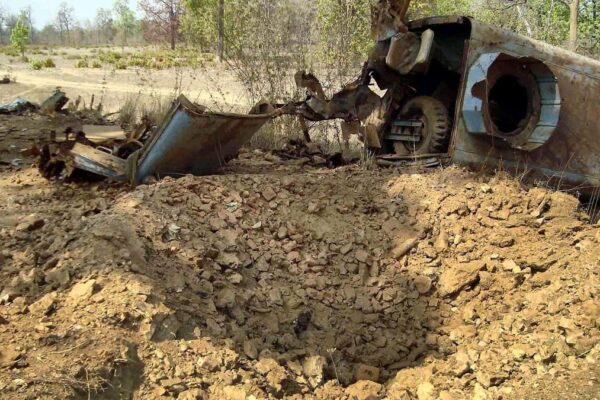
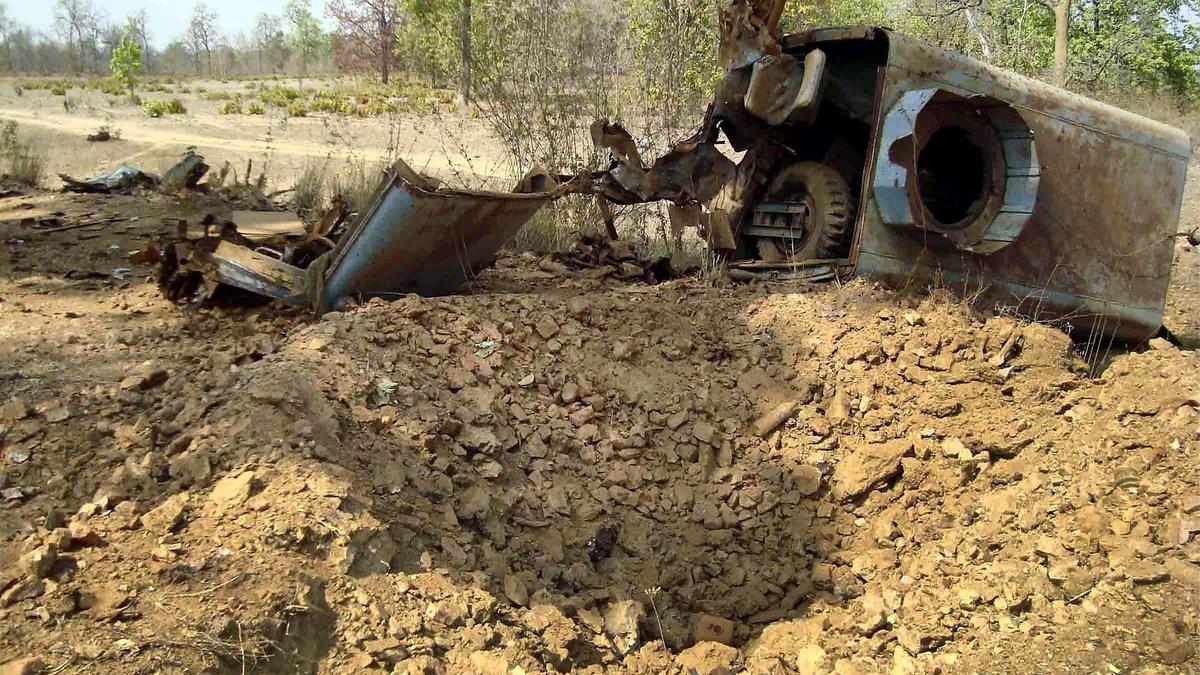
The site where Maoists launched an attack on paramilitary forces in Tadmetla, Chhattisgarh on April 6, 2010.
| Photo Credit: PTI
The High Court of Chhattisgarh recently rejected an appeal against the acquittal of 10 accused persons involved in a brutal attack on the security forces in Sukma on April 6, 2010. On this fateful day, 75 personnel of the Central Reserve Police Force (CRPF) of the 62nd battalion and one policeman of the district force, were killed near Tadmetla. The vehicle sent for rescue was also blasted with a remotely triggered Improvised Explosive Device (IED). A case was registered under various sections of the Indian Penal Code (IPC), Arms Act, and Explosive Substances Act, against unknown Naxalites at the police station in Chintagufa. However, the High Court held that there was a lack of evidence, incomplete circumstantial proof, procedural lapses in the investigation, and a failure to establish guilt beyond reasonable doubt, despite the gravity of the offence.
Lapses in the investigation
The High Court said that there was no independent corroboration in support of the confessional statements of the accused persons. All the prosecution witnesses had turned hostile. The accused persons were not identified by any of the witnesses and no Test Identification Parade (TIP) was conducted. Though the death of the deceased persons had been due to the burns and injuries sustained in firing and explosion, there was no evidence to link that with the accused persons.
No incriminating material (weapon or explosive) had been seized from any of the accused. There was no Forensic Science Laboratory (FSL) report to prove that the materials seized from the site, such as tiffin bombs and grenades, were explosives. The Court regretted that there was no record of the prosecution sanction required under the Arms Act for the seized prohibited weapons. In the end, the Court asked the Director General of Police to conduct training courses for the police personnel to enhance their investigative competence, and to periodically check compliance with the Court’s directives.
There is no gainsaying that the investigation was poor. It appears no special attention was given to the case which had shaken the conscience of the nation. Neither was an SIT was formed nor was the case supervised by a senior police official. Even the provisions of the Unlawful Activities (Prevention) Act (UAPA), 1967 or the Chhattisgarh Special Public Security Act, 2005, were not invoked. Despite these deficiencies, one circumstance which the courts failed to consider was the hostile environment in which the investigation was carried out.
Less than ideal environment
The Tadmetla massacre occurred in April 2010 when the Maoists’ annual Tactical Counter Offensive Campaign (TCOC) against the security forces was under way. The TCOC was started by the Maoists after the formation of the People’s Liberation Guerrilla Army (PLGA) in 2000; it generally lasts for about three months. The main objective for conducting a TCOC is to target the security forces in order to loot their weapons. While the mandate of the PLGA battalion was to strike anywhere, as decided by the party’s top leadership, the general area of movement of the battalion was in South Bastar, which included the southern areas of the Sukma, Dantewada and Bijapur districts. With hundreds of militias positioned all around for passing information about possible police movement to their larger military formations, finding independent witnesses to testify against the Maoists would have been nearly impossible.
The severity of the problem can be understood from the fact that there are still no less than 12 security camps (including five police stations and seven standalone CRPF camps) on the Dornapal-Jagargunda road in Sukma which is hardly 58 km long. The Chintagufa village falls about halfway on this road.
Rushed investigation
Tadmetla was perhaps a case which had a hurried investigation. The case was charge-sheeted without unearthing the names of the main perpetrators of the attack. Later inputs revealed that the attack was spearheaded by the commander of the PLGA battalion, Madvi Hidma. The secretary of the central regional bureau, Katakam Sudarshan, and a special zonal committee member, Haribhushan of the north Telangana special zone, were among the key planners of the attack. No less than 300 cadres including members of battalion-1, the central regional company, company-2 (of the west Bastar division), and local platoons participated in the attack. At least eight Maoists were also killed in the encounter.
Surprisingly, only some militias were arraigned in the charge-sheet. Catching a top leader (or their surrender) could have been very helpful in exposing the entire plot. The investigating officer could have toiled more to unearth the truth. It is a different matter that most of the senior cadres now have surrendered; succumbed to an illness (Katkam Sudarshan and Haribhushan); or been killed (Hidma).
The investigation of grave offences, particularly involving banned organisations such as the CPI (Maoist), requires special skills. The investigating officer needs to know the structure as well as the modus operandi of the outfit. The focus should be more on collecting scientific evidence when there is a high probability of witnesses turning hostile, and knowing that the witness protection mechanism has not acquired roots in the criminal justice system. While some of these issues have been addressed in the new criminal laws, their implementation lies entirely with the investigating agencies.
R.K. Vij is a former IPS officer
Published – May 20, 2026 02:09 am IST