

CSIR‑IICT technology powers India’s compressed biogas scale-up
Each day, tonnes of unsold produce and discarded peels pile up in bustling urban vegetable markets. For years, this waste was simply hauled away—adding to overflowing landfills. In nearby rural areas, farmers faced a parallel challenge of crop residues such as paddy straw and husk with little economic value, often burnt in the open, worsening air pollution and depleting soil health.
However, compressed biogas (CBG) offers a compelling alternative to this twin crisis by converting agricultural residues and organic waste into a clean, transport-ready fuel. It transforms what was once discarded or burnt into a valuable energy source, and not only reduces environmental damage but also creates economic opportunities for farmers while easing the burden on urban waste systems.
At the forefront of this transition are scientists at the Hyderabad-based CSIR–Indian Institute of Chemical Technology (CSIR-IICT). Led by Chief Scientist A. Gangagni Rao, over the years, they have developed technologies that convert agricultural waste and organic residues into biogas and nutrient-rich manure.

CBG represents a major advancement in upgrading the raw biogas into c—about 97%—that can be compressed and used much like Compressed Natural Gas (CNG). It serves multiple applications, from transportation fuel and industrial use to household energy, helping reduce dependence on imported fossil fuels. The by-product — fermented organic manure — offers farmers a sustainable alternative to chemical fertilisers and an additional source of income, explains Dr. Rao.
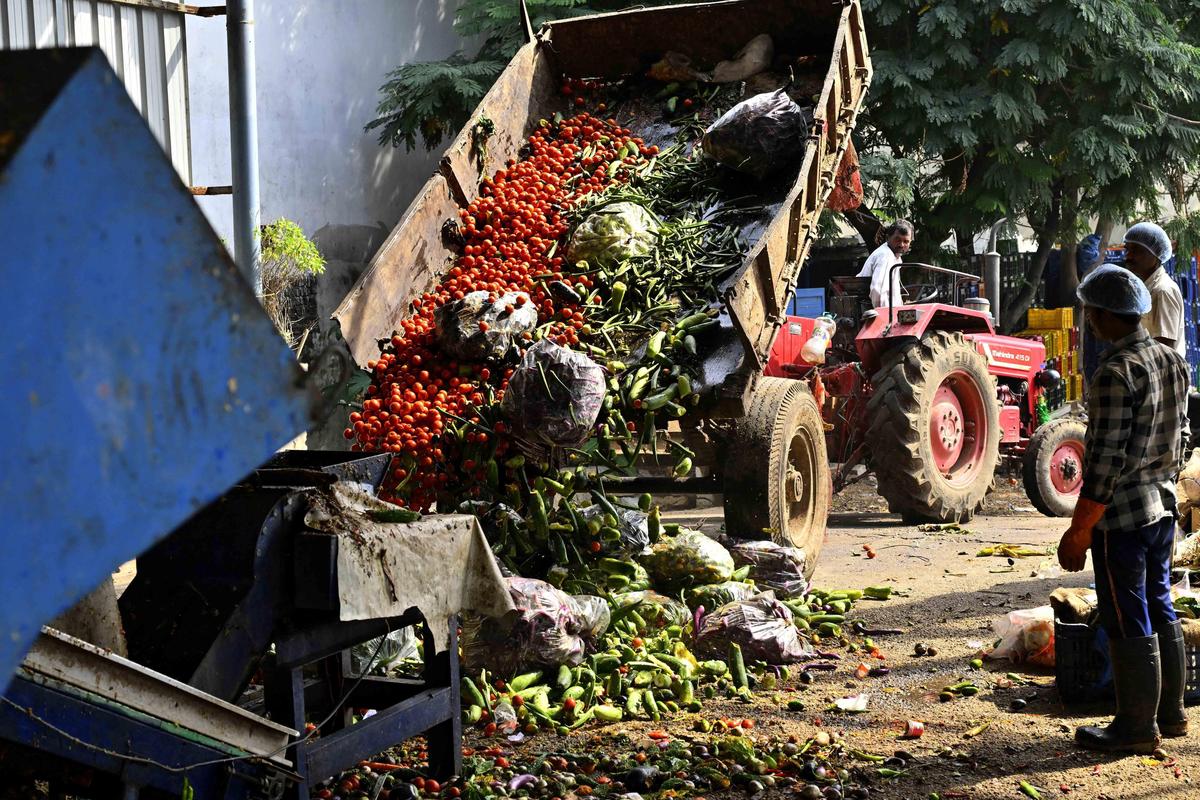
Workers dump vegetable waste at Dr. B.R. Ambedkar Vegetable Market Yard in Bowenpally.
| Photo Credit:
Nagara Gopal
Its production builds on biomethanation, but conventional methods often struggle with dry, fibrous biomass that resists microbial breakdown. Recognising this limitation, researchers have developed advanced anaerobic digestion systems suited to Indian conditions. Among these are the Dry Anaerobic Digester with Unique Hydrodynamics (DADUH), designed for lignocellulosic biomass, and the Bi-phasic Anaerobic Digester System (BiADS).
Dry biomass such as paddy straw and rice husk is difficult to process because of its rigid structure—composed of cellulose, hemicellulose, and lignin—and its low moisture content. In conventional digesters, such materials tend to float, clog systems, and degrade slowly, yielding limited gas.
The DADUH system addresses these challenges through a specially designed reactor that enhances contact between microbes and biomass, even at high solids concentration and lower water usage. The result is faster decomposition, higher gas yields, and efficient conversion into clean energy and organic manure, he says.
These innovations are now moving from the laboratory to real-world implementation. Three full-scale CBG plants are in the development stage: two designed to produce 12 and five tonnes per day (TPD) of CBG from rice husk and paddy straw at Mulugu (Telangana) and near Guwahati (Assam), respectively, and another three-tonne-per-day plant based on Napier grass at Ramanna Peta (Telangana)
The push for CBG also aligns with the Centre’s SATAT (Sustainable Alternative Towards Affordable Transportation) initiative, which aims to establish 5,000 CBG plants with an annual production capacity of 15 million metric tonnes to promote circular economy practices, strengthen rural livelihoods and enhance national energy security, says the chief scientist.
Alongside solutions for dry biomass, the institute has made strides in processing wet organic waste through its indigenously developed Anaerobic Gas Lift Reactor (AGR). This high-rate biomethanation system converts food waste, vegetable residues, and poultry litter into biogas and fermented organic manure. What began as a modest pilot handling 100 kilograms of poultry litter per day has evolved into a one-tonne-per-day demonstration plant, proving its scalability and reliability.
A key milestone came when kitchen waste from the institute’s canteen was converted into biogas, reducing reliance on LPG. Encouraged by this success, the AGR technology has since been deployed in more than 15 installations, including kitchens run by the Akshaya Patra Foundation, as well as in colleges and corporate campuses, said Mr. Rao.
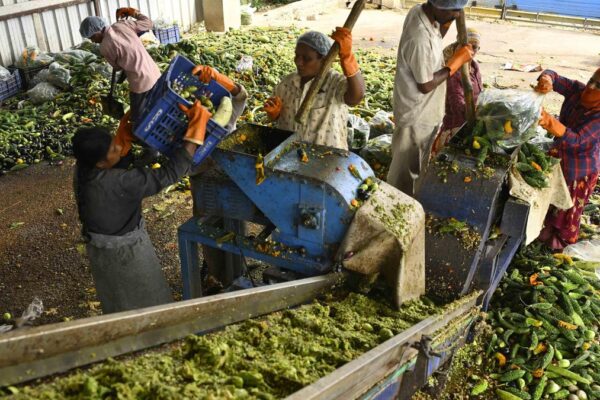
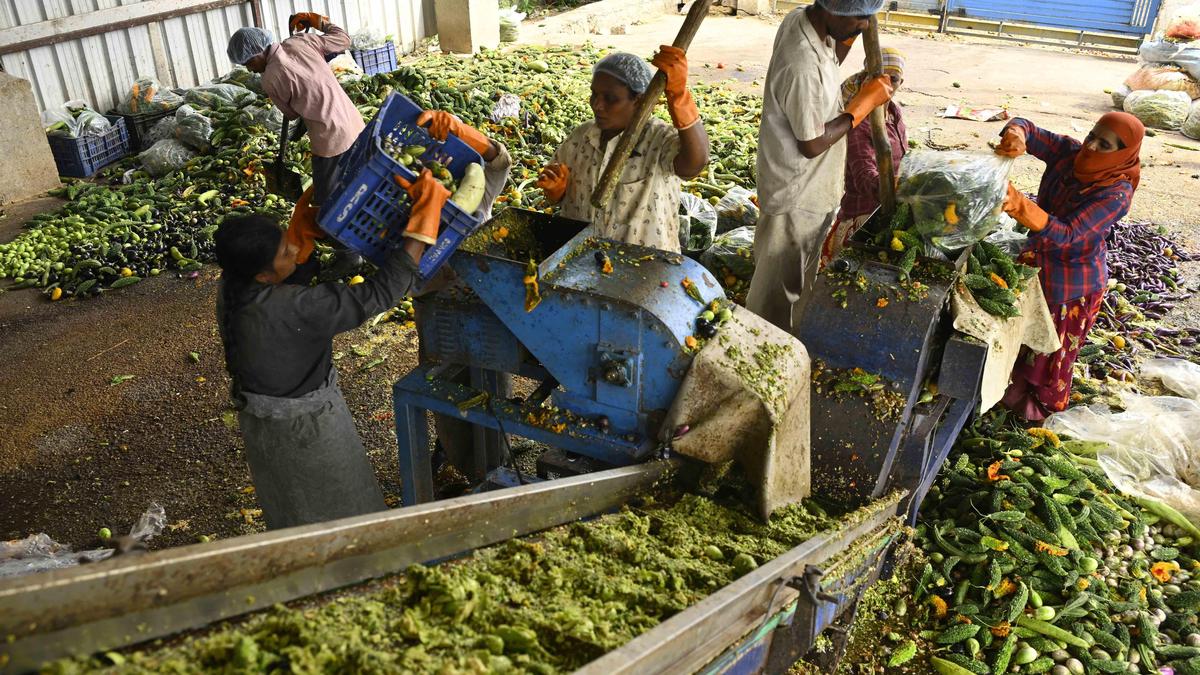
The technology gained national attention when Prime Minister Narendra Modi talked about the biogas plant at Hyderabad’s Bowenpally vegetable market in his ‘Mann Ki Baat’ address. Before the plant’s commissioning in 2020, the market committee spent ₹3–5 lakh per month on waste disposal and electricity. The new system, designed to process 10–12 tonnes of waste daily, converts it into cooking fuel and off-grid electricity, cutting costs by nearly 60% while ensuring on-site waste management. Although operations have faced disruptions due to feedstock shortages, efforts are underway to restore full functionality.
The success of such initiatives has spurred wider adoption. Around 40 AGR-based biogas plants have been established across the country, with the technology licensed to 15 companies to process diverse waste streams, from food scraps and livestock dung to poultry litter and the organic fraction of municipal solid waste. The capacities range from small 25 kg-per-day units to facilities handling up to 10 tonnes daily.
In Andhra Pradesh’s Kadapa district, for instance, 33 biogas units are being installed across schools, each processing 25 kilograms of food waste daily. Together, they generate enough fuel to cook nearly 2,000 meals a day—demonstrating how decentralised waste-to-energy systems can support community needs, points out Mr. Rao.
CSIR-IICT’s multidisciplinary team, headed by Mr. Rao, includes Sameena Begum, A. Vijaya Lakshmi, M. Naveen Kumar, and J. Sudharshan. The team is collaborating with the Himachal Pradesh government to set up biogas plants in Palampur, Solan, Dharamshala, and Kullu, as well as CBG plants in Una, Baddi, and Hamirpur. Similar projects are underway in several parts of Andhra Pradesh, including Rajamahendravaram, Vijayawada, Guntur, Nellore, and Kurnool.
These initiatives align closely with national programmes such as the Swachh Bharat Mission, aimed at reducing landfill waste while generating renewable energy. More broadly, they contribute to India’s goals of strengthening energy security and advancing the vision of Viksit Bharat 2047, said CSIR-IICT Director D. Srinivasa Reddy.
Published – May 22, 2026 09:13 pm IST