




Column by Devdutt Pattanaik | Secrets of Bihar’s mirrored caves
One of the most striking experiences near Rajgir in Bihar lies inside the Barabar Caves. The walls are polished to such perfection that they are like mirrors. These surfaces were carved and finished over 2,300 years ago, yet they still reflect light with startling clarity, as if time has barely touched them. This sheen, often described as Mauryan polish, hints at how the pillars of Maurya kings once looked — smooth, luminous, and authoritative.
The Barabar caves are among the oldest surviving monuments in India, yet they rarely occupy public imagination. They stand overshadowed by the more celebrated Ashoka pillars, crowned with lions and inscribed with imperial messages. But the caves tell a quieter, more complex story.
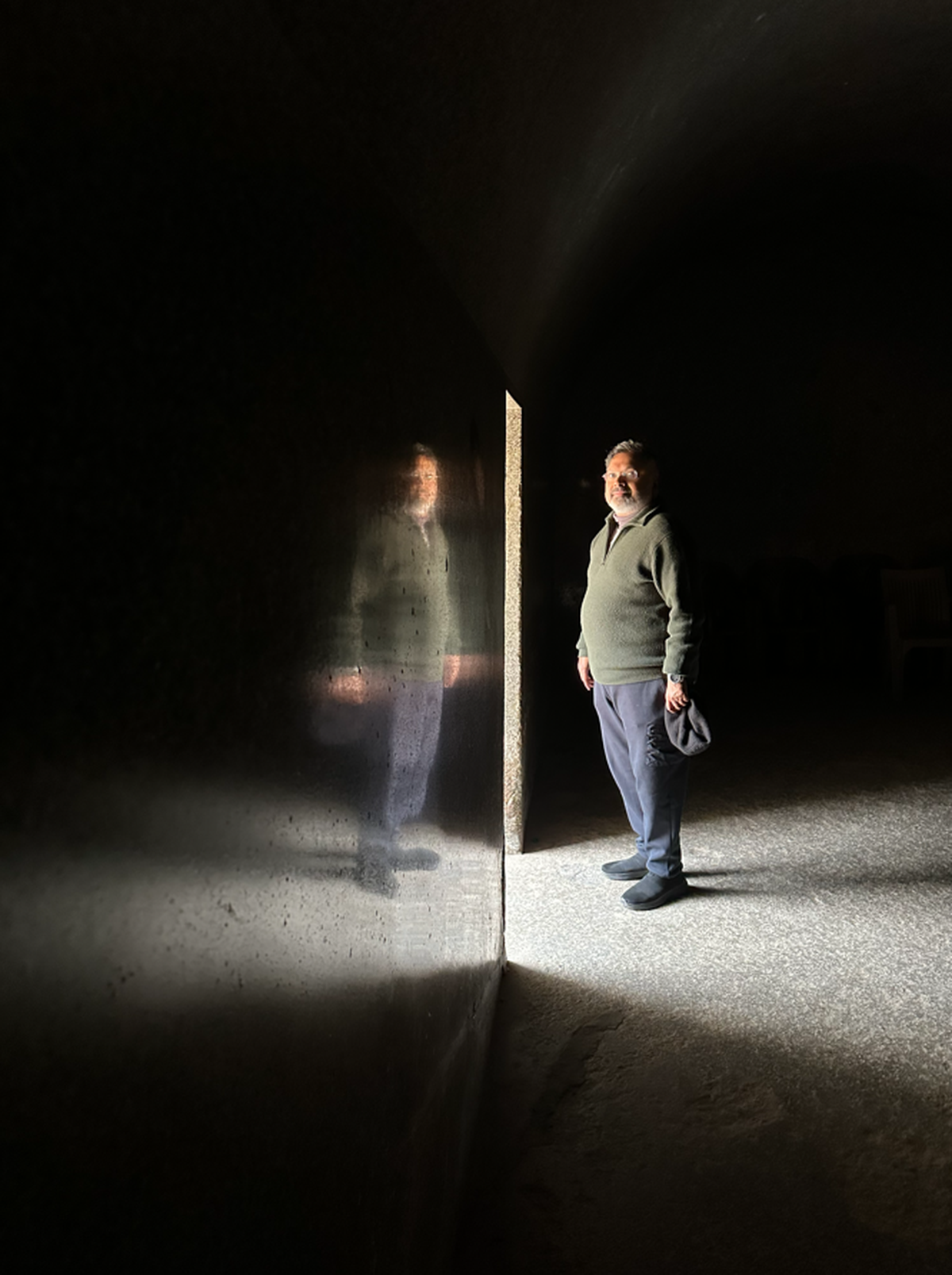
Devdutt Pattanaik inside Barabar Caves
| Photo Credit:
Courtesy Devdutt Pattanaik
These are not monuments of conquest or governance; they were spaces dedicated to a group of hermits known as the Ajivikas. This is known because inscriptions in early Brahmi script are carved onto the cave walls. Ironically, the script appears rough, even intrusive, against the flawless polish of the stone, as if human language struggled to match the perfection of the surface it marked.
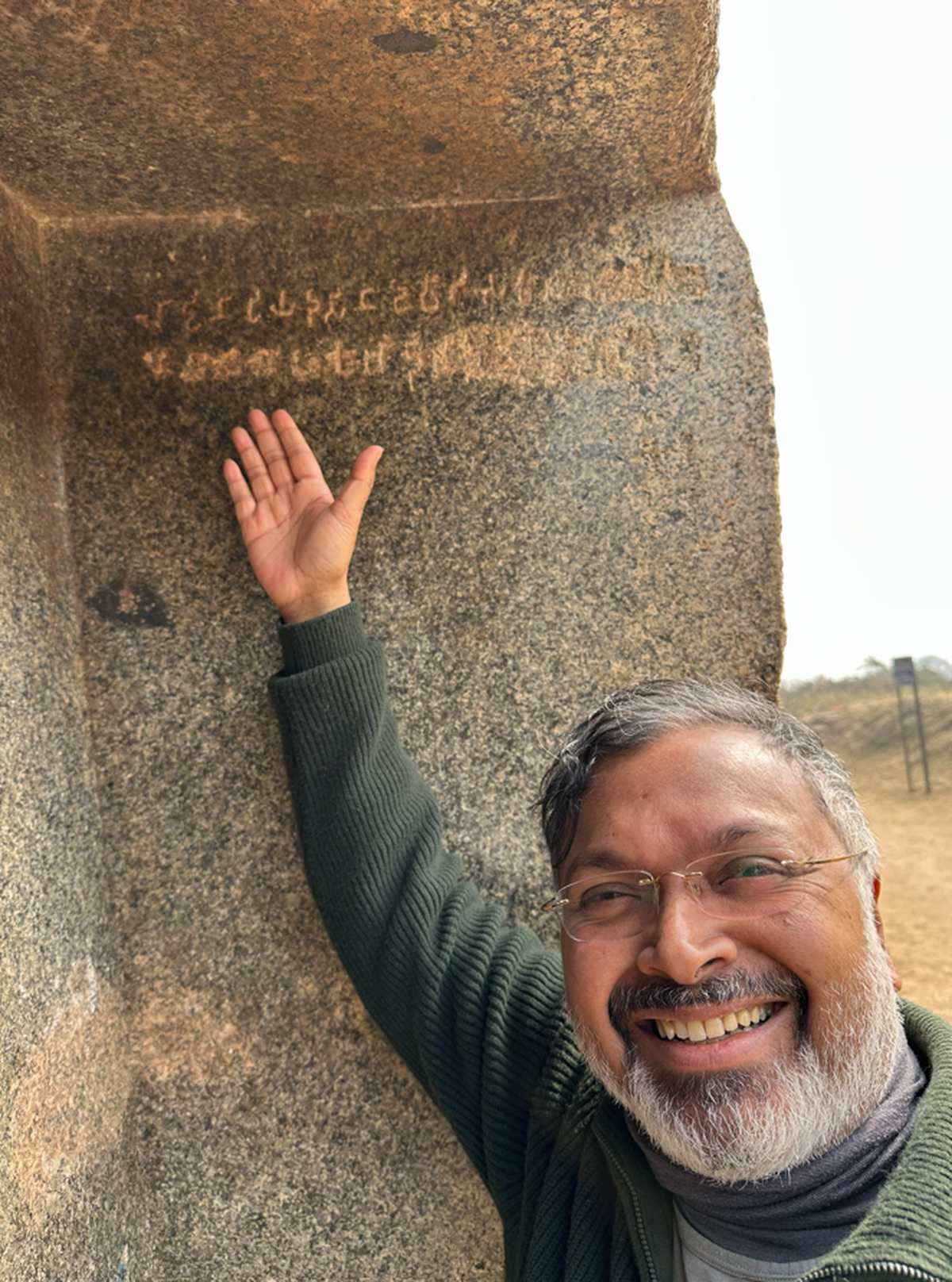
The rough script at Barabar
| Photo Credit:
Courtesy Devdutt Pattanaik
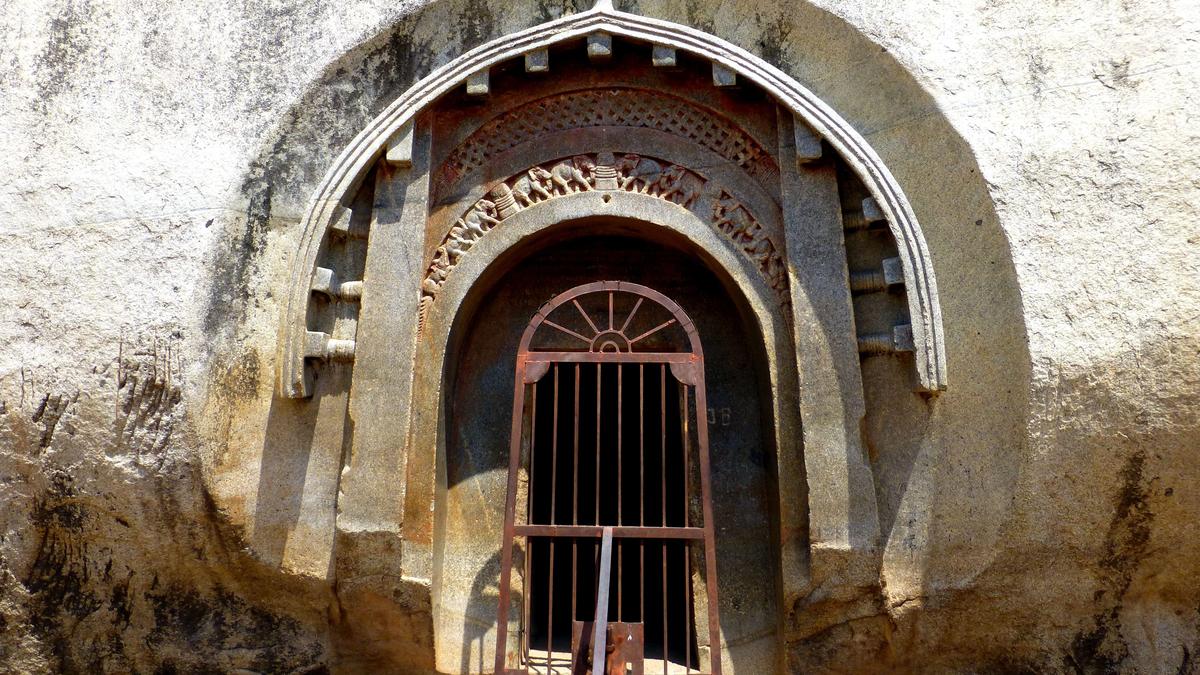
The entrance to the caves resemble gateways seen later in Buddhist sites, with a line of elephants bowing towards a stupa-like form. At the ends are elephant-headed fish, the ancient fertility symbol known as Makara. These are probably the earliest images of elephants in India.
When an empire formed
Geographically, the caves stand in a region of great historical importance. Rajgir was one of the earliest centres of monarchy in the subcontinent. This was also the landscape where elephants were domesticated and iron technology was first explored at scale. It allowed chieftains to expand control over land and people.
What once must have been small, scattered communities began to consolidate into larger political units. These leaders became toll collectors, managing trade routes and accumulating wealth. This process contributed to the rise of the Mauryan Empire around 2,300 years ago.
Trade routes expanded dramatically during this time. Networks stretched from the Ganga plains to the eastern coast, the western shores, and the northern mountains. Elephants played a crucial role in this expansion. They navigated uneven terrain, cleared dense vegetation, and opened pathways through flooded or forested regions. In doing so, they enabled the creation of routes along which goods, people, and ideas could move. These developments marked one of the earliest phases of economic intensification in India, when older pastoral systems had already begun to give way to settled agriculture.
This economic transformation was accompanied by a philosophical churn. The period is often remembered for the rise of Buddhism and Jainism, but other traditions were equally significant. Among them were the Ajivikas, to whom these caves were dedicated. The term Ajivika suggested people without livelihood (jivika, in Prakrit). They rejected social ties, property, and even clothing. Known also as Nigranthas, meaning “without knots”, they avoided attachments of all kinds. They wandered naked, detached from family and society, and pursued a severe path of renunciation. Their goal was stark: to overcome hunger and desire, gradually withdrawing from the world, even to the point of death by fasting.

Standing in opposition
At the other extreme stood the Charvakas. Their name was linked to grazing (chara), suggesting indulgence and consumption. They embraced material life, arguing that the purpose of existence lay in sensory pleasure. They dismissed concerns about debt, duty, or consequences. If the Ajivikas sought to extinguish desire, the Charvakas chose to celebrate it.
These opposing views emerged in a society increasingly shaped by ideas of accounting and exchange. As trade expanded, people became familiar with concepts of credit and debit. These financial ideas gradually influenced moral thinking, giving rise to notions of spiritual balance, such as paap (sin) and punya (virtue). Yet, both Ajivikas and Charvakas stood apart from this framework. One rejected the world entirely; the other refused to moralise it.
The Barabar caves captured this moment of transition. They were carved under the patronage of a powerful king who sought to extend political control while also seeking spiritual merit. By offering these caves to renunciants who rejected the world, the ruler participated in a paradox — material power supported those who denied material life. In that tension lay the foundations of a civilisation negotiating wealth, renunciation, desire, and transcendence.
Devdutt Pattanaik is the author of 50 books on mythology, art and culture.
Published – May 21, 2026 12:08 pm IST