



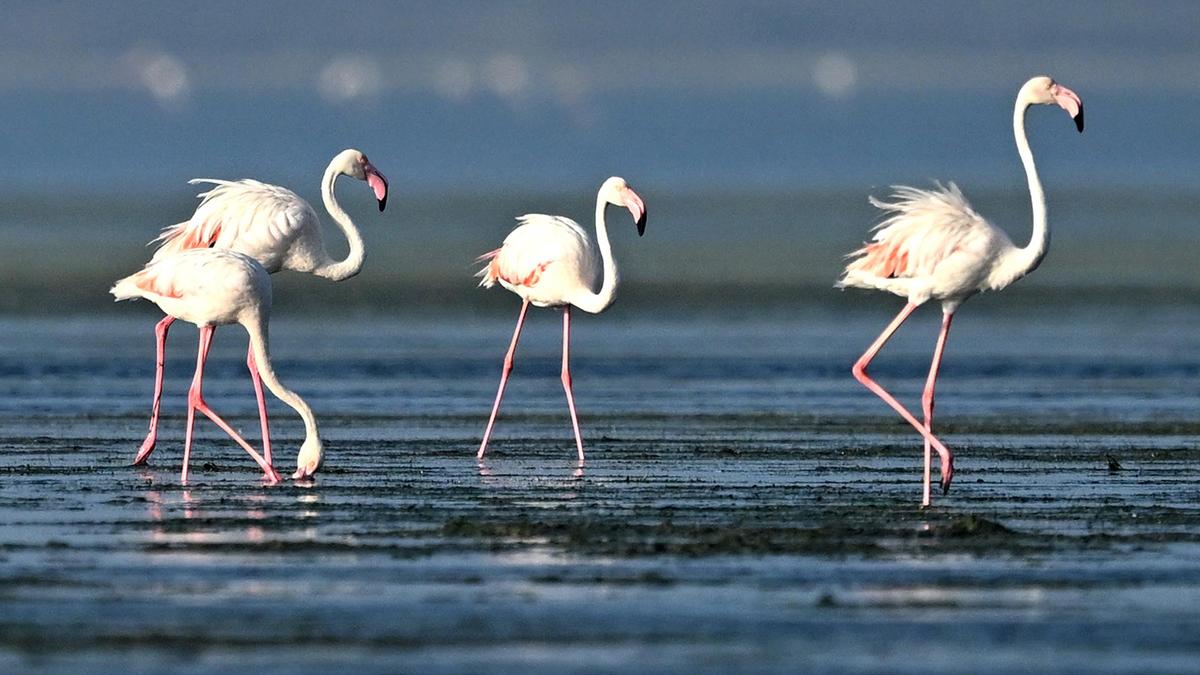
The flamingo phenomenon: Why photographers and birders flock to Pulicat lake
Fisherman M Yuvaraj bustles about his fibreboat, filling fuel in the engine, and checking if everything is in order. He even throws in an umbrella in case it rains. It is almost 4pm when he pushes his boat close to the bank of Pulicat lake. The 57-year-old is not setting out on a fishing trip. He is taking a group of us to see flamingoes.
Pulicat is the second largest brackish waterbody in India, next to the Chilika in Odisha. The lagoon that straddles Tamil Nadu and Andhra Pradesh is home to a protected bird sanctuary with birders visiting through the year.
While Yuvaraj primarily catches prawns and a few varieties of fish for a living, he is the go-to person for many birders and photographers visiting the lagoon town. “I regularly take photographers from Chennai, Coimbatore, Bengaluru, Hyderabad, and even Mumbai on my boat,” he says, rowing us along the Buckingham Canal, past a lone Asian openbill. He takes around four teams a week to see and photograph migrant birds, the chief attraction among them being greater flamingoes.
,
What draws them to the lagoon?
According to Chennai-based Nature photographer Munish Palaniappan, Pulicat is a photographer’s paradise. “The lighting across the vast expanse lends itself to dramatic photos,” says Munish, who also holds photography workshops. “Shooting birds here during the golden hour [minutes before sunrise and sunset] is an experience,” he says, adding that the historic port town’s proximity to Chennai is an added advantage.
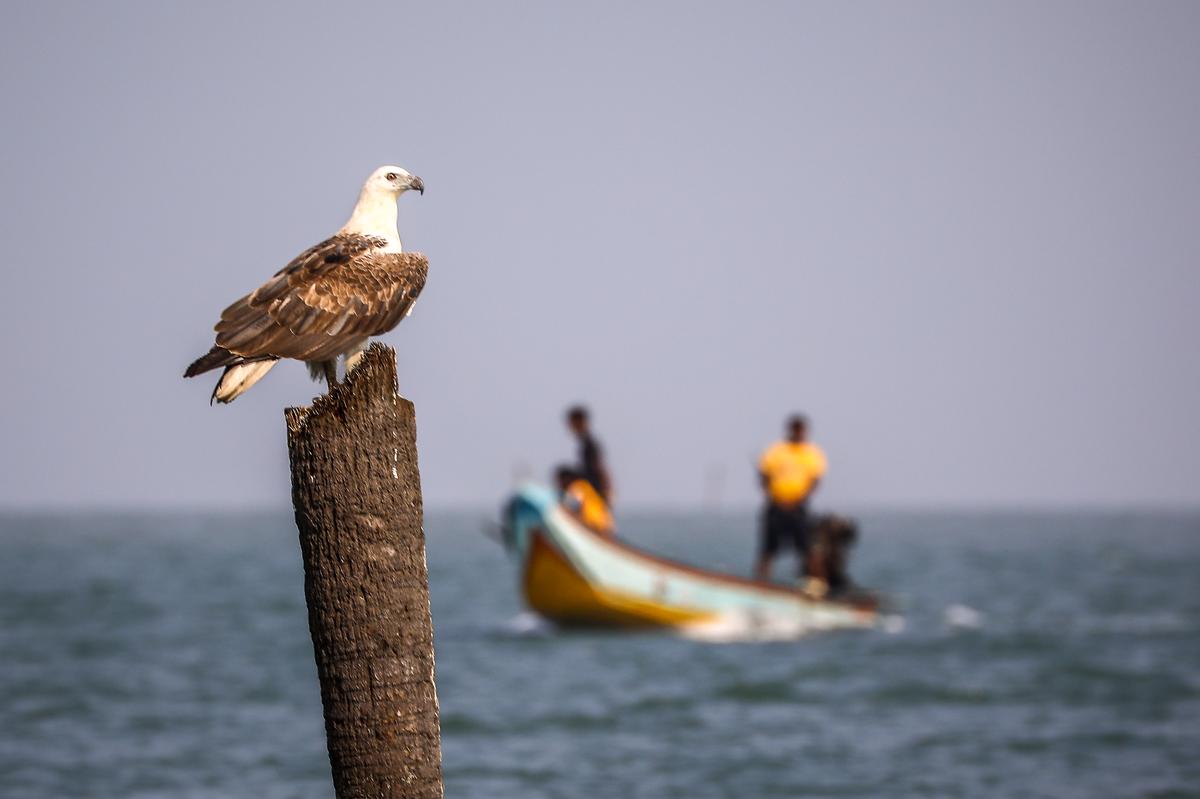
At Pulicat, which is the second largest brackish waterbody in India, next to the Chilika in Odisha.
| Photo Credit:
Munish Palaniappan
Munish, who has mentored over 100 photographers over the years, brings them to Pulicat to show them the ropes. The still, endless waters from where one can observe birds from close quarters, is a good place to learn bird photography, he says. There are assured sightings of greater flamingoes through most of the year but Yuvaraj says that they fly away during the monsoon months since there is an increase in the water level.
For several birders, visiting Pulicat is an annual ritual.
When the light is right
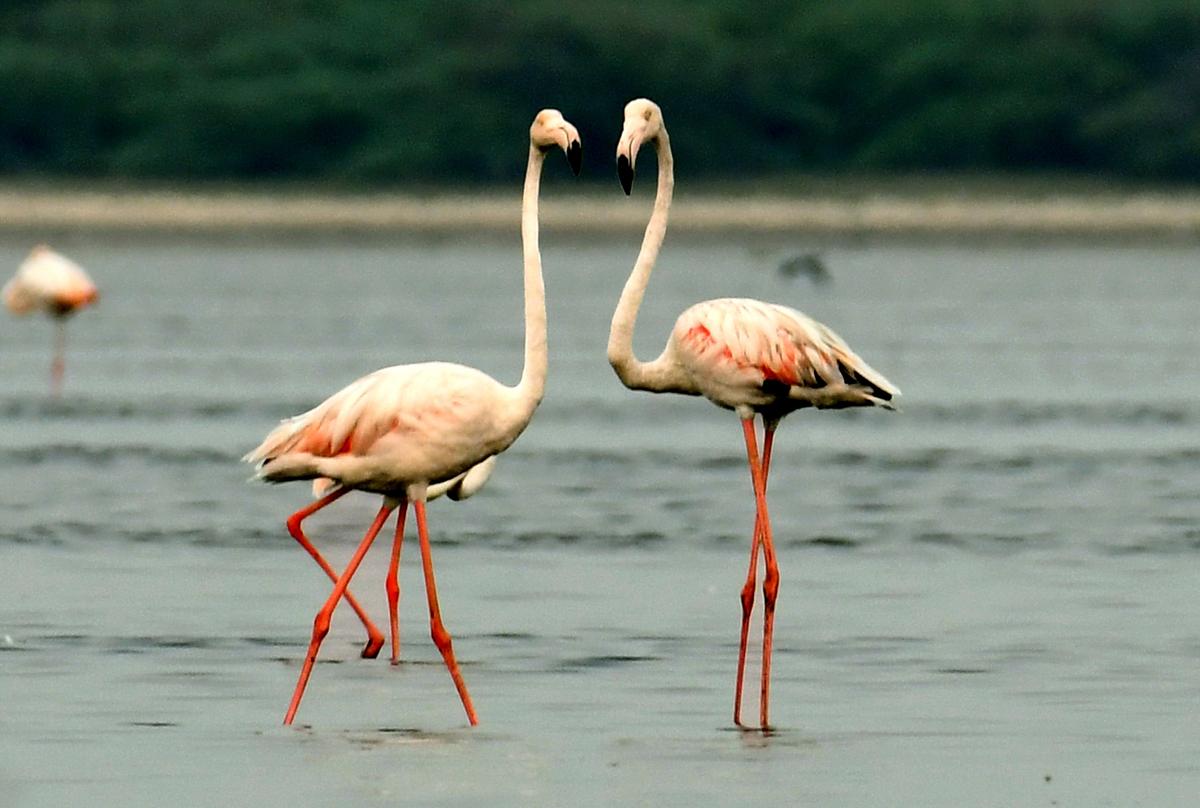
The still, endless waters from where one can observe birds from close quarters, is a good place to learn bird photography
| Photo Credit:
JOTHI RAMALINGAM B
Bengaluru-based software engineer K Kishore Kumar has been going to Pulicat every year over the past five years. He usually visits during weekends with two other birding friends, staying at a wedding hall in nearby Ponneri. “Yuvaraj takes us on his boat during sunset on Saturday when we get to photograph the birds with light falling on our back while we face the flamingoes,” he says, adding that they make another trip at sunrise the following day. “The light then is a beautiful gold with the sun falling on the light pink feathers,” he says.
Yuvaraj, whose father and grandfather too went fishing in the waters of Pulicat, knows the names and behaviour of most winged visitors that stop by his hometown. “I picked this up from the birders,” he says. Most of them plan their stay at Ponneri or Gummidipoondi. “A lot of good hotels have come up in the nearby towns,” he points out.
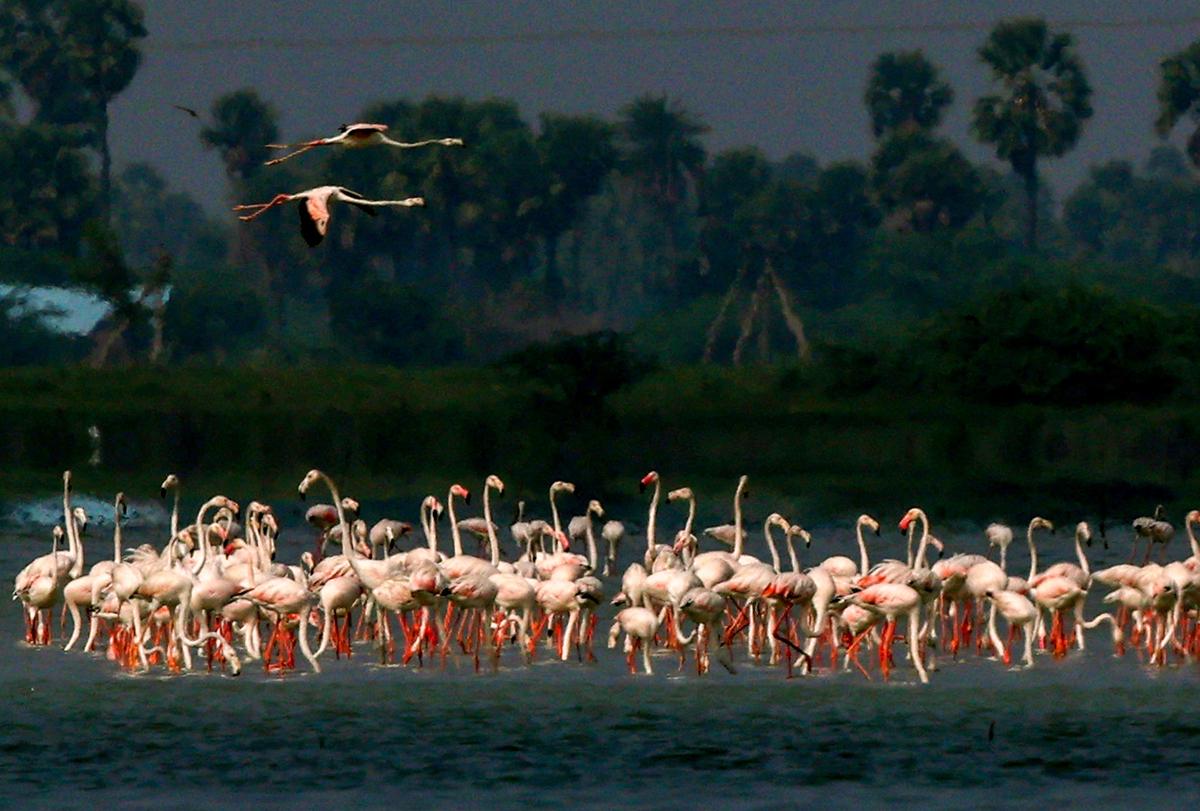
A flock of flamingos
| Photo Credit:
JOTHI RAMALINGAM B
Sri Vidhya and her husband V N Maheshwar from Coimbatore are regular visitors. “There are several wetlands in Coimbatore where we do birding, but I cannot explain in words the happiness I experience when I see a large flock of flamingoes,” she says, adding that this makes the long drive worth it. “Pulicat also gets some rare birds such as the oystercatcher, white-bellied sea eagle, and osprey,” she says.
Renuka Vijayaraghavan, another birder and photographer from Coimbatore who has visited Pulicat five times so far, comes not just for the flamingoes, but for other birds such as bar-tailed godwits, brown and lesser noddy, and crab plovers.
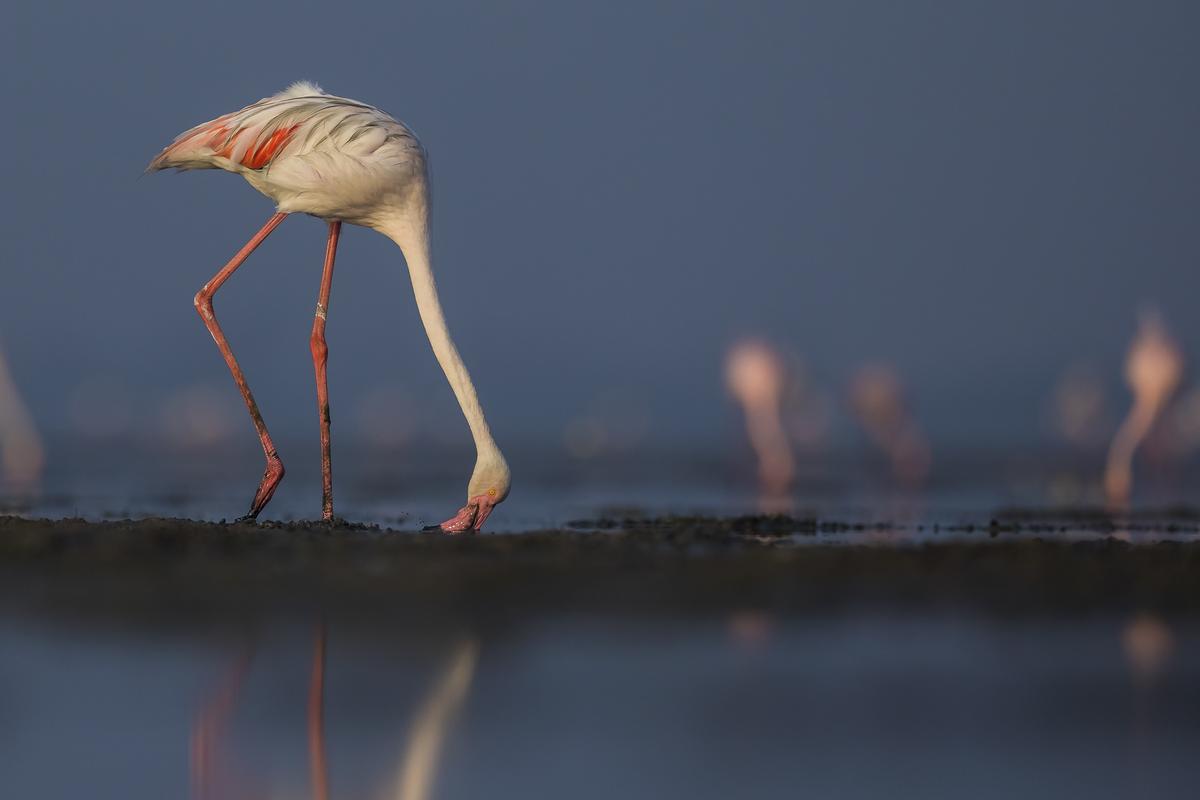
Flamingoes are filter feeders, they sweep their beaks through shallow water and use comb-like structures inside the beak to filter out tiny organisms
| Photo Credit:
Munish Palaniappan
“Flamingoes are the only birds that are in such a beautiful shade of pink,” says Chennai-based Karthik Ramamurthy, who takes Nature-lovers on guided birding trips across India and abroad. He takes several teams of birders and photographers to Pulicat every year. “I’ve brought people from Mumbai and Delhi, apart from Kochi,” he says. All of them come for the swathes of pink.
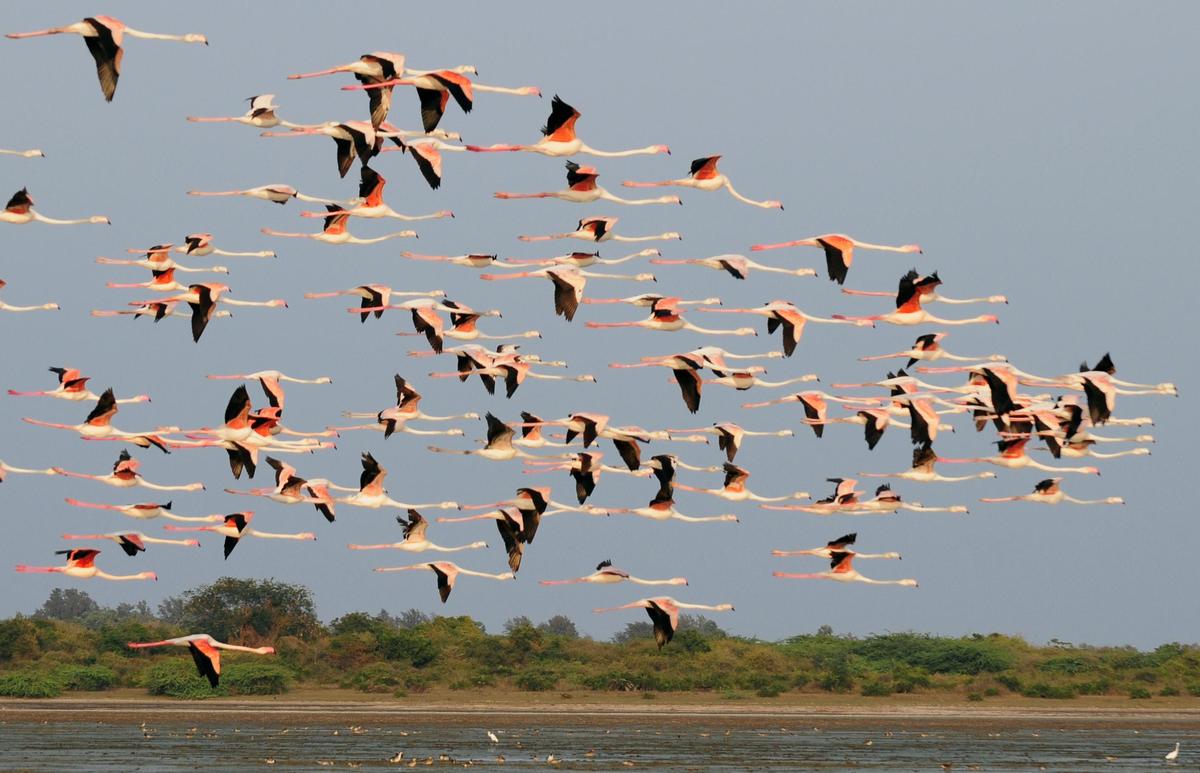
A flock of greater flamingoes in flight at Pulicat
| Photo Credit:
JOTHI RAMALINGAM B
Colour theory
Where does the pink in the flamingo come from? “They are pink due to their diet, which primarily consists of algae and tiny crustaceans (like brine shrimp), rich in natural pigments called carotenoids,” according to NVK Ashraf, senior advisor with the Wildlife Trust of India. “Flamingoes are fascinating birds,” he adds: “They produce crop milk, a nutrient-rich substance that is bright red or pink in colour, to feed their chicks.” Munish says that the greater flamingoes that visit Pulicat fly down from the Rann of Kutch in Gujarat, a majority of them stopping at Mumbai. “They fly back to Gujarat for nesting,” he adds.
While birding at Pulicat bird sanctuary is largely unorganised, Munish feels some attention from the Tamil Nadu Government will help. “If such trips are regulated, it will benefit a lot of people, rather than just a small network of birders,” he says.
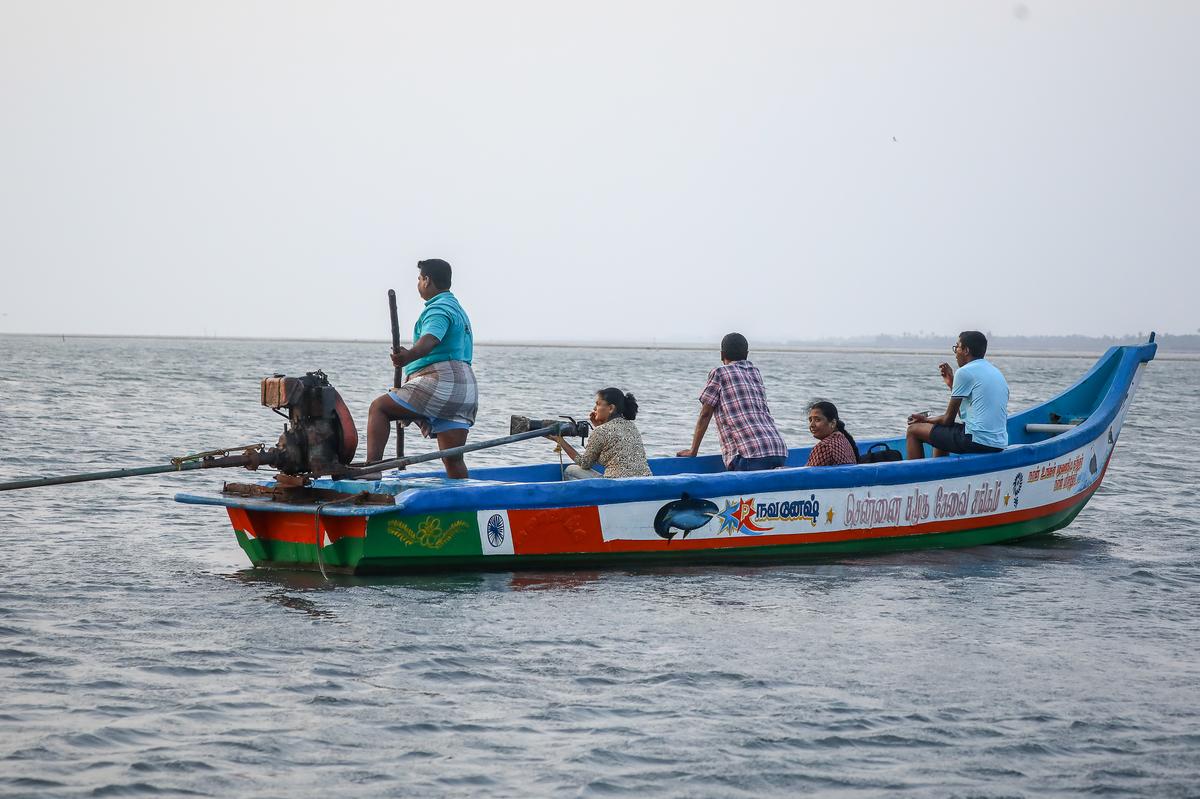
Photographers at Pulicat lake
| Photo Credit:
Munish Palaniappan
The flamingoes, meanwhile, are blissfully unaware of all the attention they are getting. We see them when our boat comes to a stop after 30 minutes of chugging along shallow waters. Yuvaraj turns off the engine to push the boat close enough for us to admire a flock of some 250 birds without them feeling our presence. The wind carries their calls towards us: they sound like ducks, but more musical.

Kishore Kumar and Yuvaraj (right)
| Photo Credit:
Special arrangement
We are not here to photograph the birds, but to simply see their delicate pink feathers and long, graceful necks.
After over 45 minutes, the flock moves away. Yuvaraj revs up the engine; it is time to head back to the shore and leave the pink behind.
Pulicat is about 60 kilometres from Chennai. There are regular buses from Chennai to the town. The best time to see flamingoes is from 4pm to 6pm and 4am to 6am. Yuvaraj can be reached on 9710518040.
Published – May 20, 2026 04:13 pm IST