



Address ‘ground level challenges’, ease regulatory frameworks: Norwegian businesses tell Modi
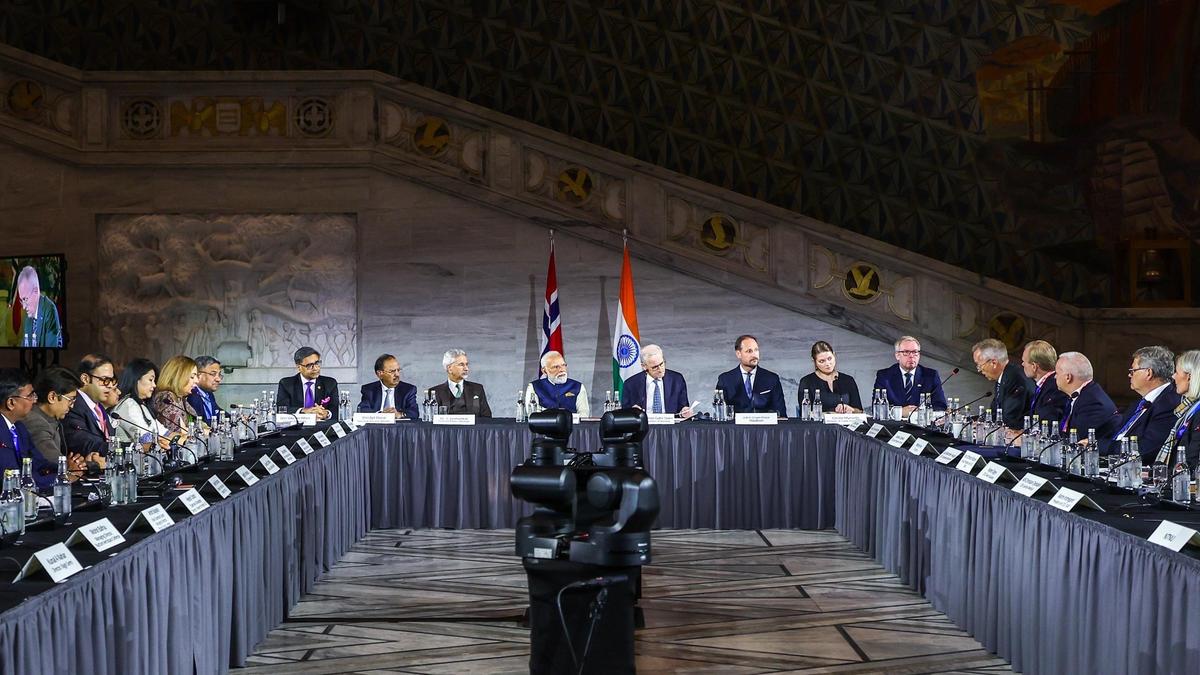
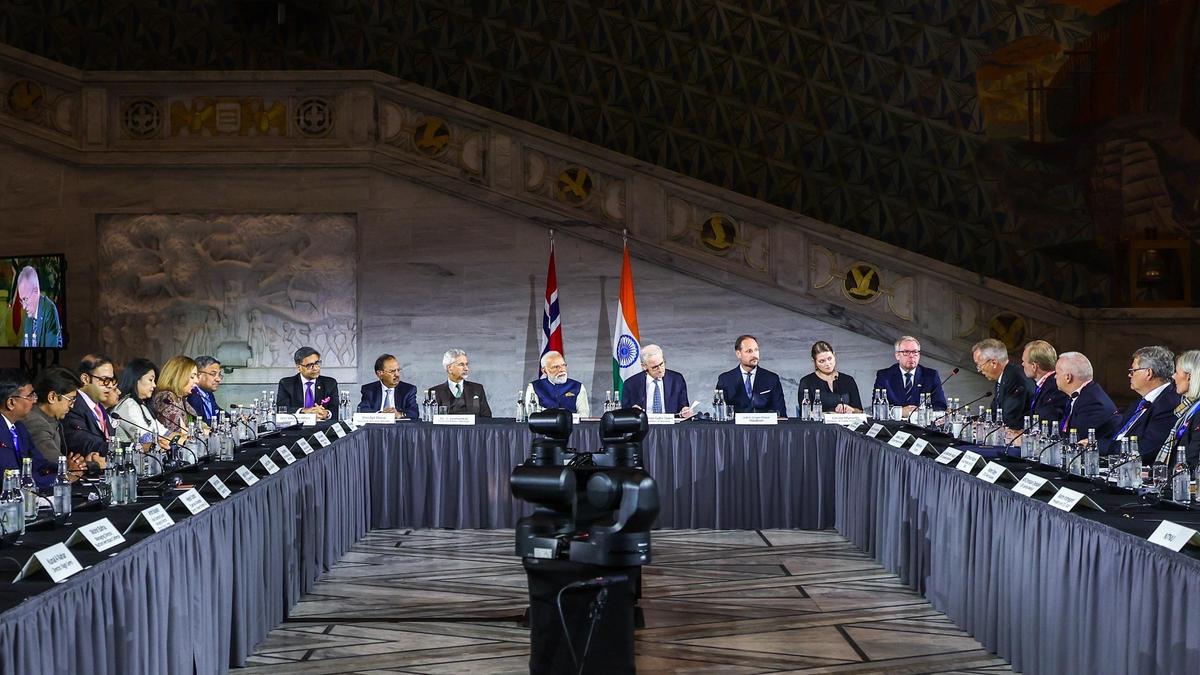
Prime Minister Narendra Modi and Prime Minister of Norway Jonas Gahr Støre attend the India-Norway Business & Research Summit in Oslo on May 18, 2026.
| Photo Credit: ANI
India can improve its ‘ease of doing business’ by streamlining regulatory frameworks and addressing “ground level challenges”, Norwegian industry leaders told Prime Minister Narendra Modi during a candid conversation at the India-Norway Business and Research Summit held in Oslo on Tuesday (May 19, 2026)
The event was part of Mr. Modi’s day-long bilateral agenda in Norway, where he and Norwegian Prime Minister Jonas Gahr Store met with about 250 participants including CEOs of 50 companies, where Indian and Norwegian businesses signed 19 B2B Memorandums of Understanding (MoUs). Mr. Store, who conducted the proceedings himself, turned to a few businesspersons from each side to speak about their experiences and ways in which processes could be improved.
Among those who spoke, Svein Tore Holsether, the CEO of Yara Fertilizers India, cited issues with their plant in Uttar Pradesh’s Babrala and called for simplifying the approvals for fertilizer approvals. Yara India, that started in India in 1993, and acquired Tata Chemicals in 2018, now caters to about 36% of the Indian market,
“First, improving the ease of doing business within crop nutrition by streamlining the fertiliser registration timelines in India, [and granting] faster approvals will help farmers across the country with access to advanced solutions and to reduce the use of subsidised fertilizer,” Mr. Holsether told PM Modi.
“There are some ground-level challenges that are creating uncertainty around our business growth in Uttar Pradesh right now, and we would welcome all the opportunity to engage with your office to work through these together,” he added, also calling for regulatory framework to support its Urea plant in the country.

“These steps together that in combination with the new trade agreement, I think that would unlock faster growth and also even stronger impact,” he said, referring to the India-EFTA Trade and Economic Partnership Agreement that came into force in October 2025. In February last year, the government had announced it would set up a special “EFTA desk” to look into problems of businesses in the four EFTA-trading bloc countries Norway, Switzerland, Liechtenstein and Iceland to help them operate in India.
Speaking to Indian journalists after the event, PM Store said that the benefit of the CEO roundtable was that both sides could identify roadblocks in doing business. “Obviously there are challenges- technical standards, procedures, our bureaucracies work differently, and need different kinds of permissions,” he said, adding that the EFTA desk would help resolve the problems. Bilateral trade in goods and services between India and Norway stood at a low US$2 billion in 2024-25, although both sides have committed to doubling trade levels.
In his remarks, PM Modi pointed to a growth in trade and investments following the entry into force of TEPA, and urged Norwegian businesses to work more closely with India to achieve the promised investment of $100 bn by EFTA countries by 2040.

“My message is that you should broaden your scope and ambition in India,” Mr Modi said inviting Norwegian businesses. “I have given you my assurance and now the ball is in your court,” he added.
Anders Opedal President and CEO of oil and gas major Equinor, said the company which produces about 2 million tonnes of LPG and 25-30 million barrels of crude oil each year, delivered its first long-term LNG consignment to India to fertilizer company Deepak Fertilizers and Petrochemicals Corp Ltd (DFPCL) last week.
“Where we can, we collaborate more. Norway is a large, large exporter of oil and gas and importer of refined products. India is a large importer of oil and gas, but exporter of refined products. So, with these synergies and the good relationship between the two countries, I hope we can do more to further strengthen the energy security for both countries and deliver long term value,” he said.
Published – May 19, 2026 02:05 am IST