
A bronze that confirmed India’s elite status
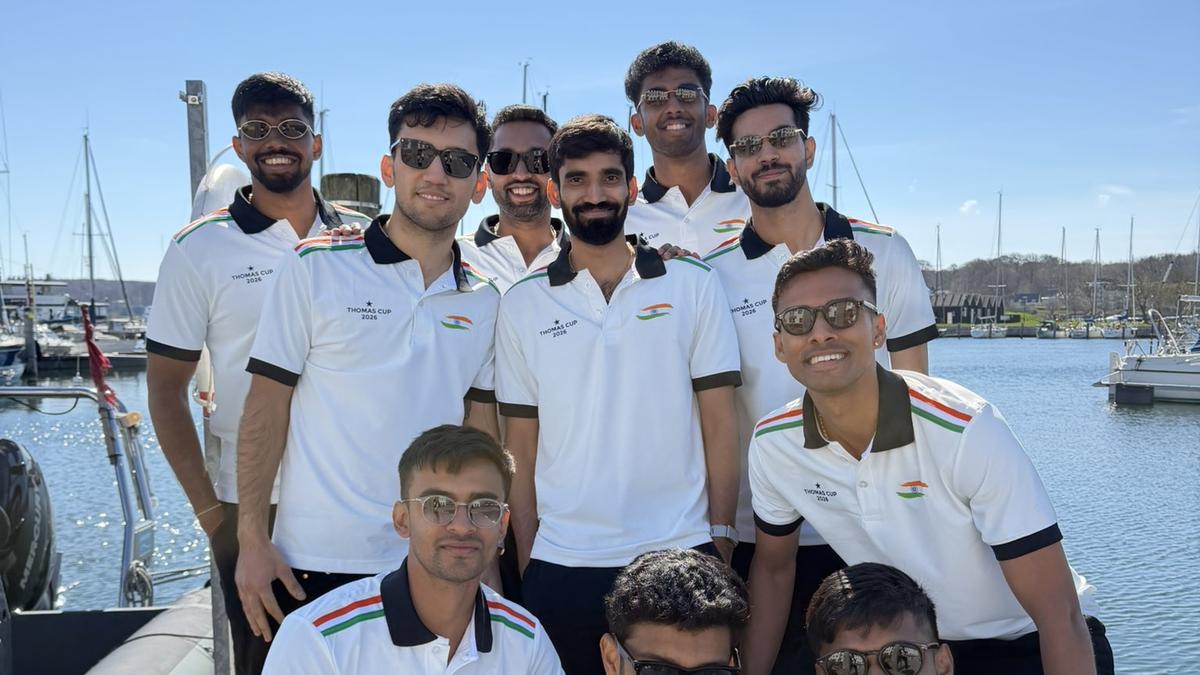
Three weeks ago, the Indian men’s badminton team had left for Denmark with barely any national conversation around them. When they returned home with a Thomas Cup bronze medal — only India’s second medal in the tournament’s 78-year history — that had hardly changed.
No crowds waited at the airport. No frenzy surrounded the team that had just fought its way into the final four of badminton’s biggest team championship. The moment dissolved into the rumble of trolley wheels, the mechanical hum of conveyor belts and the clipped repetition of arrival announcements. Somewhere between the baggage belts and sliding glass doors, Satwiksairaj Rankireddy posted what many interpreted as an expression of disappointment.
“Back home now. As usual, no one knows what happened over the past two weeks, and it seems like no one really cares,” he wrote on Instagram alongside a picture of the team at the airport.
The post quickly travelled across social media, triggering debate over whether Indian athletes outside cricket received enough recognition. A few days later, as the discussion spiralled beyond his original point, Satwik felt compelled to explain himself.
“We don’t want money or grand parades,” he wrote in a statement. “We just want to know that our country is watching and that our efforts are seen.” The clarification carried the exhaustion of an athlete trying to explain why silence can hurt more than criticism.
Satwik stressed that his comments were never meant to diminish achievements in other sports, nor were they driven by personal fame. The point, he said, was simple: India needs to build a culture that “encourages and celebrates every win, big or small. Whether it is a World Cup medal or a podium finish in a global championship like the Thomas Cup, these moments represent years of sacrifice and hard work,” he wrote.
And perhaps that silence revealed that India still does not fully understand what the Thomas Cup represents. It is badminton’s equivalent of the FIFA World Cup in prestige, and structurally closest to tennis’ Davis Cup — a competition that measures not just individual brilliance, but the collective strength of a nation’s badminton system.
One superstar cannot win it alone. Teams need depth across singles and doubles, tactical versatility, endurance, and the ability to withstand pressure across multiple ties against the sport’s traditional powerhouses.
Historically, those giants have almost always been China, Indonesia, Malaysia and Japan. India spent decades looking at that table from the outside.
Transition
That reality has changed dramatically over the last five years. India’s stunning Thomas Cup triumph in Bangkok in 2022 altered the imagination of Indian badminton forever. But in many ways, the bronze medal in Horsens this year may have been just as significant in understanding India’s place in world badminton. While the gold could still be seen as a magical fortnight where everything aligned perfectly, this bronze felt like confirmation that India genuinely belongs among badminton’s elite team nations and that the triumph in Bangkok was no one-off.
India entered the tournament seeded eighth. Several countries looked stronger on paper. Thailand had World No. 2 Kunlavut Vitidsarn. Indonesia brought one of the deepest men’s squads in the competition. Japan remained a perennial powerhouse. Chinese Taipei fielded two top-10 singles players in Chou Tien Chen and Lin Chun-Yi.
India, meanwhile, arrived with a squad in transition. Lakshya Sen carried significant expectations after his strong start to the year and deep run at the All England. Satwik and Chirag were returning from an injury-hit phase, while India’s second doubles combination of M.R. Arjun and Hariharan Amsakarunan still lacked the assurance of a guaranteed point in big ties.
Much of the intrigue centred around Ayush Shetty, then 20, who had arrived at the tournament on the back of a breakthrough run to the Badminton Asia Championships final and was increasingly being seen as India’s emerging singles force. H.S. Prannoy and K. Srikanth, the two most experienced players in the squad, entered carrying both the physical wear and tear of years on tour and the responsibility of guiding the team.
Yet, over the course of the week in Denmark, India rediscovered something that has increasingly become the identity of this team: resilience under pressure.
India’s group-stage clash against China carried enormous symbolic weight. Four years after India’s famous 3-2 win over China during its title-winning 2022 campaign, the tie once again felt like a measuring stick against badminton’s greatest powerhouse, built on relentless depth, ruthless systems and an endless conveyor belt of elite players.
This time, though, India pushed them all the way again.
Lakshya fought Li Shifeng fiercely. Satwik and Chirag saved multiple match-points before narrowly losing to Liang Weikeng and Wang Chang. And then came Prannoy, producing what felt like one final vintage act of defiance in the dead rubber against Lu Guangzu.
Going toe-to-toe
India lost the tie 2-3, but walked away looking less like outsiders and more like a side capable of going toe-to-toe with the sport’s traditional superpower.
The real breakthrough came in the quarterfinal against Taiwan, which possessed elite singles depth and a dangerous doubles combination. Anxiety surrounded Ayush, who was set to face Lin Chun-Yi, the All England champion who had beaten him in the Orleans Masters semifinals in March 2025.
Lakshya set the tone. Against the vastly experienced Chou Tien Chen, he clawed his way back from the brink, saving two game-points in the second set before turning the match around. Then Satwik and Chirag survived a ferocious contest to put India 2-0 ahead. Which meant everything suddenly rested on Ayush. That alone said something about how quickly India’s badminton landscape is changing.
Four years ago, Ayush had watched India’s Thomas Cup triumph on television. In Horsens, he walked on to the court carrying the weight of a nation’s semifinal hopes. Yet, while the rest of India seemed tense, Ayush looked remarkably calm. He absorbed Chun-Yi’s relentless attack, defended brilliantly and repeatedly found ways to wrest back control of points.
When the winning point landed, India had secured another Thomas Cup medal.
And in that moment, the tournament became about more than bronze.
Ayush’s emergence symbolised continuity. India was no longer dependent on one golden generation peaking together. Beneath Lakshya, Satwik, Chirag and Prannoy, another layer was already forming. That is what strong sporting nations do. They renew themselves before decline arrives.
By the time India reached the semifinal against France, the Forum Horsens arena had found its two loudest teams of the tournament and the atmosphere reflected the stakes for both the countries.
The Indians beat daflis in the stands while the French responded with synchronised claps and booming songs. The noise ricocheted through the arena like a festival procession trapped inside a badminton hall. Both benches roared through every point, every retrieval and every momentum swing, turning the semifinal into one of the most emotionally charged ties of the week.
A story of its own
France, though, had arrived in Horsens with a story of its own.
By reaching the last four, France had already guaranteed itself a first-ever Thomas Cup medal. A landmark moment for a nation that has steadily built one of the strongest men’s singles programmes in world badminton over the last few years. Along the way, France achieved a historic 4-1 upset victory against 14-time champion Indonesia and defeated Japan in the quarterfinals.
The rise had been driven by the extraordinary depth in singles: World No. 4 Christo Popov, his older brother Toma Junior Popov, and the explosive Alex Lanier, all ranked inside the world’s top-17.
The semifinal eventually exposed the fine margins India had been operating under throughout the tournament. Lakshya missed the tie after injuring his elbow during his diving retrievals in the quarterfinal against Chen, a setback compounded by painful blisters on his feet. Without their first singles player — and one of the team’s most reliable big-match performers — India’s chances of reaching a second Thomas Cup final were significantly reduced against a French side built around the formidable trio of Popov brothers and the World No. 10.
That absence also thrust an even greater responsibility onto Ayush. Until then, Ayush had won all his matches in the tournament and emerged as one of India’s breakout performers. But against Christo, the youngster ran into a different level of intensity and speed.
Afterwards, Ayush admitted that the Frenchman had “outclassed and outpaced” him, adding that ties like these against elite opponents were part of the learning curve.
Lanier’s relentless power and pace eventually proved too much for Srikanth, though the former World No. 1 still produced flashes of the anticipation and touch that once made him a world-renowned attacking player. With India 0-2 down, the responsibility shifted to Prannoy.
Up against the higher-ranked Toma Junior, Prannoy fought doggedly, pushing through long rallies and physical strain in an attempt to keep India alive. But the Frenchman closed out the tie in straight games even before doubles could become a factor. Satwik and Chirag never got the opportunity to influence the contest.
The 0-3 scoreline ended India’s campaign, but not the significance of its achievement. France may have gone on to make history with its first-ever Thomas Cup final, but India’s bronze still carried enormous weight. This was a team seeded eighth, managing injuries, relying on an ageing core while simultaneously ushering in a new generation. Despite that, India finished on the podium in badminton’s toughest team championship.
And perhaps that’s what Satwik was trying to say all along.