



Volkswagen Has Finally Fixed The ID.3
- ID.3 Neo ditches the oddball look and finally feels more like an electric Golf.
- VW fixes the cabin with real buttons, better materials, and a much friendlier layout.
- A bigger battery, more range, and V2L tech make the updated ID.3 more appealing.
The Volkswagen ID.3 was never a bad car, even at launch when it was plagued by software issues, and it got better over time. But there was no escaping some of its design quirks, which made it look too weird for the typical VW buyer, or the annoying touch controls that made the user experience more frustrating than it should have been. Now VW has introduced the ID.3 Neo, and it addresses all of that.
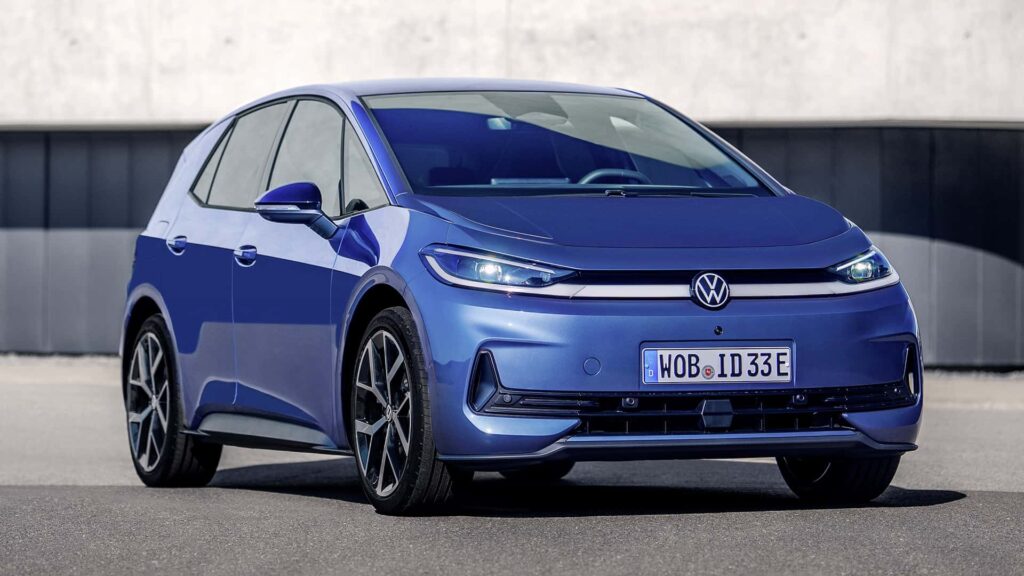
It features a completely redesigned front end that makes it look a lot more like an electric Golf. The full-width light bar connecting the headlights makes it look more premium and more contemporary, while also distinguishing it from the smaller ID. Polo, which has a similar family face. It also appears to have slightly more front overhang, which is likely why it’s marginally longer overall, and it doesn’t have the same stubby-nosed look as its predecessor.

34
Source: Volkswagen
The rest of the ID.3 Neo’s exterior remains unchanged, but it does get new wheel designs and colors. Bigger changes have occurred inside, with the dashboard, door cards, steering wheel, and most panels redesigned.
The good news is VW made good on its promise to bring back physical buttons. I counted 19 in the cabin, including those on the redesigned steering wheel alone. There is a row of physical controls below the central vents that let you adjust all the important climate settings, including the temperature for the two front zones, fan speed, and front and rear defrost.
Photo by: Volkswagen
The touch controls that required you to slide your finger to adjust the temperature or lower the media volume are thankfully gone. The volume control is now a physical rotating knob placed within easy reach between the wireless phone charger and the configurable cupholders. VW also added dedicated window switches for the driver to operate the rear windows, whereas before you had a single set of switches and you had to choose which windows they operated.
VW is clearly trying to drive home the idea that this is a ‘true Volkswagen,’ so it has even given the now-larger 10.25-inch driver’s display a 1980s-inspired gauge cluster design. It adds a welcome bit of retro charm to an otherwise modern interior. The central infotainment screen is the same 12.9-inch unit introduced with the ID.3’s previous facelift.
The manufacturer also says it has improved the quality of the interior materials, which was another area where the ID.3 lagged behind other VW models—it previously had hard plastics throughout.
The largest battery pack for the ID.3 Neo has grown to 79 kilowatt-hours, boosting WLTP range to 391 miles (630 km), and it’s paired with a 223-horsepower rear-wheel-drive motor. There’s also a 58-kWh variant with 188 hp and a base model with a smaller 50-kWh battery and 168 hp. The large battery charges at up to 183 kW, while the two smaller packs peak at 105 kW. All versions also gain vehicle-to-load (V2L) bidirectional charging.
Volkswagen could launch a more powerful and sporty version of the ID.3 Neo, and if it does, it will likely wear a GTI badge, like the smaller ID. Polo GTI. It could have the same output as the Cupra Born VZ, whose single rear motor makes 321 hp and 402 lb-ft (545 Nm), enough for a 0-62 mph (100 km/h) time of under 6 seconds.
Order books in Europe open on April 16, and VW says deliveries of the ID.3 Neo will begin in July. Pricing has yet to be announced.
Volkswagen is also working on a true electric Golf, which is expected to arrive in 2028 or 2029. It will ditch the ID.3’s MEB platform in favor of its more advanced replacement, SSP, which is essentially an evolution of MEB with elements borrowed from the PPE architecture used in the VW Group’s premium EVs, like the Porsche Macan.