



This new museum in Shivamogga educates people about bees and beekeeping
As a young boy growing up in the small town of Chitradurga in central Karnataka, Apoorva BV often spent time observing the natural world. “Animals, birds and insects have always been my favourite topics since childhood,” says the Bengaluru-based beekeeper and beekeeping educator, who has recently set up a one-of-its-kind Bee Museum at the Keladi Shivappa Nayaka Agricultural and Horticultural Sciences in Iruvakki, Shivamogga.
Like most of his peers, he went on to join an engineering college, but by his third year, he found himself drawn into the world of bees after attending a beekeeping session organised by senior beekeeper, S M Shanthaveeraiah of Chandana Madhuvana Gramina Abhivruddhi Sangha, a non-government organisation (NGO) focused on rural development.
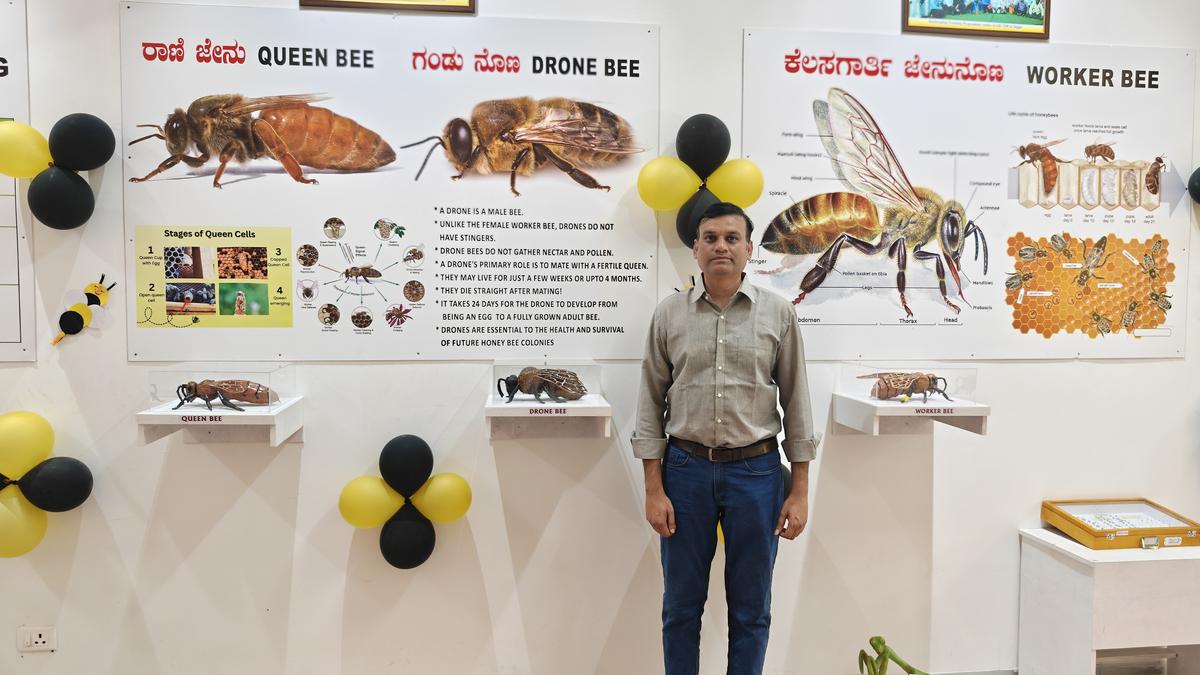
Apoorva hopes that even someone who knows nothing about bees will find the musuem interesting
| Photo Credit:
Special Arrangement
It first started as a hobby, explains Apoorva, who began by keeping these insects in his bedroom, close to the windows, where he could observe them, “especially the first flight of the day, which happened at a particular time every day.”
He also began offering help to farmers who attended the beekeeping programmes run by Shanthaveeraiah’s NGO, even volunteering as an assistant trainer. “I then started to explore how I can make this a profession. After graduation, I started to travel across the country to meet beekeepers, staying with apiary workers to learn apiary management,” recalls the founder of The Hive trust, a Bengaluru-headquartered non-profit organisation focused on bee-education and conservation.
It is all this knowledge, painstakingly gathered through the years, that has been funnelled into the new bee museum, which Apoorva hopes will help, “even a person who knows nothing about bees, find them interesting.”
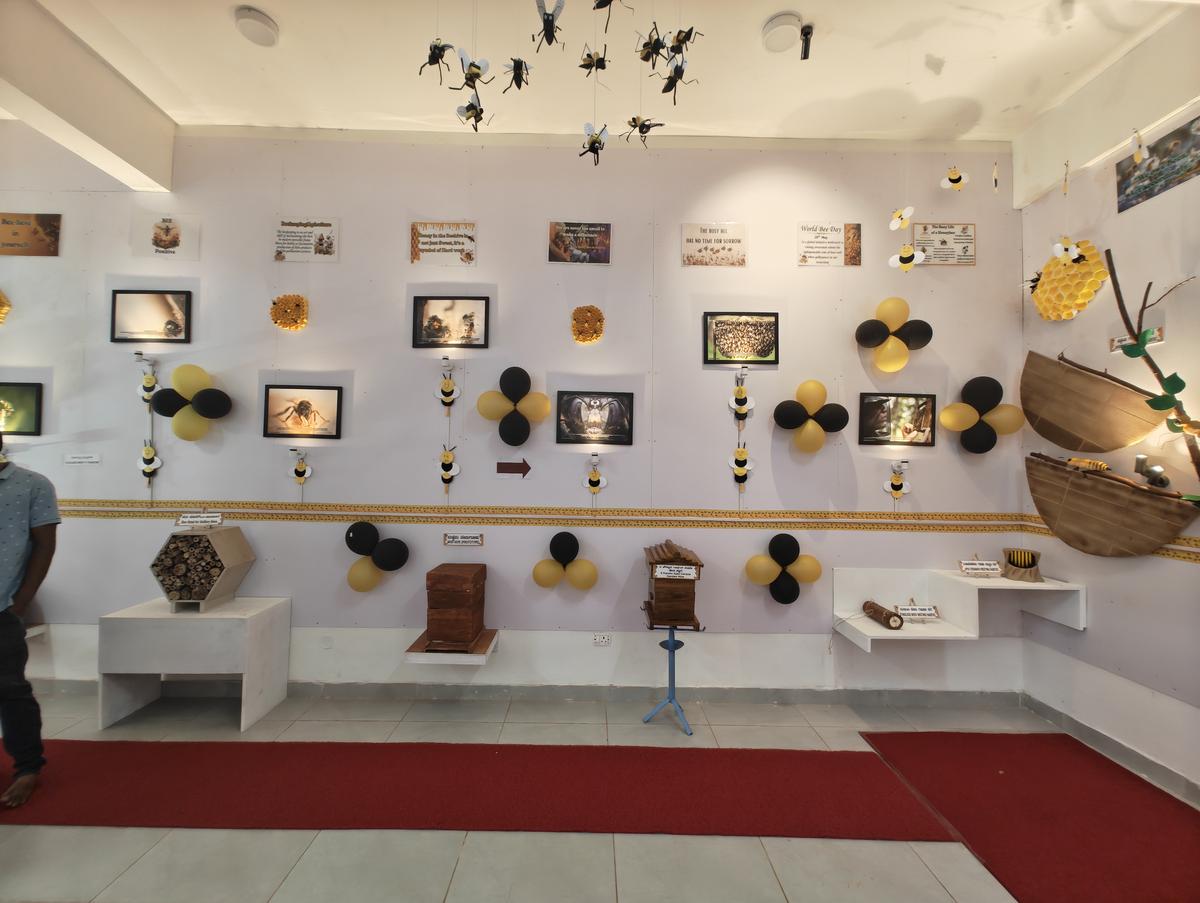
Listing some aspects of bees that are detailed in the museum, Apoorva says, “If you walk around, you will see what honey bees are, the hierarchy in the colony, the equipment used in beekeeping, the difference between solitary and social bees and bee habitats.”
The museum also offers insights into the indispensable role that small pollinators, including bees, wasps, rodents, and birds, play in ecosystem-functioning, as well as some of the challenges they face. “Pesticides, loss of habitat and change in agricultural practices affect all these pollinators, not just bees.”
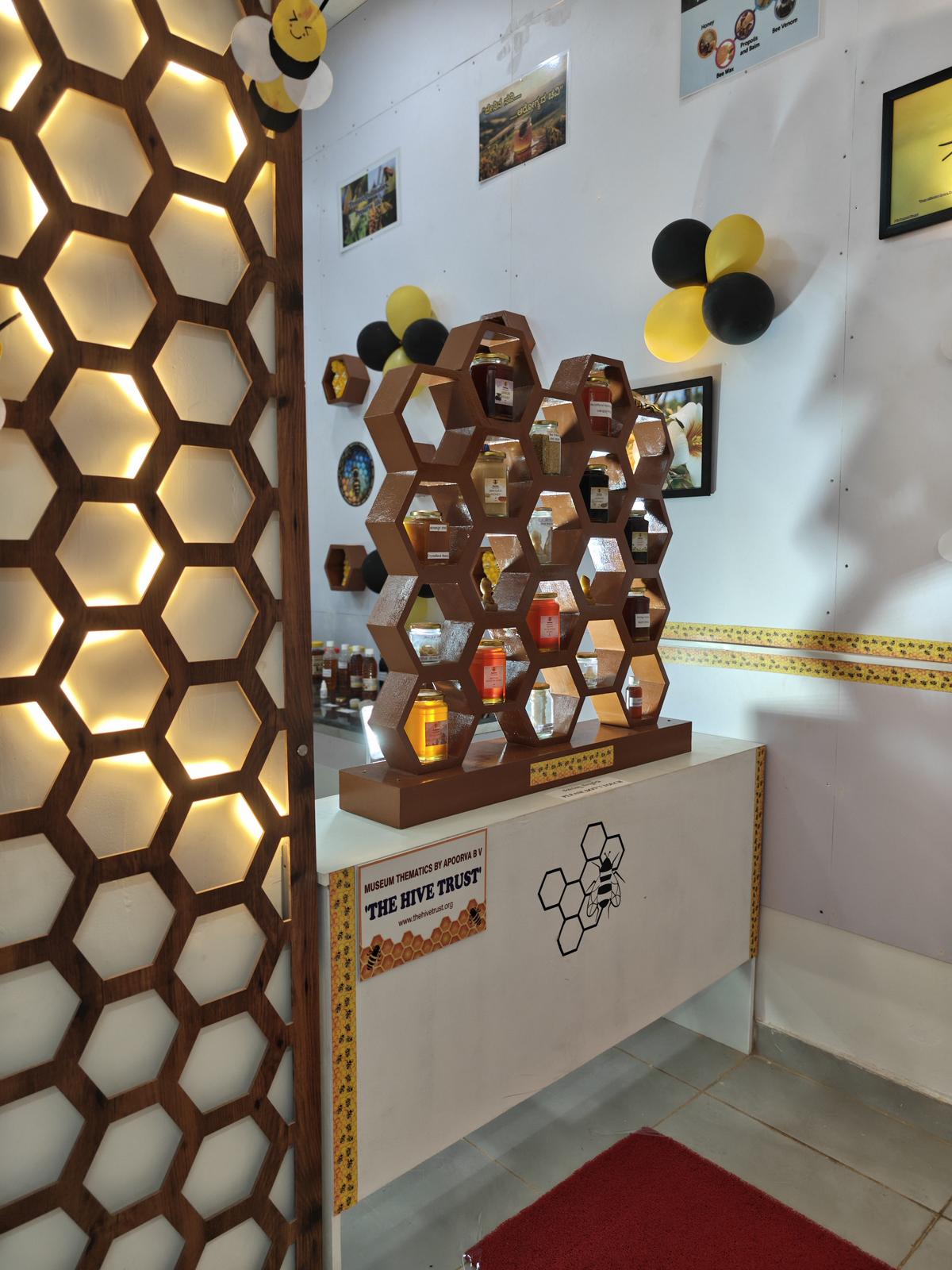
Exhibits at the musuem
| Photo Credit:
Special Arrangement
This is the first time he has worked on a project like this, says this impassioned educator, who has been regularly conducting beekeeping workshops across the State and participating in events such as Krishi Mela, Lalbagh Flower Show, farmers’ markets, and agricultural expositions.
The university, he says, approached him to create this museum, which is not just for university students but also for farmers who visit the university regularly. “Generally, these kinds of things go to professional designers, but, as a beekeeper who always enjoyed educating others on beekeeping, this was a good opportunity for me,” says Apoorva.
According to him, Shivamogga and its surroundings have significant potential to increase their beekeeping capacity. “There are so many beekeepers in Sagar, Thirthahalli, Agumbe and Mandagadde,” he says, adding that he is collaborating with a professor at the university, Jayalaxmi Hegde, on the project.
“She had taken the responsibility of implementing the Tribal Sub-Plan (TSP) scheme and had already conducted beekeeping training programmes for farmers, as well as distributed beekeeping equipment and accessories, along with bees,” says Apoorva. After she had done this, some funds remained, so they decided to channel them into a museum on campus. “And I started working on it.”
The actual process of creating the museum had more than its fair share of challenges, recounts Apoorva. “It took a long time because of the distance: I am in Bengaluru, and Shivamogga is pretty far (around 300 kilometres from Bengaluru); from Shivamogga, we have to go another 50 kilometres to reach this place,” he says.
He also had to deal with seepage, crumbling walls and workers quitting abruptly, unpleasant surprises that had not been budgeted for. “There were nights when I wondered if I should just pack up. But something kept me going. Maybe it was the museum’s purpose. Maybe it was my own,” reminiscences Apoorva, who got the contract last June and took a little under a year to create the museum, which opened to the public in March this year.
While educating people about beekeeping is an important mandate of the museum, the goals go beyond this. “It is not just about making honey, but also about appreciating and treating bees better,” he says. Bees, after all, are not machines or robots but sentient beings well connected to nature, says Apoorva, who believes that treating domesticated bees well is important. “They are highly evolved, probably more evolved than us, so we really need to appreciate them.”
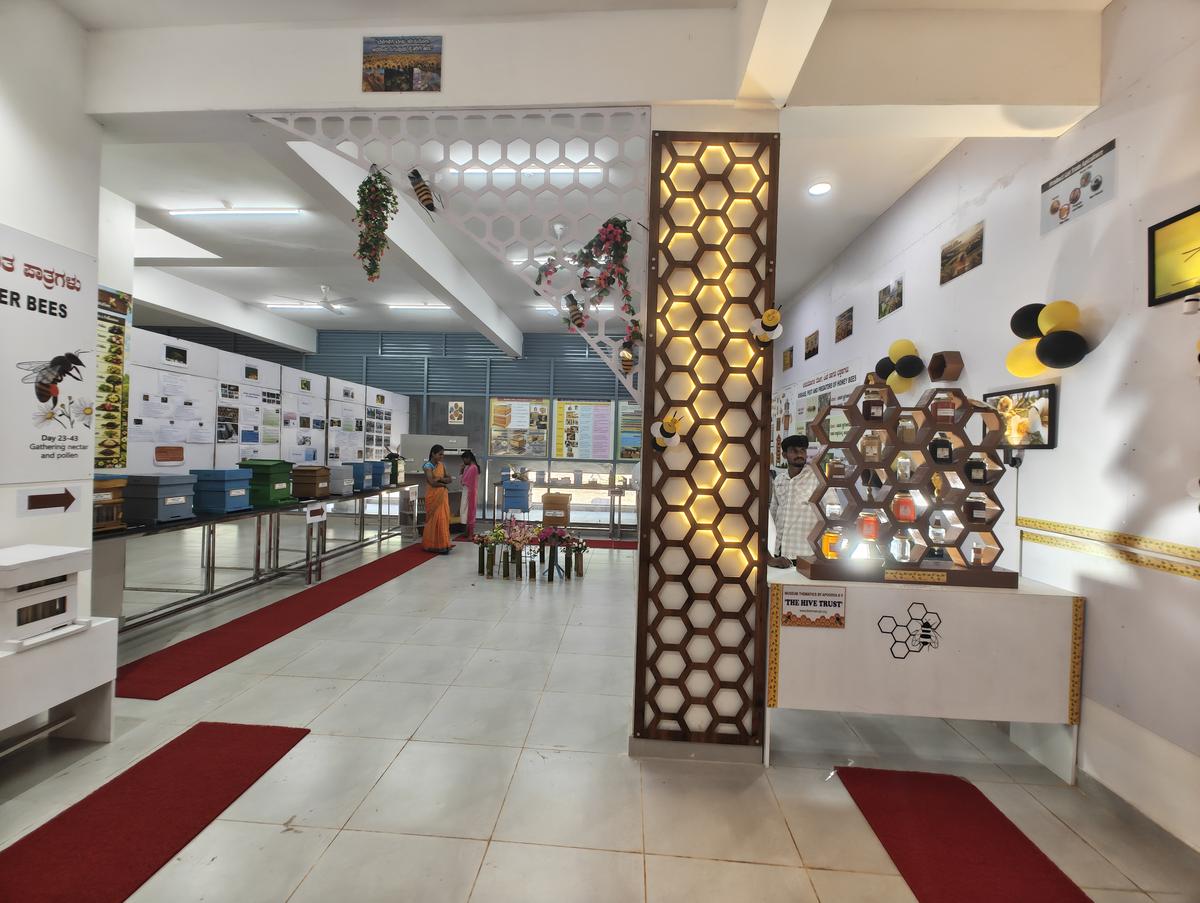
Bees are highly evolved animals, believes Apoorva
| Photo Credit:
Special Arrangement
Although India is still at a nascent stage, as far as commercial beekeeping is concerned, since “it was only after independence that the Khadi and Village Industries Commission (KVIC) started to promote it for rural employment”, he feels that beekeeping is an ideal livelihood for farmers and tribals of the Western Ghats. Moreover, “honey from the Western Ghats is rich in aroma and flavour. It also has undiscovered medicinal values,” he says, pointing out that, with the increase of tourism in this area, the market value of honey will only go up. “A family in the Western Ghats can earn a minimum of ₹2 lakhs per year if they keep 50 bee colonies.”