




Think Fast-Charging Ruins EV Batteries? Look At This 111,000-Mile Tesla Model Y
- An ex-taxi Tesla Model Y’s battery was tested for degradation after 111,000 miles.
- The car has been fast-charged almost exclusively, with only 36 kWh coming from an AC charger.
- Some studies suggest that constant DC fast charging could accelerate the degradation of EV batteries.
Well-versed EV owners know that you need to stick to home charging if you want your electric car’s battery to last a long time. However, there are always outliers.
Some studies suggest that only using DC fast chargers will negatively affect the longevity of an EV’s battery, accelerating the rate of degradation that occurs naturally with any type of chemistry. That said, not all cars are created equal, and the ex-taxi Tesla Model Y showcased in the video below is proof.

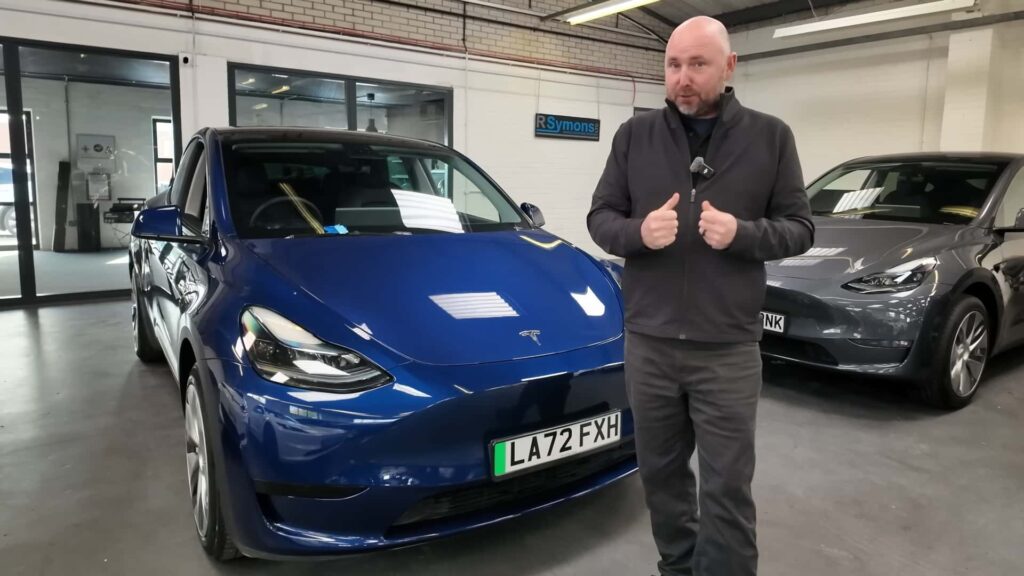
YouTuber Richard Symons, who runs a used EV shop in the United Kingdom, came across a well-looked-after Model Y that has only ever been fast-charged. So naturally, the first question that needed to be answered was how good the battery’s state of health is.
According to the data pulled from the car’s diagnostics port, this particular Model Y has only used 36 kilowatt-hours of energy from a home charging, with a whopping 32,684 kWh coming from DC fast chargers (and the car’s own regenerative braking system).
So, after looking at several battery health tests from different providers, this pre-facelift Model Y’s pack has a 92% state of health, which means it can theoretically provide 92% of the driving range compared to when it was new. That’s not bad at all, considering that another YouTuber tested his 2019 Tesla Model 3 Performance after a similar number of miles and found the degradation to be at 21%, despite being charged predominantly at home.
There is, however, a difference. The Model 3 with 79% battery health had a nickel manganese cobalt (NMC) battery, whereas the Model Y with 92% health remaining has a lithium iron phosphate (LFP) pack. NMC batteries have a higher energy density than LFP packs, so they can deliver more range in a similar form factor, but automakers recommend setting an 80% limit to protect the cells’ longevity.
LFP packs, meanwhile, are cheaper to manufacture and can be charged regularly to 100%, but they offer less energy density and don’t really like fast charging when it’s really cold outside.
All batteries degrade, but the latest data suggests that modern EV batteries will outlast the cars they’re fitted in. Degradation occurs early in the life of a pack, and then tapers off for the bulk of the battery’s expected life span, leading to usable driving ranges even after more than a decade in use.