

Tesla now calls FSD ‘Tesla Assisted Driving’ in China
Tesla has once again changed the name of its “FSD” system in China, using a more truthful name for the system in the world’s largest auto market.
For over a decade now, Tesla has sold a promise of vehicles that can drive themselves, even stating that every car it produced had all the hardware for self-driving.
It has long called the software system it sells “Full Self-Driving,” a simple, descriptive name that really says everything you need to know about the system’s functionality. It has charged up to $15,000 for this software, reflecting the value that Tesla thinks having your own robot driver would represent. More recently, it moved to a subscription-only sales model (though it does still sell the system upfront in China).
The only problem? It… doesn’t actually drive itself, despite constant false promises by the company’s CEO.
According to the standardized system for self-driving system classification, Tesla’s system is “level 2,” just like most other consumer-available software.
Level 2 does encompass a wide breadth of capability, and Tesla’s system is one of the better and more-capable Advanced Driver Assist Systems (ADAS) out there. But at the end of the day, the human driver is still responsible for the car, which means it’s level 2.
The gap between the system’s capabilities and Tesla’s naming of it has attracted much criticism over the years, some of it from regulators. Tesla recently got in a spat with California forcing it to stop using the name in marketing materials, but after adding “(Supervised)” to the end of the name and going subscription-only, California seems to have been satisfied by the minor changes.
However, regulators in China tend to be a little more no-nonsense than those in the US.
For example, Chinese regulators recently introduced sweeping regulations on door handles, reversing the flush/hidden door handle trend that many credit Tesla for starting. This had also been a source of longterm consternation, and China was the first to act to put a stop to it.
So, to avoid the consternation of Chinese regulators, Tesla has changed the name of FSD before. Originally it was called “FSD Intelligent Assisted Driving” in Chinese, then Tesla dropped the FSD part. Now it’s changing things again.
‘Tesla Assisted Driving’ is a much more realistic name
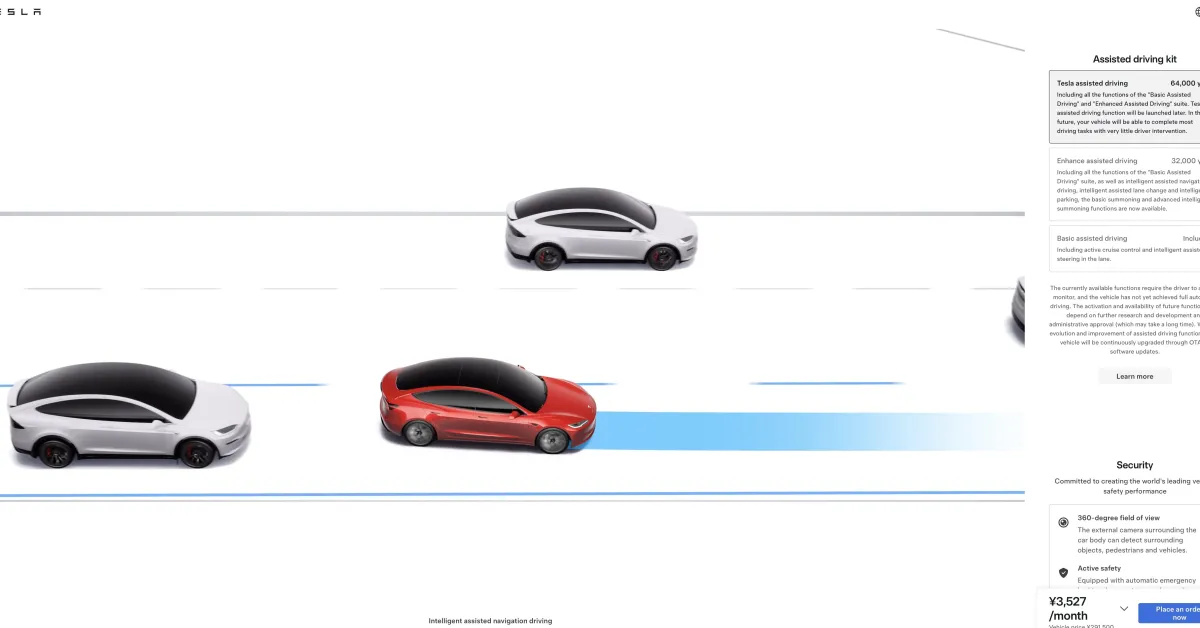
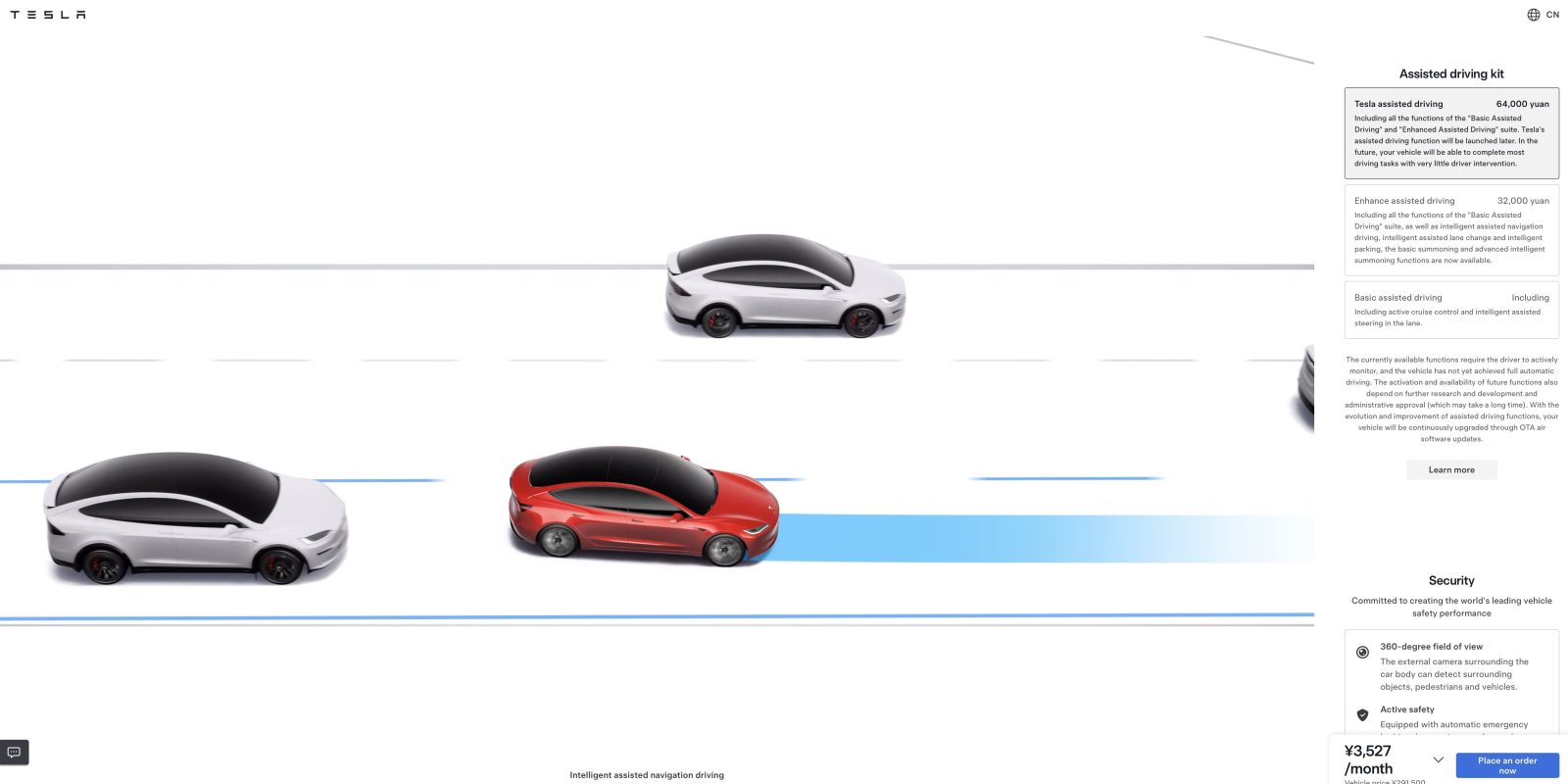
On Tesla’s website this week, a new name appeared: 特斯拉辅助驾驶, translated as “Tesla Assisted Driving.”
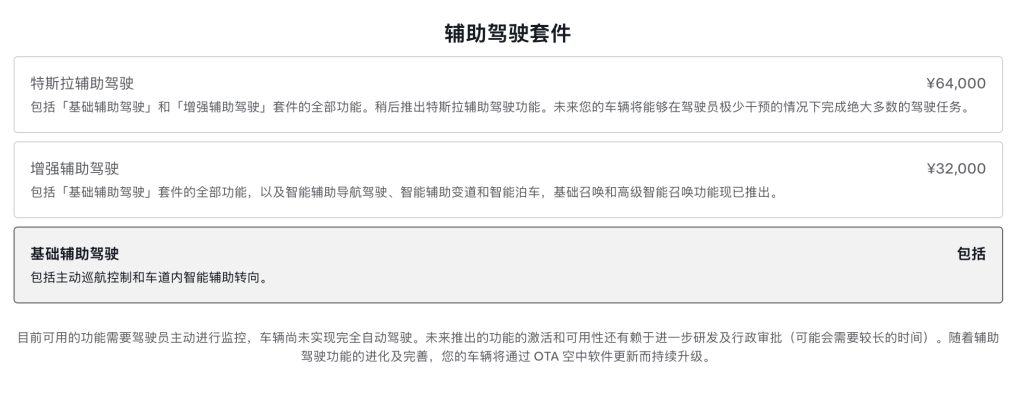
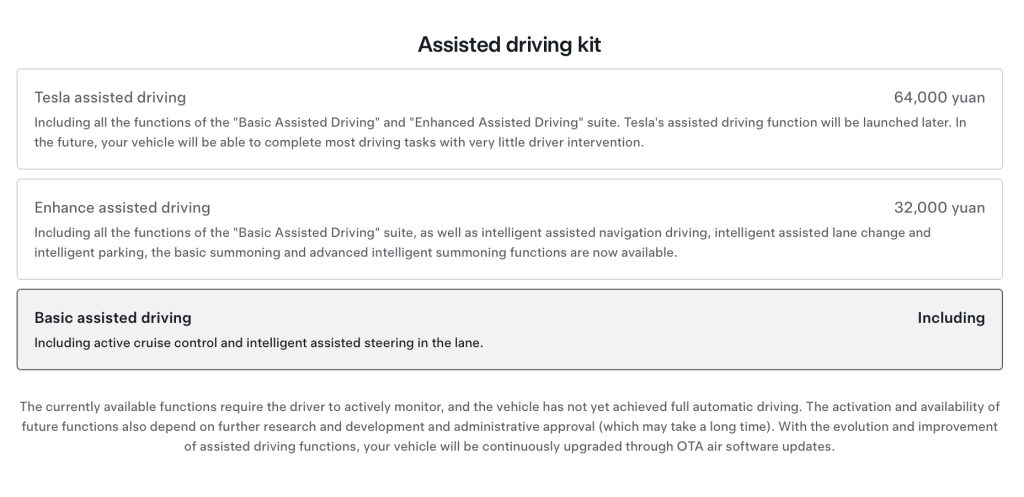
It’s a relatively minor change, swapping out the word “Intelligent” for “Tesla.” But it shows that Tesla still isn’t quite sure what to call the system, particularly since its preferred/primary name for the system, FSD, is…. simply not true. Building a whole brand around a lie is a problem, especially when public safety is concerned.
It wouldn’t be a problem if the system’s capabilities had grown as rapidly as the company’s CEO promised, but given he’s been saying it will come “at the end of next year” for about ten years now, people are starting to catch on that the wolf may not be coming.
So it makes a lot more sense not to name the system over something it can’t do. Tesla can change the name later, or can offer multiple versions of the system and refrain from selling something called “Full Self-Driving” when it can’t drive itself. (It used to do this, calling its ADAS system Autopilot, but then it decided to start selling FSD even though the system is not ready).
Interestingly enough, despite the change in name in mainland China, Tesla still sells the system as “Full Self-Driving” on its Hong Kong English-language site, or as “fully automatic driving function” when translated from the Chinese-language version. Hong Kong is part of China, but is a “special administrative region” of the country with many of its own autonomous governmental powers (including on traffic laws, as Hong Kong is right-hand drive and China is left).
There’s also the question of what Tesla’s system even is in China, as the company has launched FSD in China, then rolled back that launch before. Just this week, Tesla said FSD is available in China in an English-language tweet, but it’s not clear whether this included a rollout of any new capabilities.
Competition is fierce in the Chinese self-driving market
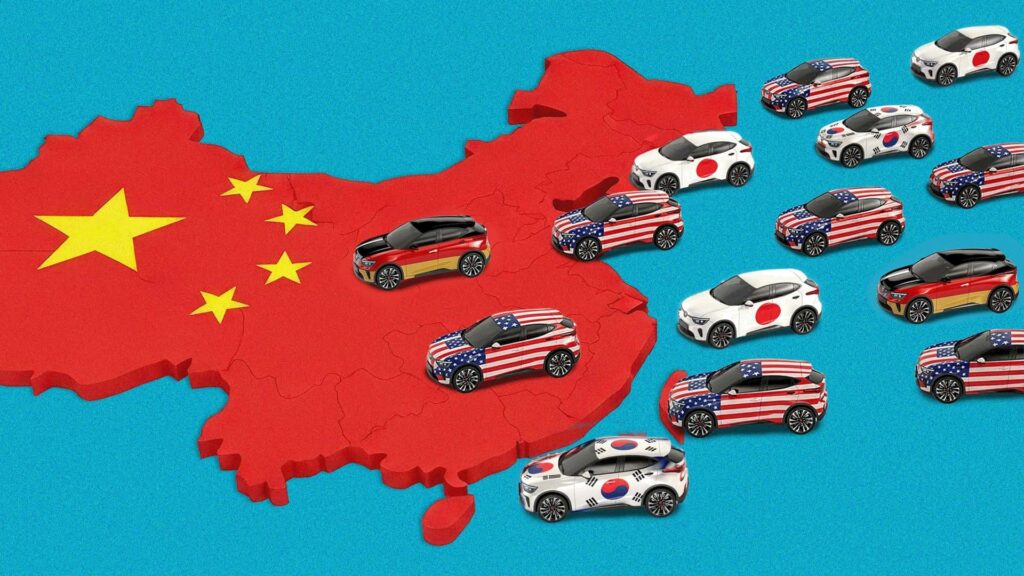
The situation is especially interesting in China, because despite Tesla being among the best systems in the West, there is a lot more competition in China.
Several other brands offer self-driving systems in China, and some of them even offer it for free. As is the case with the EV market overall, Chinese automakers are moving faster at deploying ADAS system capabilities than Western ones, and competing fiercely to have better offerings.
Chinese media did a massive real-world self-driving test of all these systems both on highways and city streets, and Tesla did come out on top in both tests – but other brands came close, so we’ll call this a win by decision, rather than a knockout.
Charge your electric vehicle at home using rooftop solar panels. Find a reliable and competitively priced solar installer near you on EnergySage, for free. They have pre-vetted installers competing for your business, ensuring high-quality solutions and 20-30% savings. It’s free, with no sales calls until you choose an installer. Compare personalized solar quotes online and receive guidance from unbiased Energy Advisers. Get started here. – ad*


FTC: We use income earning auto affiliate links. More.