


Strategic spark in India-South Korea defence ties
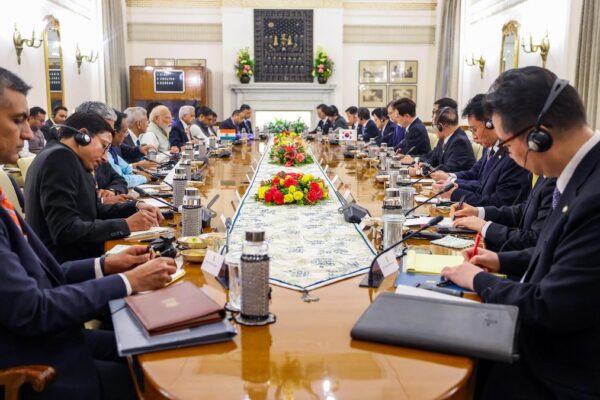
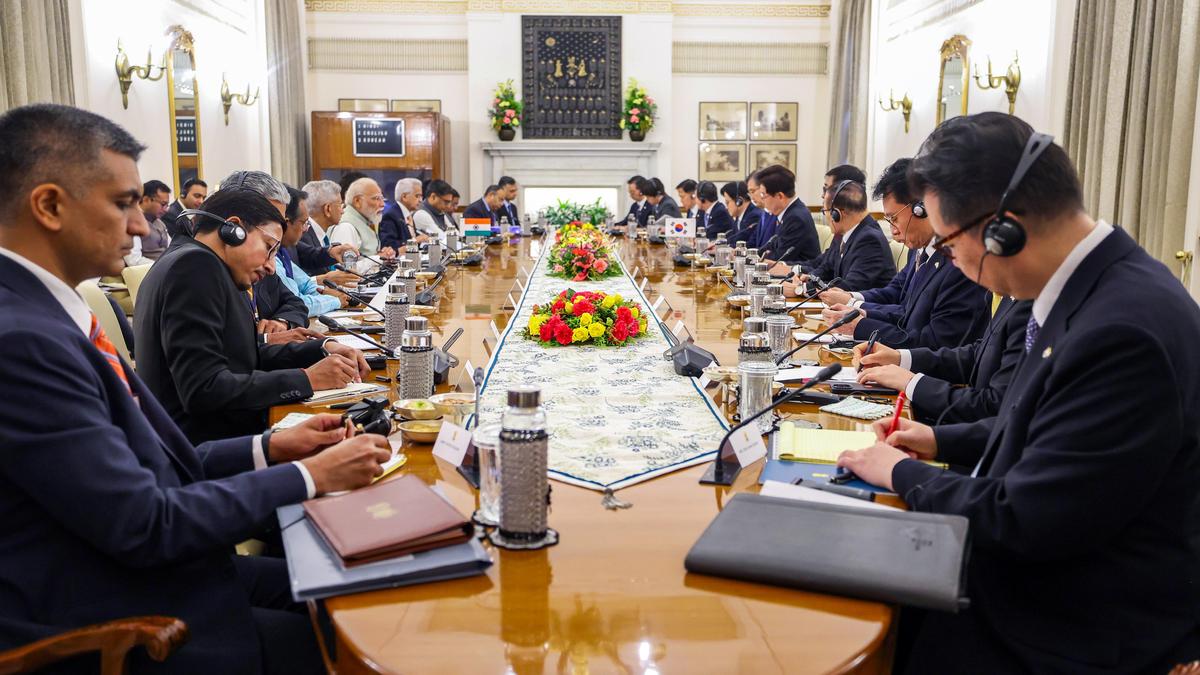
The visit of the Indian Defence Minister to Seoul (May 19-21), following the South Korean President’s visit to India (April 19-21, 2026), underscores the growing momentum and strategic significance of the India-South Korea partnership in recent years.
What began as limited defence engagement has evolved into a multidimensional partnership in defence manufacturing, technology transfer, and military modernisation. The K9 Vajra-T programme, developed under the ‘Make in India’ initiative, has become the flagship project of India-South Korea defence cooperation, paving the way for several other successful initiatives.
Project areas
Today, bilateral defence cooperation is expanding rapidly, with several new projects under consideration. Submarine collaboration has emerged as a key focus area, driven by South Korea’s expertise in conventional submarines, lithium-ion battery systems, and air-independent propulsion technologies through companies such as Hanwha Ocean. South Korea’s advancing aerospace sector, including the KF-21 fighter programme and the FA-50 light combat aircraft, has opened new avenues for collaboration in fighter technologies, engines, avionics, missile integration, and maintenance systems.
As one of the world’s leading shipbuilding powers, South Korea can significantly contribute to India’s growing maritime ambitions in the Indo-Pacific through cooperation in destroyers, logistics vessels, submarine support systems, smart shipyards, and naval propulsion technologies.
Discussions are also progressing in areas such as light tanks, utility helicopters, future ready combat vehicles, military lithium batteries, and defence electronics. Indian and Korean defence firms are pursuing joint ventures and industrial partnerships across multiple sectors.
Importantly, the partnership is evolving beyond conventional weapons systems toward innovation-driven cooperation. Both countries are promoting defence innovation ecosystems linking startups, universities, research institutions, incubators, and investors. The proposed Korea-India Defence Accelerator (KIND-X) reflects this future-oriented approach.
At the strategic level, military exchanges, naval exercises, coast guard cooperation, and defence dialogues are strengthening interoperability and mutual trust. For India, South Korea offers advanced technology and manufacturing expertise, while India provides a large market, strategic geography, and long-term industrial opportunities. Together, the two countries have the potential to build one of Asia’s most significant defence partnerships.
Cooperation in the defence industrial sector represents a significant indicator of the growing maturity and strategic depth of bilateral relations. However, it would be a serious strategic miscalculation for both countries to confine this partnership solely to these domains.
An evolving Indo-Pacific environment
The rapidly evolving Indo-Pacific geopolitical environment requires India and South Korea to expand their defence cooperation beyond industrial ties toward a broader strategic partnership focused on regional stability and shared security goals.
The next phase of defence engagement should, therefore, focus on formulating an institutionalised and forward-looking defence road map encompassing emerging security threats across the wider Indo-Pacific region. Such a framework must move beyond the current primarily defence-industrial focus of cooperation and evolve into a multidimensional partnership grounded in shared security concerns, geopolitical stability, and regional resilience.
The geopolitical landscape around the Korean Peninsula is changing rapidly. North Korea’s growing missile and nuclear capabilities continue to pose a serious threat to South Korea, while expanding Russia-North Korea military cooperation is reshaping Northeast Asia’s security architecture.
China’s growing naval assertiveness around the Korean Peninsula has created new strategic concerns for South Korea. Beijing’s expanding influence and military presence in the South China Sea also carry major implications for South Korea, as a significant share of its energy imports and maritime trade passes through these waters.
South Korea is also facing serious structural challenges. Its declining demographic profile and shrinking pool of military recruits are weakening the long-term sustainability of its conventional defence posture. Combined with a rapidly changing security environment, these internal vulnerabilities create a complex strategic situation requiring urgent and sustained policy attention from countries seeking long-term strategic cooperation with Seoul.
Need for a strategic convergence
In this context, it is essential for India’s strategic thinkers and defence planners to pay closer attention to changing geopolitical realities in South Korea. Ignoring these developments could undermine both South Korea’s security and India’s broader Indo-Pacific interests.
If India seeks to substantially expand its defence-industrial cooperation with South Korea, it must recognise that such cooperation depends on South Korea’s security, stability, and strategic resilience. Strengthening South Korea’s ability to address its security challenges should be central to this partnership.
The Indian Defence Minister’s visit to Seoul should lead to the beginning of a new phase in India-South Korea defence cooperation — one that moves beyond defence-industrial ties toward a broader partnership grounded in shared security interests and Indo-Pacific stability.
Published – May 19, 2026 12:08 am IST