




School of Ecological Nurturance: At Wayanad’s Gurukula Botanical Sanctuary, it invites people to engage deeply with land, not as observers, but as participants
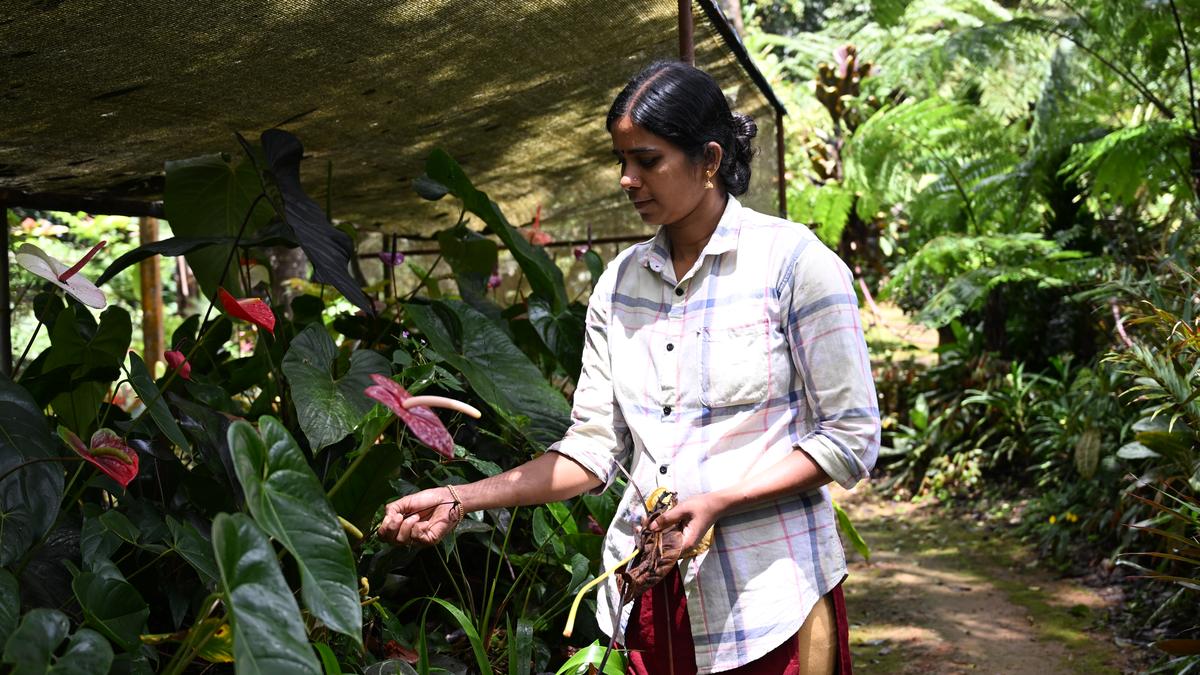
Gurukula Botanical Sanctuary is home to diverse habitats and as many as 2,000 native plant species, including orchids, ferns, trees
| Photo Credit: Mridula Vijayarangakumar
It’s a scenic route. From Coimbatore, we drive to Udhagamandalam and proceed via Gudalur and the Mudumalai forest check post to reach Sulthan Bathery in Wayanad, traversing steep hairpin turns and lush green landscapes. At the end of the seven-hour ride, Suprabha Seshan and her canine friends greet us at Gurukula Botanical Sanctuary (GBS)at Periya, which is a 26 kilometre drive from Mananthavady in Wayanad. As we take in the quiet of the forest at night from the newly constructed glass house, an inky blue darkness settles over the hills. The next day begins with a brisk walk past the dairy farm, before stopping by at the community kitchen for tea.
I am at GBS to learn about the School of Ecological Nurturance (SEN) apprenticeship programme, an initiative started along with The Forest Way Trust (Tiruvannamalai), Upstream Ecology (Ooty), and Adavi Trust (Mysore). The GBS story begins with the land itself. Unlike much of Wayanad, which saw widespread clearing of forests during the land reforms in the mid-20th century, this patch survived as a blend of primary and secondary forests even as the surrounding landscape transformed into farms and settlements. Families arriving in the late 1960s and 70s cultivated tapioca, lemongrass, bananas, jackfruit, and mango. Amid this changing terrain, a young seeker, Wolfgang Theuerkauf, a German national, the founder of GBS, arrived. “There was no plan to conserve biodiversity. He just didn’t clear the land,” says Suprabha. The sanctuary has dense plant collections, untouched forests, streams, and community landscapes nearby.
Published – April 30, 2026 04:05 pm IST