



Polestar Pauses Work On Its Electric Sports Car. But It’s Almost Done
- Polestar says the 6 is nearly finished, but it may no longer be a near-term priority.
- The electric roadster shares its platform, battery and motors with the upcoming Polestar 5.
- Polestar could prioritize developing and producing an SUV on the same platform.
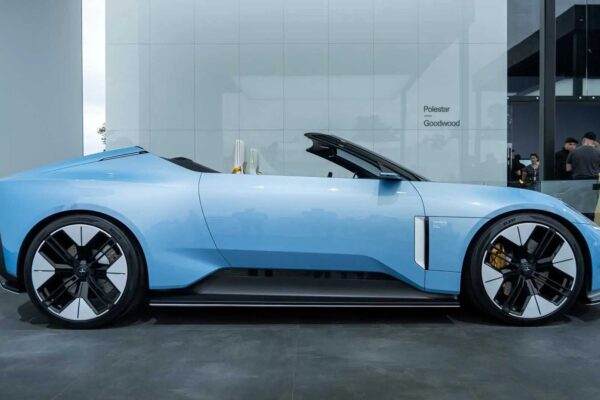
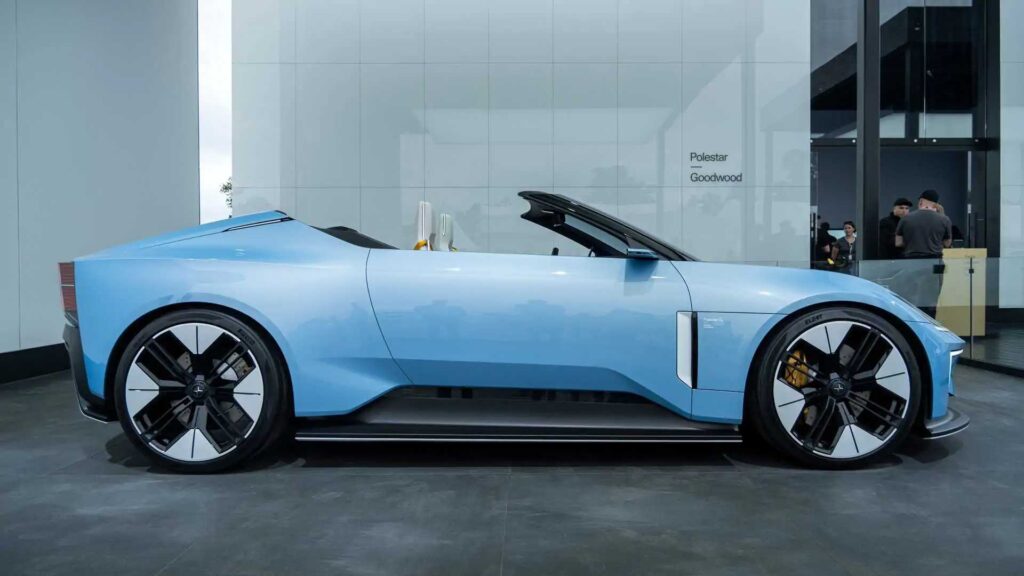
The Polestar 6 was supposed to be one of the company’s clearest statements of intent: a dedicated electric sports car aimed squarely at the Porsche 718 EV. Polestar had already confirmed production plans, but the project now appears to have slipped down the priority list, leaving its timing uncertain.
According to Polestar global communications boss Graeme Lambert, who spoke to Edmunds, the Polestar 6 is close to the end of its development program, though it has not yet been fully signed off. The major engineering work appears to be complete, with a few remaining items still requiring final development.
He pointed to the folding hardtop roof and rear seats as still needing work, but said Polestar had the resources to complete their design in-house.

28
Source: Polestar
Polestar still says it plans to launch four new models by 2028, but the 6 may no longer be part of that near-term cadence. The lineup could instead include the Polestar 5, a new version of the Polestar 4, the next-generation Polestar 2, and the compact Polestar 7 crossover. In other words, Polestar already has a full product pipeline without counting the 6.
Lambert went on to say just how similar the Polestar 6 is to the 5, with which it shares the PPA platform. It’s essentially a shorter, open-top version of that car, with the same 112-kilowatt-hour battery pack, the same motors, and suspension architecture.
But even with development seemingly on the home stretch, finishing the Polestar 6 didn’t sound like a priority. It’s unclear if the final production version will be revealed this year, as per Polestar’s previously announced plan for the 6. Based on this interview, it sounds like it could be pushed back.
If the Polestar 6 reaches production, it is expected to be built in China alongside the Polestar 5. That would create a major problem for the U.S. market, where Chinese-built EVs are subject to a 100% import tariff. The same issue is already preventing the China-made Polestar 5 from being sold in the United States, although it shouldn’t have a problem selling in neighboring Canada, which cut tariffs, essentially swinging the gate wide open for all Chinese cars.
Polestar actually opened the order books for the 2+2 drop-top, and the first 500 launch edition cars sold out very quickly. This showed Polestar that there was some demand for such a car, but it seems it wasn’t enough to make its production a priority.
What does appear to be higher on Polestar’s list is an SUV based on the same PPA platform. Unlike some Geely Group architectures, PPA is Polestar’s own platform, and it could underpin a larger electric SUV aimed at the Porsche Cayenne Electric. For Polestar, that kind of model would almost certainly matter more commercially than a low-volume roadster.
The question is whether it happens soon enough—and whether a China-built version could realistically reach the U.S. under the current tariff regime. The Cayenne-rivaling SUV is at least two years away, though, and the tariff situation could change in the meantime.