



Play of colours – The Hindu

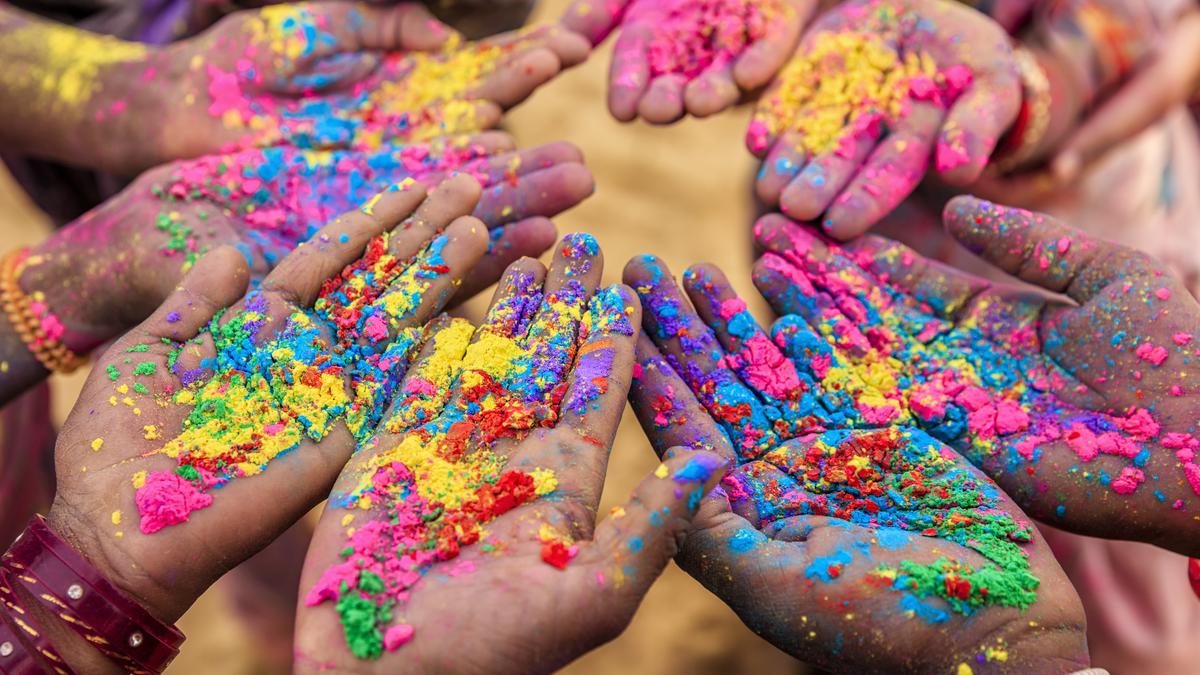
Whites, fawns, blacks and browns signalled status; bright hues were reserved for festivals.
| Photo Credit: Getty Images
Deplaning through the aerobridge, I spotted a tall, well-built, balding man dressed entirely in white — white shirt, trousers, shoes. My attempt to catch a glimpse of his face was thwarted when another man overtook me. From behind, he was the first man’s twin, tall, broad-shouldered, balding. The only difference: he was dressed entirely in black — T-shirt, trousers, sneakers. For a brief moment, they walked parallel to each other, black and white, yin and yang. Colours contrasted, surfacing unexpectedly, much like life.
My relationship with colours began long before the aerobridge moment, in a childhood drenched in brightness and possibility. Colourful flags fluttering outside a hotel signified luxury and hope that someday we too would dine there. I pestered my parents into painting each room of our home a different colour. Choosing shades from a brochure was a task I approached with grave seriousness. Like royalty, we eventually had a pink room to receive guests, a yellow room to dine, a green room to sleep, and a mauve room to study.
Published – May 03, 2026 04:14 am IST