


On measuring freedom of the press in India
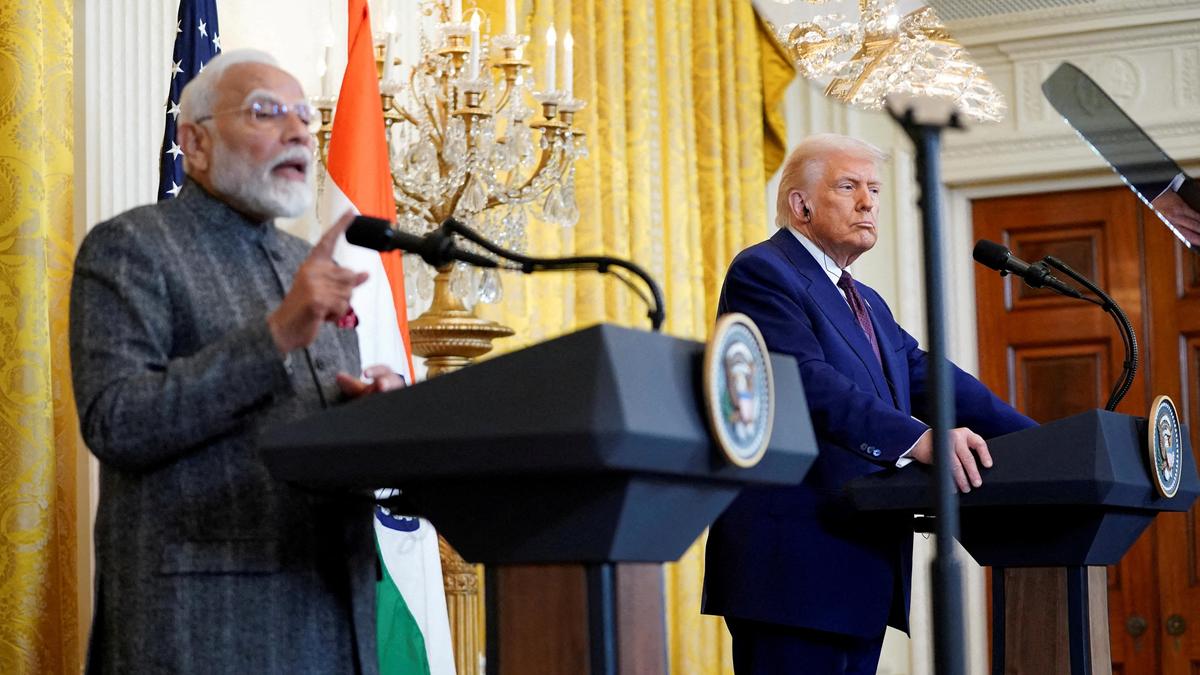
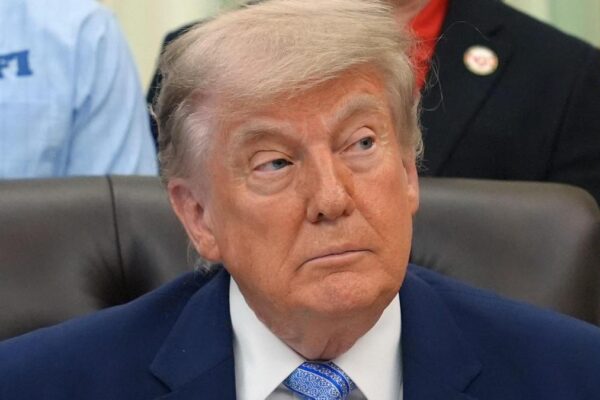
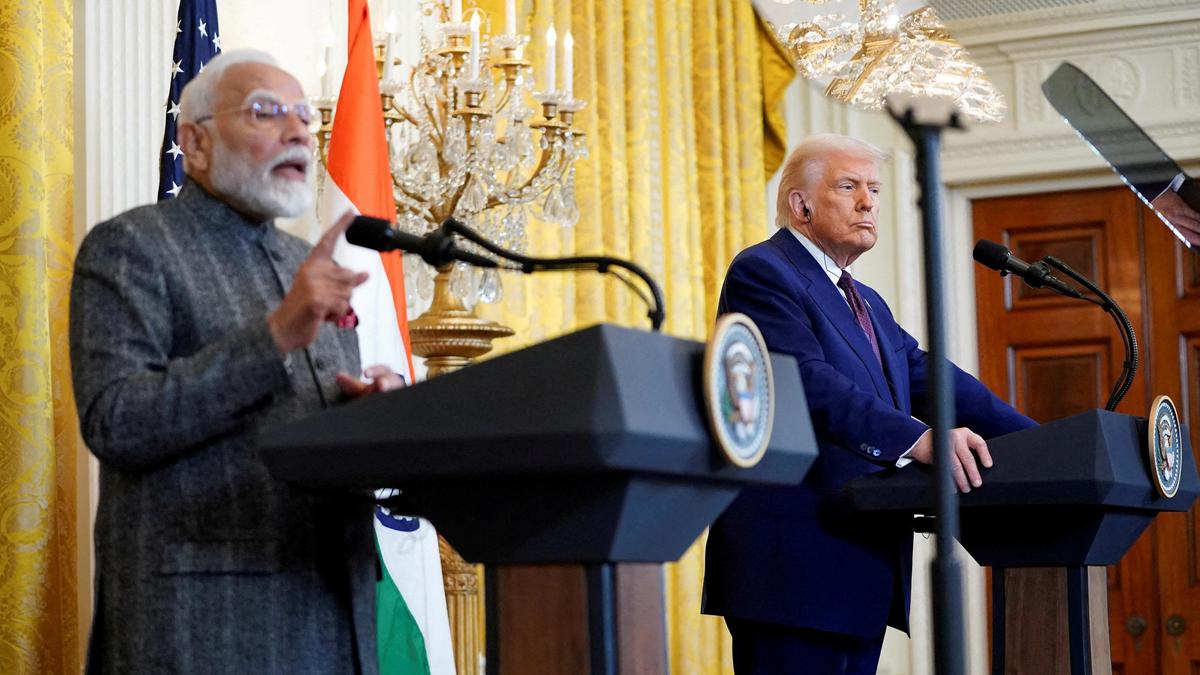
Prime Minister Narendra Modi has not addressed a press conference as Prime Minister. After a joint appearance with U.S. President Donald Trump, he took a couple of questions in February 2025.
| Photo Credit: Reuters
A patient complaining of pain can be asked to quantify it on a scale of 10 — a practice common in the West but still rare in India. There are experts who “aim to deeply investigate happiness measurement through biomedical signals, using psychophysiological methods to objectify the happiness experience.” Objective, universal facts are supposed to be the basis of management and governance.
The Norwegian journalist who wanted to ask Prime Minister Narendra Modi a question prefaced it by saying that her country had the freest press in the world, citing the World Press Freedom Index prepared annually by Reporters Without Borders. Press freedom, and even democracy, can apparently be ranked. India is ranked 157 in the World Press Freedom Index. Ukraine is at 55, Qatar at 75, Burkina Faso at 110, Oman at 127, Kuwait at 136 — countries some of which do not even hold a pro forma election rank higher on press freedom than India, according to this report.
Norway is number one. But what the ranking does not take into account is the unfiltered racism of an apparently free press — such as a Norwegian mainstream newspaper that portrayed Mr. Modi as a snake charmer, an age-old trope to depict India. The rankers have themselves clarified that the quality of journalism is not a criterion. The racism of the freest press does not affect its standing.
Mr. Modi has not addressed a press conference as Prime Minister. After a joint appearance with U.S. President Donald J. Trump, he took a couple of questions in February 2025. Mr. Trump, for his part, routinely seeks out confrontational interviews to make his point, while simultaneously seeking to delegitimise the media. Press conferences and probing interviews have become rare across India’s leadership. No leader wants to take questions — whether in the legislature or the media. Political communication has become a one-way street in which the principal actor broadcasts without the inconvenience of being contested — that applies as much to several Opposition leaders as well.
The contestations within the media space are often a reflection of society, and state control of the media is an extension of the control the state seeks to enforce across other domains of people’s lives — movement, thinking, learning, and the mingling of populations. In Norway, the media, the society and the state share broadly the same consensus. Of its 55 lakh people, 95 per cent speak Norwegian and 60 per cent are affiliated to the Church of Norway. A largely homogenous country where the media does not require to contest the state is not comparable to a large, diverse country riven by conflicting viewpoints about everything, and where the state is simultaneously trying to control the thinking of its people. Political contestation in such a society produces a multitude of media narratives — and a multitude of pressures.
That said, those who seek to dismiss Western standards as irrelevant are curiously selective in their approach. They would dismiss the Press Freedom Index but in the same breath celebrate some random ranking on Ease of Doing Business, or a foreign country’s national honour conferred on their leader. The convenience of the dismissal gives it away. Rankings exist. They are often methodologically dubious, frequently corrupted by subjective factors and sometimes by outright prejudice. No global ranking is required to establish that the Indian media is under severe stress — from market forces and from state measures alike. Equally, no amount of fine print can sustain the argument that Kuwait belongs far above India on any honest measure of press freedom. The index’s own methodology undermines its own conclusions at the extremes.
The better argument is not that rankings are worthless but that they are blunt instruments — useful for identifying broad patterns, unreliable as precise judgements.
Published – May 22, 2026 01:27 am IST