


Jones Mercury FASE Snowboard Bindings Review: The Best Fast Entry System
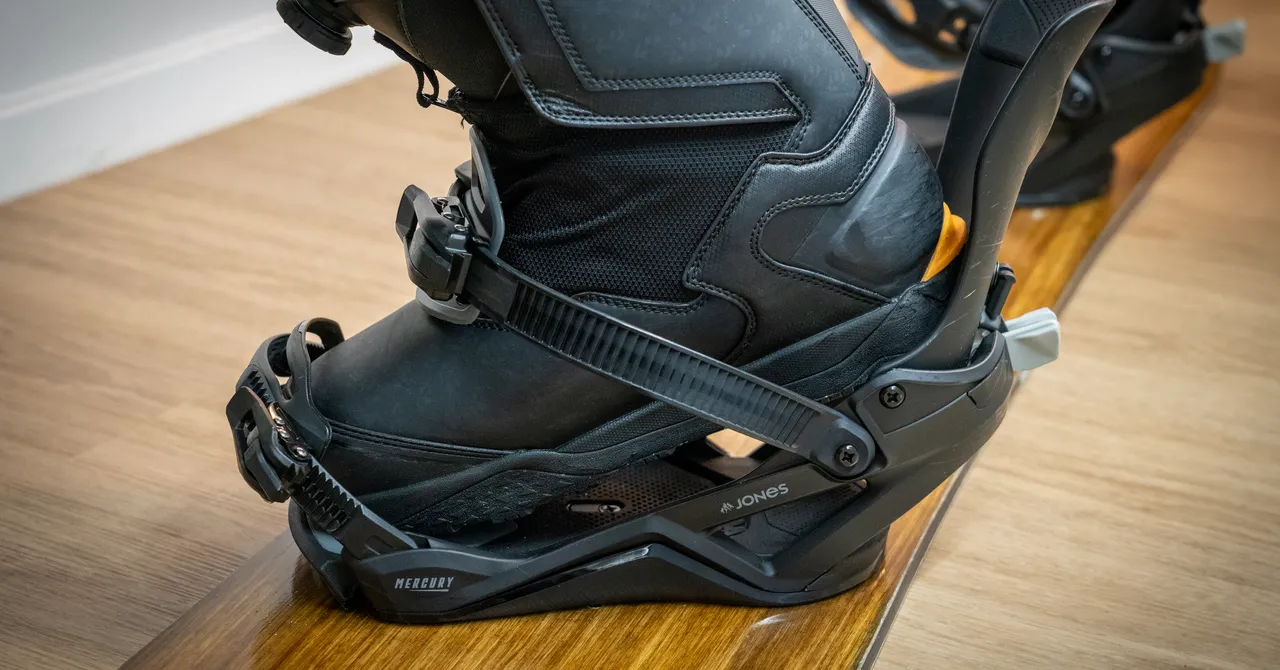
The biggest change is in the highback of the binding, which is called the AutoBack in the FASE system. While it can still fold all the way forward for travel and low-hanging chairlifts, when it’s open it leans much farther back than your standard highback. On the bottom of the highback, on the inside, is a sturdy plastic lever.
When you step into the binding, your boot presses down on that lever. That shunts the highback up into its full, upright position, pressing it into the back of your calf like normal. Then you just tighten the ankle strap, and off you go. When you want out, you just reach down and open the ratchet on the ankle strap. It releases, and you can step right out.
The Jones Mercury FASE binding I tested shares a lot of DNA with Jones’ standard Mercury bindings. It’s a fairly stiff binding, designed primarily for freeride (i.e. off-piste) and powder rather than the terrain park, but it works well as an all-mountain binding. It has a layer of foam padding both on top of and underneath the foot plate, which does a nice job of dampening vibration and giving you a little cushioning from hard landings.
Jones highbacks aren’t known for their customizability, and that trend continues here. You have two settings for forward lean, but that’s it. If you’re used to Union bindings, which allow you to tweak the rotation of the highback, you may find that disappointing, but for me, these highbacks fit my calves like a glove. They are stiff, which provided great responsiveness, but they’re lightly padded at the top, and I found them to be very comfortable.
The biggest departure from the standard Mercury model is that most of Jones’ traditional bindings use something that the company calls SkateTech. There’s a fulcrum in the sides of the binding that lets you put a little more weight on your edges for more control. I’ve become a big SkateTech convert over the years, so I was disappointed that it wasn’t included here, though I adjusted quickly, and they still felt very responsive while using them. However!
In Use

Photograph: Brent Rose
I tested these bindings on a snowy road-trip through British Columbia and got them into a wide array of conditions, from steep and deep powder to icy groomers of death. I also got to try them while cat-skiing and heli-skiing in the backcountry, which is where I’ve found quick-bindings usually fail me. I tested them using the Jones Hovercraft 2.0 (which I spent two seasons on and reviewed for WIRED), as well as the rather hardcore 2025 Jones Flagship Pro, which is my new go-to for sketchy, scary, or mixed terrain.