



Interpreting the ‘rise’ of the Cockroach Janta Party
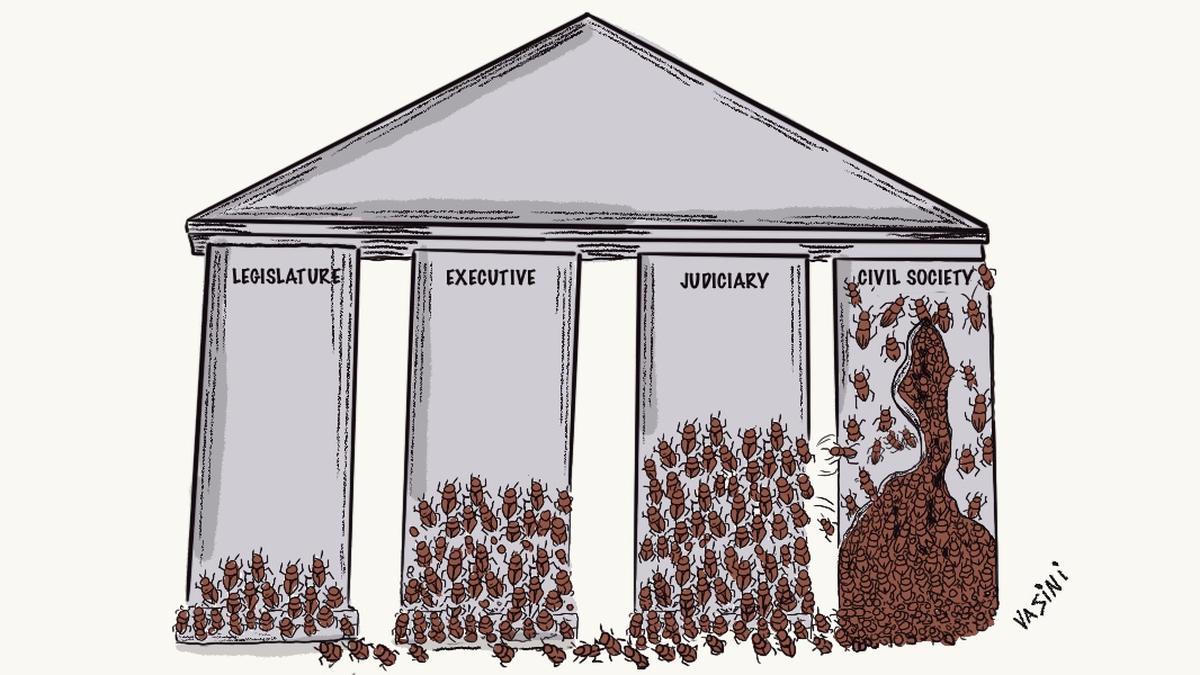
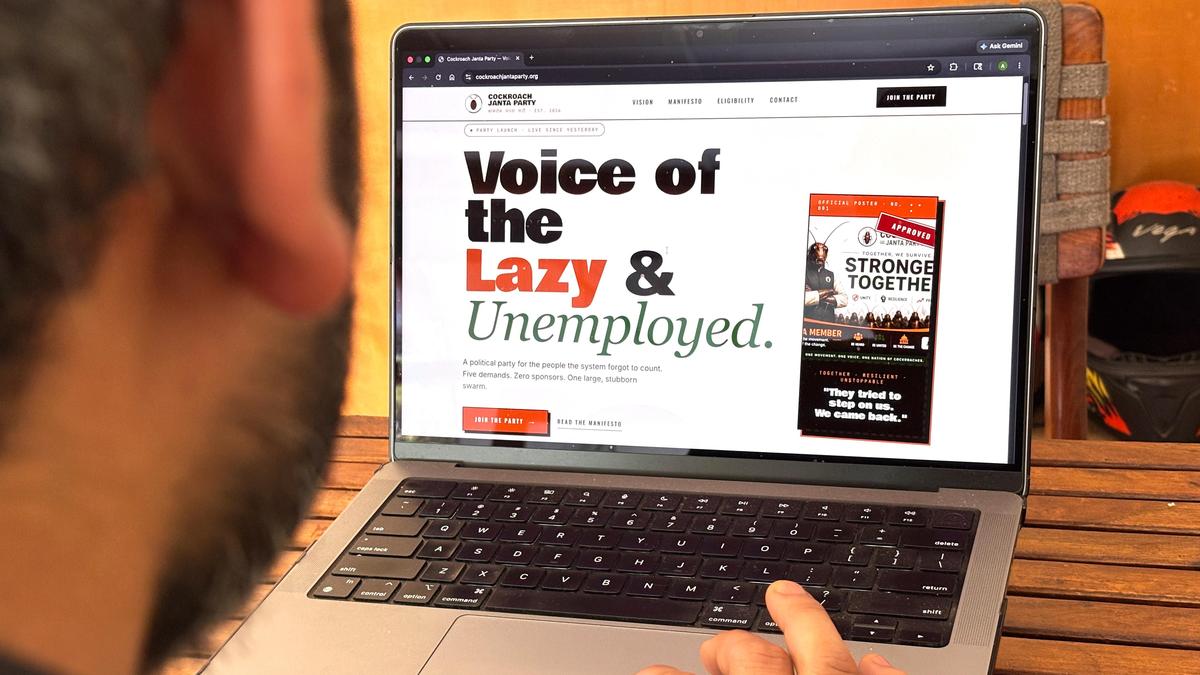
In just four days, a formation in India calling itself the ‘Cockroach Janta Party’ has accumulated a following that established political organisations often spend years building. Meme pages, Instagram reels, and semi-ironic political formations began aggregating at remarkable speed, prompting comparisons with Bangladesh and Nepal, where youth-led mobilisations appeared capable of unsettling entrenched political arrangements through digitally synchronised anger. Increasingly, many are wondering whether this is the future of politics itself: reactive and emotionally charged, and organised less around long-term political structures than around symbolic enemies and collective outrage.
The excitement is understandable because younger people increasingly feel disconnected from institutional politics and representative structures that appear distant from their lived anxieties about work, aspiration, insecurity, and exhaustion. Social media allows individuals who otherwise experience themselves as politically isolated to suddenly participate in moments of collective emotional intensity. A meme or slogan can create the feeling of political participation within hours. Yet, the deeper question is whether politics organised primarily through synchronised outrage can sustain itself beyond moments of emotional intensity.

The erosion of collective social life
The real crisis is not simply institutional decline or ideological exhaustion. The deeper crisis concerns the erosion of collective social life itself. Public life has weakened, and many shared spaces through which people once experienced collective belonging have steadily deteriorated. In the past, political formations emerged through unions, campuses, neighbourhood associations, and everyday cultures of participation embedded within ordinary social life. Those structures created continuity and emotional investment that allowed political life to exist beyond immediate reaction. Increasingly, however, societies produce individualised subjects who remain emotionally hungry for collective belonging while lacking the social conditions that are necessary to sustain it.
Perhaps this reflects one of the deeper contradictions of modernity itself. The language of liberty that emerged after the French Revolution was historically tied to emancipation and collective self-rule. Yet, over time, especially within consumer societies shaped by fossil-fuel-driven development, freedom increasingly came to mean individualised freedom of choice: the freedom to consume, compete, and privately pursue aspiration. Public life gradually weakened as private life expanded. Under such conditions, digitally synchronised crowds become psychologically powerful because they temporarily relieve isolation. A common enemy allows fragmented individuals to feel collectively present again.

This is where the distinction between synchronisation and solidarity becomes important. Contemporary platforms are extraordinarily effective at producing synchronisation. Millions can feel emotionally aligned within hours through shared outrage or a symbolic target. However, emotional synchronisation is not the same as durable collective life. One produces intensity; the other requires continuity, memory, emotional investment, and long-term commitment. Contemporary politics increasingly forms around antagonism rather than shared futures because outrage circulates faster than organisation, and anger is easier to sustain digitally than commitment.
Cross-country comparisons require caution
This is why comparisons with Bangladesh and Nepal require caution. The underlying conditions do not appear fundamentally different. In both cases, initial reactive energy eventually moved toward more organised political formations. The decentralised swarm did not remain decentralised; it was redirected, institutionalised, or exhausted. That suggests the deeper issue may not concern student politics or youth mobilisation in one country versus another. The broader structural tendencies — individualisation, fragmented public life, and weakening collective institutions — increasingly appear shared across much of the contemporary world.
This is where reflections emerging from the recent Iran-Israel-United States tensions become relevant. Decentralised resilience is only possible when sustained by deeper emotional and material structures capable of surviving beyond moments of immediate confrontation. Distributed action cannot function indefinitely through outrage alone. For decentralised systems to remain coherent without centralised command at every stage, there must exist some larger shared horizon: collective ethical commitment, emotional continuity, historical memory, or durable symbolic attachment. Decentralisation is not merely organisational or technological; it is also emotional, cultural, and material.
Watch: How Gen Z protests shaped the world in 2025
What increasingly appears visible in contemporary digital politics is the coexistence of enormous emotional energy with weakening structures of collective endurance. This is where Jacques Lacan’s famous intervention during the May 1968 French student uprisings becomes relevant. At a moment when many intellectuals imagined the protests as radically emancipatory, Lacan responded with an unsettling observation: “What you aspire to as revolutionaries is a master. You will get one.” His point was not merely cynical. Revolt against one symbolic order does not automatically abolish mastery. More often, desire reorganises itself around new forms of certainty and authority.
This insight becomes important in societies shaped by individualised aspiration and emotional fragmentation because politics organised primarily through opposition derives much of its coherence from the enemy itself. The enemy stabilises identity and keeps the crowd emotionally synchronised. But once movements move toward governance, contradictions emerge, compromises become necessary, and symbolic clarity weakens. The crowd that formed around shared antagonism then discovers that sustaining a collective world is far more difficult than synchronising anger.
There is also a deeper material contradiction. Developmental systems shaped by fossil-fuel-driven modernisation not only intensify individualisation but also structurally reproduce centralisation. Energy systems, logistics networks, financial architectures, digital platforms, and megacities all operate through immense concentrations of coordination and power. Even the platforms through which decentralised political energies circulate are themselves among the most centralised technological systems in history.
The central point
This creates a contradiction at the heart of contemporary anti-establishment politics. People increasingly desire decentralisation emotionally while inhabiting systems structurally dependent on centralisation. The crowd can challenge power, but reorganising power requires engagement with material systems that push relentlessly toward concentration, scale, and control. Unless societies can begin rebuilding the emotional, institutional, and material foundations necessary for collective life — trust, shared responsibility, organisational memory, and durable public commitment — reactive synchronisation will continue to reproduce cycles of outrage without durable transformation.
The central question is not whether decentralised political energy can emerge. It clearly can. The real question is whether contemporary societies still possess the capacity to transform synchronisation into solidarity, and moments of reactive mobilisation into enduring collective forms, or whether every rupture will eventually reproduce new concentrations of power and, as Lacan warned, new masters.
Soumyajit Bhar is Senior Assistant Professor at the School of Liberal Studies, BML Munjal University
Published – May 23, 2026 12:16 am IST