





How do volcanoes affect the earth’s atmosphere?

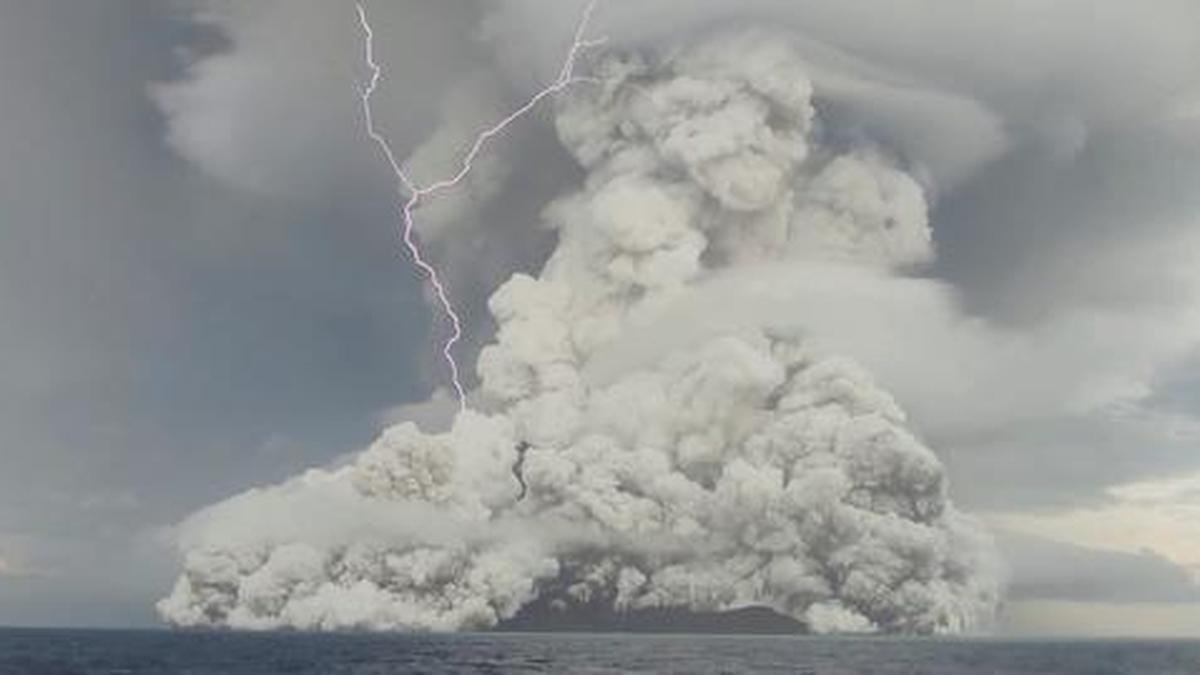
The underwater volcano Hunga Tonga-Hunga Ha’apai, off Tonga, erupted powerfully in 2022.
| Photo Credit: Reuters
Volcanoes change the earth’s atmosphere by releasing gases and particles in large quantities. When a volcano erupts, it blasts sulphur dioxide high into the sky, which reacts with water to form aerosols. Since aerosols scatter sunlight, a powerful eruption can end up cooling the earth’s surface for many years. Large eruptions also spew clouds of ash and dust that block sunlight around the eruption site while most of the ash falls back down in a few weeks.
Eruptions also release carbon dioxide. While modern human activity produces much more carbon dioxide than volcanoes, eruptions throughout history have helped drive long-term warming trends. They also emit compounds that can create acid rain or damage the protective ozone layer. Taken together, volcanic eruptions have continuously influenced the earth’s climate.
Recently, researchers used satellites to study the 2022 Hunga Tonga-Hunga Ha’apai eruption in the South Pacific. They found the volcano released massive quantities of methane into the stratosphere, where volcanic ash triggered chemical reactions that turned the methane into formaldehyde. Scientists have said the finding could point the way to new ways to slow global warming, since methane is a potent greenhouse gas.
Have a question you’d like answered? Send an email to science@thehindu.co.in with ‘Question Corner’ in the subject line.
Published – May 14, 2026 08:00 am IST