




Hari Darshan Sankhya captures the silence and solitude of the mountains on canvas
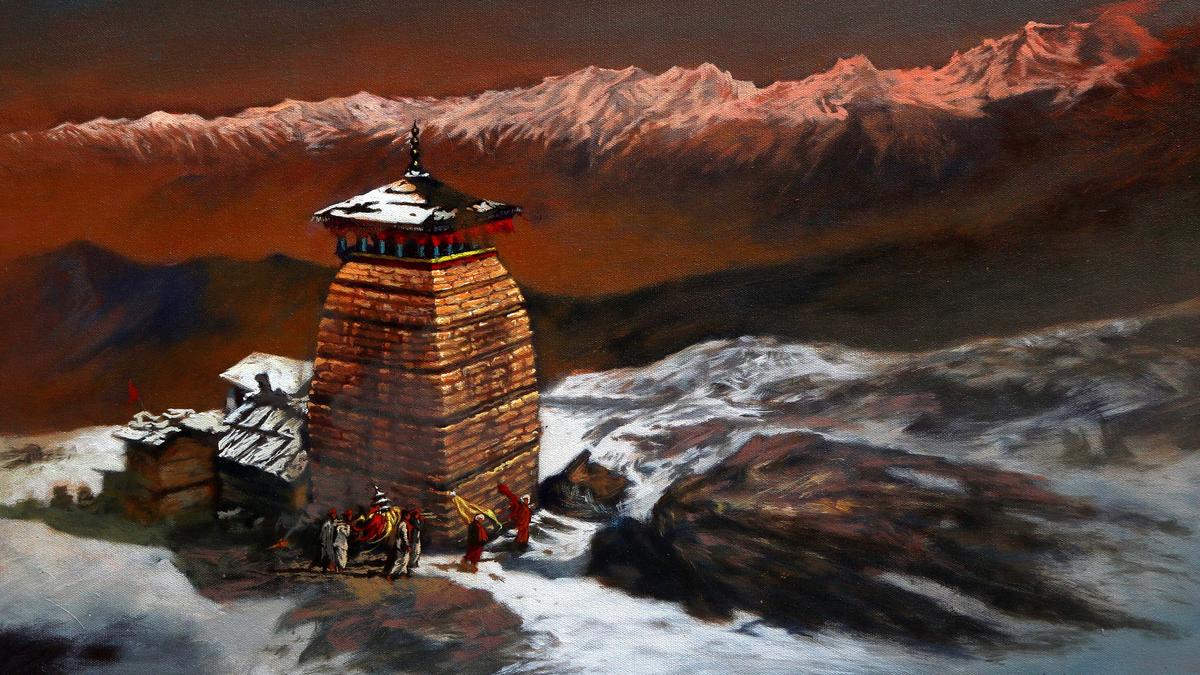
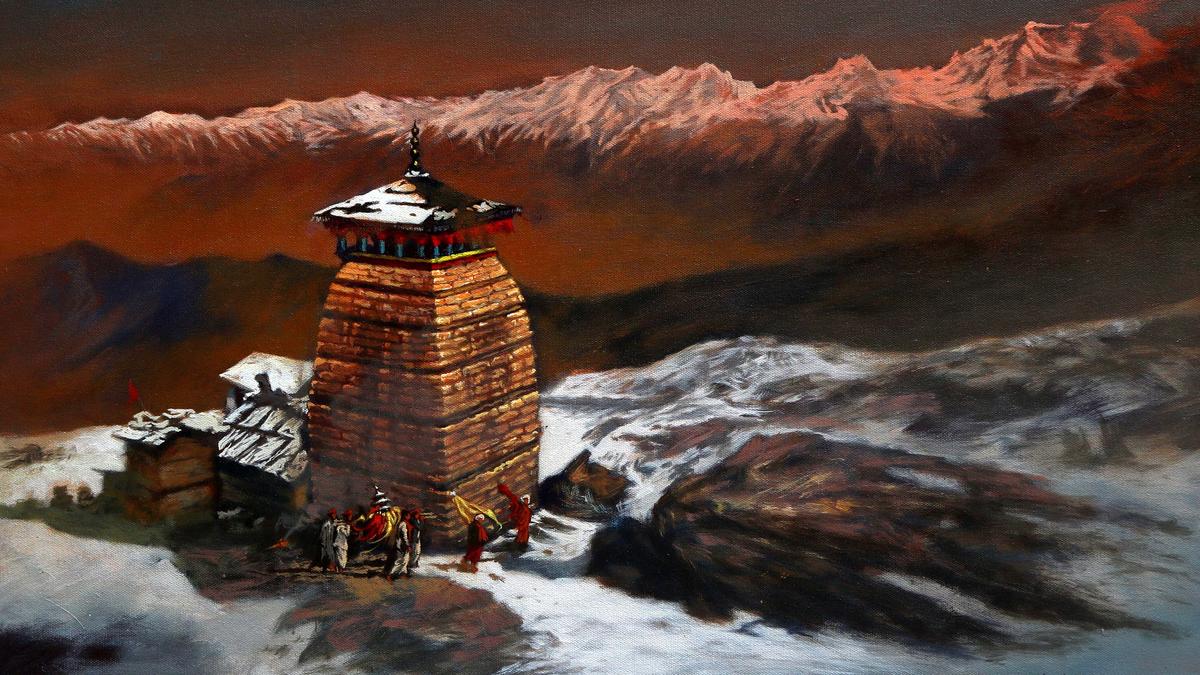
A depiction of Tunganath
| Photo Credit: Courtesy: Hari Darshan Sankhya
Artist Hari Darshan Sankhya’s solo exhibition ‘Himalaya: The Sacred Silence of Spirituality and Peace,’ captured the awe-inspiring stillness and vastness of the Garhwal mountains. Twenty-one select works from his series of 108 paintings, created after three years of travel and research, were on view at Mahatma Gandhi Kashi Vidyapith (MGKVP) in Varanasi. Though the show was held almost a month ago, its themes of cultural protection and spiritual stillness continues to resonate.
The collection also pays tribute to the legacy of Nicholas Roerich, the famed Russian painter known for his portrayal of the Himalayas, and the Roerich Pact, which called for the protection of culture during times of conflict — a message Sankhya believes holds relevance today. For the artist, the Himalayas are not mere landscapes. “For me, travel is not merely a geographical shift but a creative necessity. The Himalayas are not just a mountain range; but a divine presence,” he says.
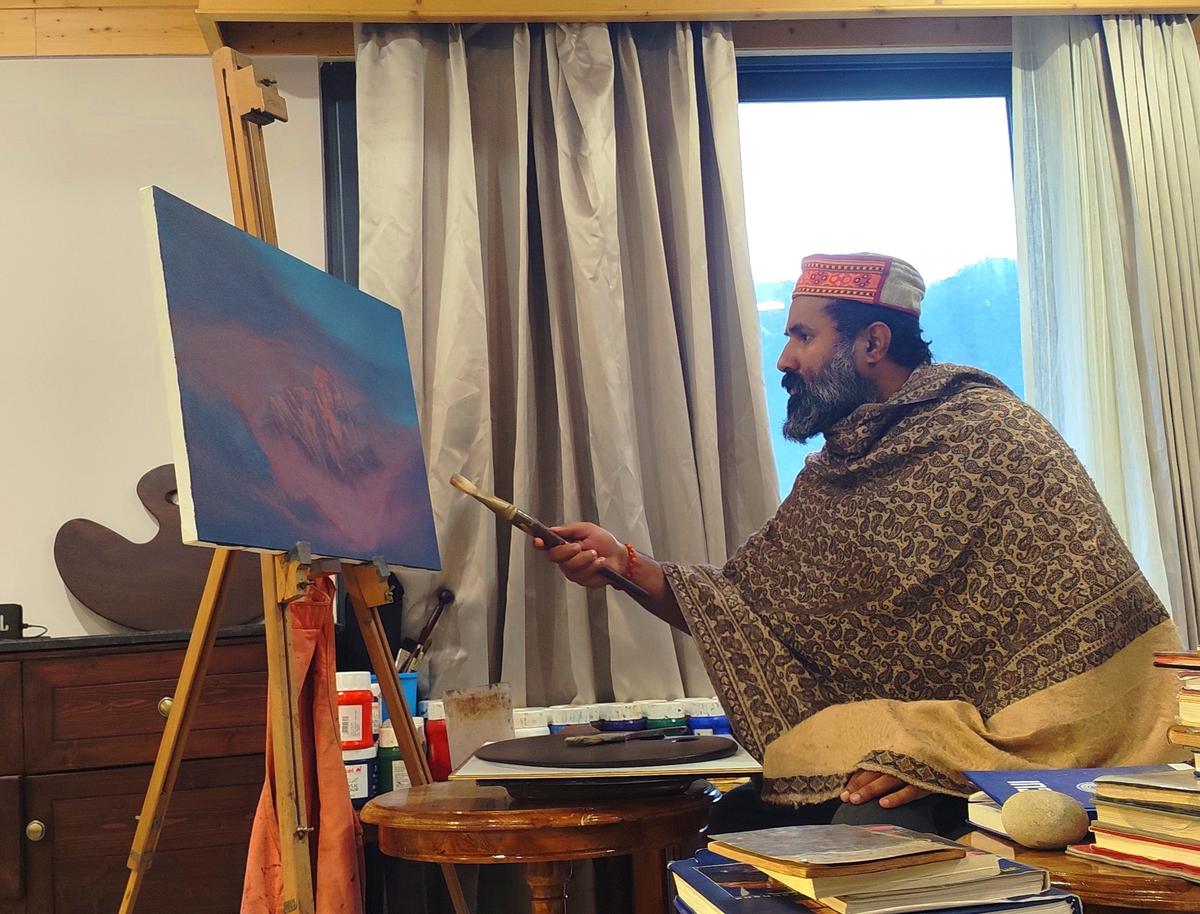
Artist Hari Darshan Sankhya
| Photo Credit:
Special Arrangement
Sankhya terms his visit to the Kashi Vishwanath Temple in January 2023, as a turning point in his creative journey. “That was the first time I felt a cosmic rhythm.” That experience became the beginning of a three-year travel through Uttarakhand — Vashishta Gufa, Kedarnath, Tungnath, Rudranath and Jageshwar temples. They found their way into their canvases. “Apart from these shrines, my paintings also included Nanda Devi and Shivling peaks. To me, these are not just structures of stone or ice, but living embodiments of spirituality.”
The years of working in solitude were not easy. “The silence of the Himalayas was daunting at first; transitioning from mainstream urban life to establishing oneself in desolate spaces was a significant psychological struggle,” he says. There were landslides, arduous climbs and lack of art material. “The toughest part, however, was being at the right place at the right time to capture specific spiritual moments. But as soon as I connected with the energy there, that loneliness transformed into a creative silence.”
It is this silence that lies at the centre of the series. Sankhya’s works are filled with mist, shifting lights, temple forms and mountain silhouettes that seem to dissolve and reappear. It feels as if someone is revisiting memories.
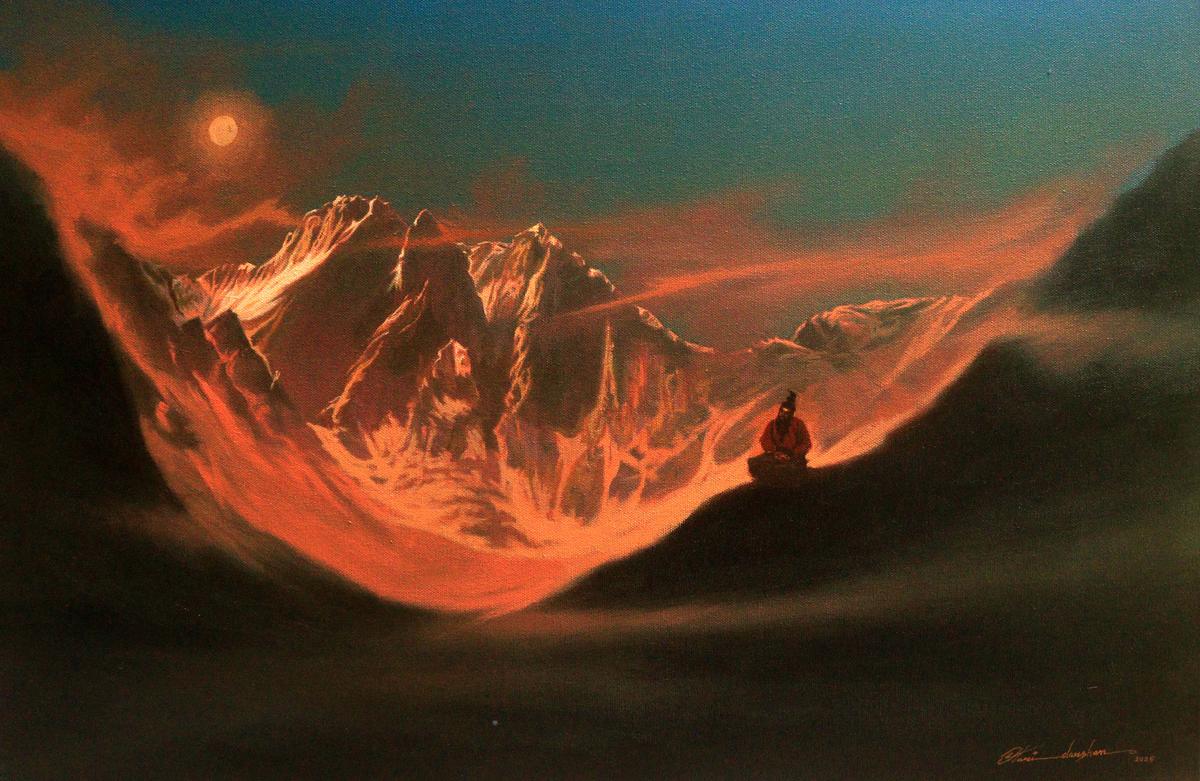
A work titled ‘Meru Dhyanam’
| Photo Credit:
Courtesy: Hari Darshan Sankhya
“I do not paint them as they appear; but as they take shape in my consciousness,” explains the artist adding: “My guide in this process is the Triguna theory of Sankhya philosophy (sattva, rajas, tamas). I use luminous blue-pink hues for sattva and deep, mysterious tones for tamas.”
The number 108 gives the project another layer of meaning. “A meditative rosary (mala) consists of 108 beads, aimed at spiritual evolution and lasting peace. I envision this series as a visual rosary.” Each painting is a ‘bead’ that collectively forms a visual prayer for humanity and world peace.”
Sankhya also speaks strongly about environmental protection. “Viewing the Himalayas solely through the lens of entertainment damages its ecology and sanctity. My paintings pose a question to the viewers — do they want to save that Himalayan silence or the noisy commercialisation of today?”
The exhibition is expected to travel to other states.
Published – May 19, 2026 07:14 pm IST