




Electric semi trucks can save fleets nearly $160,000 per truck
After following two fleets over more than a year and 200,000 km of real-world driving, Canada’s most comprehensive real-world test of electric semi trucks showed that fleets can realize nearly $160,000 in savings. Per truck.
Conducted by FPInnovations’ PIT Group and Transport Canada’s Zero-Emission Trucking Program, the recently published study collected more than 200,000 km (124,224 miles) of diesel and electric semi truck data over a year of operations on Montreal-area roads. The result is one of the clearest datasets yet on how electric Class 8 trucks perform outside of the more controlled environments of demonstrations and pilot programs.
“This project has been unique in that it was conducted over such a long period of time,” said Maxime Tanguay-Laflèche, senior researcher in telematics and advanced data with FPInnovations’ PIT Group. “Twelve months, across different seasons and with two separate fleets — which is something fleets generally haven’t been able to do on their own.”
What’s more, the test was able to keep the focus on fuel type – diesel vs. electric – by limiting the scope to Freightliner Cascadia (ICE) and eCascadia (BEV) model Class 8 trucks. The results were clear, and the efficiency gains undeniable, leading to a projected $157,126 in savings per truck over the course of six years.
Efficiency gains undeniable
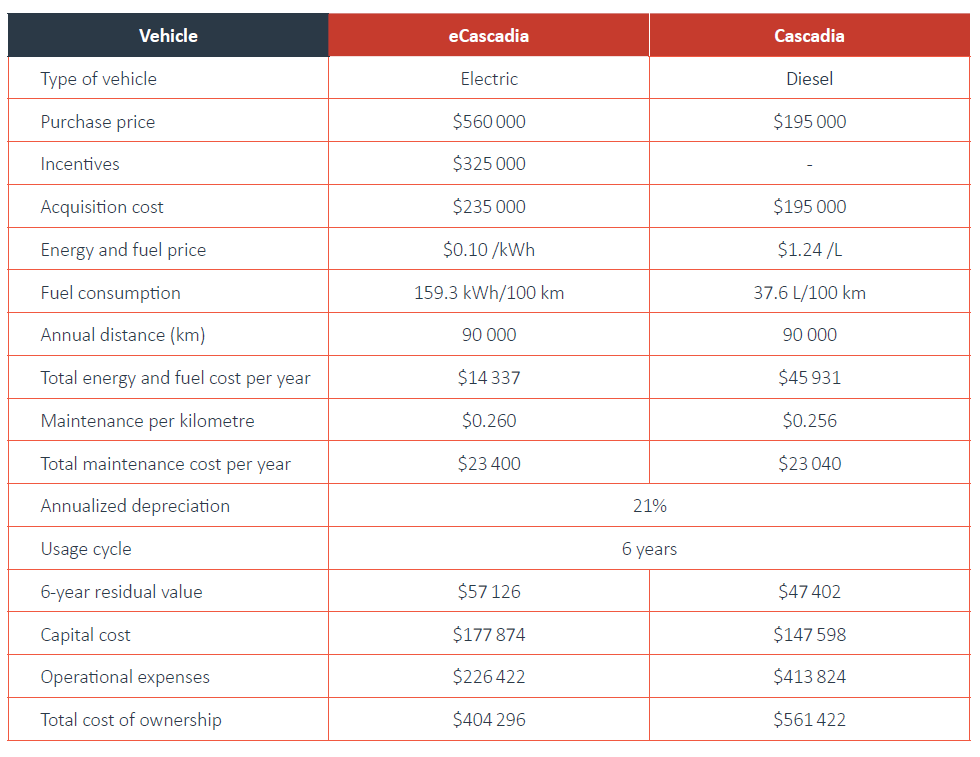
You can see the results for yourself in the chart above, which includes a number of incentives to bring down the acquisition costs of the Freightliner eCascadia, but the study also shows a higher list price and higher maintenance costs that I’d normally expect to see on an EV, as well as a lower residual value, indicating that the $157K savings might be conservative.
Even so, it’s important to note that another key finding of the study was that deployment of BEVs (battery-electric vehicles) was not quite as simple as swapping out diesel semi trucks for their electric counterparts. Routes with predictable distances, centralized terminals, and controlled return schedules allowed electric trucks to operate efficiently and reliably.
The report repeatedly shows that success depended less on vehicle capability than on operational alignment. Routes with predictable distances, centralized terminals and controlled return schedules allowed electric trucks to operate efficiently and reliably, while variability and scheduling pressure quickly exposed operational flaws.
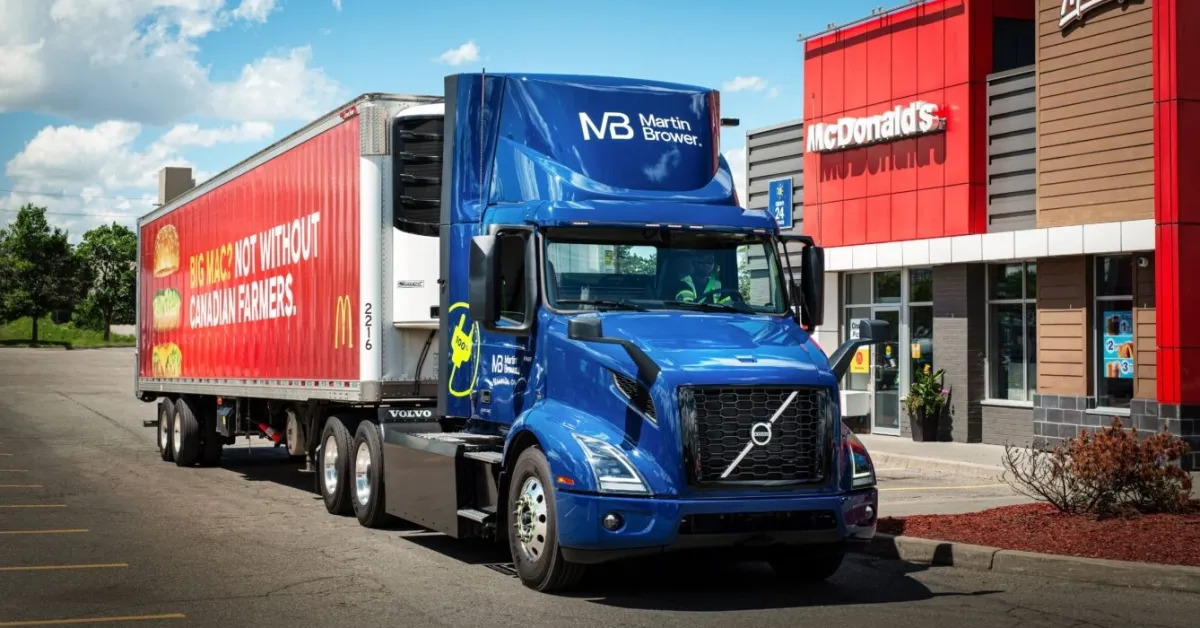
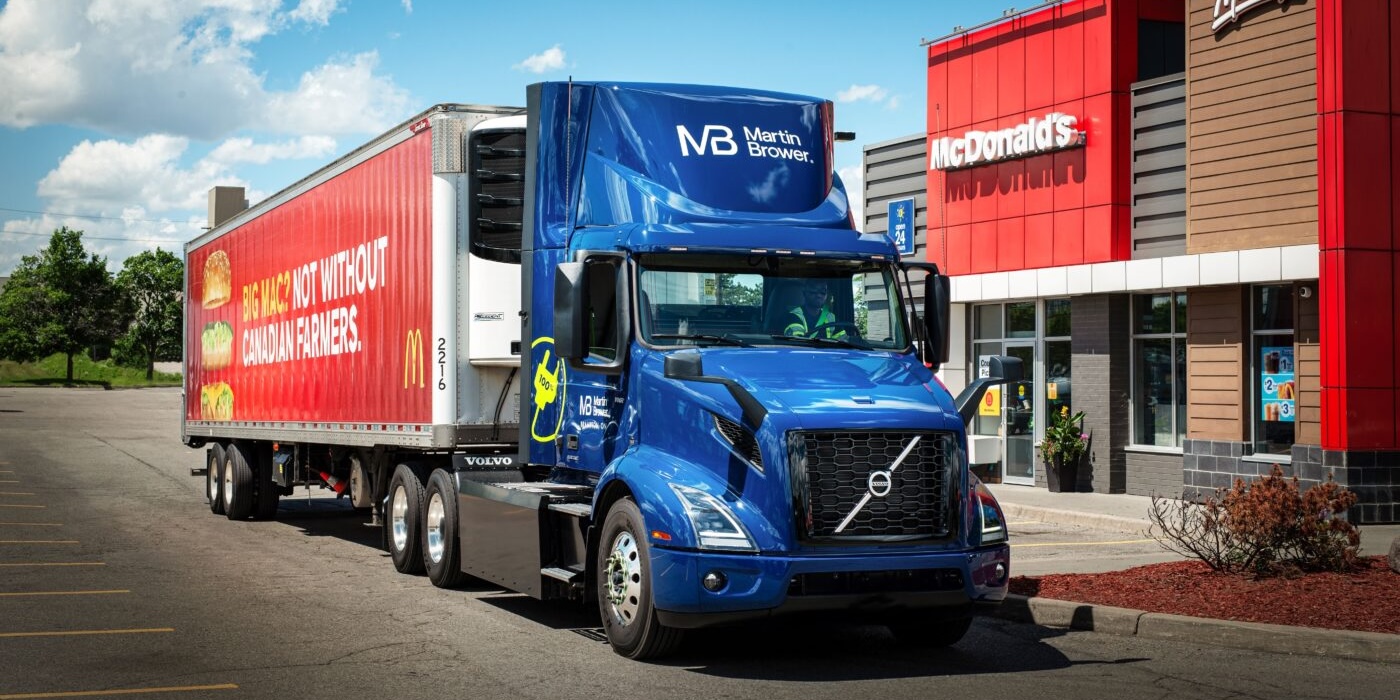
The eCascadia semi trucks operated by Martin Brower (McDonald’s) and Loblaw performed best when fleets adapted their operations around the strengths and limitations of the technology, not when asked to do a 1:1 swap for diesels.
“The fleets integrated the trucks into their operations; we didn’t influence how they were used,” Tanguay-Laflèche said. “Our role was to monitor performance and provide feedback that could help optimize how Class 8 battery-electric trucks are actually operated.”
The study follows comments from MAN Trucks’ CEO, who claims that electric semi trucks could pay for themselves in as little as three years, while producing at least 80% fewer greenhouse-gas emissions under Quebec’s relatively clean electricity grid. Its findings generally proved out what proponents of EVs have been saying for years – which should surprise absolutely no one.
SOURCE: Truck News; featured image by Martin Brower.

If you’re considering going solar, it’s always a good idea to get quotes from a few installers. To make sure you find a trusted, reliable solar installer near you that offers competitive pricing, check out EnergySage, a free service that makes it easy for you to go solar. It has hundreds of pre-vetted solar installers competing for your business, ensuring you get high-quality solutions and save 20-30% compared to going it alone. Plus, it’s free to use, and you won’t get sales calls until you select an installer and share your phone number with them.
Your personalized solar quotes are easy to compare online and you’ll get access to unbiased Energy Advisors to help you every step of the way. Get started here.


FTC: We use income earning auto affiliate links. More.