



Charged EVs | Ford rotor built with 100% recycled rare earth magnets passes durability test
A UK consortium has completed an end-to-end circular rare earth supply chain for electric vehicle motor magnets, with Ford validating the results at its R&D facility in Dunton, UK.
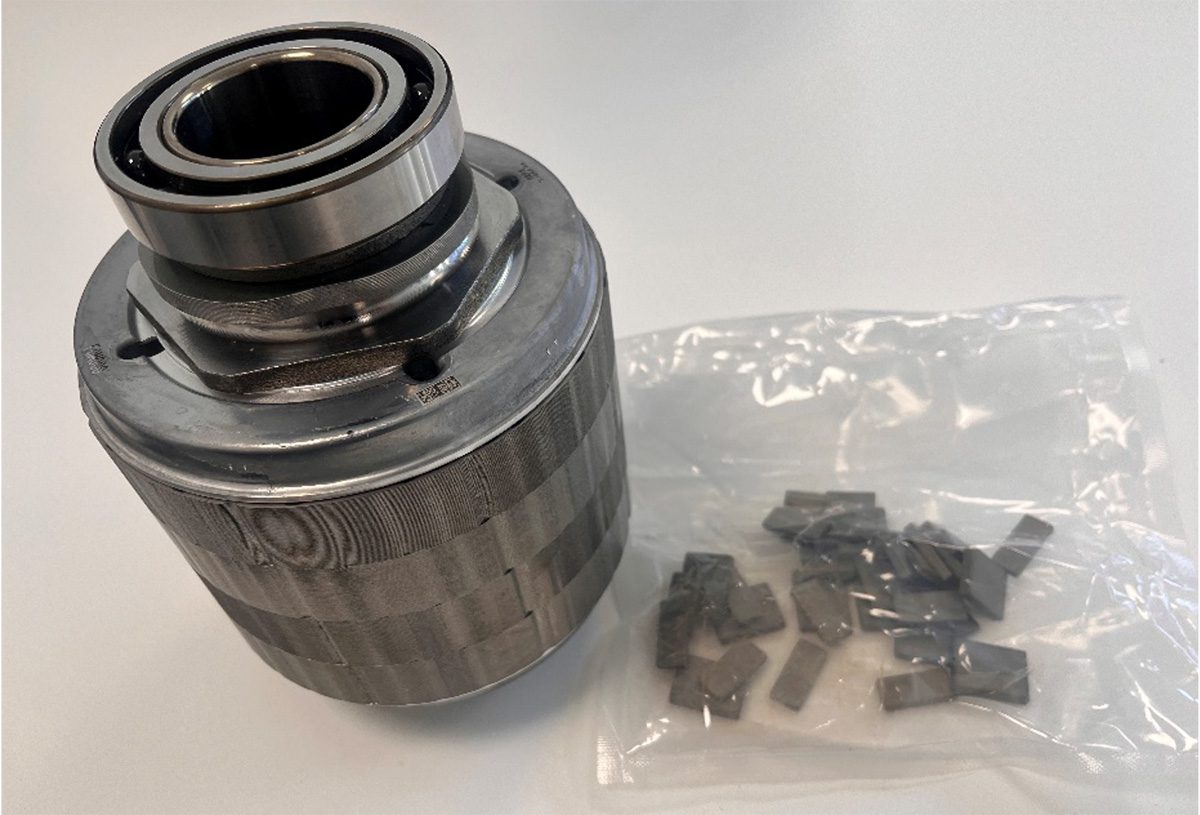
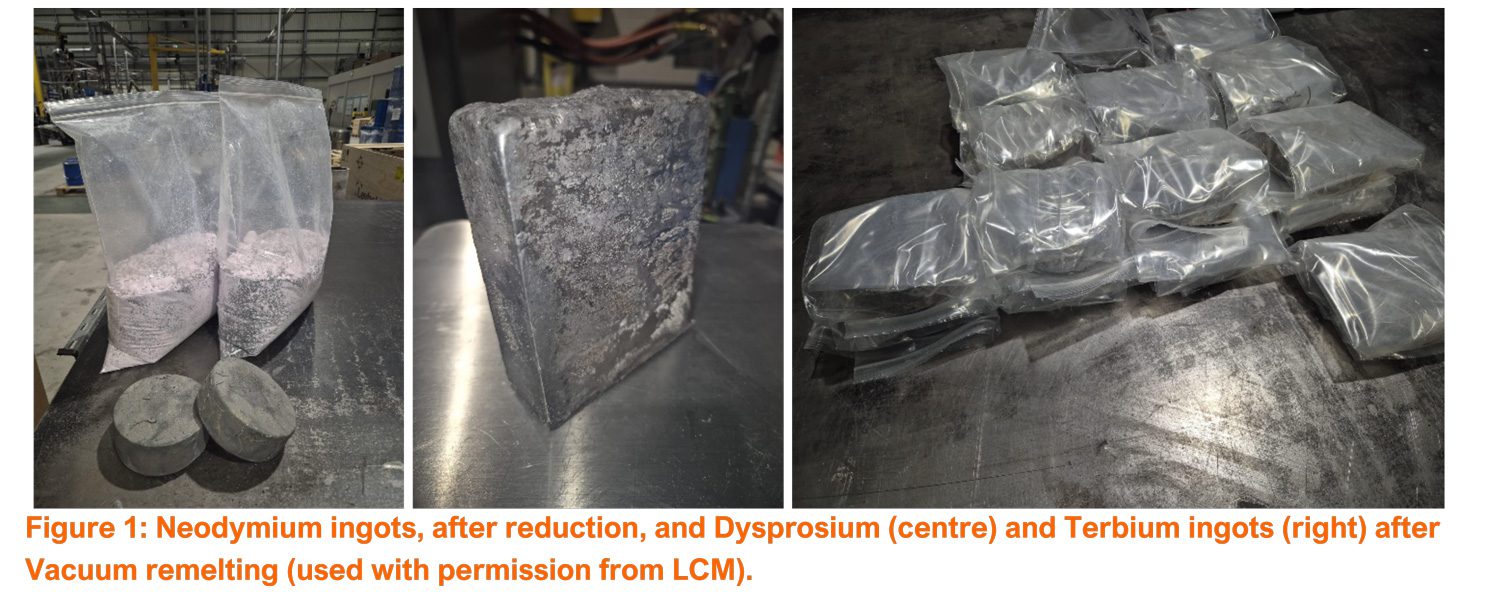
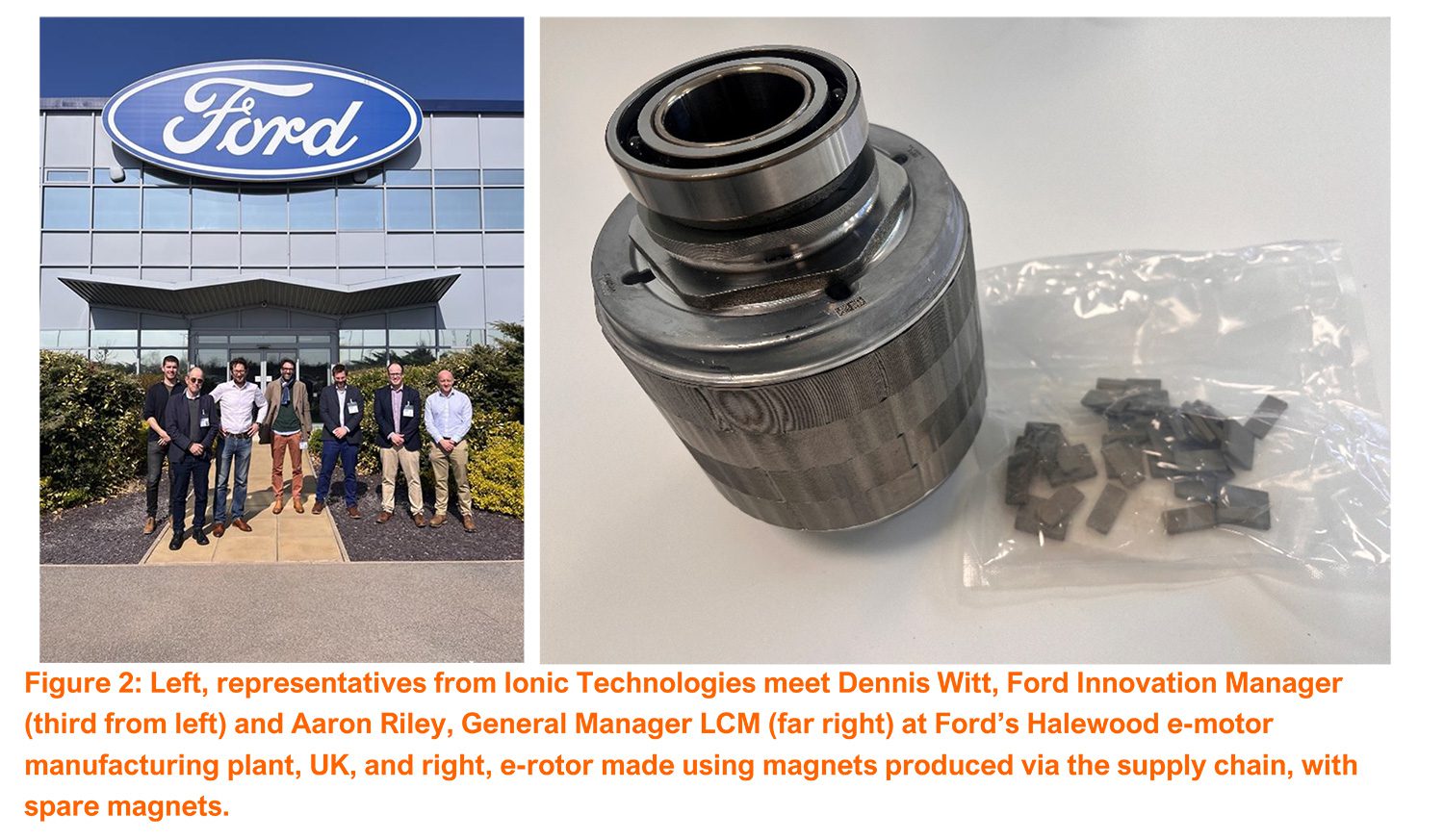
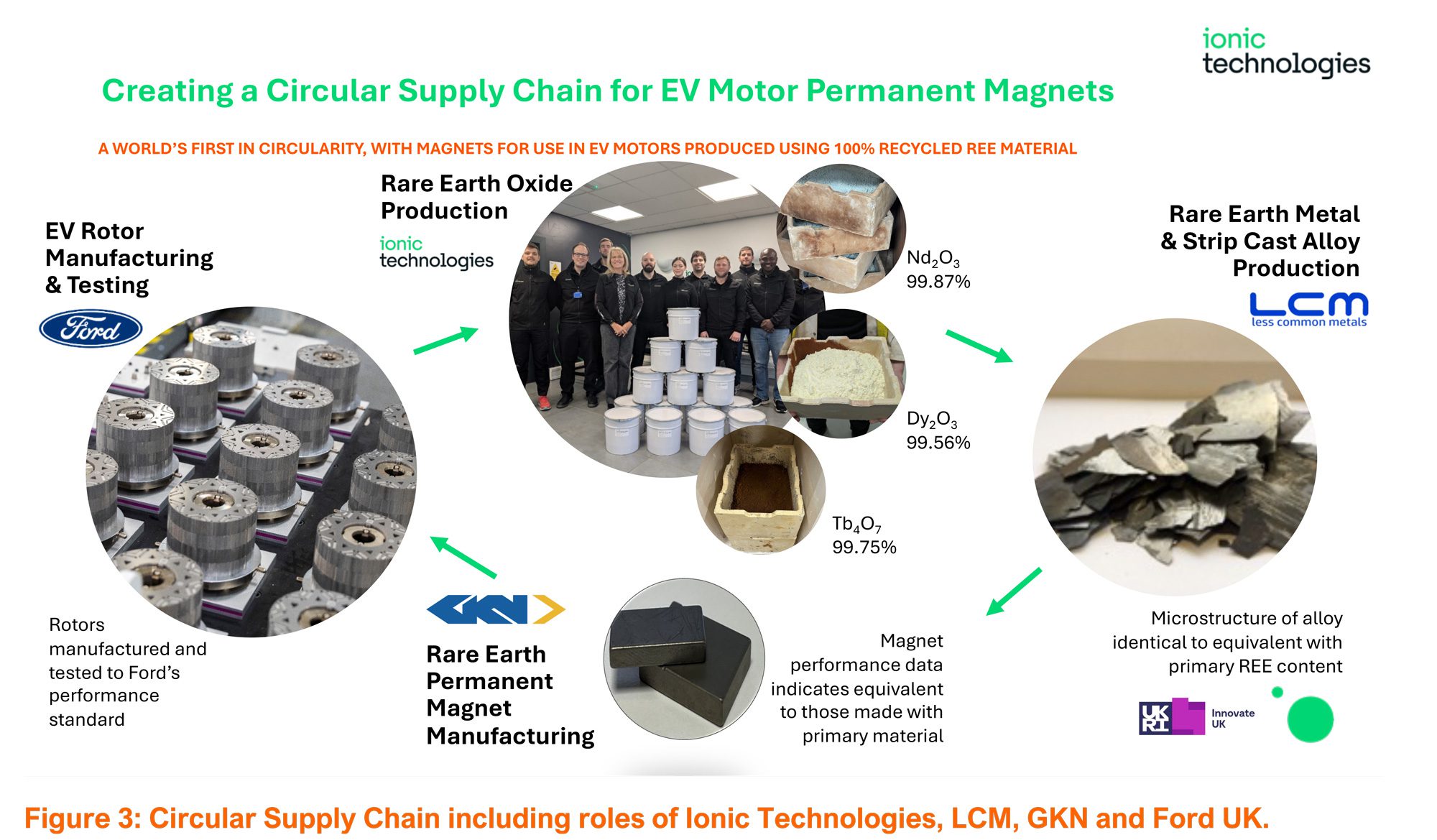
The chain ran as follows: Ionic Technologies, a Belfast-based subsidiary of Australia’s Ionic Rare Earths (ASX: IXR), recycled scrap NdFeB magnets and alloy into individually separated rare earth oxides. Less Common Metals (LCM) converted those oxides into metal and strip-cast alloy to magnet specification. GKN manufactured the finished magnets at its facility in Radevormwald, Germany. Ford built two test rotors at its Halewood e-motor plant, then ran one on a dynamometer at Dunton—where it passed a durability test cycle with results comparable to rotors made with production-grade, mined-material magnets.
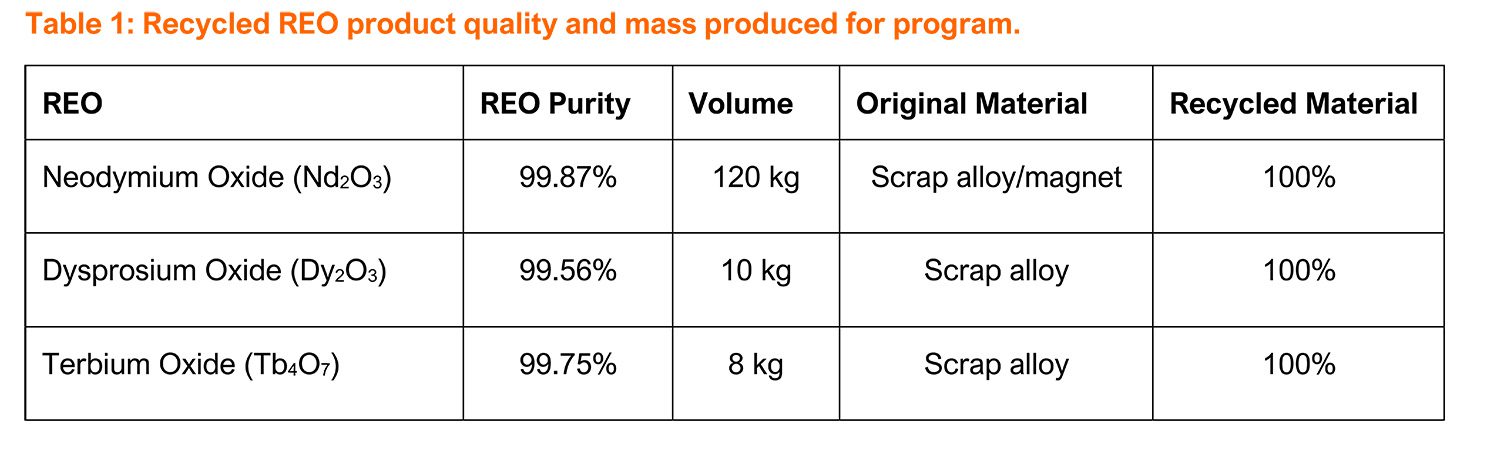
The purity numbers held up. Ionic Technologies produced neodymium oxide (Nd₂O₃) at 99.87%, dysprosium oxide (Dy₂O₃) at 99.56%, and terbium oxide (Tb₄O₇) at 99.75%, all from 100% recycled feedstock. The batch volumes—120 kg of Nd₂O₃, 10 kg of Dy₂O₃, and 8 kg of Tb₄O₇—exceeded LCM’s minimum batch requirements. GKN reported the recycled alloy flakes behaved identically to virgin material during magnet manufacturing and produced the same end specification.
China’s export controls on rare earth materials, announced earlier this year, have thrown Western automotive supply chains into sharp relief. Dysprosium and terbium—both produced here from recycled scrap—are precisely the heavy rare earth elements most affected by those controls, as they’re critical for high-temperature coercivity in EV traction motor magnets.
“Electric vehicle motors rely on high quality rare earth permanent magnets,” said Dennis Witt, UK Innovation Manager at Ford. “We proved that recycled magnets can meet our rigorous commercial standards on the first attempt.”
The project was funded under the UK Government’s CLIMATES initiative via the Department for Business and Trade and InnovateUK. It’s not mass production—Ionic Technologies is still working toward a Final Investment Decision on an £85 million commercial plant at Queen’s Island in Belfast, which has received an offer in principle for a £12 million UK government capital grant. Planned capacity is 400 metric tonnes of magnet REOs per year.
A follow-on project, CirculaREEconomy, funded through the Advanced Propulsion Centre UK’s £2 billion DRIVE35 programme, is already underway with the same partners.
Source: https://wcsecure.weblink.com.au/pdf/IXR/03088644.pdf