


battery swap to the US
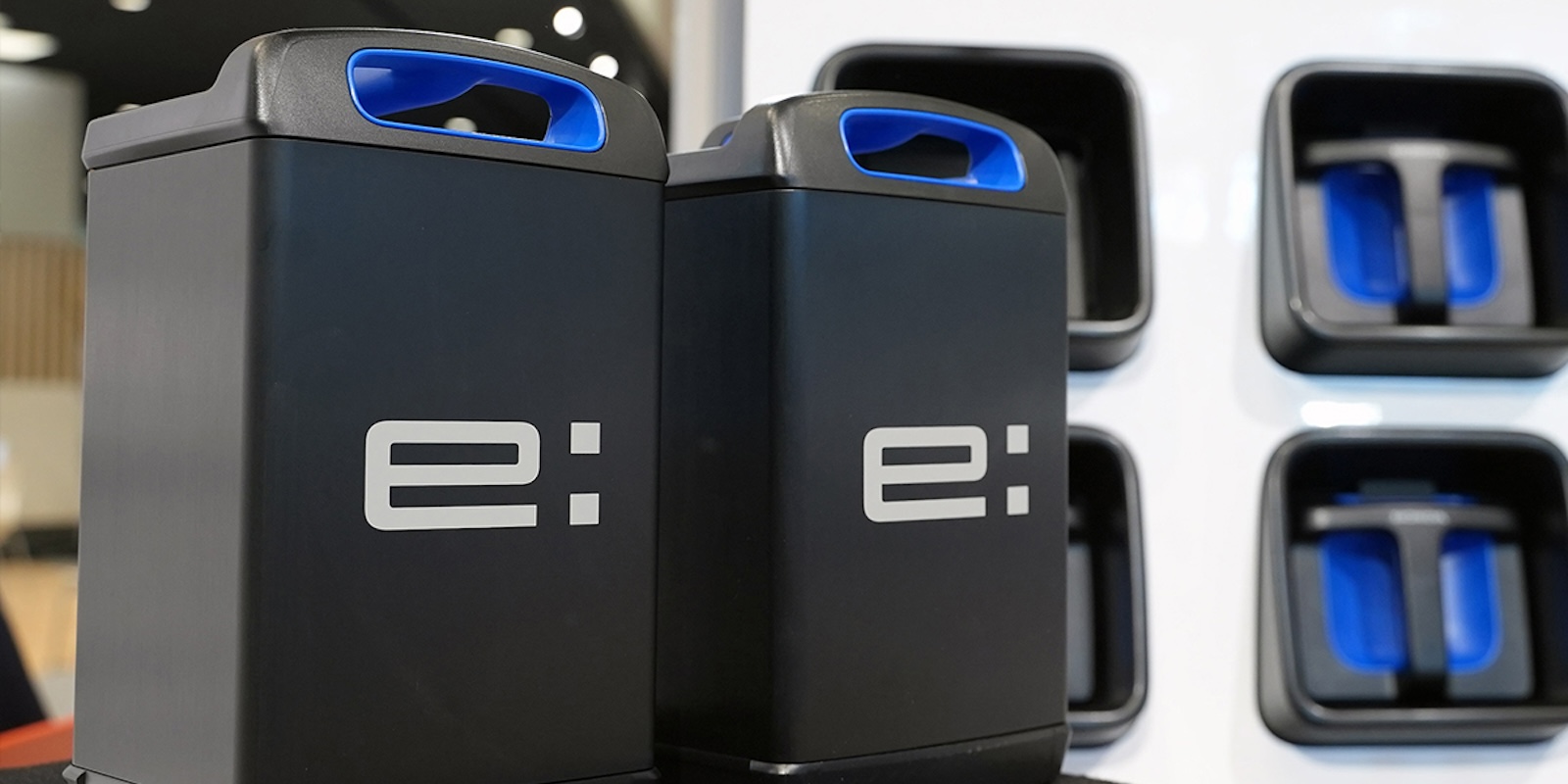
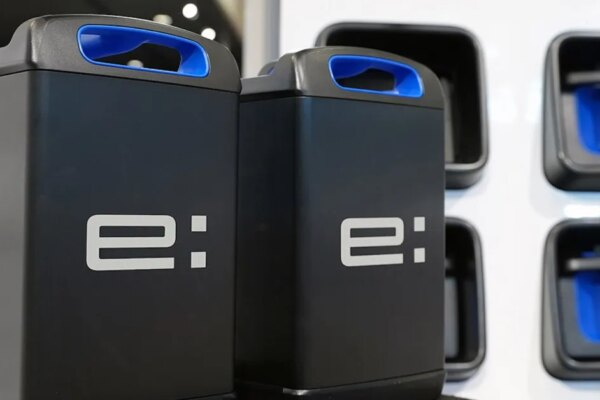
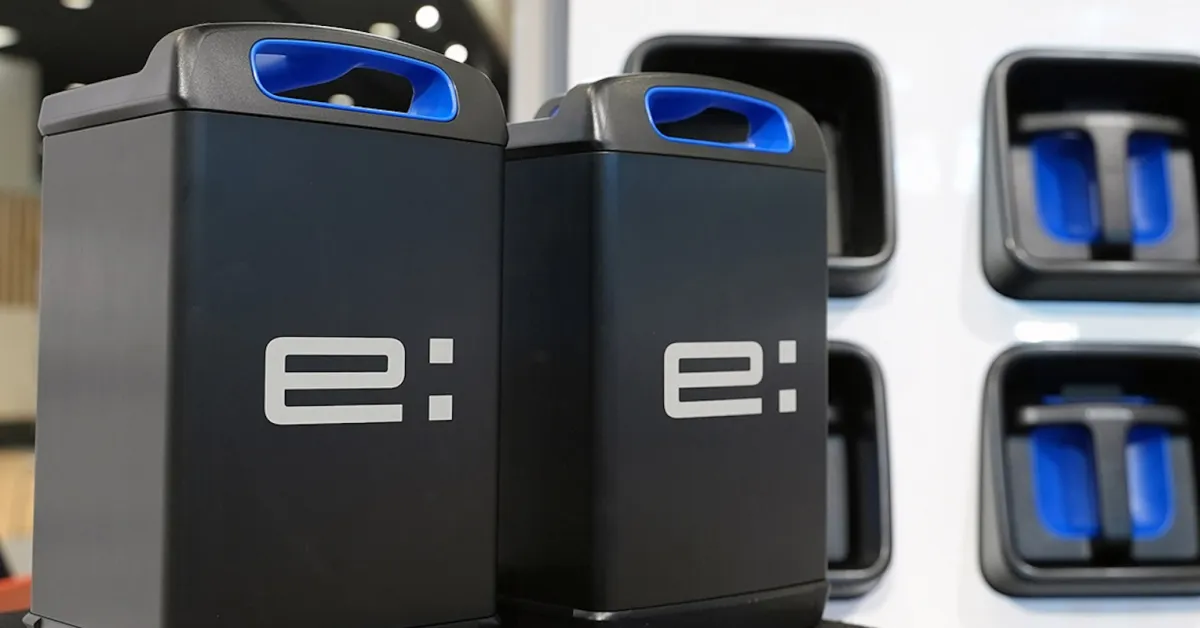
Honda brought its Mobile Power Pack e: swappable battery system to ACT Expo last week, where the brand announced plans to bring the swap system to market for B2B commercial integrations starting as early as June 2026.
Honda has been working on its swappable-battery tech for a while now, showing it off in various applications like the brand’s electric lawn mowers, its electric scooters in Indonesia, and with OEM partnerships with rival brand Yamaha in Japan. Now, Honda says it’s ready to bring the Mobile Power Pack e: to the US market.
Once it arrives, Honda will aim its MPP at addressing key friction points with e-mobility adoption such as long charging time, downtime concerns, and high battery costs in the power generation, small-scale construction equipment, agriculture, and material handling spaces.
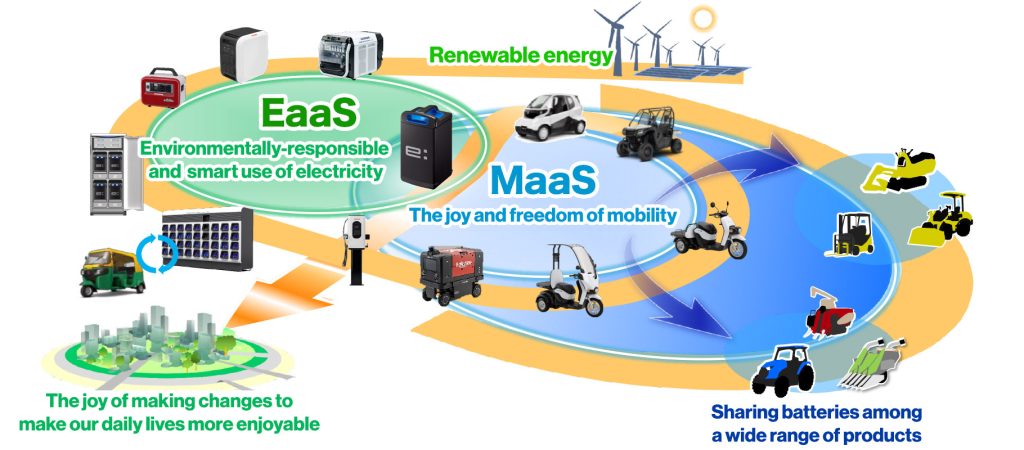
The conceptual diagram below, provided by Honda, illustrates how the same MPP could could be used across those industries.
Honda eMaaS
Honda’s goal is to make the MPP and its vending machine-style charging stations a light equipment industry standard that’ll eventually used by both their own branded vehicles and other OEMs.
“Honda has been pursuing the concept of ‘Honda eMaaS,’ model,” reads the official Honda release. “(eMaaS) combines 1) the EaaS (Energy as a Service) that connects energy and services and 2) the MaaS (Mobility as a Service) that realizes the freedom of mobility for people. At Honda, we position the MPP as one of the key elements to realize the Honda eMaaS concept, which will enable us to contribute to the expansion of renewable energy use.”
Honda envisions a world where utility companies, construction equipment brands, and even apartment dwellers would eventually be customers – along with anyone else who might want access to a compact portable battery.
Honda showed the MPP at this year’s ACT Expo, where it was on display along with Honda’s hydrogen fuel cell genset and the brand’s CR-V fuell cell plugin.
Electrek’s Take
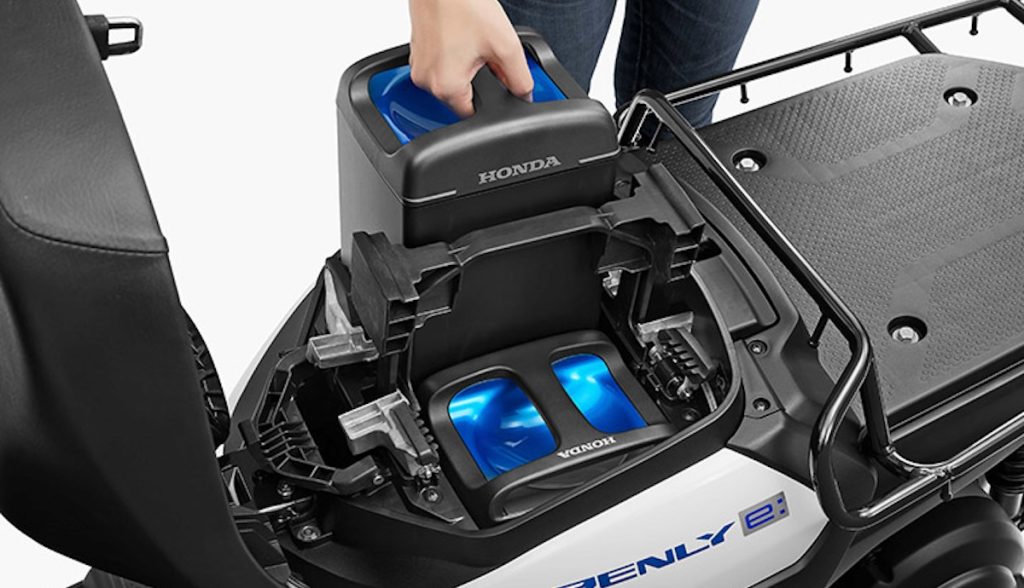
Honda’ ha’s built a solid portable pack with a rugged frame that’s shock, water, heat, and even EM resistant while remaining relatively light (just over 20 lbs.). That light weight helps make the MPP more easily swappable for use on a range of products while being comfortable enough to carry around and use as a portable power supply. The MPP also has an integrated battery management unit that controls charging and discharging to increase battery life and reduce degredation.
Another big win is the big vending machine that actually charges the MPPs. The Honda Mobile Power Pack Exchanger is designed to make it easy for users to stop by and exchange their drained battery for a new one at (presumably) every 7 ELEVEn between here and Minato – but Honda has another use for it: peak shaving.
Honda wants to attach these exchangers directly to the power grid, enabling them to store surplus electricity from the grid during off-peak hours, and later offload that electricity when demand spikes, helping Exchanger sites reduce their energy bills while supporting the stability of the broader grid.
That’s called a win-win, kids.
SOURCE | IMAGES: Honda.

If you’re considering going solar, it’s always a good idea to get quotes from a few installers. To make sure you find a trusted, reliable solar installer near you that offers competitive pricing, check out EnergySage, a free service that makes it easy for you to go solar. It has hundreds of pre-vetted solar installers competing for your business, ensuring you get high-quality solutions and save 20-30% compared to going it alone. Plus, it’s free to use, and you won’t get sales calls until you select an installer and share your phone number with them.
Your personalized solar quotes are easy to compare online and you’ll get access to unbiased Energy Advisors to help you every step of the way. Get started here.


FTC: We use income earning auto affiliate links. More.