



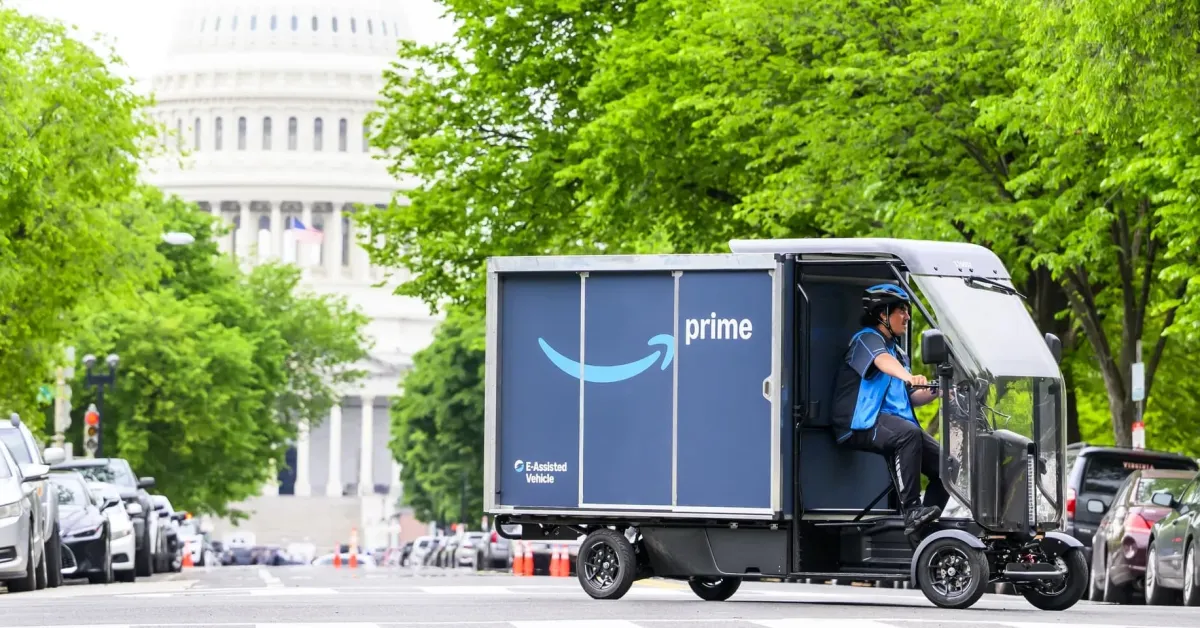
Amazon is deploying these massive cargo e-bikes for deliveries
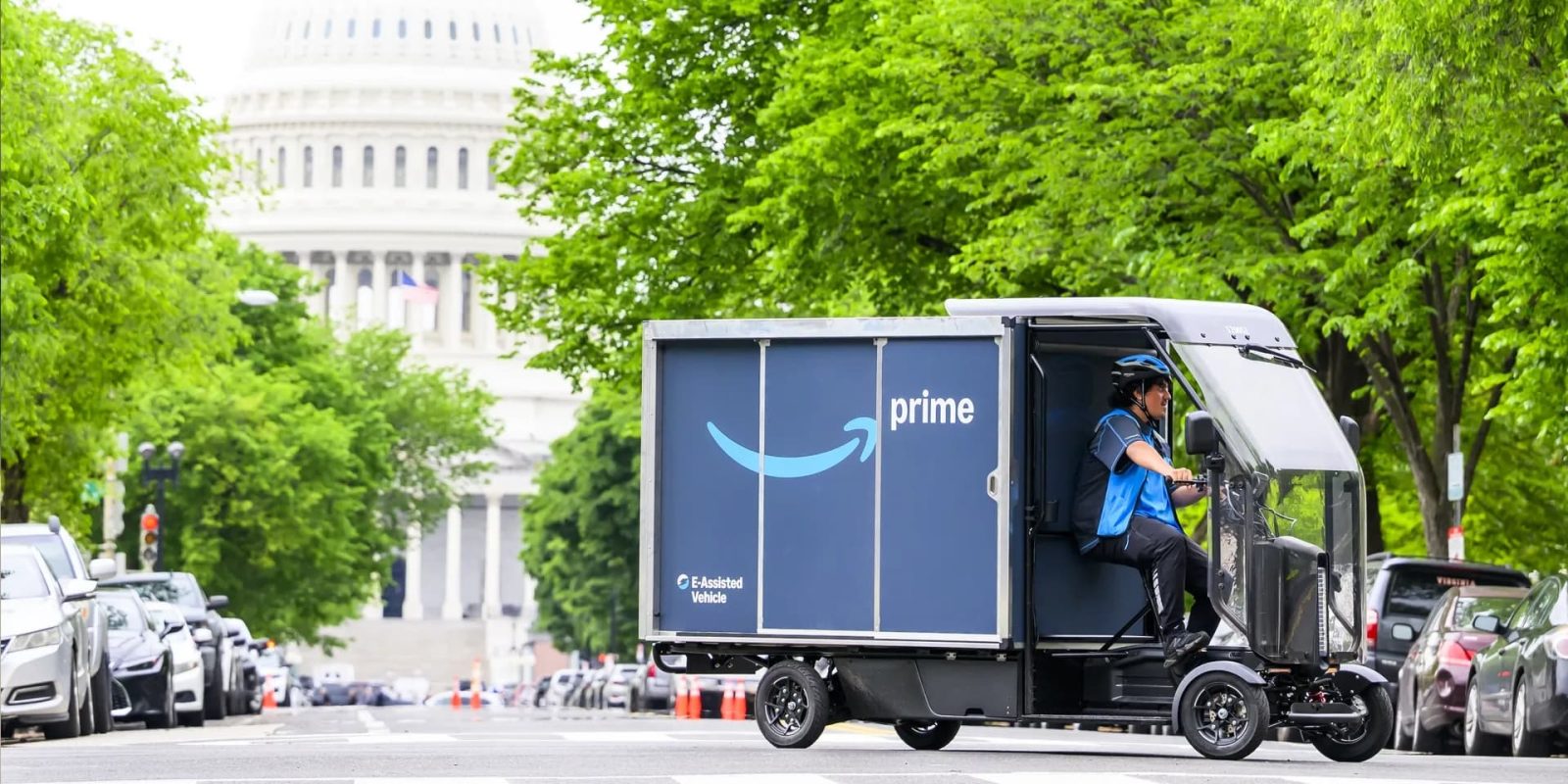
Amazon is officially rolling out e-cargo bike deliveries in Washington, DC, as part of a new pilot program launched in partnership with the District Department of Transportation (DDOT). The ten-month initiative, called “MicroFreight DC,” will see Amazon Delivery Service Partners making neighborhood deliveries using a fleet of battery-powered cargo bikes instead of traditional delivery vans.
The pilot will deploy up to 15 four-wheeled e-cargo bikes operating out of a dedicated microhub in Southwest DC. The vehicles feature enclosed seating areas for riders along with windshields and wipers to help delivery associates operate comfortably in poor weather. According to DDOT, the bikes will be limited to 15 mph (25 km/h) and prohibited from riding on sidewalks.
The goal is to study whether shifting “last-mile” deliveries from larger vans to smaller electric cargo vehicles can reduce congestion, noise, and emissions while improving delivery efficiency in dense urban neighborhoods.
“By using e-cargo bikes to deliver packages, the District demonstrates a commitment to reducing traffic and piloting innovative delivery solutions,” said DDOT Director Sharon Kershbaum.
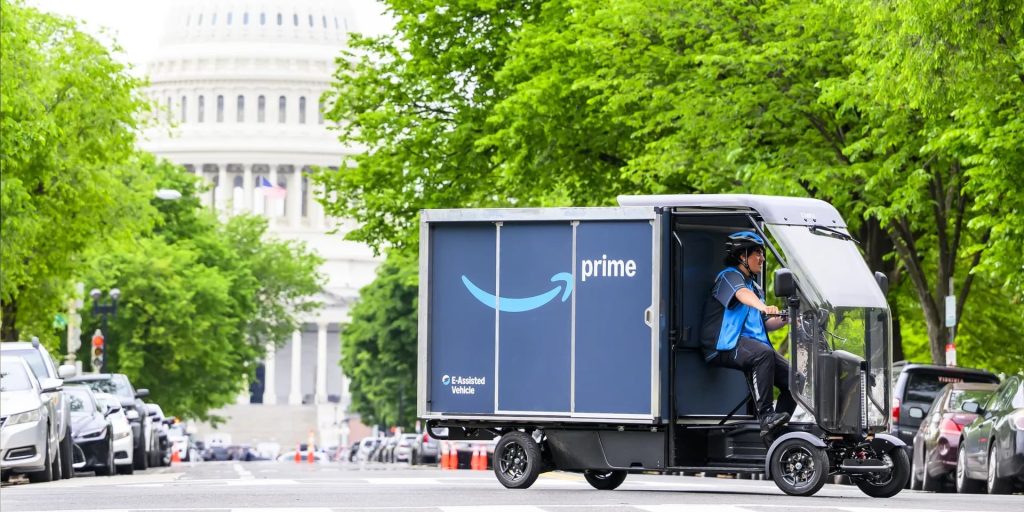
The cargo ‘e-bikes’ use electric bicycle drivetrains and include pedals with a pedal-by-wire system common in three- and four-wheeled cargo e-bikes that translates the user’s pedal power into forward motion via an electric motor.
Amazon says the concept has already proven itself in cities around the world, especially in dense urban cores where delivery stops are clustered close together. Rather than sending large vans into crowded neighborhoods, packages are brought to smaller local microhubs where cargo bikes handle the final leg of delivery.
And while the idea may still feel novel in much of the US, cargo bike logistics have become increasingly common in Europe. Companies including DHL, UPS, FedEx, and Amazon have all experimented with or expanded cargo bike delivery operations in cities where curb space is limited and vehicle congestion slows traditional vans to a crawl.
The interesting part here is that DC appears to be embracing the concept not just as a climate initiative, but also as a transportation strategy. Cargo bikes can use bike lanes and commercial loading zones while taking up far less road space than delivery vans. That could potentially reduce double-parking and the constant stopping and starting that often snarls city traffic.
Of course, success will likely depend heavily on infrastructure and rider behavior. A poorly designed cargo bike pilot could create conflicts with cyclists or pedestrians, while a well-run system could quietly become one of the more efficient urban delivery models available.
And to be fair, the massive cargo bikes, which are more of a cargo quadricycle, will still likely take up a significant portion of the bike lane. But it sure is better than getting blocked entirely by a 5-ton delivery van.
DDOT says it will collect monthly data throughout the pilot, including trip counts, route distances, and package totals, before issuing a final report at the end of the program.


FTC: We use income earning auto affiliate links. More.