




ABB E-mobility’s new EV fast charger kills peak power hype
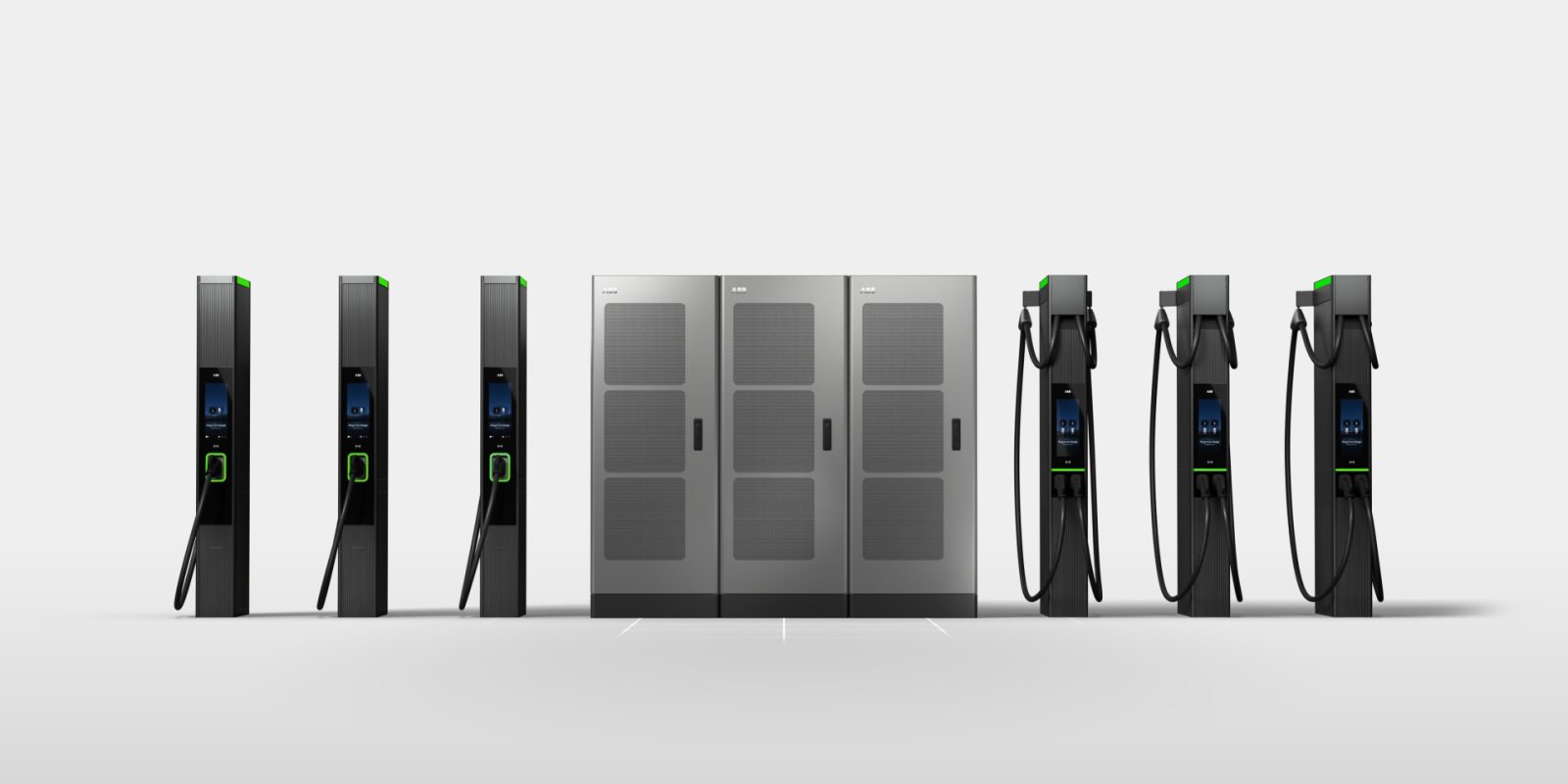
ABB E-mobility just debuted a new EV fast-charger system that’s trying to change how operators think about building EV charging sites, and it’s not about chasing the highest power numbers anymore.
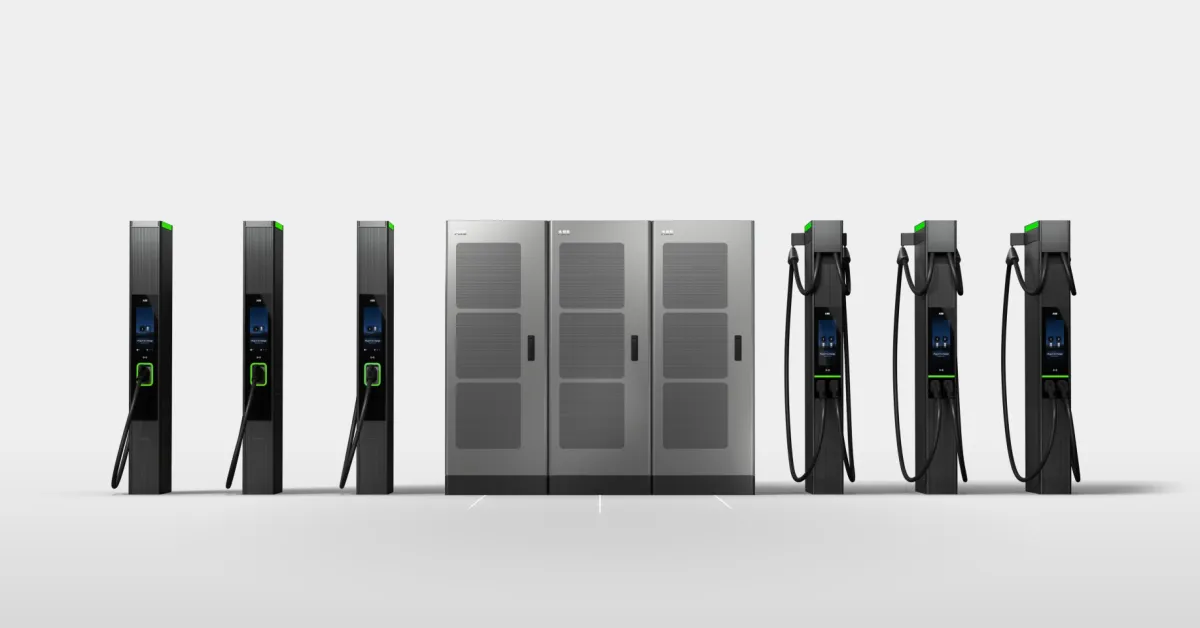
ABB E-mobility announced its new OM M-Series, a modular fast-charging system that separates power cabinets from dispensers and scales from 200 kW up to 1.2 megawatts.
That might sound like a spec upgrade, but the bigger shift is what ABB is optimizing for: how much energy actually gets delivered to EVs over time, not just how much power is installed on paper.
The system is designed for a wide range of sites, including public fast-charging hubs, retail and destination locations, and commercial fleet depots.
Power is shared, not locked to each charger
Instead of tying a fixed amount of power to each charger, the M-Series pools power in centralized cabinets and distributes it across multiple dispensers as needed.
The ChargePost dispenser portfolio – Solo, Duo, Dock, and Ultra – supports CCS1, CCS2, NACS, and MCS connectors, and can be configured across 36 different site layouts.
That flexibility matters because EVs don’t all charge the same way. Traditional setups can leave capacity stranded when a single charger isn’t fully utilized. ABB says the M-Series fast chargers avoid that by dynamically shifting power where it’s needed in real time.
Scaling up without rebuilding
The system can support up to 24 charge points and expand in 400 kW increments using up to three interconnected power cabinets.
Crucially, that expansion can happen in the field without redesigning the site or replacing existing hardware. That means operators can add capacity as demand grows, rather than overbuilding upfront.
ABB says that approach reduces the cost of delivered energy and improves overall site economics, especially for operators managing large networks.
Built for multiple charging use cases
ABB E-mobility is pitching the M-Series around three main types of charging sites:
Public fast-charging corridors can start with a single 400 kW cabinet and scale up to 1.2 MW across as many as 24 chargers. Existing hardware continues to operate as sites expand.
Retail and hospitality locations, such as supermarkets, fuel stations, and logistics hubs, can shift between high-power charging at low usage and serving more vehicles at once when demand rises.
Fleet depots get flexibility for mixed vehicles like vans, trucks, and buses, with support for both high-power opportunity charging and lower-power overnight charging from the same system. MCS readiness is also on the table.
A push toward “delivered energy” economics
ABB E-mobility’s CEO, Michael Halbherr, said, “The industry spent a decade optimizing for nameplate power. What operators need to optimize for now is the cost of energy delivered over the lifetime of a site.”
That’s a real shift. High peak power doesn’t mean much if it isn’t consistently available across chargers or if utilization is uneven.
The M-Series is designed to keep delivered power close to rated power across different EVs and usage patterns, which could help improve reliability and utilization – two persistent pain points for fast-charging networks.
High power density and grid flexibility
ABB says the system reaches a power density of 625 kW per square meter — or 1.2 MW in under 2 square meters — which could be useful for sites where space is tight, or land is expensive.
It also supports optional battery storage for peak shaving and grid-constrained locations, along with open APIs and software tools so operators can integrate the system into their existing platforms.
The M-Series connects to ABB’s asset management platform for real-time monitoring, fault detection, and maintenance.
From all-in-one chargers to modular systems
The launch also marks a broader shift in ABB’s fast charger lineup.
Its A-Series chargers are all-in-one systems designed for simpler deployments. The new M-Series moves in the opposite direction, separating power from dispensers so sites can be tailored more precisely to how they’re actually used.
Both platforms use ABB’s in-house silicon carbide power electronics and share the same core architecture, which the company says has been commercially deployed since 2024.
Electrek’s Take
This is where the EV charging conversation is heading.
The industry already has plenty of high-power chargers on paper; what it’s been missing is consistent performance, better utilization, and business models that work at scale.
If ABB E-mobility’s approach performs as it claims, shifting the focus from peak power to delivered energy could help operators build more efficient sites without overinvesting upfront.
And with fleets, retail sites, and highway corridors all needing different setups, modular systems like this make a lot more sense than one-size-fits-all hardware.
The real test, as always, will be how it performs in the field.
Read more: San Francisco moves to install curbside EV chargers on city streets

If you’re looking to replace your old HVAC equipment, it’s always a good idea to get quotes from a few installers. To make sure you’re finding a trusted, reliable HVAC installer near you that offers competitive pricing on heat pumps, check out EnergySage. EnergySage is a free service that makes it easy for you to get a heat pump. They have pre-vetted heat pump installers competing for your business, ensuring you get high quality solutions. Plus, it’s free to use!
Your personalized heat pump quotes are easy to compare online and you’ll get access to unbiased Energy Advisors to help you every step of the way. Get started here. – *ad


FTC: We use income earning auto affiliate links. More.