


A new start against noise pollution
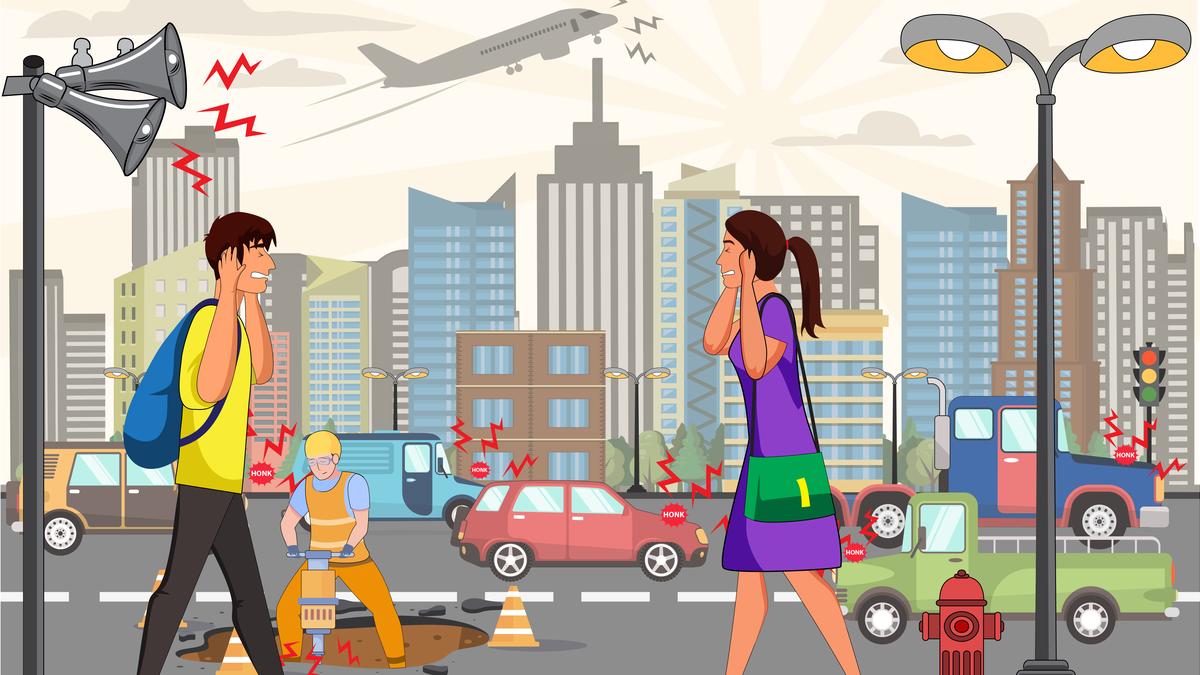
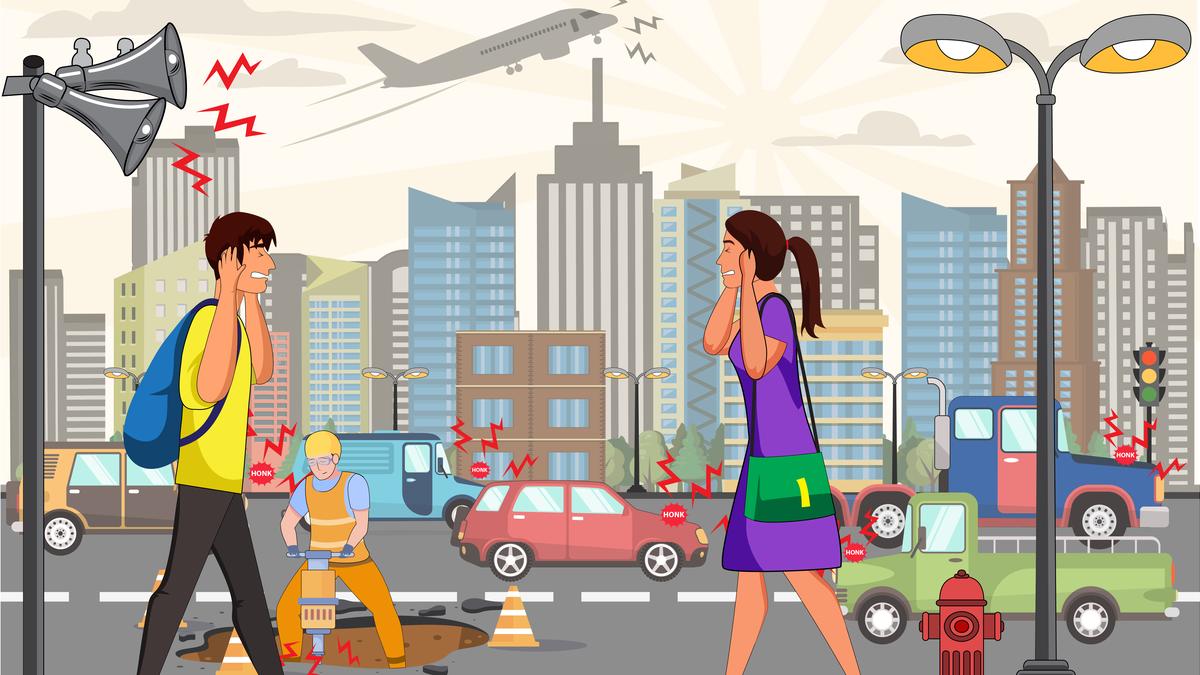
The European Environment Agency ranks noise as the second-largest environmental cause of disability-adjusted life years lost in Europe, behind only air pollution.
| Photo Credit: Getty Images/iStockphoto
For a few weeks now, the most insistent sound in Tamil Nadu has been the pea whistle, and that looks set to continue. Inside the Chepauk stadium, Chennai Super Kings supporters live up to the team’s call to action — “whistle podu” (blow the whistle) — through all its Indian Premier League matches.
Outside the stadium, since the Assembly election results on May 4, supporters of the Tamilaga Vettri Kazhagam (TVK) have flooded the streets across the State to celebrate Joseph Vijay’s victory by blowing the party’s election symbol, which is also a pea whistle.
Anyone who watched the 2010 football World Cup will understand how irritating this noise can be. The vuvuzelas were so relentless that international viewers complained that the football commentary had become inaudible, prompting several broadcasters to add audio filters. When hundreds or thousands of people blow pea whistles, they render a comparably terrible annoyance. A single whistle blast creates 104-116 decibels of pressure at the source, according to research from Western Michigan University. The threshold beyond which sustained exposure to air pressure can damage hearing is 85 decibels.
Some of the cricket team’s matches have been rousing and the TVK’s victory is unprecedented. But the fact remains that noise pollution has become the most tolerated form of pollution in India.
While even air pollution has finally forayed into the policy vocabulary as a deleterious problem, data from the National Ambient Noise Monitoring Network (NANMN) show that more than 80% of recording stations breached the prescribed noise limits during both day and night in 2019 itself — while awareness of its ills remains low. In Chennai, all 10 stations exceeded the residential nighttime threshold of 45 decibels. A 2022 UN Environment Programme report cited a maximum reading from Moradabad in Uttar Pradesh to be the world’s second-highest on its list (a ranking contested by government officials).
The actual problem is likely to be much worse as the NANMN has only 70 stations across seven metros, and the network has not been meaningfully expanded in 14 years. District towns in the Hindi belt and the Northeast generate ambient sounds whose profiles no official authority is measuring. Further, in towns with less healthy civic infrastructure and less responsive policing, loudspeaker permissions are unchecked and construction activity often runs through the night. Among the poor, the children often sleep with noise while their parents often spend several hours in conditions that, in any country with a functioning occupational health enforcement, would attract criminal liability.
Effects of excess noise
The World Health Organization has attributed 16% of disabling hearing loss in adults to occupational noise. India is estimated to have 6.3 crore people with some degree of impaired hearing. According to studies of noise-induced hearing loss in occupational settings, the prevalence of impaired hearing ranges from 13% in a Puducherry survey of 500 construction workers to a pooled estimate of 49% in a meta-analysis of industrial cohorts.
The European Environment Agency ranks noise as the second-largest environmental cause of disability-adjusted life years lost in Europe, behind only air pollution.
A WHO synthesis attributed around 16 lakh healthy life years lost annually in Western Europe to traffic noise alone. This is because loud sounds disrupt sleep, elevate cortisol levels in the blood, render endothelial dysfunction, and impair the cognition of children near airports and arterial roads. India also has more densely packed cities, building acoustics that are less sensitive to the need to mitigate noise, and of course looser enforcement.
Rules against noise
If tolerance is not a feature of India’s political discourse, it remains a fixture of how Indians react to pollution.
One reason is the Noise Pollution (Regulation and Control) Rules 2000, which set zone-wise limits and silence zones but which are rarely enforced. The Central Pollution Control Board only recently proposed financial penalties for violations — that too because much of the worst noise is generated by occasions that politicians would prefer not to police.
The Rules already accommodate religious and cultural observances. State governments can permit nighttime loudspeaker use between 10 pm and midnight on festive occasions for up to 15 days a year. However, public events routinely exceed decibel limits within the permitted hours, with sound systems often plonked in residential lanes and sometimes even outside hospitals.
No major political party has been willing to ask its supporters to organise a festival or procession but observe the limits. Parties fear that any restraint will be read as an attack on the faithful. It need not be and the political imagination should be capable of saying so.
Mr. Vijay has presented TVK as a fresh start for Tamil Nadu, unencumbered by the compromises of the Dravidian parties. At least for now, he possesses the political capital to set norms that his predecessors could not. One hopes the whistle that brought him to power could be the start of a new relationship with public sound that respects the right of people to work, relax, and sleep in peace.
Published – May 12, 2026 02:32 am IST