



Decolonising and de-Nobelising science – The Hindu
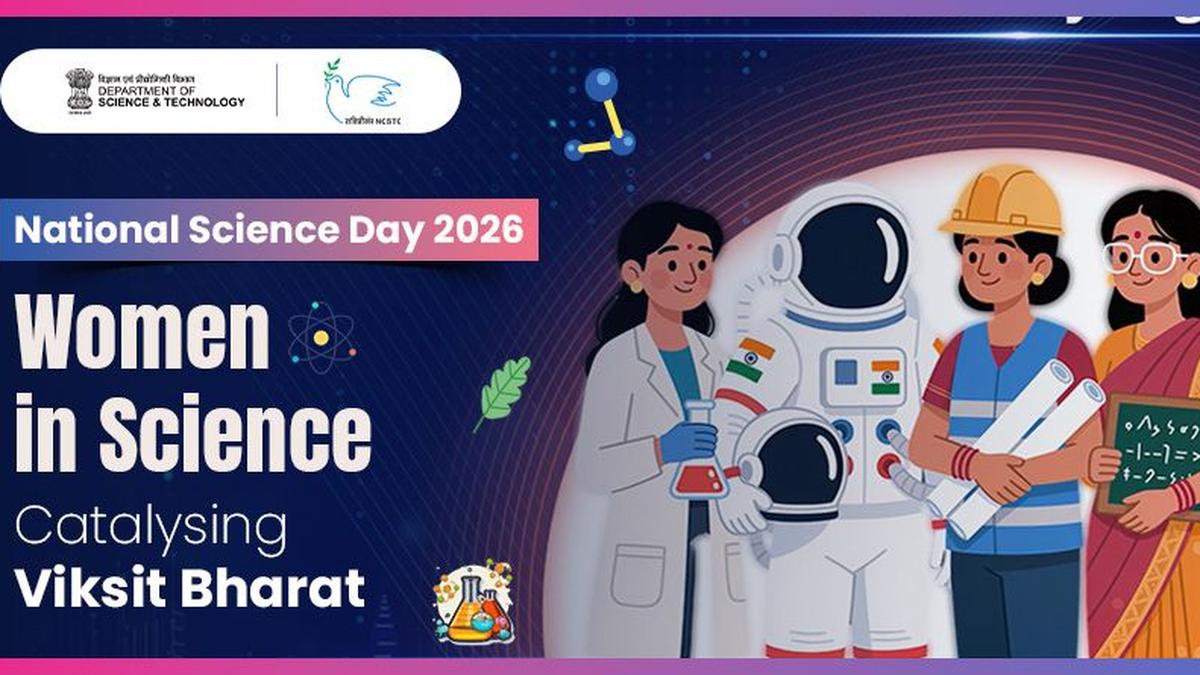
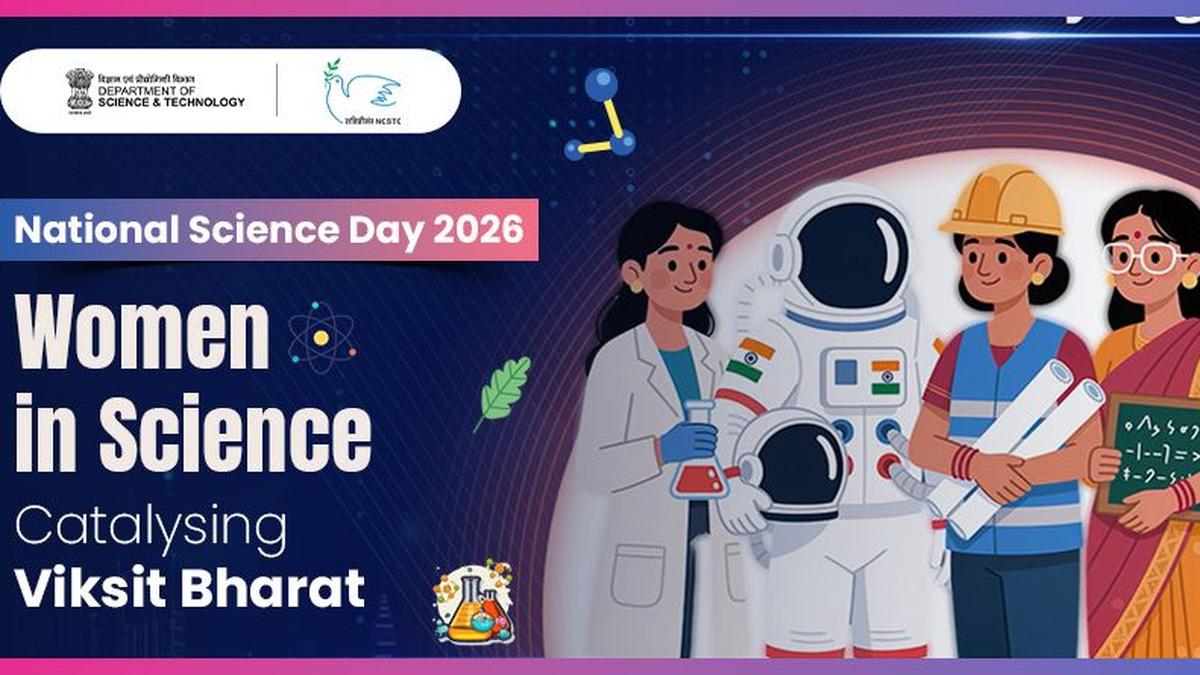
‘National Science Day should become an annual day of discussion of what counts as science, including the work of technicians, field staff, nurses, lab attendants, data collectors, and others whose labour is essential to make new knowledge but is rarely commemorated.’ Photo: dst.gov.in
Every February 28, India celebrates National Science Day to commemorate C.V. Raman’s announcement of the Raman effect in 1928, a discovery that won him the Nobel Prize in Physics in 1930. Such national rituals are said to be just acts of remembrance, but they are not; they also legitimise what the state says counts as science.
Three keywords
A new book about keywords offers a useful way to read this ritual itself as a word with a political life. Decolonial Keywords, edited by anthropologists Renny Thomas and Sasanka Perera, argues that some everyday terms can be treated as archives of history and power and that their definitions are often a political rather than a linguistic achievement. ‘National Science Day’ and ‘Nobel Prize’ can also be treated as such keywords: ones that organise India’s public imagination of science. There is a reason we mark a date that can be narrated with a “world-class discovery” rather than a date on which, say, a public hospital improved maternal outcomes.
If decolonising science is to mean anything in India, it must include the need to de-Nobelise how the state understands and valorises science. Specifically, it must stop treating external prestige as the main proof of scientific worth and expand the cast of legitimate scientific actors and sites. Three keywords from the book — ‘jugaad’, ‘poromboke’, and ‘laboratory’ — help show how this recognition works through institutional infrastructures.
Researcher and author Pankaj Sekhsaria’s essay on ‘jugaad’ begins by using the word’s instability — it can plausibly be read as a virtue, a compromise, or corruption — to explain how it creates space for powerful actors to amplify the meanings that suit them and discard those that don’t. He also shows how the word has been absorbed into managerial talk as a laudable synonym for frugal innovation while other resonances remain harder to hear or take seriously.
This is how innovation tends to behave in the public theatre of National Science Day. It becomes a stage-managed synonym for ingenuity that the stage packages for elite consumption, preferably in English, preferably legible to global management culture, and preferably compatible with award narratives. Prof. Sekhsaria ends with a question that cuts through this template: what words do farmers, fishers, and craftspeople use to describe their own inventiveness? Answering this question forces our attention away from the elite markers of prestige and towards the vocabularies that people use to produce and name practical knowledge.
Professor Banu Subramaniam’s chapter on ‘poromboke’ makes a parallel argument about classification, anchored in Tamil political ecology. The state often glosses over ‘poromboke’ as wasteland, or land that does not generate revenue for the state. Her point is that the revenue category has always been a social category in disguise because the state’s accounting decides which landscapes count as productive and so which people’s uses count as legitimate. Historically, the term also referred to land set aside for public use, whereas in contemporary practice it covers a range of commons that remain essential for marginalised communities precisely because they are not private property.
She also remarks on how the word has become a pejorative in common Tamil speech, meaning ‘good for nothing’. When the state declares a landscape to be disposable, the people who depend on it become easier to declare disposable as well. In the same way, some kinds of inquiry are said to be ‘national science’ while others of less prestige are rendered ‘routine work’ or ‘local practice’. This is why what we celebrate on National Science Day is not value-neutral but a way to sort the labour of science.
Dr. Thomas focuses on ‘laboratory’ and his analysis begins by distinguishing between elite ‘mega labs’ and the ‘minor labs’ ubiquitous in towns and villages, especially diagnostic centres (‘pathology labs’). Raman’s own story is inseparable from laboratory infrastructure — he announced the Raman effect while working at the Indian Association for the Cultivation of Science in Calcutta — but Dr. Thomas’s point is that this recognisability is something we manufacture. When schools teach the laboratory as the place where great people work in isolation, the everyday diagnostic lab, where most Indians actually encounter scientific authority, becomes conceptually minor even though it is central to society.
And once we treat a ‘lab’ as a social institution, its politics become part of its definition. Dr. Thomas has found in his own work that lab-mates do science but also share rituals, gossip, and celebrate occasions together, and is often a space where people reproduce hierarchies of caste and gender. But in other settings, it is also a place where the authority of ‘science’ is routinely performed before the public.
What counts as science
The keywords thus clarify what a de-Nobelised imagination of science, paralleling the decolonisation of science, would require. It would force India to ask how Indians produce the thing called ‘recognition’ — through discoveries and papers as much as by institutions that sort labour into celebrated and hidden.
National Science Day, then, should not simply reproduce a Nobel-shaped story about genius and external validation. It should become an annual day of discussion of what counts as science, including the work of technicians, field staff, nurses, lab attendants, data collectors, and others whose labour is essential to make new knowledge but is rarely commemorated.
Published – February 26, 2026 12:57 am IST